I almost didn’t come here.
However, Da Bao Pagoda Nha Trang sits on a hillside north of the city.
It lies far from most itineraries, and even my Grab driver gave me a quizzical look.
Twenty minutes later, I stood on a stone terrace with the whole of Nha Trang Bay shimmering below me, and the only sound was the soft, hollow clatter of bamboo wind chimes. Nobody had told me about this place. Now I am telling you.
Da Bao Pagoda Nha Trang is not the type of temple that makes it onto postcards. Moreover, it is quiet and unassuming. It is tucked into the Vĩnh Hòa neighborhood, where a road winds past local homes and small fruit stalls. It lacks fame, but it repays visitors with atmosphere. It is run by a handful of friendly monks. They seem genuinely pleased to see visitors, on grounds that are spotless, calm, and filled with small, thoughtful details.
It is the kind of place where you arrive planning to stay twenty minutes and leave an hour and a half later, blinking in the sunlight and wondering where the time went. If you are mapping out your trip to Nha Trang, this pagoda deserves a quiet morning — it resets your nervous system before you dive back into the city’s energy.
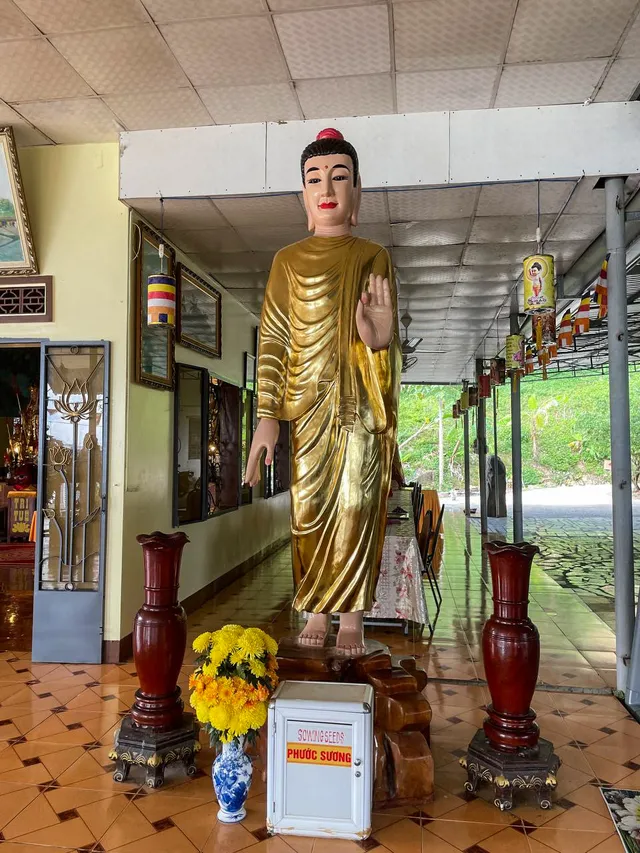
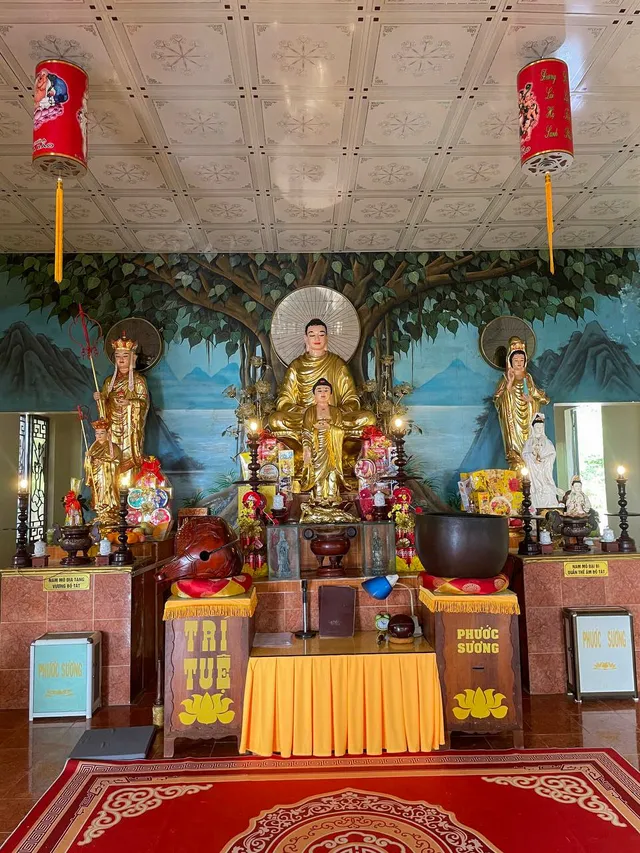
🌅 The Million-Dollar View (That Costs Nothing)
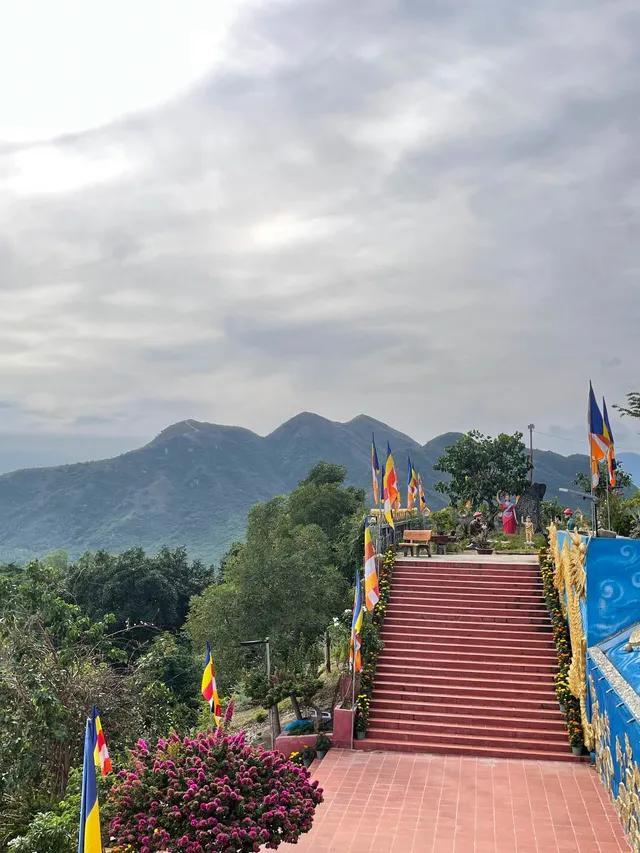
The undisputed star of Da Bao Pagoda is Tue Giac Vien — the temple garden and open‑air viewpoint.
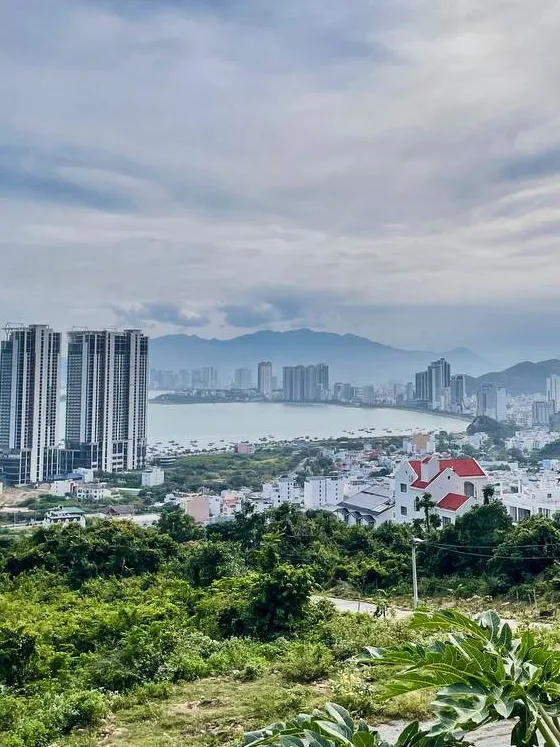
You walk up a short flight of stone steps, past blooming frangipani and neatly trimmed bonsai, and suddenly the hillside drops away. Before you is a panorama of Nha Trang that rivals any rooftop bar or observation deck: the curving coastline, the turquoise sweep of the bay, and the distant silhouette of the islands, with the city sprawling along the shore like a glittering ribbon.
At sunrise, the water turns soft pink and gold. At sunset, the sky catches fire behind the mountains. I arrived in the late afternoon and watched the whole show: fishing boats puttered back to port, the first city lights flickered on, and the sky shifted through a dozen shades of orange and violet. It cost me exactly zero dong.
The garden itself is a small, beautifully maintained space. Stone benches are set at the perfect angle to take in the view.
When I was there, a young monk was quietly sweeping the terrace with a bamboo broom. His movements were slow and rhythmic. He nodded at me and continued his work. In Da Bao Pagoda Nha Trang, the sense of calm remained, and our interaction was simple and perfect.
If you enjoy discovering lesser-known viewpoints, you might like my guide to the peaceful 48-meter Buddha. That Buddha is hidden among rice fields west of the city, and the view is breathtaking. The crowds are nonexistent there.
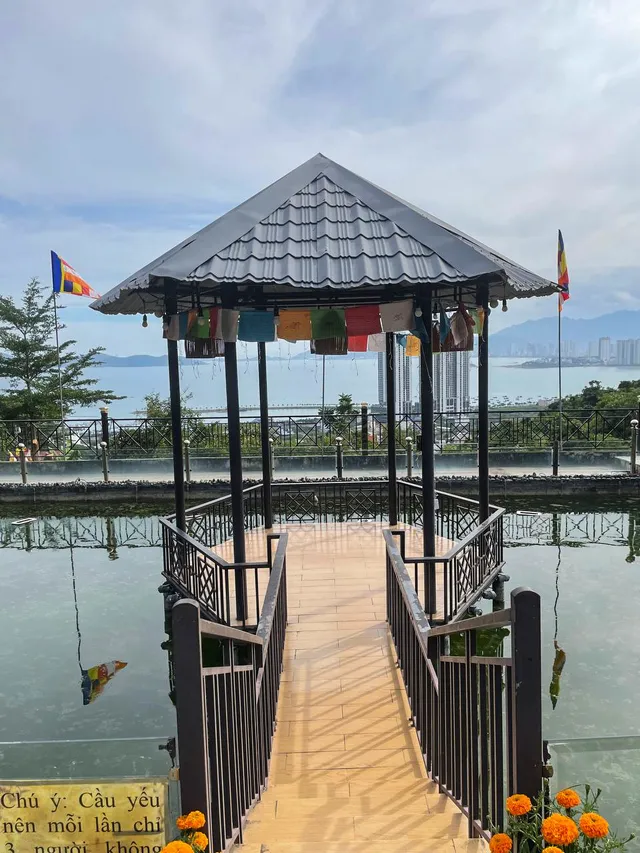
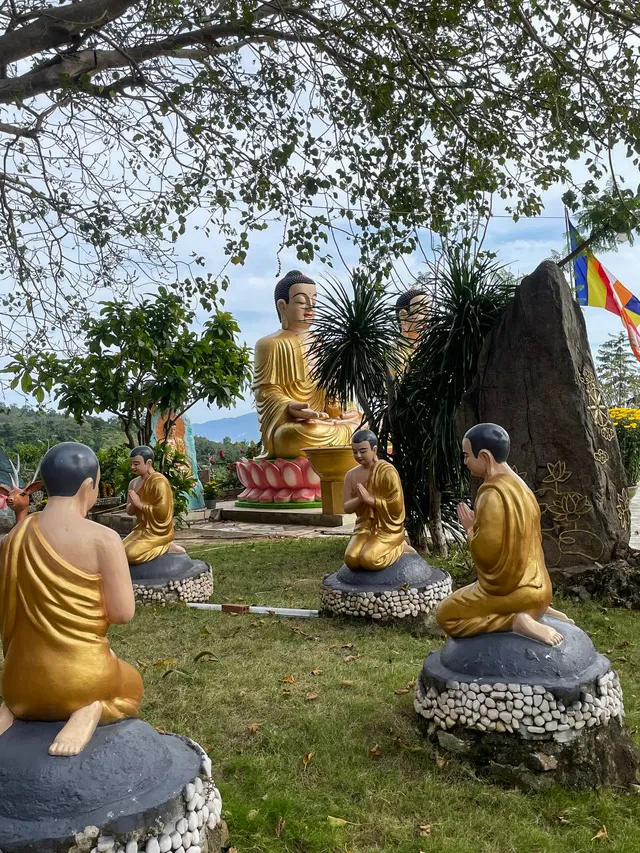
🪨 The White Stone Buddha and Bamboo Wind Chimes
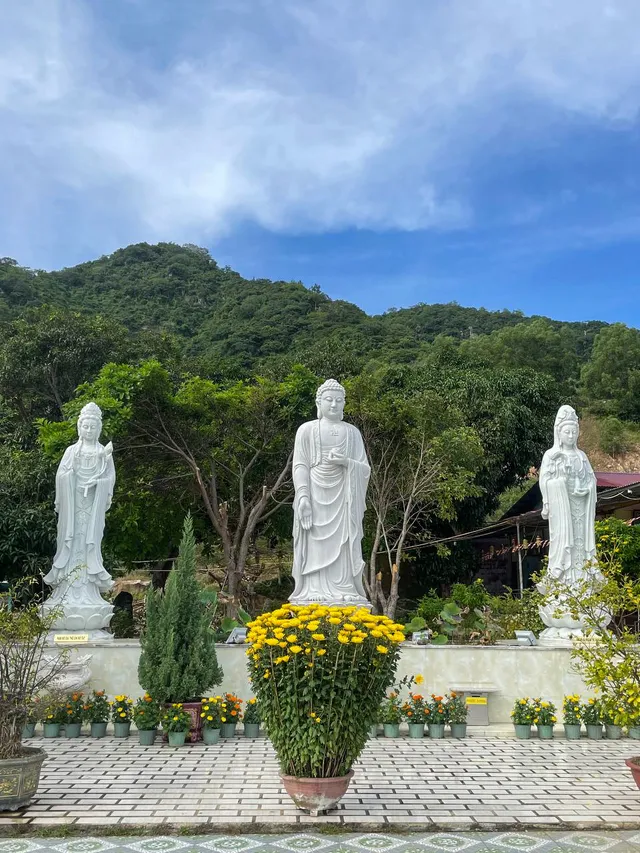
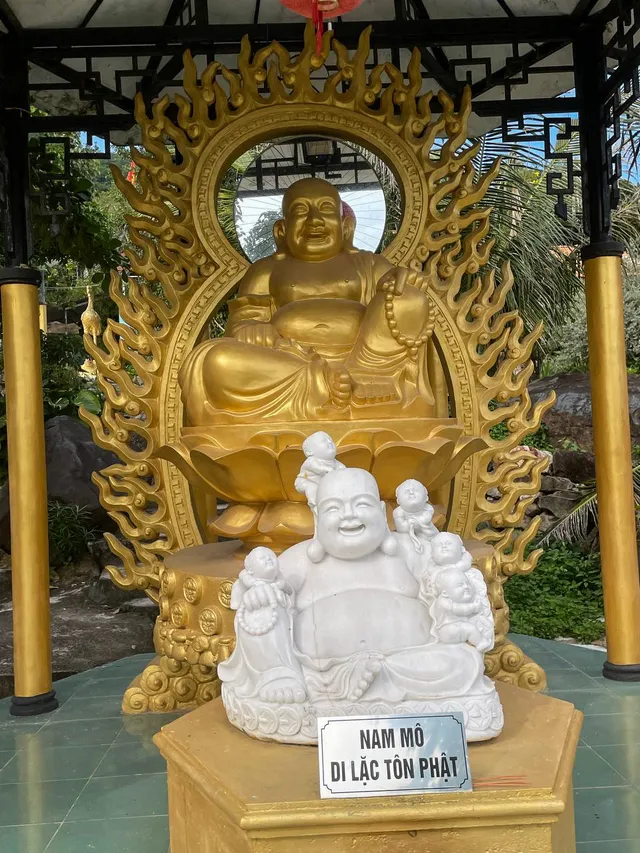
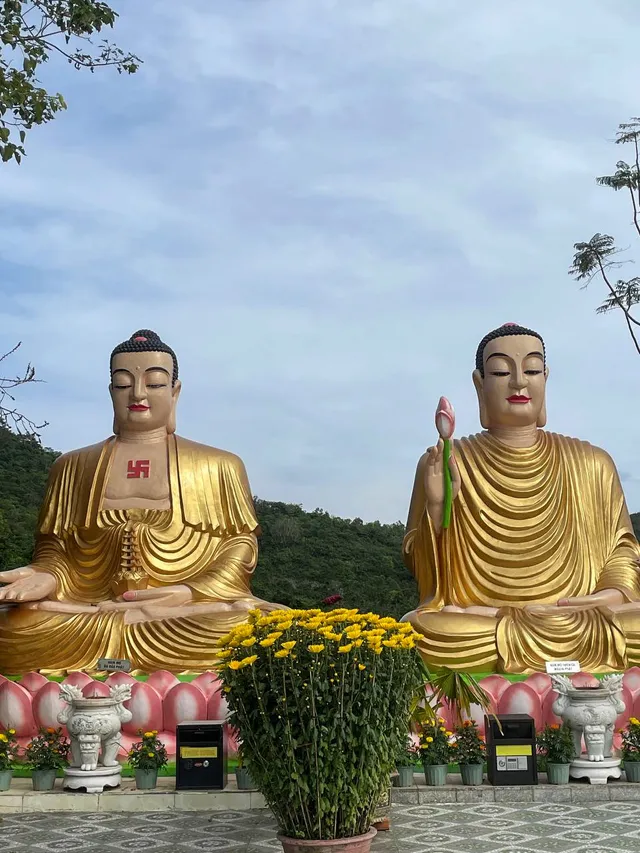
The main hall houses the pagoda’s spiritual heart: the Đá Bảo Buddha, carved from a single block of white stone.
Da Bao Pagoda Nha Trang is not the largest Buddha in Vietnam, and it is not even close. Nevertheless, its simplicity is arresting.
The stone is cool and smooth.
The features are delicate, and the atmosphere inside the hall is deeply solemn.
Incense drifts in lazy spirals.
The only sound is a murmur of prayer.
I sat on a wooden bench near the back for ten minutes, doing nothing.
It felt like the most productive part of my week.
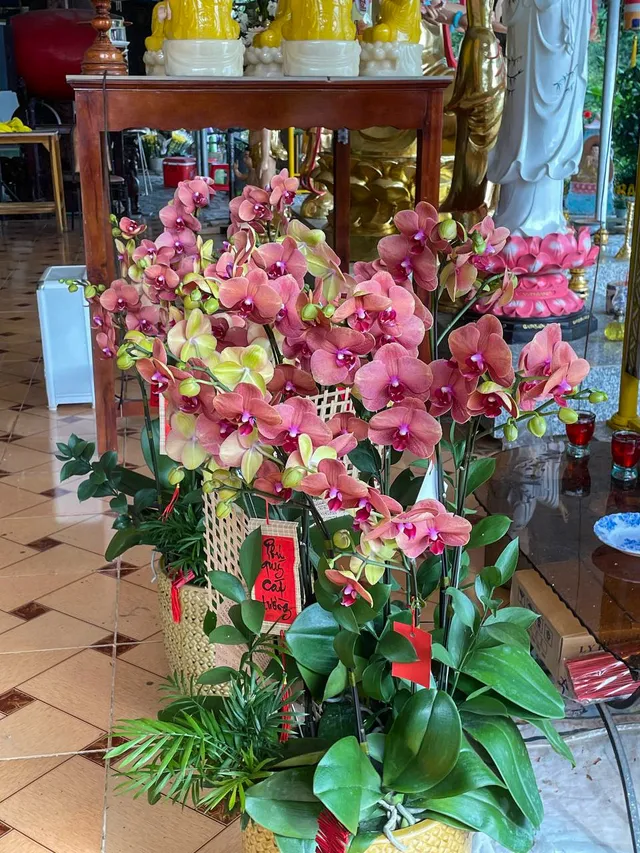
At Da Bao Pagoda Nha Trang, the detail that stayed with me longest was the sound. Additionally, dozens of bamboo wind chimes hang around the grounds. They are hollow tubes of varying lengths. It knocks together in the breeze. The sound is unlike anything I have heard at other temples. Soft, hollow and almost musical, it resembles wind playing a wooden xylophone. It drifts through the gardens.
It mingles with the rustle of leaves and the distant hum of the city below. It is impossibly calming. I stood under a tree for five minutes, eyes closed, listening. A small pack of friendly stray dogs—the pagoda’s unofficial residents—wandered over to inspect me. Tails wagging, they flopped down in the shade. Even they seemed at peace.
Before heading out to explore the hillside, make sure your phone is ready. I always activate an eSIM for Vietnam before I leave home to navigate to hidden spots like this. This helps avoid scrambling for a SIM card.
☕ Coffee With a View (Yes, There Is a Café)
Here is something I did not expect: Da Bao Pagoda has a small café on the grounds. It is nothing fancy — a modest counter, a few plastic chairs, a simple menu of Vietnamese coffee, fresh juices, and smoothies — but it sits right on the terrace, facing that million-dollar view. I ordered a ca phê milk đá and sat there for half an hour, watching the clouds drift over the bay. The coffee was strong, sweet, and cost less than a dollar. A young couple at the next table were sharing a mango smoothie and taking turns photographing each other against the skyline. It was, without question, the best café view I have found in Nha Trang — and I have visited nearly every rooftop in the city. For a completely different kind of café experience — one built inside a cave with waves crashing against the rocks — my guide to the hidden cave coffee north of the city makes a perfect contrast. One is all silence and bamboo chimes; the other is all salt spray and thunderous ocean.
🕘 Practical Information & How to Get There
- 📍 Address: Tổ 14 Đường Đệ, Vĩnh Hòa Ward, Nha Trang, Khánh Hòa.
- 🎟️ Entrance Fee: Completely FREE. Donations are welcome but never expected. I left a small note in the donation box near the main hall.
- ⏰ Opening Hours: Daily from 7:00 AM to 7:00 PM. The garden may close slightly earlier, around dusk, so aim to arrive before 6:00 PM if you want to catch the sunset.
- 🧥 Dress Code: Cover your shoulders and knees. This is an active temple, and the monks appreciate modest attire. If you forget, the temple can rent you a pair of trousers for a token fee (around 10,000 VND).
- ⏱️ Time Needed: 45 minutes to 1.5 hours, depending on how long you sit at the café or meditate in the garden.
Getting there is straightforward; Da Bao Pagoda Nha Trang is accessible by taxi or bus.
- 🚖 Taxi / Grab: From central Nha Trang, the ride costs around 100,000–150,000 VND and takes about 15–20 minutes. The road winds uphill through a residential neighborhood, so have your driver wait or arrange a return trip — finding a Grab back down can be tricky. For a guaranteed ride, arrange the return trip with your driver in advance so you’re not stuck finding a Grab from the hillside.
- 🛵 Motorbike: If you have your own wheels, the ride is straightforward. Follow Google Maps to “Chùa Đá Bảo” — the last stretch is a narrow lane, so go slow. Having your own transport also lets you combine the pagoda with other northern Nha Trang spots, like the wild beach at Bãi Dài. Renting your own motorbike or car lets you explore the coast at your own pace.
💡 My Honest Tips
- 🧴 Bring insect repellent. The gardens are lush, and the mosquitoes come out in the late afternoon. A quick spritz before you settle onto a bench makes all the difference.
- 👟 Wear comfortable shoes. There is a short but genuine climb from the entrance to the viewpoint — stone steps, uneven in places — and flip-flops will make it harder than it needs to be.
- 💰 Carry a little cash. Not for the entrance — it is free — but for a coffee at the café, a small donation, or the trouser rental if you forget the dress code.
- 🌅 Best time to visit. Late afternoon, around 4:00–5:00 PM. You will catch the golden hour, watch the sunset from the terrace, and experience the pagoda at its most peaceful. Mornings are also beautiful and even quieter.
- 🤫 Keep your voice low. This is a working monastery. The monks are welcoming, but the atmosphere depends on visitors respecting the silence. Speak softly, and you will feel genuinely welcome.
🏨 Where to Stay Nearby
Da Bao Pagoda sits in the northern part of Nha Trang, away from the main tourist strip. If you want to be close to this kind of quiet, hillside experience, consider staying in the Vĩnh Hòa or Vĩnh Phương areas — they are residential, affordable, and give you a more local perspective on the city. My full area guide to Nha Trang’s neighborhoods breaks down every district, from the beachfront high‑rises to the quiet hillside pockets. My Top 10 Best Hotels in Nha Trang guide can help you find something within easy reach of both the city center and the northern pagodas. Before any trip, I always make sure I am covered — a good travel insurance policy gives me peace of mind, whether I am climbing temple stairs or navigating Nha Trang’s motorbike traffic.
💎 Verdict: A Sanctuary Worth Finding
Da Bao Pagoda Nha Trang won’t dominate your Instagram feed. It is quiet, modest, and content to sit on its hillside. Let the bamboo chimes do the talking. If you are tired of crowded attractions, seek a moment of genuine peace.
It is the kind where you can hear the wind, watch the sunset, and feel the stress dissolve. This is your place. Come for the view, stay for the coffee. Let the bamboo in the breeze remind you why you travel.
For another off‑the‑beaten‑path pagoda experience, the Cao Dai Temple in Da Lat — where Victor Hugo is a saint — is a completely different, wonderfully bizarre counterpart to Da Bao’s serene simplicity. And if you are mapping out a longer Vietnam journey, my 9‑day Nha Trang itinerary shows you how to weave these quiet spiritual moments with beach days, island escapes, and jungle adventures.
Frequently Asked Questions
What is Da Bao Pagoda in Nha Trang known for?
It’s a quiet hillside pagoda in the Vĩnh Hòa neighborhood known for the Tue Giac Vien viewpoint, a panoramic view of Nha Trang Bay accompanied by the sound of bamboo wind chimes.
Is there an entrance fee for Da Bao Pagoda’s viewpoint?
No, the panoramic view from the temple garden costs nothing to visit.
What is the main Buddha statue at Da Bao Pagoda?
The Đá Bảo Buddha, carved from a single block of white stone, sits in the main hall — it’s small but noted for its delicate, simple features.
When is the best time to see the view at Da Bao Pagoda?
Both sunrise and sunset are recommended — at sunrise the water turns soft pink and gold, and at sunset the sky catches fire behind the mountains.
Where is Da Bao Pagoda located?
It’s tucked into the Vĩnh Hòa neighborhood on a hillside north of Nha Trang city, off most standard itineraries.
Disclosure: This article contains affiliate links. If you book through them, I may earn a small commission at no extra cost to you. I only recommend experiences I have personally tested and loved.
More from our travel guide network
Build your Vietnam route — free.