Many tourists in Ho Chi Minh City visit the Jade Emperor Pagoda or the colorful Cao Dai temple. Few reach Việt Nam Quốc Tự Saigon, the spiritual center of Vietnamese Buddhism.
Việt Nam Quốc Tự Saigon is not just another pagoda. It serves as the headquarters of the Buddhist Sangha of Vietnam. It is the seat of the Supreme Patriarch and the largest Buddhist complex in the city.
This is where major national ceremonies are held. Thousands of monks gather for important ordinations. The country’s Buddhist leadership guides a community of millions.
I visited on a quiet weekday morning. The vast, serene complex felt more like a sanctuary than a tourist attraction. If you’re checking flights to Ho Chi Minh City, start here to understand Vietnam’s spiritual heart.
🕊️ The Temple That Moved Through History
Việt Nam Quốc Tự Saigon has a story that mirrors modern Vietnam itself. The original temple was built in 1951 at a different location near what is now the War Remnants Museum.
It was a modest structure but quickly became the central hub for Buddhist activities in the south.
During the turbulent years of the 1960s, the temple played a pivotal role in the Buddhist crisis. This was a period of intense tension between the Buddhist majority and the Catholic-led government.
From this temple’s community, the monk Thích Quảng Đức emerged. His self-immolation in 1963 at a nearby intersection shocked the world and contributed to political change.
The original building was eventually relocated to make way for urban development. In 1993, the foundation stone for the current, much larger complex was laid at its present site in District 10.
The new temple was inaugurated in 2017, a symbol of resilience and renewal.
🏛️ The Grand Stupa and the Tower of Bells
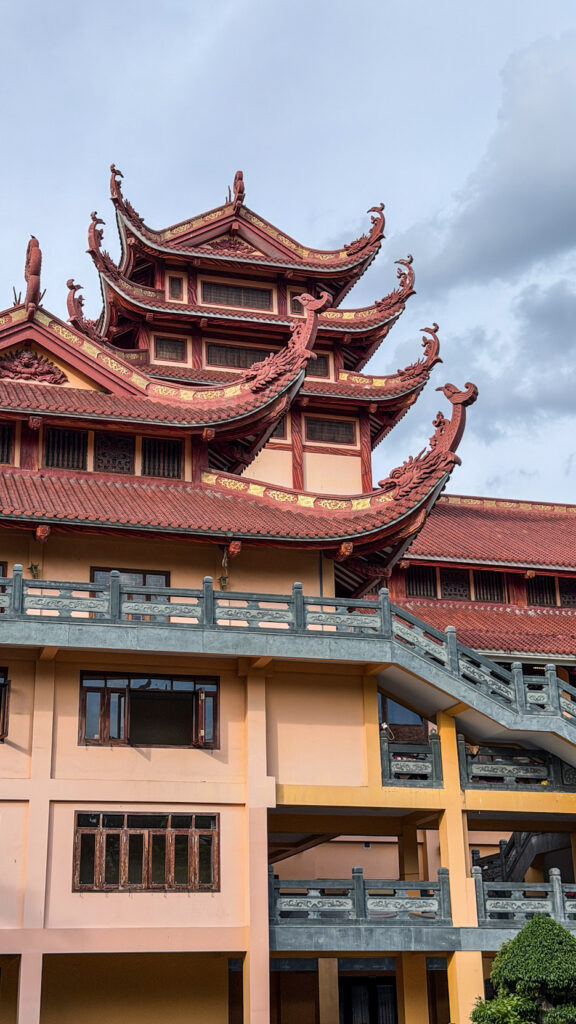
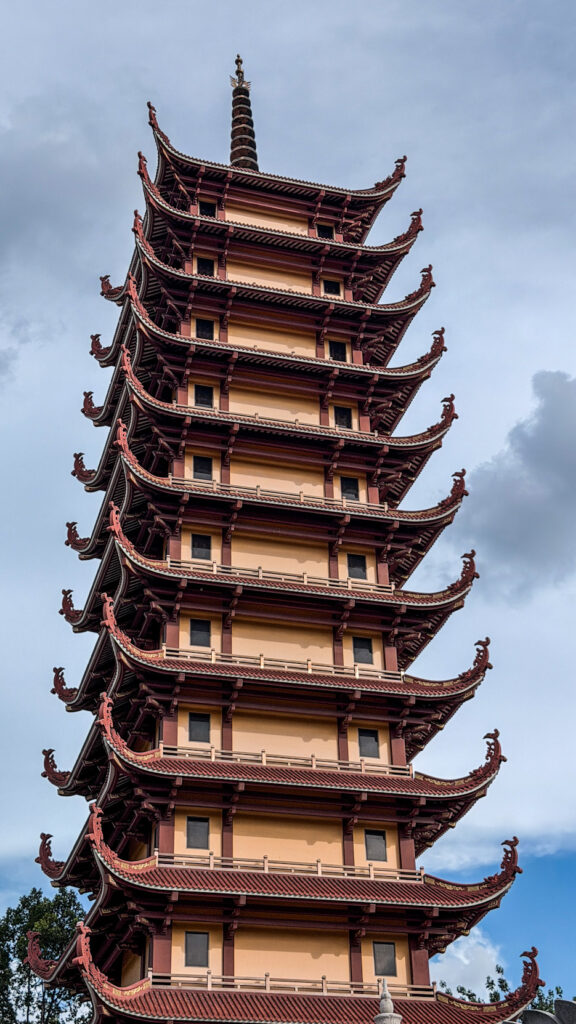
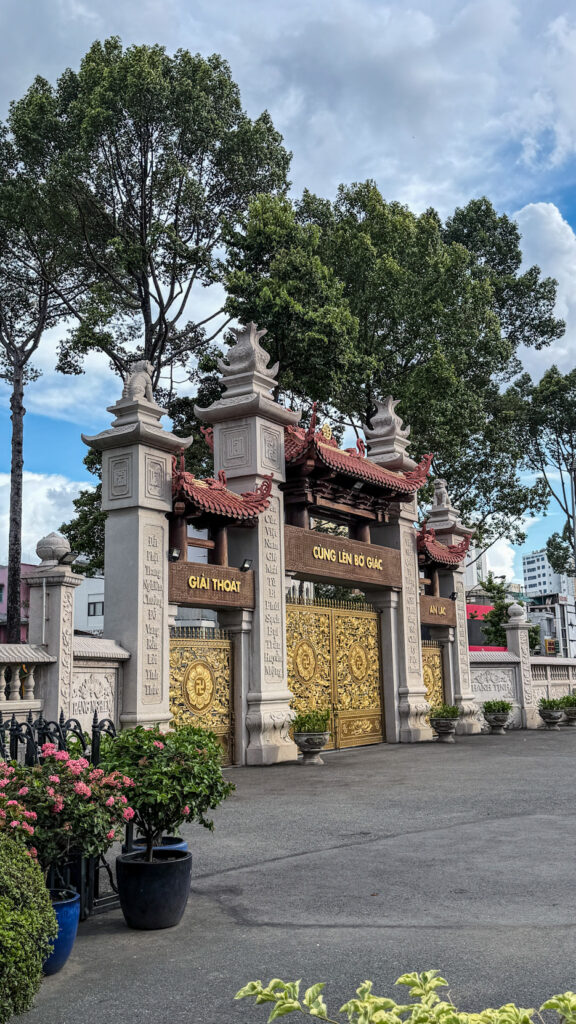
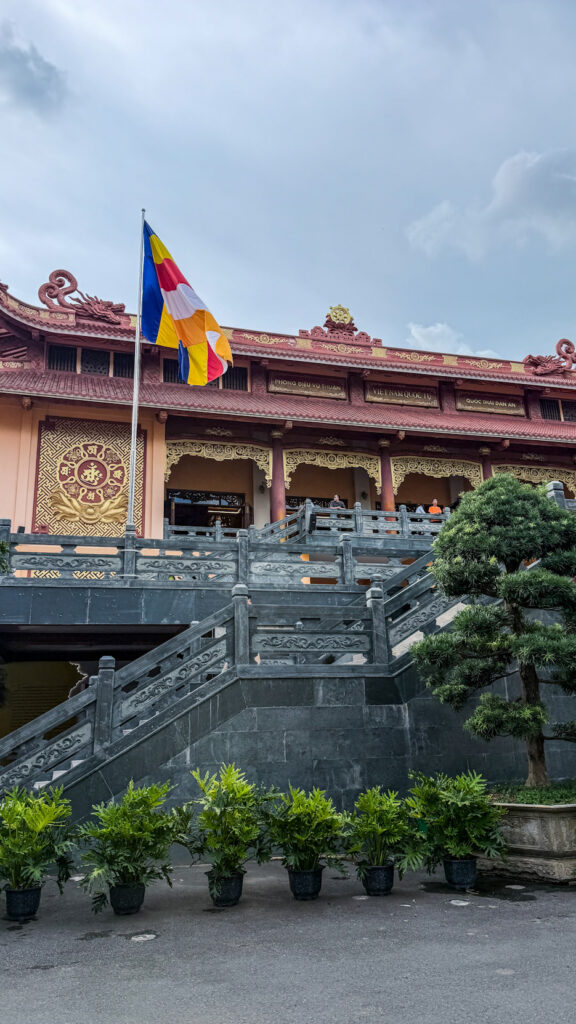
The first thing you notice when you arrive at Việt Nam Quốc Tự Saigon is the scale. The main stupa is a towering, seven-story structure. That structure dominates the skyline of this quiet residential neighborhood.
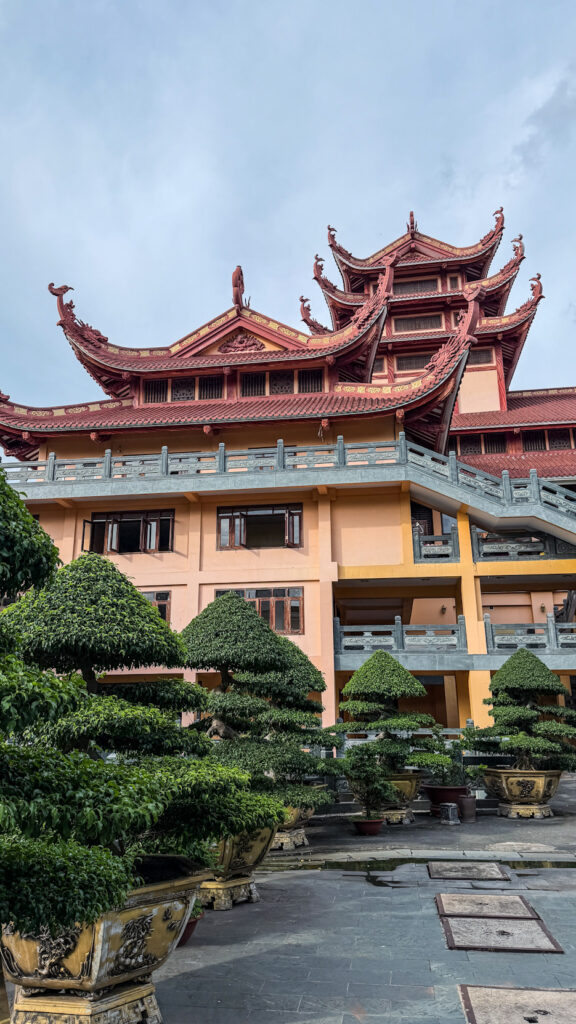
Its design blends traditional Vietnamese Buddhist architecture with modern construction techniques. Clean lines, graceful curves, and a sense of solidity feel both ancient and brand new.
Inside, the central hall is vast and cool. Polished stone floors reflect the light filtering through tall windows.
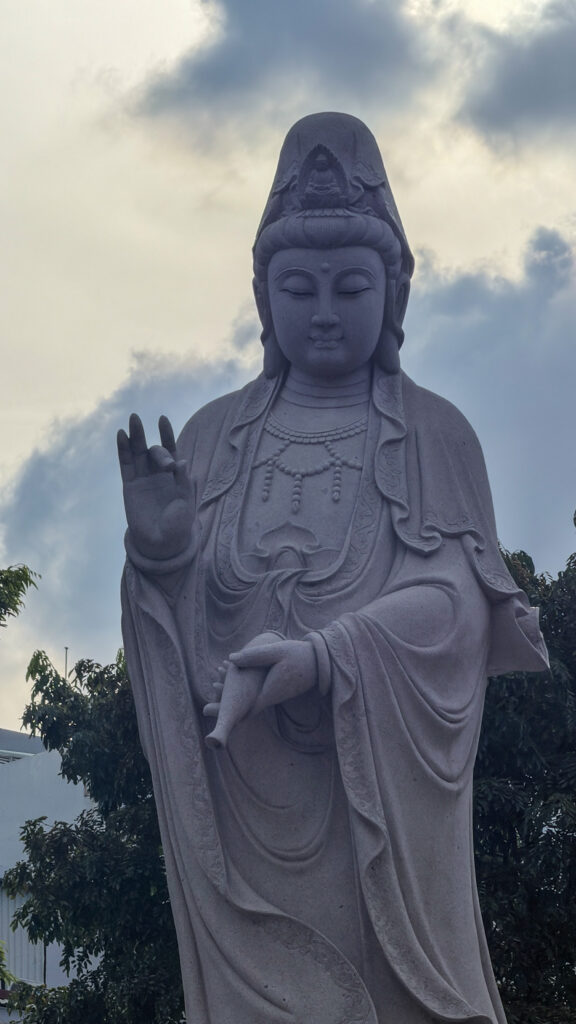
At the heart of the hall sits a magnificent bronze Buddha statue. It is serene and monumental, flanked by intricate carvings and floral offerings.
The walls are lined with smaller altars dedicated to various bodhisattvas and patriarchs of Vietnamese Buddhism. Each altar is tended with fresh fruit, flowers, and glowing candles.
The complex doesn’t stop at one building. However, to the left of the main stupa stands a seven-story bell tower. Its bronze bell is cast to ring out across the city on important Buddhist holidays.
To the right, a matching drum tower stands in symmetry. Between them stretch wide courtyards and landscaped gardens filled with bonsai trees and lotus ponds. Shaded benches invite monks in saffron robes to walk slowly or sit in quiet conversation.
The entire complex feels more like a university campus for the soul. It is spacious, orderly, and profoundly peaceful.
🙏 A Living Institution, Not a Museum
Việt Nam Quốc Tự Saigon stands as a working headquarters. This is not a relic for tourists; it is the beating heart of Vietnamese Buddhism. The Supreme Patriarch resides here, and the temple’s halls host councils of senior monks. These councils decide matters affecting Buddhist communities across the country.
You may see young novices hurrying to classes. Elderly laypeople chant in the main hall, or a solemn ceremony unfolds before hundreds. The atmosphere remains welcoming despite its importance. Visitors may enter the main hall and sit quietly. Monks are accustomed to travelers and respond with a gentle nod.
📍 Practical Info
📍 Address: 244 Đường 3 Tháng 2, Phường 12, Quận 10, Ho Chi Minh City
🕒 Open: Daily, from early morning until evening. Mornings are coolest and quietest.
🎟️ Entrance: Free. Donations are welcome but never requested.
👗 Dress code: Shoulders and knees covered. This is the most important Buddhist site in the country — treat it with the respect it deserves.
🚕 Getting there: About 10–15 minutes by Grab from District 1. Drivers recognize “Việt Nam Quốc Tự” or “Chùa Quốc Tự”.
The temple is in District 10, a residential area with excellent local street food. If you’re looking for a comfortable base nearby, you can find a hotel in Ho Chi Minh City — staying in District 1 or District 3 puts you within easy Grab distance of this temple and several other spiritual landmarks. For the highest-rated stays across all budgets, my Top 10 Best Hotels in Ho Chi Minh City guide has the full lineup.
🔗 What to Pair It With
If you’re building a day of spiritual exploration, Việt Nam Quốc Tự pairs beautifully with Chùa Vạn Phật, the Temple of Ten Thousand Buddhas, just a short Grab ride west. For a completely different kind of sanctuary, the Cao Dai Temple Saigon blends five faiths under one rainbow-colored roof. And if you’re collecting Saigon’s most important temples, my upcoming Saigon pagodas guide will bring all of these together in one essential list. 🌸
💎 Verdict: The Quiet Colossus of Vietnamese Buddhism
Việt Nam Quốc Tự doesn’t need to advertise. It’s the spiritual center of the country, a vast complex of stupas, bells, and courtyards where the leadership of Vietnamese Buddhism guides a community of millions. Come for the architecture, stay for the silence, and leave with a deeper understanding of the faith that shapes this nation. 🛕
Frequently Asked Questions
What is Việt Nam Quốc Tự Saigon?
It’s the headquarters of the Buddhist Sangha of Vietnam and the seat of the Supreme Patriarch — the largest Buddhist complex in Ho Chi Minh City.
When was the current temple built?
The foundation stone was laid in 1993 at its present site in District 10, and the new temple was inaugurated in 2017.
What stood here before the current complex?
The original temple, built in 1951 near what is now the War Remnants Museum, was the central hub for Buddhist activity in the south and connected to the 1963 Buddhist crisis before being relocated for urban development.
Can visitors enter the temple?
Yes — visitors may enter the main hall and sit quietly. Monks are accustomed to travelers, and the atmosphere remains welcoming despite the complex’s importance as a working headquarters.
What structures make up the complex?
A towering seven-story main stupa, a matching seven-story bell tower and drum tower, plus courtyards and gardens with bonsai trees and lotus ponds.
More from our travel guide network
Build your Vietnam route — free.