Visiting Hanoi for first-timers? Vietnam’s capital is one of the best places to begin a trip around the country. The city blends historic temples, colonial architecture, busy markets, great food, lakes, cafes and lively street life.
Hanoi can also feel chaotic when you first arrive. The traffic is intense, the Old Quarter is busy and there are more attractions than you can realistically see in a couple of days.
This guide for Hanoi for first-timers explains where to stay and how many days you need.
It covers what to see, what to eat, how to get around, and nearby destinations worth adding to your itinerary.
Is Hanoi Worth Visiting?
Yes. Hanoi is one of the most rewarding cities in Vietnam for a first visit, particularly if you are interested in Vietnamese history, food and local culture.
The city has a very different character from southern destinations such as Ho Chi Minh City. Hanoi feels older, more traditional and more closely connected to Vietnam’s historical and cultural identity.
The historic Old Quarter is the natural starting point for most visitors. Its narrow streets, traditional buildings, cafes, restaurants and street vendors make it one of the most distinctive areas of the city.
Hanoi is also an excellent base for exploring northern Vietnam. You can combine your stay with Hanoi tours and day trips to destinations such as Ninh Binh and Ha Long Bay, while Sapa is better treated as a separate overnight trip.
How Many Days Do You Need in Hanoi?
For most first-time visitors, 3 days in Hanoi is an excellent starting point.
- 1 day: enough for a very quick introduction.
- 2 days: enough for the main attractions.
- 3 days: ideal for a first visit.
- 4–5 days: better if you want day trips or a slower pace.
If Hanoi is part of a longer Vietnam itinerary, three days gives you enough time to experience the city without using too much of your overall trip.
If you are still planning the rest of your journey, see our Vietnam for First-Time Visitors Guide.
Where to Stay in Hanoi for first-timers
The easiest choice for most first-time visitors is the area around Hoan Kiem Lake and the Old Quarter.
You will be close to restaurants, cafes, markets, nightlife and many of Hanoi’s most famous sights. You can also walk to a large number of attractions instead of arranging transportation every time you leave the hotel.
If you want to compare accommodation before your trip, you can browse Hanoi hotels here.
Hanoi Old Quarter
Best for: first-time visitors, street food, nightlife, walking and atmosphere.
The Old Quarter is the most convenient choice if you want to step outside your hotel and immediately find restaurants, cafes, shops and things happening around you.
French Quarter
Best for: couples, luxury hotels, architecture and a quieter atmosphere.
The French Quarter has wider streets and many impressive colonial-era buildings. It is still central but generally feels less hectic than some parts of the Old Quarter.
West Lake
Best for: longer stays, cafes, restaurants, families and travelers who prefer a quieter neighborhood.
West Lake is farther from the historic centre but offers a more relaxed atmosphere and plenty of restaurants and cafes.
Hanoi Old Quarter
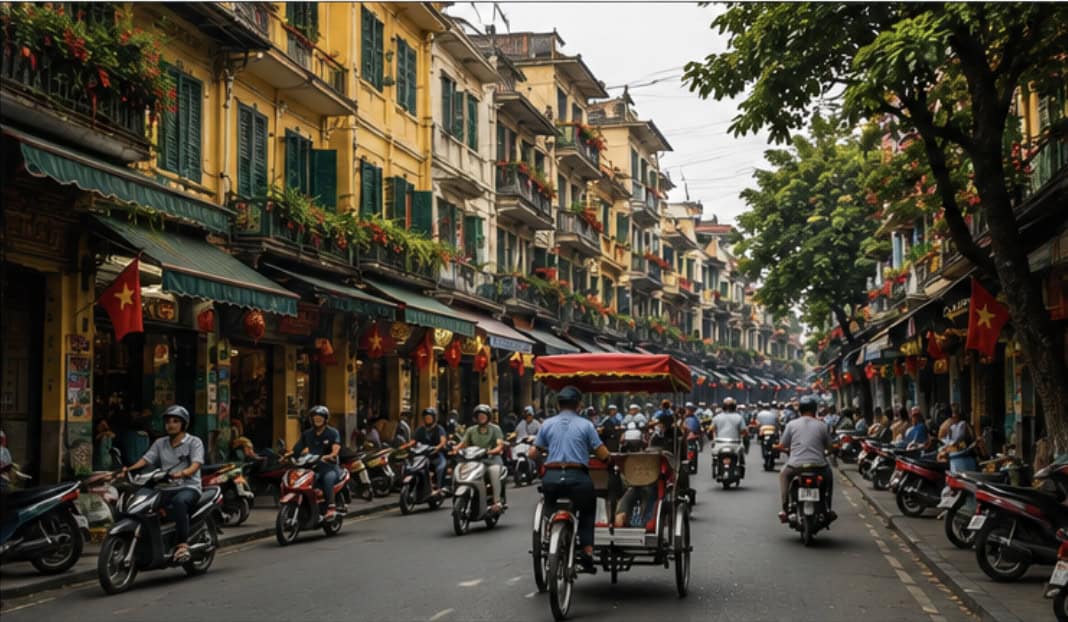
The Old Quarter is probably the first place you should explore after arriving in Hanoi.
The historic neighborhood is famous for its narrow streets, traditional architecture, small shops, cafes and street food. The area historically developed around specialized craft and trading streets, and that character is still visible today.
The best way to explore it is on foot. Do not worry about following a perfect route. Walk through several streets, stop for coffee, try local food and allow yourself time to simply observe the city.
For a more organized experience, you can also find Hanoi Old Quarter walking tours and other local experiences.
Hoan Kiem Lake

Hoan Kiem Lake is one of the most recognizable places in Hanoi and one of the easiest attractions to combine with the Old Quarter.
The lake is surrounded by walking areas and gardens. Early morning and evening can be particularly interesting because local residents come here to exercise, walk and socialize.
Ngoc Son Temple sits on a small island in the lake and is connected to the shore by the distinctive red bridge.
You do not need to plan a complicated visit. Walking around the lake and exploring the surrounding streets can easily take several hours.
You can also browse Hanoi sightseeing experiences that include Hoan Kiem Lake and the surrounding historic centre.
Temple of Literature
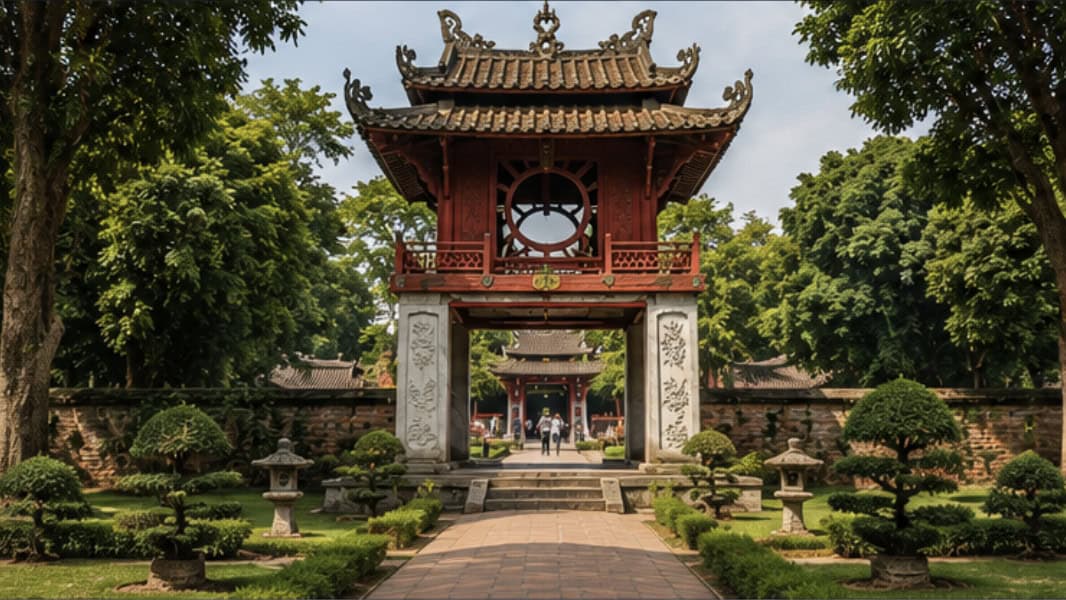
The Temple of Literature is one of Hanoi’s most important historical and cultural attractions.
It was established in 1070 and became home to Vietnam’s first university in 1076. The complex is dedicated to Confucius and contains traditional courtyards, gardens and historic buildings.
The Temple of Literature is a good choice if you want something quieter and more cultural after spending time in the busy Old Quarter.
What Else Should You See in Hanoi?
Hanoi has enough attractions to keep you busy for several days. For a first visit, prioritize the places that match your interests rather than trying to see everything.
- Ho Chi Minh Mausoleum complex for Vietnamese history.
- Imperial Citadel of Thang Long for archaeology and history.
- Hoa Lo Prison for a deeper look at the city’s history.
- Tran Quoc Pagoda for Buddhist architecture and West Lake.
- West Lake for a slower afternoon.
- Ngoc Son Temple for a compact cultural stop in the centre.
- Hanoi museums for Vietnamese history, art and culture.
- Traditional cafes for experiencing Hanoi’s famous coffee culture.
What Food Should You Try in Hanoi?
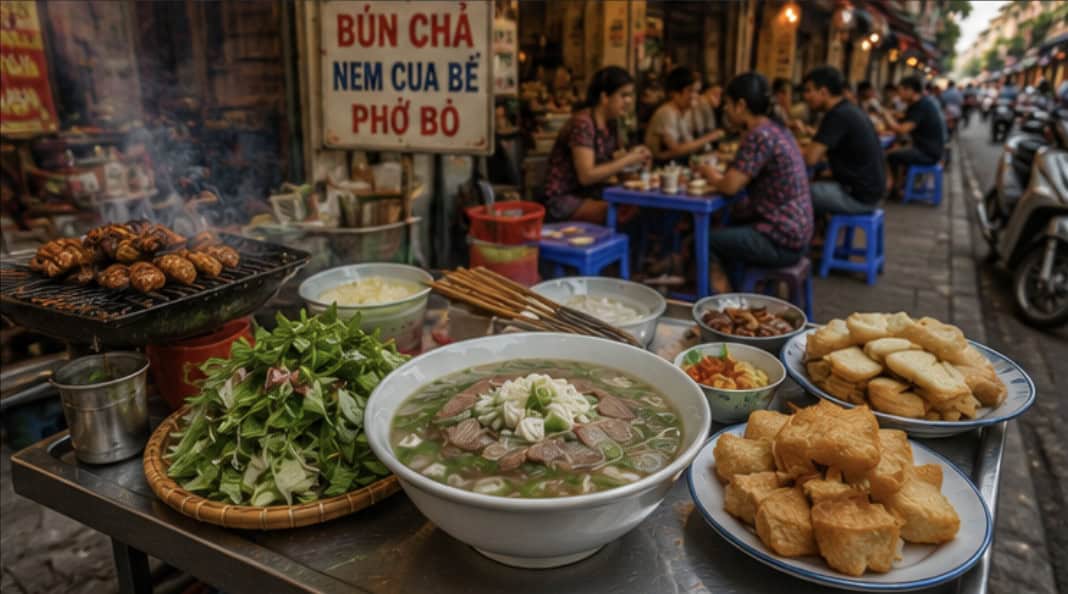
Food is one of the main reasons to spend several days in Hanoi.
Some of the dishes worth looking for include:
- Pho — Vietnamese noodle soup and one of the country’s best-known dishes.
- Bun cha — grilled pork served with noodles, herbs and dipping sauce.
- Egg coffee — one of Hanoi’s signature drinks.
- Banh mi — Vietnamese baguette sandwiches with different fillings.
- Cha ca — turmeric-marinated fish served with herbs and noodles.
- Banh cuon — delicate steamed rice rolls.
The Old Quarter is particularly convenient for trying different dishes because restaurants and street food vendors are concentrated throughout the neighborhood.
Hanoi Street Food
You do not need to spend a lot of money to eat well in Hanoi.
Small local restaurants and street-side food stalls can offer excellent meals, and eating several smaller dishes can be a better way to experience Hanoi than sitting down for one large meal.
Try different neighborhoods rather than eating at the same restaurant every day.
A simple evening can be as easy as walking through the Old Quarter, stopping for bun cha, having Vietnamese coffee and finishing with a cold drink around the nightlife streets.
How to Get Around Hanoi
For the central tourist areas, walking is often the easiest option.
When distances are longer, Grab is particularly convenient. You can use the service to request a car or motorbike and see the fare before confirming the ride.
Traditional taxis are also available, while public buses can be useful if you want to keep transportation costs low.
Our Grab Vietnam Guide explains how Grab works for tourists.
How to Get From Hanoi Airport to the City
Most international visitors arrive at Noi Bai International Airport, which is located outside central Hanoi.
Depending on traffic and your destination, the transfer can take a significant part of your arrival time, so do not schedule too many activities immediately after landing.
You can use Grab, a taxi, an airport bus or a private transfer.
If you are arriving late at night or traveling with several pieces of luggage, a pre-arranged transfer can be the simplest option.
Is Hanoi Easy to Navigate?
Yes, once you understand the basic layout.
- Hoan Kiem Lake is the central reference point for many visitors.
- Old Quarter is immediately north of the lake.
- French Quarter is south of the lake.
- West Lake is farther northwest.
- Temple of Literature is west of the central lake area.
Planning your sightseeing by neighborhood is much more efficient than crossing the entire city several times every day.
How Much Does Hanoi Cost?
Hanoi can work for almost any travel budget.
Budget travelers can stay in hostels or inexpensive hotels, eat local food and use inexpensive transportation.
Mid-range travelers can choose comfortable hotels, restaurants and private transfers without spending excessively.
Luxury travelers have access to five-star hotels, fine dining and private experiences.
Accommodation will usually make the biggest difference to your daily budget, so it is worth comparing Hanoi hotel prices before booking.
For broader Vietnam budgeting, see our Vietnam Travel Cost Guide.
When Is the Best Time to Visit Hanoi?
Hanoi has noticeable seasonal changes, so the experience depends heavily on when you visit.
Cooler periods are generally more comfortable for walking around the Old Quarter and visiting outdoor attractions. Hot and humid periods can make sightseeing more tiring, while rainy weather can bring sudden showers.
The best approach is to check the expected weather before each day and keep some flexibility in your itinerary.
Is Hanoi Safe for Tourists?
Hanoi is generally straightforward for tourists, but normal big-city precautions still apply.
Keep your belongings secure in crowded areas, be careful with phones and bags near busy roads and use reputable transportation services.
For many first-time visitors, traffic is a bigger practical challenge than anything else.
When crossing a busy street, move steadily and predictably rather than suddenly changing direction.
What Should You Do on Your First Day in Hanoi?
Your first day does not need to be packed with attractions.
- Check into your hotel.
- Walk around your neighborhood.
- Visit Hoan Kiem Lake.
- Explore part of the Old Quarter.
- Stop for Vietnamese coffee.
- Have a local dinner.
- Explore the area again after sunset if you still have energy.
This is usually a much better introduction to Hanoi than trying to visit ten attractions immediately after a long flight.
Best Day Trips From Hanoi
One of Hanoi’s biggest advantages is its position in northern Vietnam.
Ninh Binh
Ninh Binh is one of the easiest additions to a Hanoi itinerary. The region is known for limestone landscapes, boat trips and countryside scenery.
If you are interested in visiting, you can browse Ninh Binh tours from Hanoi.
Ha Long Bay
Ha Long Bay is one of Vietnam’s most famous destinations and is commonly combined with Hanoi.
Depending on your schedule, you can choose a day cruise or spend a night on a cruise.
You can compare Ha Long Bay cruises and tours before deciding which option fits your itinerary.
Sapa
Sapa is farther away and is better suited to an overnight trip rather than a rushed day trip.
If you are traveling onward from Hanoi, you can also check Vietnam domestic flights when comparing your transport options.
How to Spend 3 Days in Hanoi
Day 1: Old Hanoi
Start around Hoan Kiem Lake and explore the Old Quarter on foot.
Spend the day walking, eating, drinking Vietnamese coffee and getting familiar with the city.
Day 2: History and Culture
Visit the Temple of Literature and several of Hanoi’s major historical attractions.
Use the afternoon for museums or quieter parts of the city.
Day 3: Choose Your Experience
Use your final day for anything you missed, West Lake, additional food experiences or a day trip.
You can also use the day to slow down and simply enjoy Hanoi instead of adding another attraction.
What Should First-Time Visitors Avoid in Hanoi?
- Trying to see every attraction in two days.
- Changing hotels unnecessarily.
- Planning long outdoor sightseeing sessions during the hottest part of the day.
- Assuming every tourist-area restaurant is good.
- Carrying more cash than you need.
- Ignoring traffic when crossing roads.
- Booking every minute of your trip in advance.
Hanoi is a city where leaving some free time can actually improve the trip.
Hanoi for First-Time Visitors: Quick Summary
| Question | Best Answer |
|---|---|
| How long should I stay? | 3 days is a good starting point |
| Best area for first-time visitors? | Old Quarter and Hoan Kiem |
| Best area for luxury? | French Quarter |
| Best area for a quieter stay? | West Lake |
| Best way to explore central Hanoi? | Walking and Grab |
| Must-see area? | Old Quarter |
| Must-see landmark? | Hoan Kiem Lake |
| Important cultural attraction? | Temple of Literature |
| Best food experience? | Local Vietnamese food and street food |
| Best nearby day trips? | Ninh Binh and Ha Long Bay |
Final Advice for Your First Hanoi Trip
Hanoi is best experienced at a relatively slow pace.
Stay somewhere central, give yourself at least two or three days and organize your sightseeing by neighborhood rather than constantly crossing the city.
Spend time walking through the Old Quarter, sit beside Hoan Kiem Lake, visit the Temple of Literature and try several different local dishes.
Once your Hanoi stay is planned, you can compare Hanoi hotels, check flights and find Hanoi tours and experiences for the next part of your Vietnam trip.
Frequently Asked Questions
How many days are enough for Hanoi?
Three days is a good amount of time for a first visit. Two days covers the major highlights, while four or five days gives you more time for day trips and a slower pace.
Where should first-time visitors stay in Hanoi?
The Old Quarter and Hoan Kiem area are usually the easiest choices because they are close to many attractions, restaurants, cafes and nightlife areas.
Is Hanoi walkable?
Yes, particularly around Hoan Kiem and the Old Quarter. For longer distances, Grab is usually more convenient.
What are the must-see places in Hanoi?
For a first visit, prioritize the Old Quarter, Hoan Kiem Lake, Ngoc Son Temple and the Temple of Literature, then add museums and other attractions according to your interests.
Is Hanoi good for first-time visitors to Vietnam?
Yes. Hanoi offers a strong combination of history, culture, food and everyday Vietnamese life, while also providing convenient access to northern Vietnam.
Can I visit Ha Long Bay from Hanoi?
Yes. Ha Long Bay is commonly combined with Hanoi as part of a northern Vietnam itinerary. You can choose between day trips and overnight cruises depending on how much time you have.
Can I visit Ninh Binh from Hanoi?
Yes. Ninh Binh is one of the most practical excursions to add to a Hanoi itinerary and can work particularly well as a day trip.
Is Hanoi expensive for tourists?
Hanoi can be very affordable, particularly if you choose local restaurants, budget accommodation and inexpensive transportation. The city also has plenty of luxury hotels and high-end experiences.
Planning a wider Southeast Asia trip?
Cambodia With Me — practical Cambodia travel guides
Siam With Me — Thailand travel guides
Indonesia With Me — Indonesia travel guides
Singapore With Me — Singapore travel guides
Build your Vietnam route — free.