Ha Giang can be challenging to plan for first-time visitors.
Ha Giang is not the easiest destination in Vietnam.
It is not a place you visit simply because you have a spare afternoon. The roads are mountainous, distances are deceptive, and the best parts of the province are spread across valleys, passes and small towns.
But that is also exactly why Ha Giang feels different.
This is Vietnam at its most dramatic: enormous limestone mountains, winding roads, remote villages, rice terraces, local markets and some of the country’s most spectacular mountain scenery.
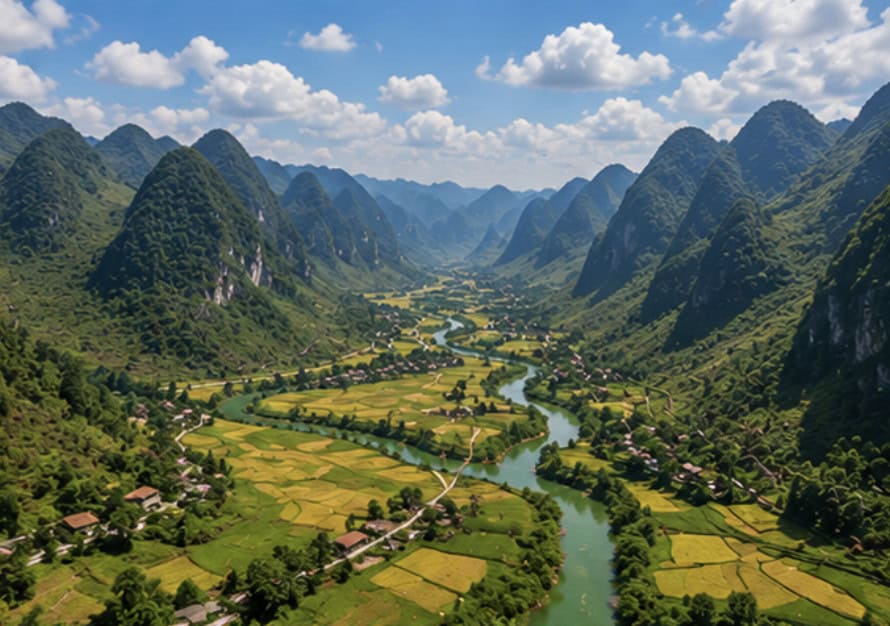
For most first-time visitors, the main reason to come is the Ha Giang Loop — a multi-day road trip through the mountains of northern Vietnam.
You can ride it yourself if you are properly licensed and experienced, or travel with a local driver as an Easy Rider. For many visitors, the second option is the more sensible choice.
Is Ha Giang Worth Visiting?
If you like mountains, road trips, dramatic landscapes and places that feel very different from Vietnam’s major cities, Ha Giang is absolutely worth considering.
If you dislike long journeys, winding mountain roads or several days without the convenience of a major tourist city, it may not be the right destination for you.
Ha Giang is not really about checking off attractions.
The road is the attraction.
You stop because the valley suddenly opens in front of you. You stop because a mountain pass looks impossible. You stop because there is a small village below the road and you want to see how people live there.
That is the experience.
What Is the Ha Giang Loop?
The Ha Giang Loop is a multi-day route through the mountainous north of Vietnam.
The classic journey connects Ha Giang, Yen Minh, Dong Van, Meo Vac and Du Gia before returning to Ha Giang.
Most travelers allow around three or four days for the classic route, although adding extra time gives you more freedom to stop, walk and explore.
The most famous section is Ma Pi Leng Pass, where the road climbs high above the Nho Que River.
But the loop is much more than one viewpoint.
How Many Days Do You Need in Ha Giang?
Four days is the best starting point for a first visit.
- 2 days: possible, but rushed.
- 3 days: good for travelers with limited time.
- 4 days: the classic choice for a first Loop.
- 5+ days: better if you want more villages, walking and slower travel.
Do not choose the shortest itinerary simply because it looks efficient on a map.
Mountain roads take longer than they appear, and the whole point of Ha Giang is being able to stop.
Should You Ride a Motorbike Yourself?
This is one of the most important decisions before your trip.
Ha Giang is a serious mountain riding environment. There are steep climbs, tight corners, changing weather and roads where concentration matters much more than speed, which makes a proper, well-fitted helmet non-negotiable — here’s what to look for.
If you are properly licensed, experienced on motorcycles and comfortable riding in mountainous conditions, independent travel can be incredibly rewarding.
If you are not, do not treat the Ha Giang Loop as a place to learn.
A local driver allows you to concentrate on the landscape instead of navigation and road conditions.
Before renting anything, read our Vietnam Motorbike Rental & License Guide.
Easy Rider or Self-Ride?
| Option | Best For |
|---|---|
| Easy Rider | Travellers who want to enjoy the scenery without riding themselves |
| Self-Ride | Experienced and legally licensed riders |
| Private Car | Families, groups and travellers who do not want motorcycles |
| Group Tour | Solo travellers who want a social experience and organised logistics |
Ha Giang Loop tours are available in several formats, from group motorcycle trips to private experiences.
What Makes Ha Giang So Special?
The landscape is the obvious answer.
But the deeper reason is the combination of landscape and culture.
The province is home to several ethnic communities, including Hmong, Tay and Dao communities, and traveling through the mountains means passing villages, farms and traditional homes along the route.
You are not simply traveling through an enormous natural park.
People actually live here.
1. Drive Through Ma Pi Leng Pass
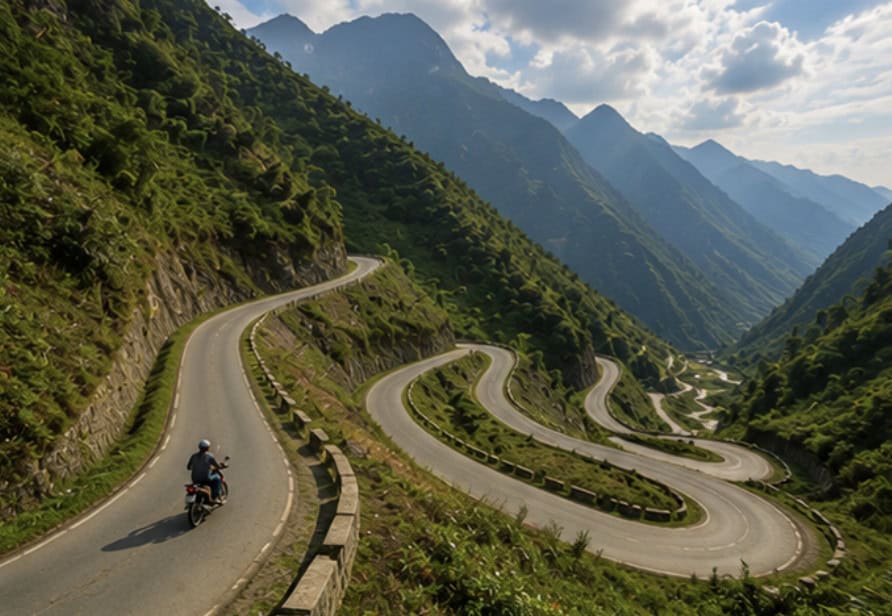
Ma Pi Leng Pass is the moment many travelers remember most from the entire Loop.
The road cuts across enormous limestone mountains with the Nho Que River far below.
Do not rush this section.
Stop at viewpoints, walk a little when it is safe to do so.
And give yourself time to actually look at the landscape instead of spending the entire pass trying to get the perfect photograph.
Vietnam Tourism describes Ma Pi Leng as the defining stretch of the route, particularly because of the dramatic relationship between the mountain road and Nho Que River.
2. See the Nho Que River
The Nho Que River runs through one of the most spectacular sections of the Ha Giang landscape.
Depending on conditions and your itinerary, you may be able to combine the mountain viewpoints with a boat trip through the canyon.
It is not something you need to force into the trip, but when conditions are good, seeing the cliffs from the river gives you a completely different perspective.
3. Stop at Dong Van
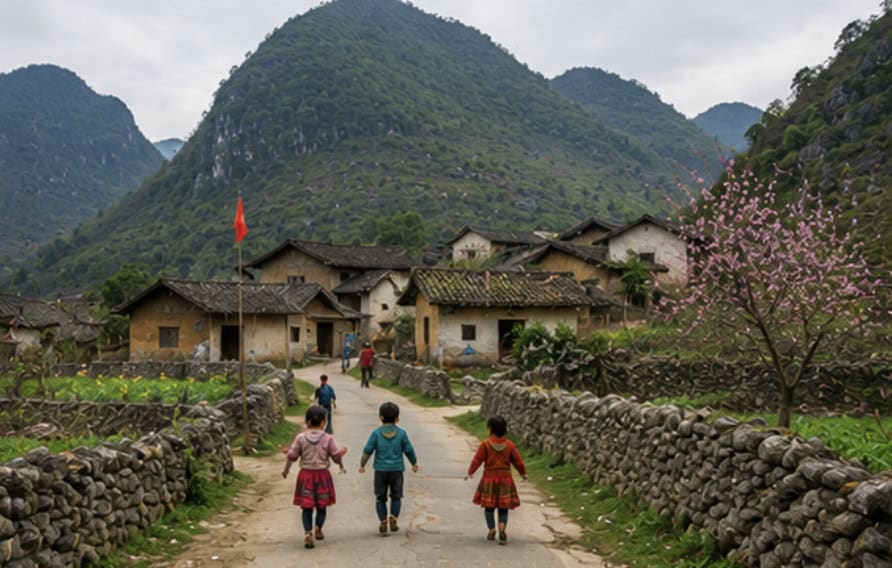
Dong Van is one of the most important stops on the Loop.
After hours on mountain roads, arriving in a small town with cafes, restaurants and an old quarter feels almost surreal.
Stay overnight rather than treating Dong Van as a quick lunch stop.
If your route coincides with the Sunday market, that can be an especially interesting time to be there.
4. Explore Dong Van Old Quarter
Dong Van Old Quarter is compact, so you do not need a complicated sightseeing plan.
Walk around in the evening, have dinner and find a café for the following morning.
After a day on the road, this slower part of the itinerary is welcome.
5. Visit the Hmong King’s Palace
Hmong King’s Palace near Sa Phin is one of the most interesting historical stops on the route.
The complex gives you a break from the endless mountain scenery and adds some context to the region’s history.
It is an easy stop to combine with the journey towards Dong Van.
6. Reach Lung Cu
Lung Cu Flag Tower is one of the best-known landmarks in northern Vietnam.
It sits close to the northern border and is often included in longer Ha Giang itineraries.
Whether it deserves the detour depends on how much time you have.
If your priority is simply experiencing the Loop at a relaxed pace, do not sacrifice half a day just to say that you have visited every famous pin on the map.
7. Drive Through Quan Ba
Quan Ba and Heaven’s Gate are among the first major landscape highlights when traveling north from Ha Giang.
This is where the route starts to feel properly mountainous.
The road climbs, the valleys open up and the landscape changes dramatically.
It is an excellent introduction to what is coming later on the Loop.
8. See the Rice Terraces
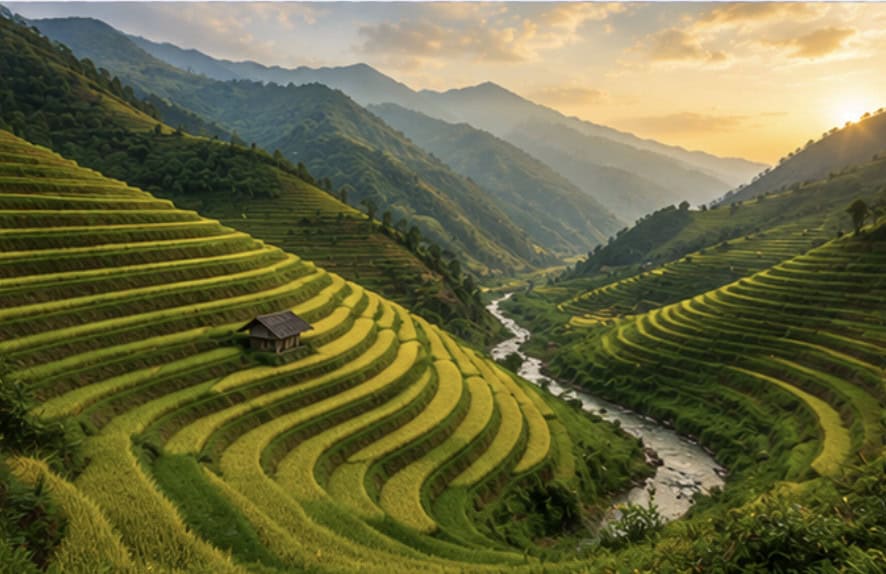
Rice terraces appear throughout the northern mountain landscape.
Their appearance changes with the agricultural season, so do not expect the same colors throughout the year.
Sometimes the terraces are filled with water and reflect the sky. At other times they turn green or golden.
This is another reason not to plan Ha Giang entirely around photographs you have seen online.
9. Visit Local Villages
Some of the best moments on the Loop happen when there is no famous attraction at all.
A Ha Giang village experience can give you time to see traditional houses, farms and everyday life away from the main road.
If you stay in a homestay, take the opportunity to eat with your hosts rather than treating the accommodation simply as a cheap hotel.
10. Stay in a Ha Giang Homestay
A Ha Giang homestay can be one of the most memorable parts of the trip.
You do not get the same level of comfort as a large city hotel, but you gain something more important: proximity to local communities and a completely different rhythm of travel.
For the first night in Ha Giang City, you can also compare Ha Giang hotels.
11. Explore Du Gia
Du Gia is a popular stop on the southern part of the Loop.
Compared with the huge mountain viewpoints around Ma Pi Leng, the atmosphere here is more relaxed.
This is a good place to slow down, stay in a homestay and experience the countryside without constantly checking how many kilometers remain.
12. See Du Gia Waterfall
Du Gia Waterfall is an easy addition to a route through the area when conditions are suitable.
It is particularly welcome after several hours on the motorcycle.
Bring swimwear if you are traveling in a suitable season and local conditions allow swimming.
The Classic 4-Day Ha Giang Loop
Day 1 — Ha Giang to Yen Minh
Leave Ha Giang and begin climbing into the mountains.
Quan Ba, Heaven’s Gate and the surrounding valleys are the major highlights.
Stay around Yen Minh.
Day 2 — Yen Minh to Dong Van
Continue through the limestone mountains towards Dong Van.
Depending on your route, add the Hmong King’s Palace and Lung Cu.
Spend the evening in Dong Van.
Day 3 — Dong Van to Meo Vac and Du Gia
This is the big mountain day.
Ride through Ma Pi Leng Pass, take in the Nho Que River scenery and continue towards Meo Vac before heading south.
Stay around Du Gia.
Day 4 — Du Gia to Ha Giang
Take a slower morning, visit the waterfall if conditions allow and then return towards Ha Giang.
Try to arrive with enough time for your onward transport rather than planning a late arrival and hoping everything goes perfectly.
Can You Do Ha Giang Without a Motorbike?
Yes.
You do not have to drive yourself to experience the Loop.
An Easy Rider is one of the most practical options for visitors who want the motorcycle experience without taking responsibility for riding the mountain roads themselves.
Ha Giang Easy Rider tours can also make the trip easier for solo travelers who want an organized itinerary.
Private cars are another option for families and travelers who prefer four wheels.
How to Get to Ha Giang
Most visitors travel to Ha Giang by road from Hanoi.
The journey takes several hours, so treat the transfer as part of the trip rather than assuming you can arrive in the morning and immediately complete a full day of riding.
Hanoi to Ha Giang transfers can be arranged in advance.
If you are building a larger northern Vietnam itinerary, combine Ha Giang with Hanoi, Sapa or Ninh Binh rather than trying to squeeze it into a single short weekend.
Our Vietnam Transport Guide covers the broader transport system.
Where to Stay Before the Loop
Most travelers spend at least one night in Ha Giang before or after the Loop.
You do not need an expensive hotel. The important things are a convenient location, somewhere to leave luggage if your tour operator offers storage, and an early start.
Compare Ha Giang hotels before your arrival.
What Should You Pack for Ha Giang?
- Small backpack for the Loop.
- Light layers.
- Warm layer for mountain mornings.
- Comfortable shoes.
- Rain protection.
- Sunscreen.
- Gloves if riding.
- Phone power bank.
- Small personal first-aid kit.
Do not take your entire suitcase onto the Loop.
Travel light and leave the rest of your luggage at your hotel or with your tour operator when that service is available.
For the wider Vietnam trip, use our Vietnam Packing List.
What Is the Weather Like in Ha Giang?
Weather can change quickly in the mountains.
A clear morning can become cloudy or wet, and temperatures can feel very different from those in Hanoi.
That is why layers and rain protection matter even if the forecast looks comfortable.
For planning the wider trip, our Vietnam Weather by Month guide is a useful starting point.
Is Ha Giang Safe?
Ha Giang itself is not a destination where most visitors need to worry about ordinary tourist crime.
The bigger issue is road safety.
Mountain riding requires concentration, appropriate speed and respect for weather and road conditions.
If you are not an experienced rider, hiring a local driver is the safer choice.
Vietnam Tourism also specifically recommends traveling with a local driver rather than riding alone on the Loop.
For broader travel advice, see our Is Vietnam Safe for Tourists? guide.
Ha Giang for Couples
Ha Giang works surprisingly well for couples who enjoy adventure.
Sharing a few days on the road, staying in mountain homestays and stopping at viewpoints creates a completely different kind of trip from a conventional resort holiday.
If you want the experience without the responsibility of riding, book a private Ha Giang Easy Rider experience.
Ha Giang for Solo Travelers
Solo travelers have several good options.
A group Loop gives you transport, accommodation and other travelers to share the experience with.
An Easy Rider trip is another strong option if you want the road experience without riding alone.
Compare Ha Giang group tours before choosing the route.
Ha Giang for Families
Families can visit Ha Giang, but the Loop requires more thought than a normal city itinerary.
Young children may find several days on mountain roads tiring.
For families, a private car or carefully selected private tour may make more sense than a motorcycle group.
Private Ha Giang tours offer more control over the pace and stops.
Ha Giang vs Sapa
| Destination | Best For |
|---|---|
| Ha Giang | Mountain road trips, dramatic scenery and remote villages |
| Sapa | Mountain scenery, trekking, Fansipan and easier access |
Sapa is easier. Ha Giang is more of an adventure — see the full comparison
If you have enough time, there is no reason to choose only one.
Start with our Sapa for First-Time Visitors guide if you are deciding how to fit both into your northern Vietnam itinerary.
Ha Giang vs Ninh Binh
These destinations are almost opposites.
Ninh Binh gives you limestone scenery with relatively easy access, boat trips and cycling.
Ha Giang takes the same idea of dramatic limestone landscapes and puts you much deeper into the mountains.
Our Ninh Binh for First-Time Visitors guide is useful if you are comparing the two.
What Not to Do in Ha Giang
- Do not try to complete the Loop in an absurdly short time.
- Do not ride beyond your experience level.
- Do not assume the weather will remain perfect.
- Do not spend the entire trip chasing photographs.
- Do not pack a huge suitcase for a motorcycle journey.
- Do not treat local villages as photo sets.
- Do not ignore your driver’s advice about road conditions.
Ha Giang First-Time Visitor Checklist
- Allow at least three days for the Loop.
- Four days is better for a first visit.
- Decide between self-riding, Easy Rider, private car or group tour.
- Check your legal requirements before renting a motorbike.
- Book accommodation or a tour in advance during busy periods.
- Pack light.
- Bring warm and rainproof layers.
- Visit Dong Van.
- Ride or travel through Ma Pi Leng Pass.
- See the Nho Que River.
- Spend time in at least one local village.
- Leave room in the itinerary for unexpected stops.
Final Thoughts
Ha Giang is one of the few destinations in Vietnam where the journey genuinely matters more than the destination.
You will remember the road disappearing around a mountain, the valley opening below you, a small village beside the route or the first view of the Nho Que River.
You may not remember every temple or viewpoint you stopped at.
That is fine.
For a first visit, give Ha Giang at least three days, choose your riding option carefully and resist the temptation to turn the Loop into a race.
If you want the experience without having to organize every detail yourself, compare Ha Giang Loop tours, Ha Giang accommodation and Easy Rider experiences before you go.
Frequently Asked Questions
How many days do I need for Ha Giang?
Three days is possible, but four days is a better first-time itinerary because it gives you more time for stops and reduces the pressure to ride long distances every day.
Do I need a motorbike to visit Ha Giang?
No. You can travel with an Easy Rider, private car or organized tour.
Is the Ha Giang Loop difficult?
The route is demanding because of mountain roads, weather and long riding days. Your difficulty level depends heavily on your riding experience and the itinerary you choose.
Is Ha Giang suitable for first-time visitors to Vietnam?
Yes, but it should not be your first experience riding a motorcycle in Vietnam. Travelers without appropriate riding experience can enjoy the region with a local driver.
What is the most famous place in Ha Giang?
Ma Pi Leng Pass is probably the most famous section of the Ha Giang Loop, although the overall experience includes many other mountain roads, valleys and villages.
Can I visit Ha Giang without riding?
Yes. Easy Rider and private car tours are the main alternatives.
What should I bring on the Ha Giang Loop?
Pack light, with comfortable clothing, warm layers, rain protection, good shoes, sunscreen and a power bank.
Is Ha Giang safe?
For most travelers, the main safety concern is road conditions and riding ability rather than ordinary tourist crime. If you are not an experienced rider, use a local driver.

More from our travel guide network
Build your Vietnam route — free.