Quick answer: Hanoi Train Street is one of the city’s most unusual attractions. An active railway passes through a narrow residential area with houses and cafés near the tracks. Access is restricted and can change; do not expect to walk onto the railway whenever you want. The safest approach is to visit through an operating café. Follow local instructions and stay clear of the tracks when a train approaches.
Train Street is one of those places that looks almost impossible until you see it yourself. Residents live directly beside an active railway line, and several times a day the normal rhythm of the neighborhood changes as a train passes through.
It is worth visiting, but it is important to remember that this is not a theme park. People live here, trains still operate here and railway safety comes first.
What Is Hanoi Train Street?
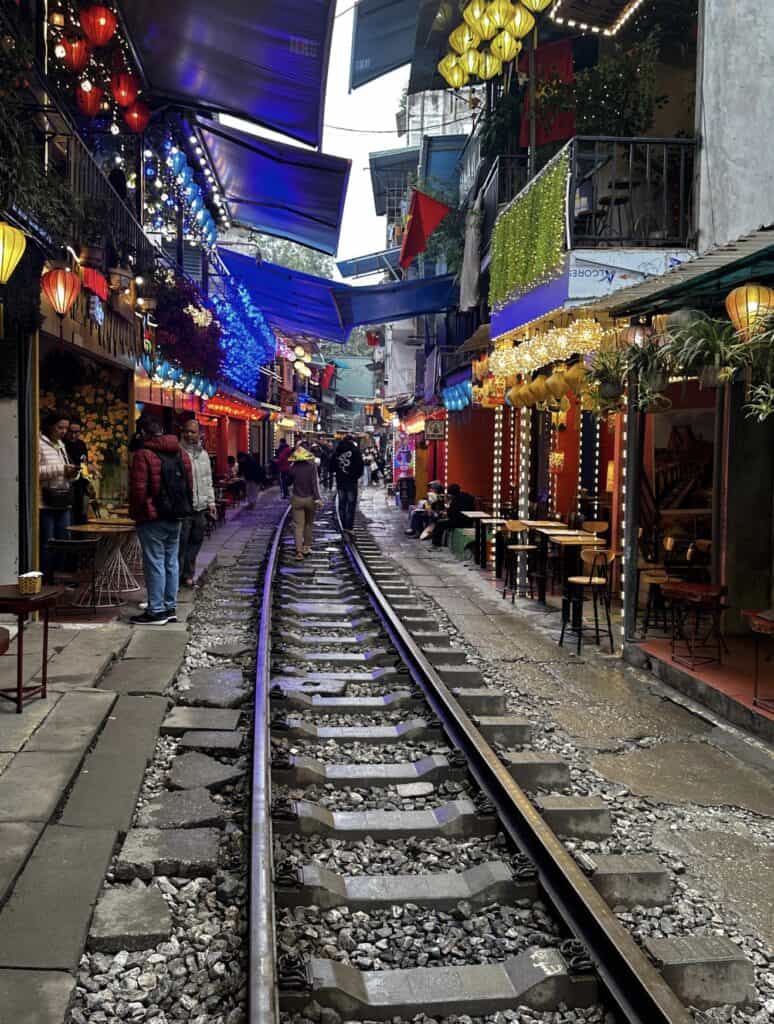
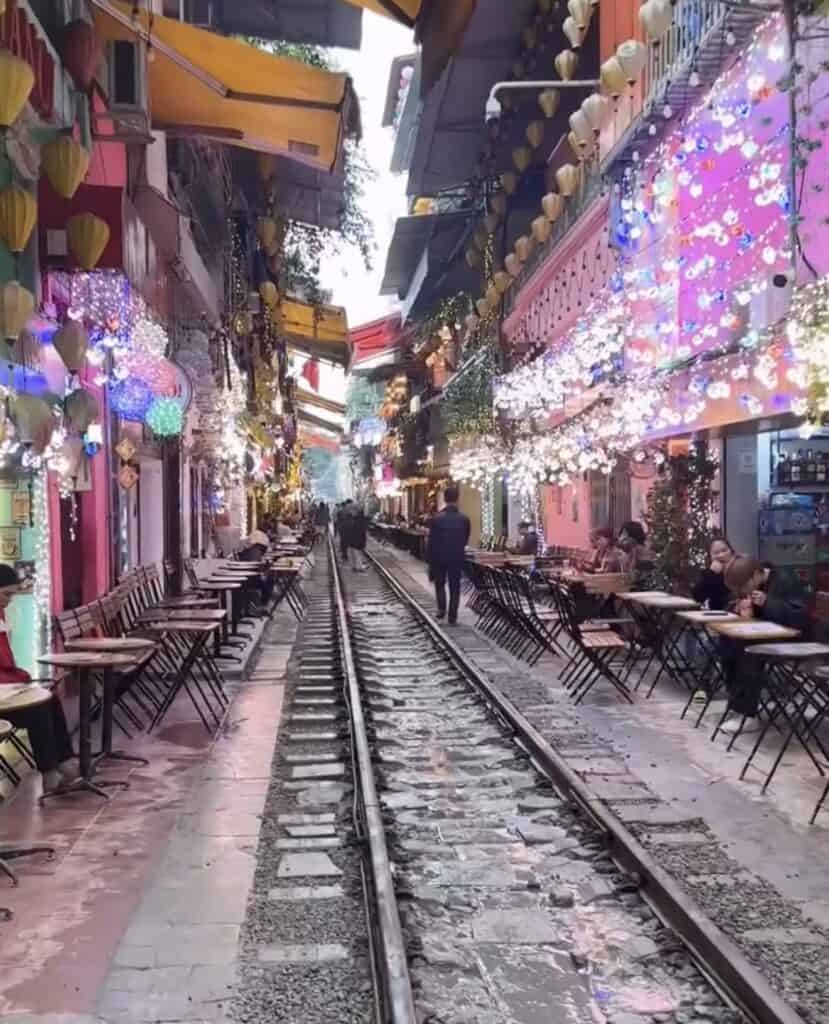
Hanoi Train Street is a narrow railway corridor running through the city, particularly around the Phung Hung and Tran Phu area of the Old Quarter.
The railway was built during the French colonial period and became famous internationally much later, when photographs and videos showing trains passing extremely close to homes began spreading across social media.
What makes the place unusual is that the railway is part of an ordinary residential neighborhood. Houses, cafés, doors and everyday life are located immediately beside the tracks.
Generally, for most of the day, the area can look surprisingly normal.
However, when a train is approaching, everything changes.
Afterward, chairs and tables are moved as residents clear the area beside the railway and everyone returns to safety.
Is Hanoi Train Street Open?
This is where things get confusing.
Hanoi Train Street has been subject to access restrictions for years because of safety concerns. The rules and enforcement can also vary between sections of the railway and change over time.
That means you should not rely on old travel videos showing tourists freely walking along the tracks.
In practice, visitors may still be able to experience Train Street from cafés operating in the area, but access is not guaranteed. Entry points can be controlled, and authorities may restrict access when necessary.
Do not plan your visit around standing directly on the railway tracks for photographs. The railway is active, and the safest way to experience Train Street is from a place where local staff are controlling the viewing area.
Where Is Hanoi Train Street?
The most famous section is around the Phung Hung and Tran Phu area, close to Hanoi Railway Station and the western side of the Old Quarter.
There are several points where visitors may encounter the railway, but the exact access situation can change.
If you search for Hanoi Train Street on your map, check the location carefully before walking there. The railway extends through different parts of Hanoi, and not every section offers the famous café experience shown in photographs.
The popular Old Quarter section is convenient to combine with other central attractions, which is one reason it remains so popular with first-time visitors.
How to Visit Hanoi Train Street
The simplest approach is to go to the Train Street area and see what access is available on the day.
If an entrance is controlled, follow the instructions of local staff or authorities rather than trying to find another way onto the tracks.
When cafés are operating and accepting visitors, you can order a drink and watch the railway from their designated seating area.
Do not assume that because another traveller entered the tracks in a video you saw online, you can do the same today. Conditions and enforcement can change.
What Happens When a Train Arrives?
This is the part that makes Train Street famous.
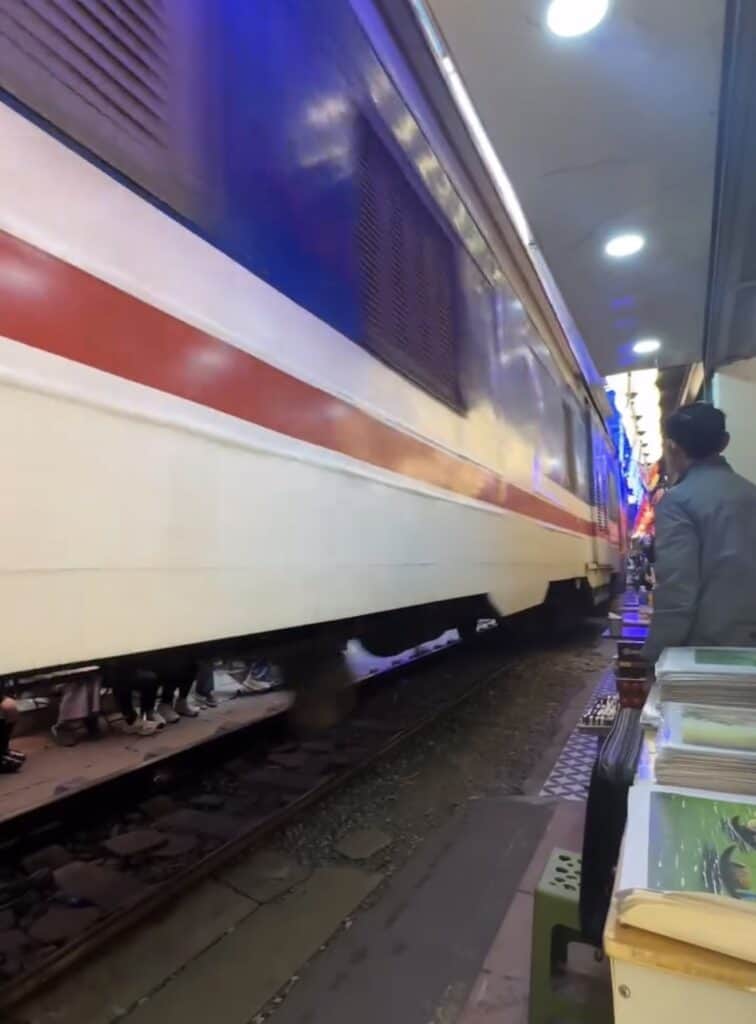
When a train is approaching, café staff and residents begin clearing the area around the railway. Tables, chairs and other objects are moved away from the tracks, and visitors are told where to stand.
The train then passes through the narrow corridor at surprisingly close range.
Once it has passed, the area quickly returns to normal. Tables come back out, residents continue with their daily activities and the street becomes a residential neighborhood again.
The entire process can be over very quickly, which is why it is important to listen to local staff rather than trying to get the perfect photograph.
Can You Walk on the Tracks?
You should not treat the railway as a public walking path.
Even if you see photographs of tourists standing directly between the rails, that does not mean it is safe or permitted when you visit.
The railway remains active. A train can approach much faster and with much less room than you might expect, especially if you are concentrating on taking photographs.
If you are visiting Train Street, stay in the area designated by local staff and move away from the tracks immediately when instructed.
When Do Trains Pass Hanoi Train Street?
There is no single timetable that you should treat as guaranteed for a Train Street visit.
Train movements can change because of railway operations, delays and changes to the daily service. Online schedules can also become outdated quickly.
The best approach is to ask the café staff about the next expected train after you arrive.
This is particularly important if you are traveling specifically to photograph the train. Do not build your entire Hanoi itinerary around an exact online time and assume the train will arrive to the minute.
If you want to see the train, allow some flexibility in your schedule.
What Is the Best Time to Visit?
There are two things to consider: the train and the crowds.
The most popular viewing periods can become busy, particularly around the times when visitors expect a train to pass. Weekdays can be more comfortable than weekends if you want a less crowded experience.
Late afternoon and early evening can also provide attractive light for photography, but these periods may be busier.
If your priority is simply seeing Train Street rather than getting the most famous photograph possible, choosing a quieter period can make the experience much more enjoyable.
How Much Does Hanoi Train Street Cost?
There is normally no separate attraction ticket for Train Street.
If you enter through a café, you will generally be expected to order something. Prices depend on the café and what you order.
Be careful with anyone claiming that you need to pay a large compulsory entrance fee just to see the railway. If you are unsure about the price of a drink or any additional charge, ask before ordering.
Is Hanoi Train Street Safe?
Train Street requires more caution than a normal Hanoi attraction.
The most important rule is simple: never underestimate the train.
When a train approaches:
- Follow the instructions of café staff or local authorities.
- Move completely away from the railway.
- Do not stand on the tracks for photographs.
- Do not lean toward the train.
- Keep children close and away from the railway.
- Do not use a tripod or equipment that could obstruct the area.
- Never attempt to touch the train.
Remember that this is an active railway in a residential neighborhood, not a controlled tourist attraction.
Can You Visit Train Street With Children?
Families can visit the area, but parents should be particularly careful.
The railway is extremely close to buildings, and the space becomes much more restricted when a train approaches.
If you are traveling with young children, keep them beside you at all times and follow the instructions of local staff.
Do not allow children to run along the tracks or move toward the railway for photographs.
Train Street Photography Tips
Train Street is obviously very photogenic, but getting a photograph should never take priority over safety.
A wide-angle lens or the standard camera on your phone is usually enough to capture the narrow perspective of the railway and surrounding buildings.
The best photographs often come from showing the entire environment rather than trying to get extremely close to the train.
And remember that the neighborhood is someone’s home. Avoid photographing residents in an intrusive way, especially when they are simply going about their daily lives.
How Long Do You Need at Train Street?
You do not need an entire day.
For most visitors, around one hour is enough to see the area, have a drink and, if the timing works, watch a train pass.
If you are particularly interested in photography or want to explore the surrounding Old Quarter as well, allow more time.
Train Street is also easy to combine with a wider walking route through the Old Quarter.
For that, see our Hanoi Old Quarter guide and plan the area as part of a larger day rather than traveling across the city just for a few minutes beside the railway.
What Can You See Near Train Street?
Train Street is located close to several other central Hanoi attractions, so it makes sense to combine it with other places rather than making a separate trip.
You can explore the Old Quarter, continue toward Hoan Kiem Lake or visit Hanoi Railway Station.
If you are staying in the Old Quarter, Train Street can easily be included in a walking day around central Hanoi.
For accommodation in the area, see our Best Old Quarter Hotels in Hanoi.
If you are still choosing accommodation across the city, our Best Hotels in Hanoi guide covers more options.
Is Hanoi Train Street Worth Visiting?
Yes, provided you approach it with realistic expectations.
Train Street is not simply a place where you sit on railway tracks and wait for a train to pass. It is a functioning residential neighborhood with an active railway, and the tourism surrounding it has created legitimate safety and access problems.
The experience is still fascinating because of the contrast: ordinary Hanoi life continues right beside railway tracks that are still used by trains.
If you respect the restrictions, listen to local staff and keep away from the tracks when a train approaches, Train Street can be one of the most memorable stops on a Hanoi trip.
FAQ
Is Hanoi Train Street open in 2026?
Access is restricted and can change depending on the section and current enforcement. Visitors should not assume that they can freely enter the railway area. Check the situation locally when you arrive.
Can tourists walk on Hanoi Train Street?
You should not walk or stand on the active railway tracks. If access to the area is available, follow local instructions and remain in a designated safe area.
Do you have to pay to visit Hanoi Train Street?
There is generally no separate attraction ticket. If you visit through a café, you will normally order a drink or other item.
How long does a visit to Train Street take?
About one hour is normally enough for a short visit, although you may want longer if you are combining Train Street with an Old Quarter walking route.
Is Hanoi Train Street worth visiting?
Yes. It is one of Hanoi’s most unusual experiences and gives you a glimpse of a residential neighborhood built around an active railway. Just remember that safety and local restrictions come first.

More from our travel guide network
Build your Vietnam route — free.