Imperial City Hue, also known as Hue Citadel or Đại Nội, is the most important historical attraction in Hue. Historically, it was the political and ceremonial center of the Nguyen Dynasty, and it contains massive defensive walls, royal gates, palaces, temples, gardens and the remains of the Forbidden Purple City.
For first-time visitors, this is the one historical site in Hue that should be near the top of the itinerary. You can walk through the same ceremonial spaces used by Vietnam’s emperors, see the throne hall and explore the surviving royal architecture.
The site is large, so it is worth planning your visit rather than simply arriving, walking through the main gate and leaving an hour later. This guide explains what to see, how much time to allow, ticket prices, opening hours and the easiest way to combine the Imperial City with other Hue attractions.
What Is the Imperial City of Hue?
The Imperial City is the royal heart of the Hue Citadel, the former imperial capital of Vietnam.
The Nguyen Dynasty established Hue as the country’s imperial capital in the early 19th century. Construction of the citadel began under Emperor Gia Long in 1804, and the complex continued to develop under subsequent emperors — most notably under Emperor Minh Mang (reigned 1820–1841), whose reign saw much of the Imperial City’s layout formalized, including rebuilding work on Thai Hoa Palace and the organization of the Forbidden Purple City.
The wider fortified area contains several layers of space. The outer Citadel protected the capital, while the Imperial City formed the main royal enclosure inside it. At its center was the Forbidden Purple City, the private area reserved for the emperor, members of the royal family and palace personnel.
Thirteen Nguyen emperors ruled from Hue until the end of the dynasty in 1945.
The wider Complex of Hue Monuments was inscribed as a UNESCO World Heritage Site in 1993, recognizing the importance of the former imperial capital and its surviving architecture and landscape.
Imperial City Hue: Quick Facts
| Information | Details |
|---|---|
| Location | Central Hue, on the northern side of the Perfume River |
| Adult ticket | 200,000 VND |
| Children aged 7–12 | 40,000 VND |
| Time needed | About 2–4 hours |
| Best entrance | Ngo Mon Gate |
| Best for | History, architecture, photography and first-time visitors to Hue |
| UNESCO status | Part of the Complex of Hue Monuments |
Ticket prices and operating arrangements can change, so it is sensible to check the current information before your visit if you are planning your day around several paid monuments.
Imperial City Hue Opening Hours
The Imperial City generally opens daily, with hours varying by season.
| Season | Typical opening hours |
|---|---|
| Warmer season | Approximately 6:30 AM–5:30 PM |
| Cooler season | Approximately 7:00 AM–5:00 PM |
For the most accurate opening information on the day of your visit, check the official Hue monument ticketing system before leaving your hotel. Electronic tickets for sites within the Complex of Hue Monuments can also be purchased through the official system.
How Much Is the Imperial City Hue Ticket?
The standard adult entrance ticket for the Imperial City is 200,000 VND. Children aged 7–12 pay 40,000 VND, according to current published ticket information.
The Imperial City ticket covers the main royal complex. Other major monuments around Hue, including the royal tombs, normally require separate admission unless you purchase a combination ticket.
If you are planning to visit several monuments during the same trip, compare the individual prices with the available combination tickets. A combination ticket can make more sense if you already know that you want to visit the Imperial City together with several royal tombs.
For a detailed look at the three most important royal tombs, see our Tu Duc, Khai Dinh & Minh Mang Tombs guide.
What to See Inside Hue Imperial City
Many could spend several hours exploring the Imperial City, Imperial City Hue, but some areas deserve particular attention.
Ngo Mon Gate
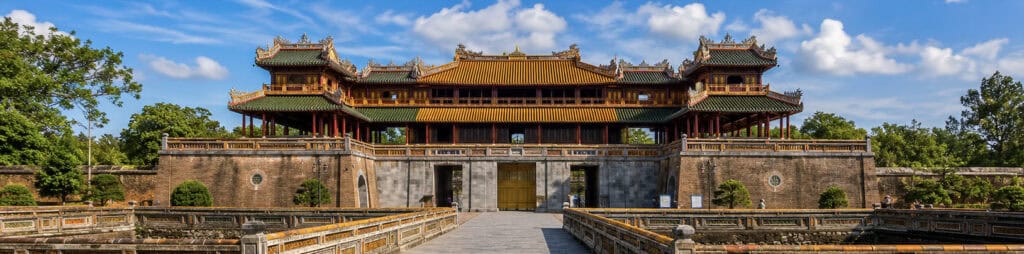
Ngo Mon Gate, or the Noon Gate, is the iconic southern entrance to the Imperial City and one of the most recognizable structures in Hue.
Just outside Ngo Mon Gate stands the Flag Tower (Cot Co), a tall flagpole platform built in the early 19th century that remains one of the most visible landmarks when approaching the Imperial City from the Perfume River side.
The gate was designed as a monumental ceremonial entrance rather than simply a defensive doorway. Its upper pavilion was used for important royal ceremonies and imperial announcements.
This is also the point where many visitors first understand the scale of the complex. Take a few minutes to look back at the gate before moving deeper into the Imperial City.
Thai Hoa Palace
Thai Hoa Palace, or the Palace of Supreme Harmony, was one of the most important ceremonial buildings in the imperial capital.
This was where major royal ceremonies took place, including events connected with the emperor and the court. The architecture is characterized by traditional Vietnamese design, elaborate decoration and large wooden columns.
The palace is one of the essential stops if you want to understand how the Imperial City functioned as a center of political power rather than simply a collection of historic buildings.
The Forbidden Purple City
Behind the main ceremonial areas was the Forbidden Purple City, the most private part of the imperial complex.
This was the emperor’s inner domain and included residences, working areas and buildings associated with the royal household. Much of the original complex was damaged or destroyed during periods of conflict, but restoration work has brought several important areas back to life.
Do not judge the Forbidden Purple City only by what remains today. The empty spaces and surviving foundations help show just how extensive the royal compound once was.
Nine Dynastic Urns
The Nine Dynastic Urns are among the most impressive surviving objects inside the Imperial City.
The enormous bronze urns represent the Nguyen emperors and dynasty and stand in front of the ancestral temple complex. Their scale, decoration and symbolism make them one of the easiest places to appreciate the ceremonial character of imperial Hue.
Royal Temples and Ancestral Buildings
The Imperial City contains several temples and ancestral buildings connected with the Nguyen royal family.
These areas are generally quieter than the main ceremonial route and are worth exploring if you have enough time. They also provide a better impression of the religious and family traditions surrounding the imperial court.
Royal Gardens and Restored Buildings
Not every worthwhile part of the Imperial City is a palace.
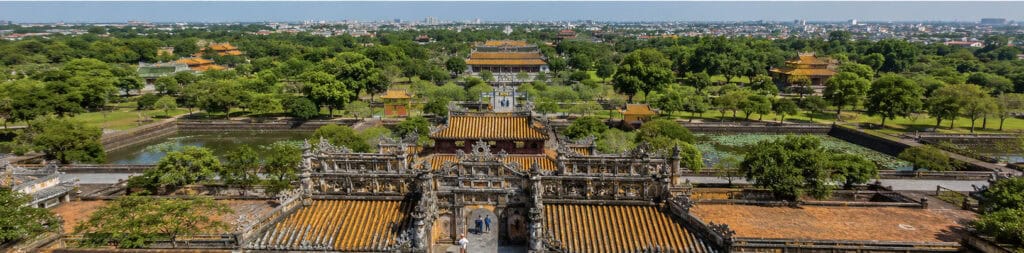
Gardens, courtyards, gates and restored residential buildings are scattered throughout the complex. Some of the most enjoyable sections are away from the main entrance, where the crowds thin out and the atmosphere becomes considerably quieter.
How Long Do You Need at Imperial City Hue?
For a quick visit, allow at least 2 hours.
For a more relaxed visit covering the major gates, palaces, temples, courtyards and surviving sections of the Forbidden Purple City, 3–4 hours is a better target.
Trying to combine the Imperial City with several royal tombs in only a few hours is usually a mistake. The distances between the monuments and the amount of walking involved make a rushed itinerary less enjoyable.
If you have a full day, a better plan is to explore the Imperial City in the morning and visit two or three royal tombs later in the day.
Best Time to Visit the Imperial City
Hue can be hot and humid, and much of the Imperial City is outdoors. There is shade in some areas, but you should expect plenty of walking in the sun.
Early morning is usually the best time to visit. Temperatures are more comfortable, the light is better for photography and you have a better chance of exploring the main courtyards before the busiest tour groups arrive. Leaving your hotel before 7 AM gives you the best chance of both.
Late afternoon can also work well, particularly if you prefer softer light and want to avoid the strongest midday heat. Just leave enough time before closing to see the areas you actually want to visit.
During periods of heavy rain, allow extra time because some courtyards and pathways can become wet and slippery.
How to Get to Hue Imperial City
The Imperial City is located in central Hue, directly across the Perfume River from much of the city’s modern tourist area.
If you are staying in central Hue, getting to the entrance is straightforward by taxi, Grab, bicycle or on foot, depending on your hotel location.
The main tourist entrance is Ngo Mon Gate. This is the most convenient starting point for a first visit because it takes you directly into the principal ceremonial area.
If you are arriving in Hue from another Central Vietnam destination, the Imperial City is easy to include in a broader itinerary — see our full guide to getting into Hue from the airport.
Our Central Vietnam Travel Guide covers the wider route between Hue and Da Nang and can help you plan the logistics of combining the cities.
Can You Visit the Imperial City and Royal Tombs in One Day?
Yes, and this is one of the best ways to experience Hue if you only have one full day.
A practical itinerary is:
- Start at the Imperial City in the morning.
- Spend around 3 hours exploring the royal complex.
- Have lunch in central Hue.
- Continue to two or three royal tombs in the afternoon.
- Return to the city center before dinner.
If your accommodation is close to Dong Ba Market or elsewhere along the river, this loop is easy to complete without needing a car for the day.
Tu Duc, Khai Dinh and Minh Mang are particularly popular because they offer very different architectural and landscape experiences.
See our complete guide to Tu Duc, Khai Dinh and Minh Mang Tombs if you want to choose which ones to visit.
What to Wear at Hue Imperial City
Wear comfortable clothing and shoes because you will be walking considerable distances.
Lightweight clothing is useful in hot weather, but remember that the Imperial City contains important religious and royal buildings. Avoid beachwear and overly revealing clothing.
A hat, sunglasses, sunscreen and a bottle of water are also useful, particularly if you are visiting around midday.
Comfortable walking shoes are more important than they may seem. The complex is much larger than the main palace area visible from the entrance.
Photography at the Imperial City
The Imperial City is one of the best photography locations in Hue.
Ngo Mon Gate is the obvious starting point, but do not stop there. The palace roofs, courtyards, ornamental details, temple buildings, gardens and long symmetrical pathways all provide different compositions.
Morning light is particularly good for exterior photography, while overcast weather can actually make it easier to photograph detailed architecture without harsh shadows.
Be respectful around religious areas and follow any signs restricting photography inside particular buildings.
Is Hue Imperial City Worth Visiting?
Yes — especially if this is your first trip to Hue.
The Imperial City is not simply another historic attraction. It is the place that explains why Hue is different from other major Vietnamese destinations.
Da Nang is known for beaches and modern city life. Hoi An is famous for its preserved merchant-town architecture and lantern-lit streets. Hue’s identity is much more closely connected with the Nguyen Dynasty, imperial ceremonies, royal architecture and the Perfume River.
The Imperial City brings all of that together in one location.
It is also much more rewarding when you give yourself enough time to explore beyond the first few buildings. The complex is large, and the quieter areas often provide some of the best atmosphere.
Imperial City Hue vs. Other Hue Attractions
| Attraction | Best for |
|---|---|
| Imperial City | Royal history, architecture and the Nguyen Dynasty |
| Tu Duc Tomb | Gardens, lakes and a peaceful setting |
| Khai Dinh Tomb | Detailed decoration and a dramatic hillside setting |
| Minh Mang Tomb | Classical imperial architecture and landscaped grounds |
| Perfume River | Scenery, evening atmosphere and boat trips |
If you have limited time in Hue, the Imperial City should generally be your first major historical stop. The royal tombs can then be selected according to your interests.
Tips for Visiting Hue Imperial City
- Arrive early: mornings are generally more comfortable for walking.
- Allow at least 2–3 hours: the complex is larger than it first appears.
- Bring water: there is significant outdoor walking.
- Wear comfortable shoes: expect courtyards, pathways and considerable walking.
- Check ticket information: prices and opening arrangements can change.
- Consider a combination ticket: it can make sense if you are also visiting several royal tombs.
- Do not rush: the quieter sections are often more interesting than simply photographing the main gate.
- Plan your route: combine the Imperial City with nearby Hue attractions rather than crossing the city repeatedly.
Staff at hotels near the Citadel can often suggest which tombs to prioritize afterward if you are short on time.
FAQ: Imperial City Hue
What is the Imperial City in Hue?
The Imperial City is the main royal enclosure inside Hue Citadel. It was the political and ceremonial center of the Nguyen Dynasty and contains palaces, temples, gates, courtyards and the remains of the Forbidden Purple City.
How much is the entrance fee to Hue Imperial City?
The current standard adult ticket is 200,000 VND. Children aged 7–12 pay 40,000 VND. Combination tickets are available for visitors planning to see multiple Hue monuments.
How long should I spend at Hue Imperial City?
Allow at least 2 hours for a quick visit. Around 3–4 hours is better if you want to explore the major palaces, temples, courtyards and quieter sections without rushing.
What is the most important building in Hue Imperial City?
Thai Hoa Palace is one of the most important surviving ceremonial buildings, while Ngo Mon Gate is the most recognizable entrance. The Forbidden Purple City and Nine Dynastic Urns are also essential stops.
Can I visit the Imperial City and royal tombs on the same day?
Yes. A common strategy is to visit the Imperial City in the morning and two or three royal tombs in the afternoon. This gives you a good overview of Hue’s imperial heritage without trying to see everything at once.
Is Hue Imperial City suitable for children?
Yes, although the amount of walking and heat can be tiring for younger children. Families should bring water, sun protection and allow plenty of breaks.
What should I see after the Imperial City?
The royal tombs are the most obvious next choice. Tu Duc, Khai Dinh and Minh Mang are particularly popular and each offers a different architectural experience.
Final Verdict
Hue Imperial City is the essential historical attraction in Hue and one of the most important heritage sites in Central Vietnam.
The scale of the citadel, the ceremonial architecture, the surviving royal buildings and the history of the Nguyen Dynasty make it much more than a quick sightseeing stop.
Give yourself at least a few hours, arrive early if possible and explore beyond Ngo Mon Gate. If you have more time, combine the Imperial City with two or three royal tombs to get a much fuller picture of Hue’s imperial past.
For planning the rest of your trip, start with our Hue for First-Time Visitors guide, then use our Hue tours and experiences guide to find more ways to explore the city.
More from our travel guide network
Build your Vietnam route — free.