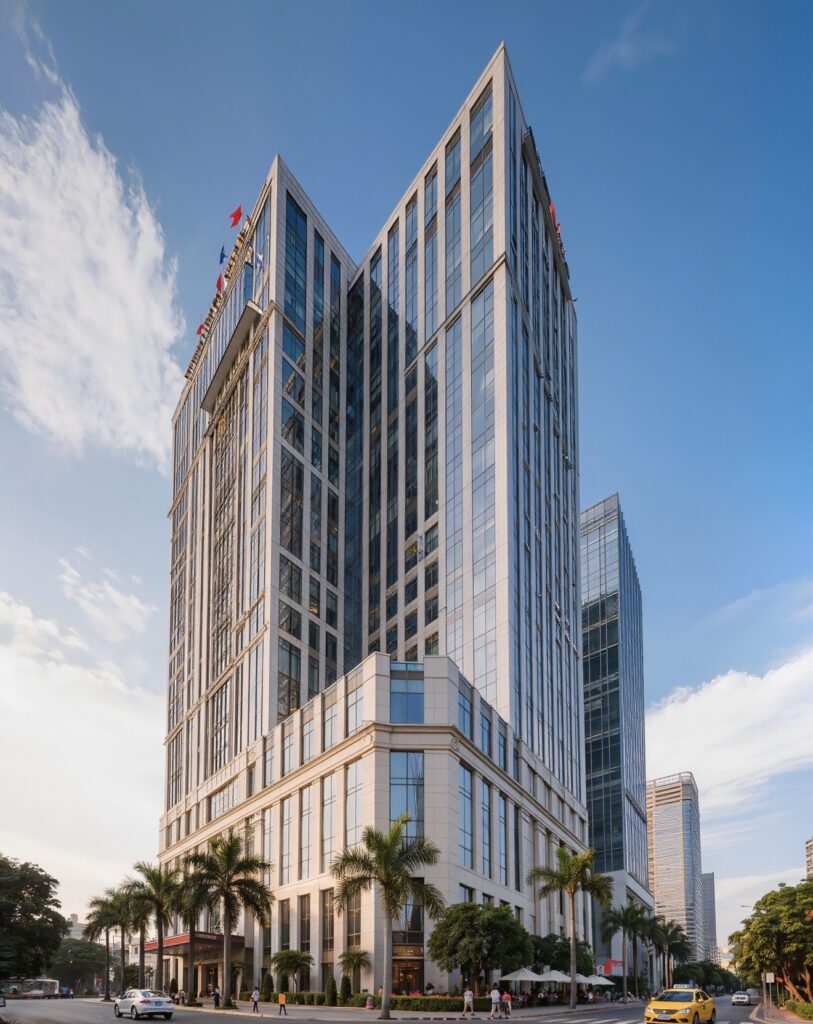
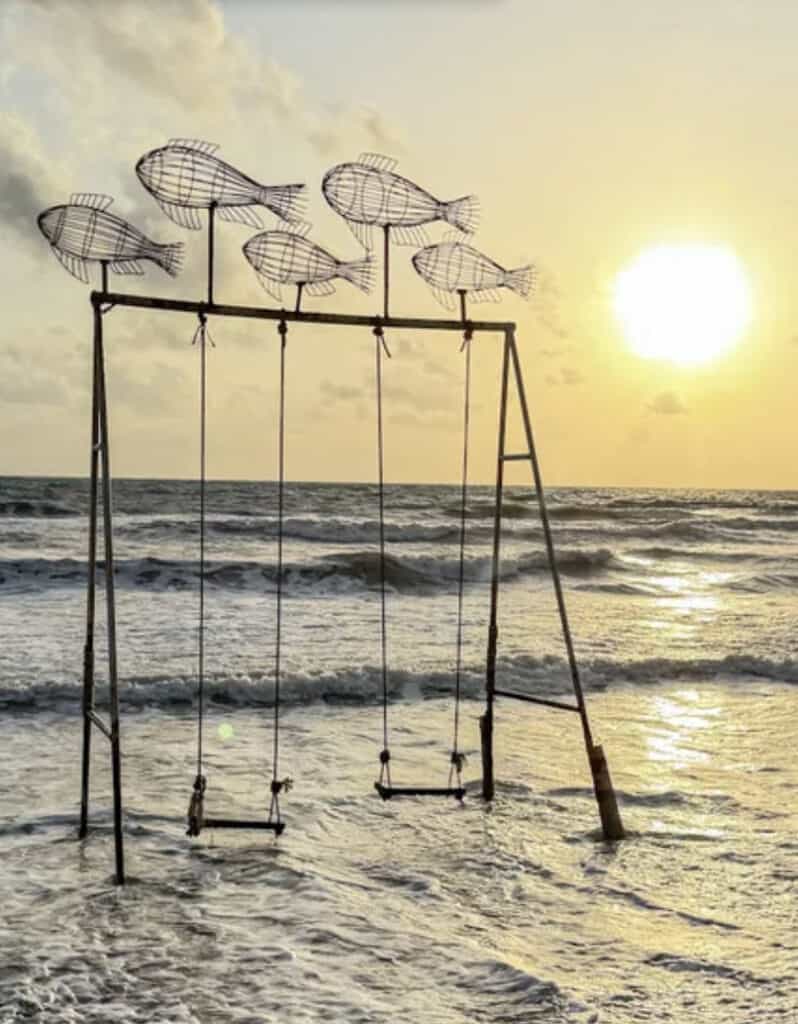
Most Quy Nhon itineraries point straight at the coast — Ky Co, Eo Gio, the open road along the sea. That’s fair; it’s the main draw, but the city’s own landmarks deserve at least one morning too.
But the city itself has three landmarks worth a morning, and they sit close enough together to cover in a single easy loop.
Tháp Đôi, a pair of centuries-old Cham brick towers, sits right inside the city. A few minutes away, Quy Nhon Green Square gives the waterfront district its green, palm-lined center. And the Gia Lai Museum — despite the name — holds the region’s ethnographic collection, a short ride from both.
None of these need a full day on their own. Combined, they make a relaxed half-day that fits neatly before or after a beach excursion — and they’re a good reason to spend at least one morning in the city rather than heading straight for Ky Co.
Tháp Đôi — Quy Nhon’s Twin Cham Towers
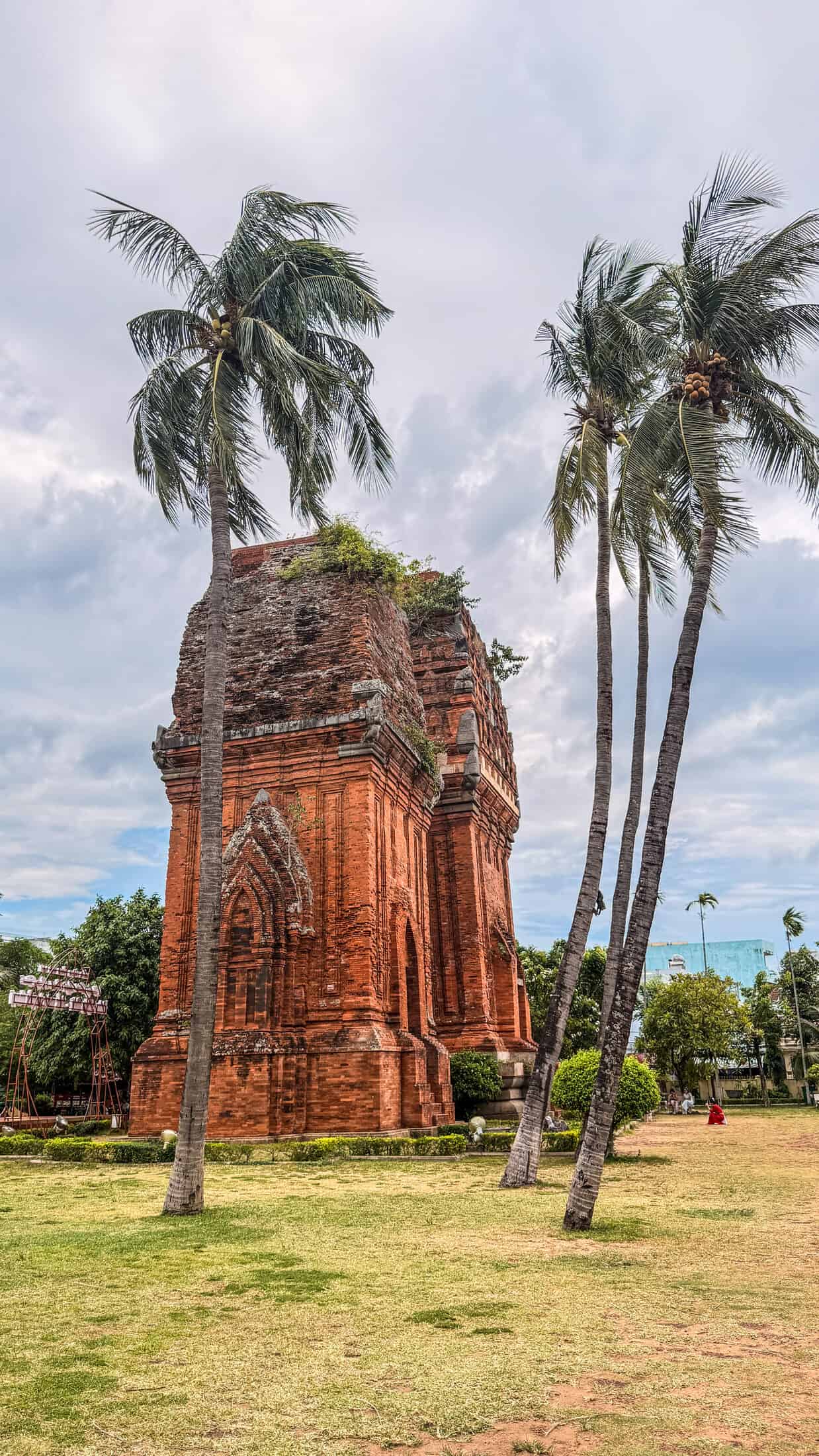
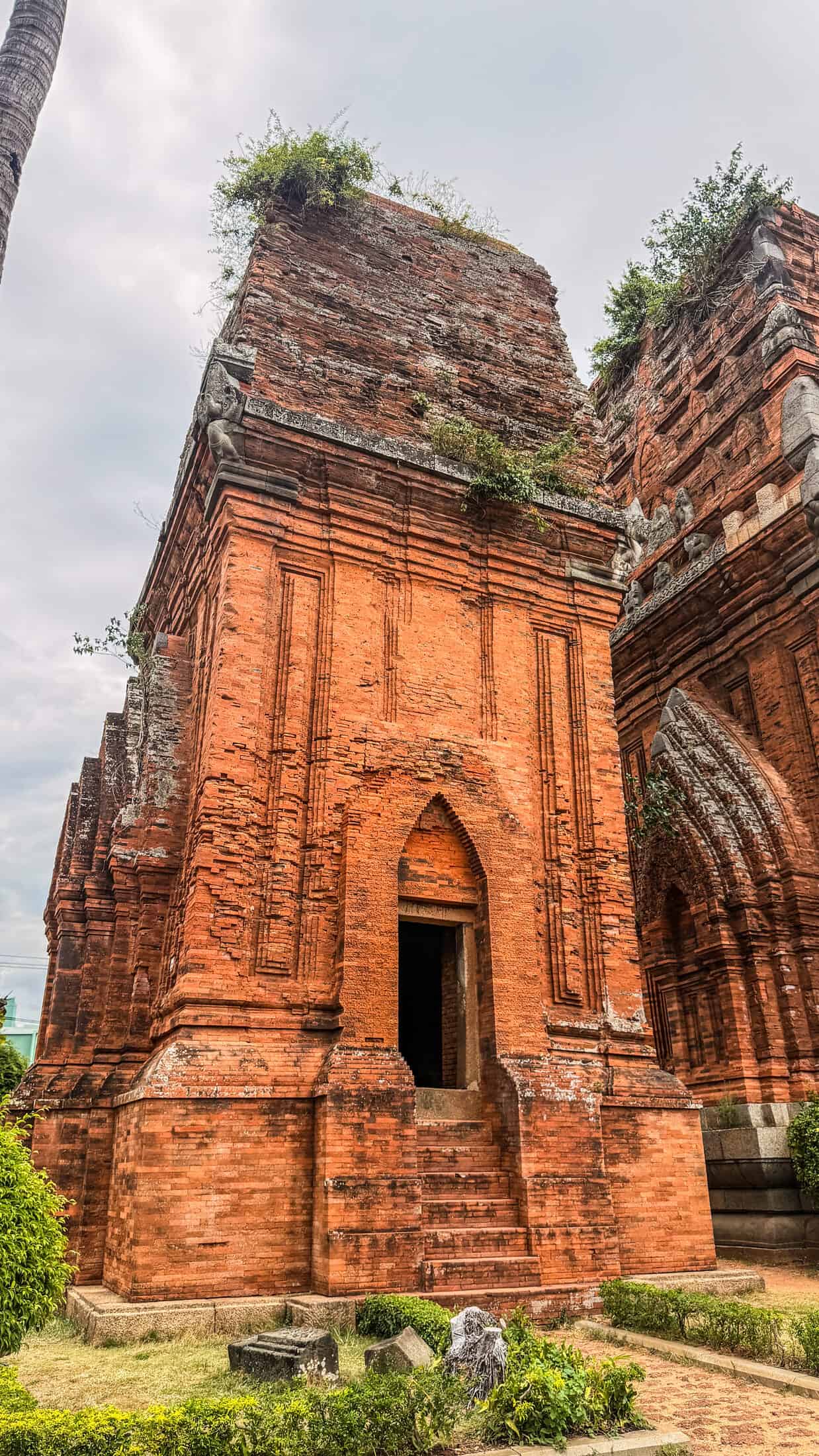
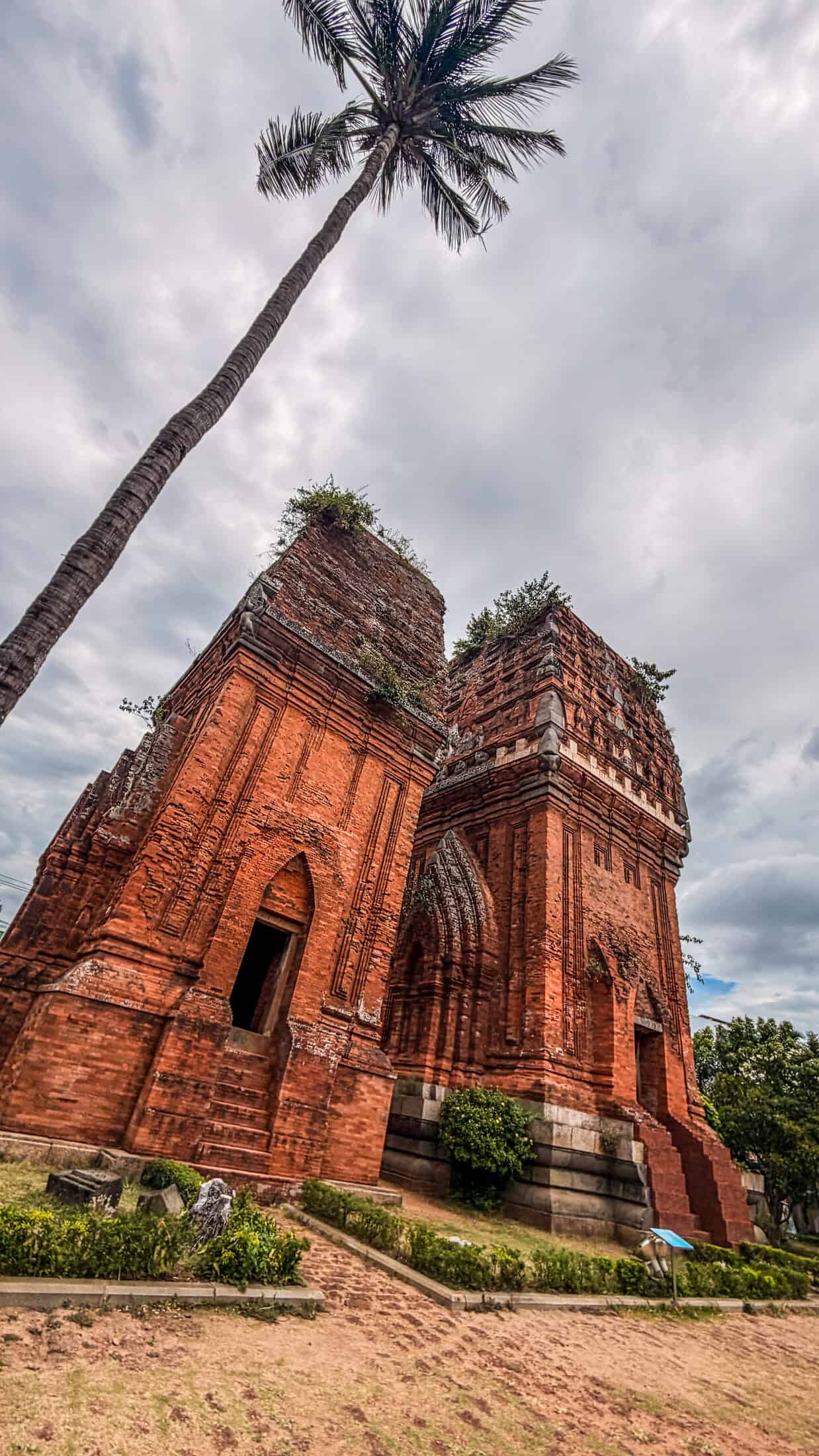
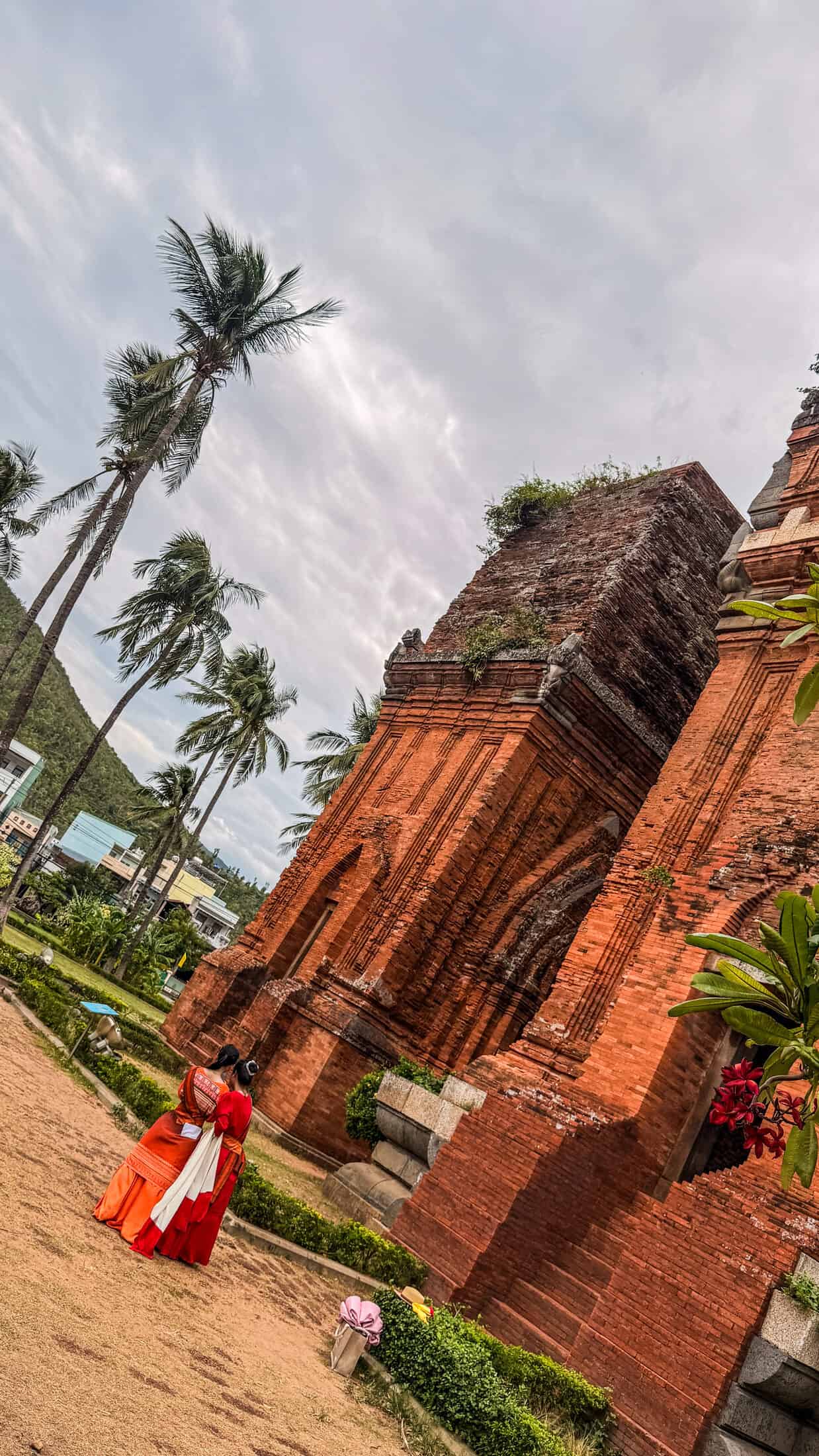
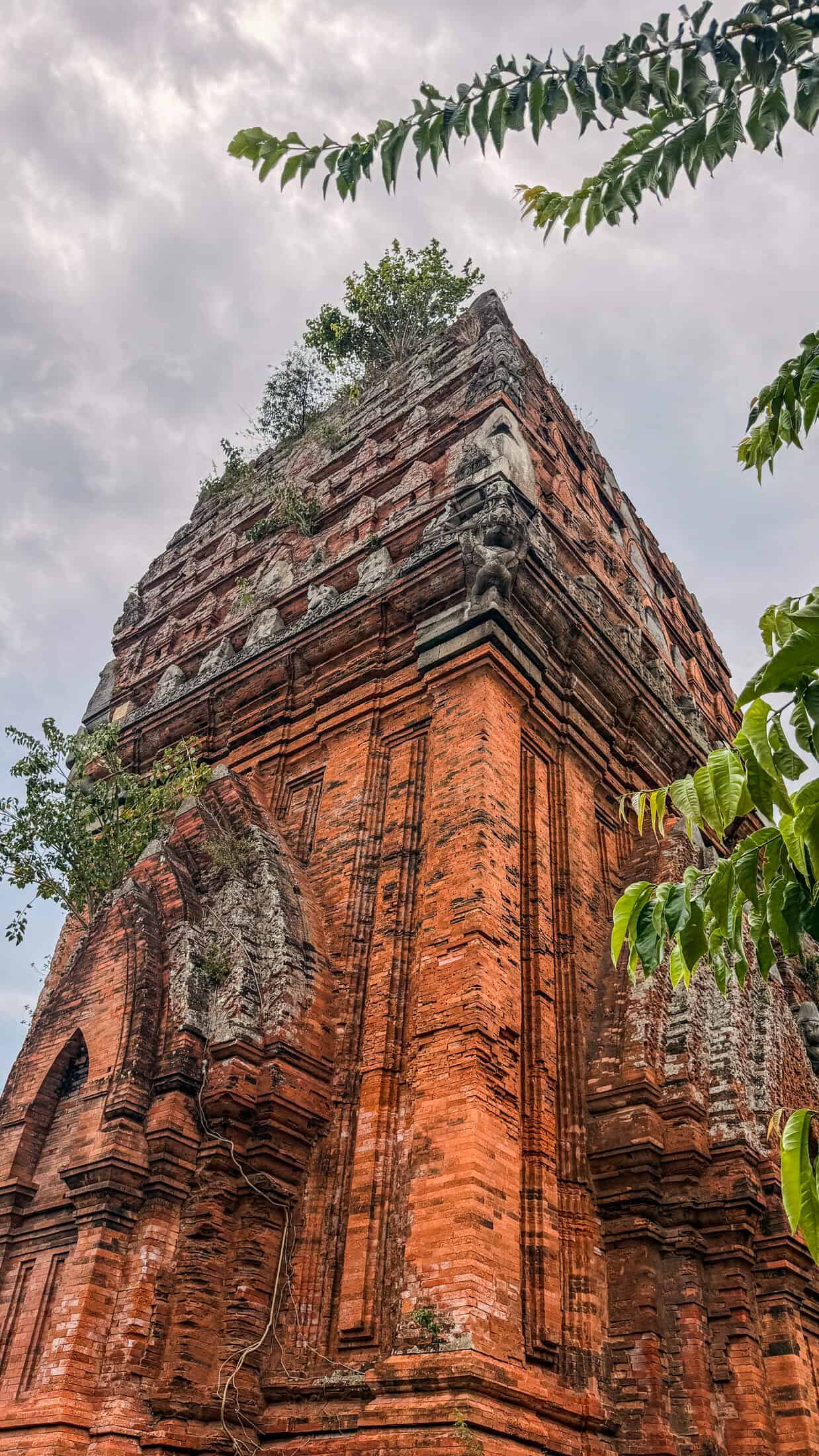
Tháp Đôi (“Twin Towers”) is a pair of red-brick Cham towers built during the late period of Cham temple architecture, roughly the late 12th or early 13th century. Unlike some of the more heavily restored towers further along the coast, Tháp Đôi keeps a weathered, lived-in look — vegetation growing from the upper tiers, brick carving softened by time.
The towers sit inside a small public park, which makes this an easy stop rather than a dedicated excursion. Entry is inexpensive, and a QR code posted at the site links to an audio guide if you want more background on Cham history than a signboard can give.
The site closes for a few hours around midday (roughly 11:30 to 14:30, though it’s worth double-checking on arrival) and reopens in the afternoon. Late-afternoon light on the brick is a good reason to time a visit for then rather than at midday.
If you’ve already seen Po Nagar in Nha Trang or a Cham museum elsewhere on the coast, Tháp Đôi is a smaller, quieter stop — worth it if you’re curious about the Cham sites specific to this part of Vietnam rather than trying to see every tower on the route.
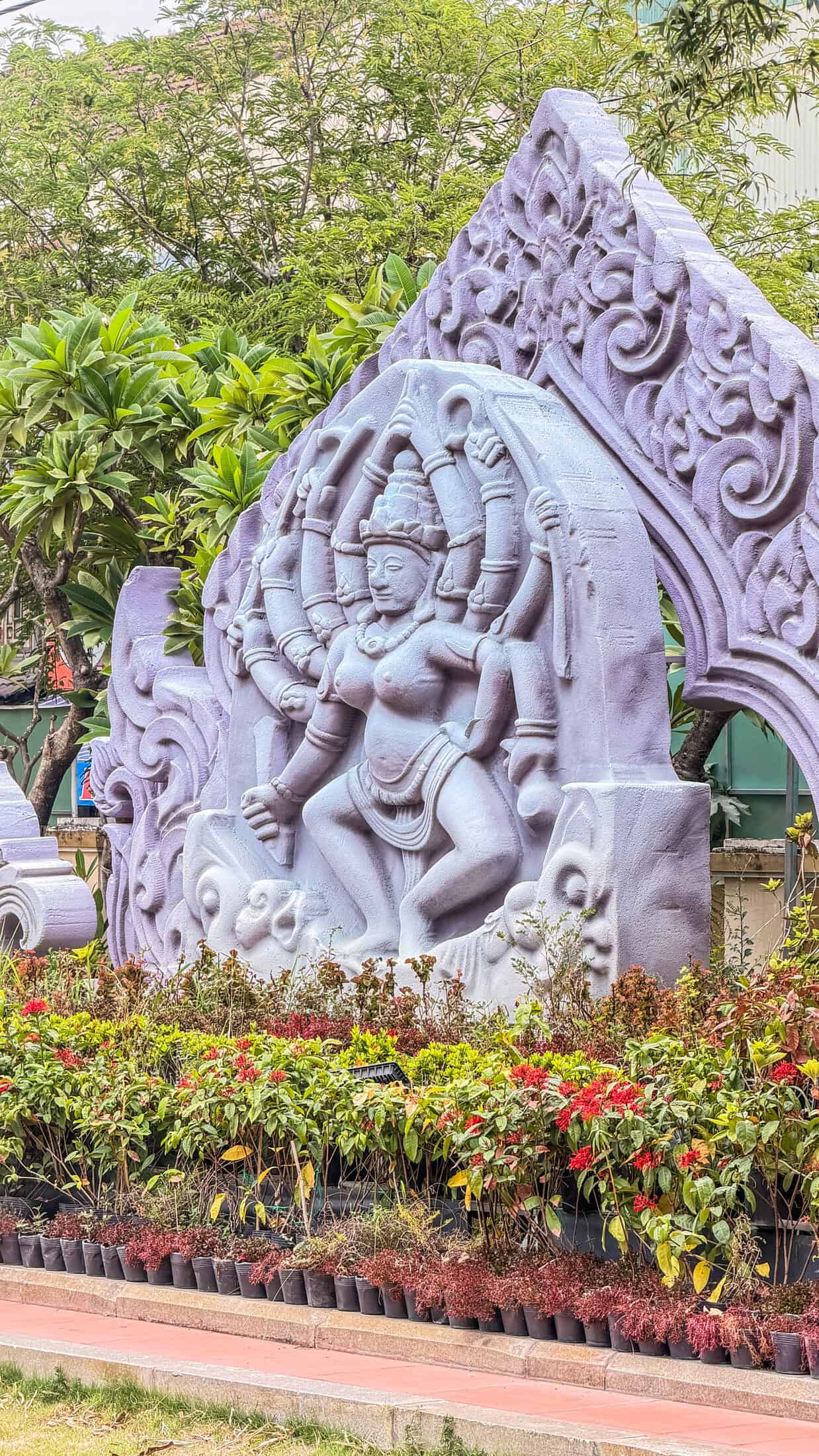
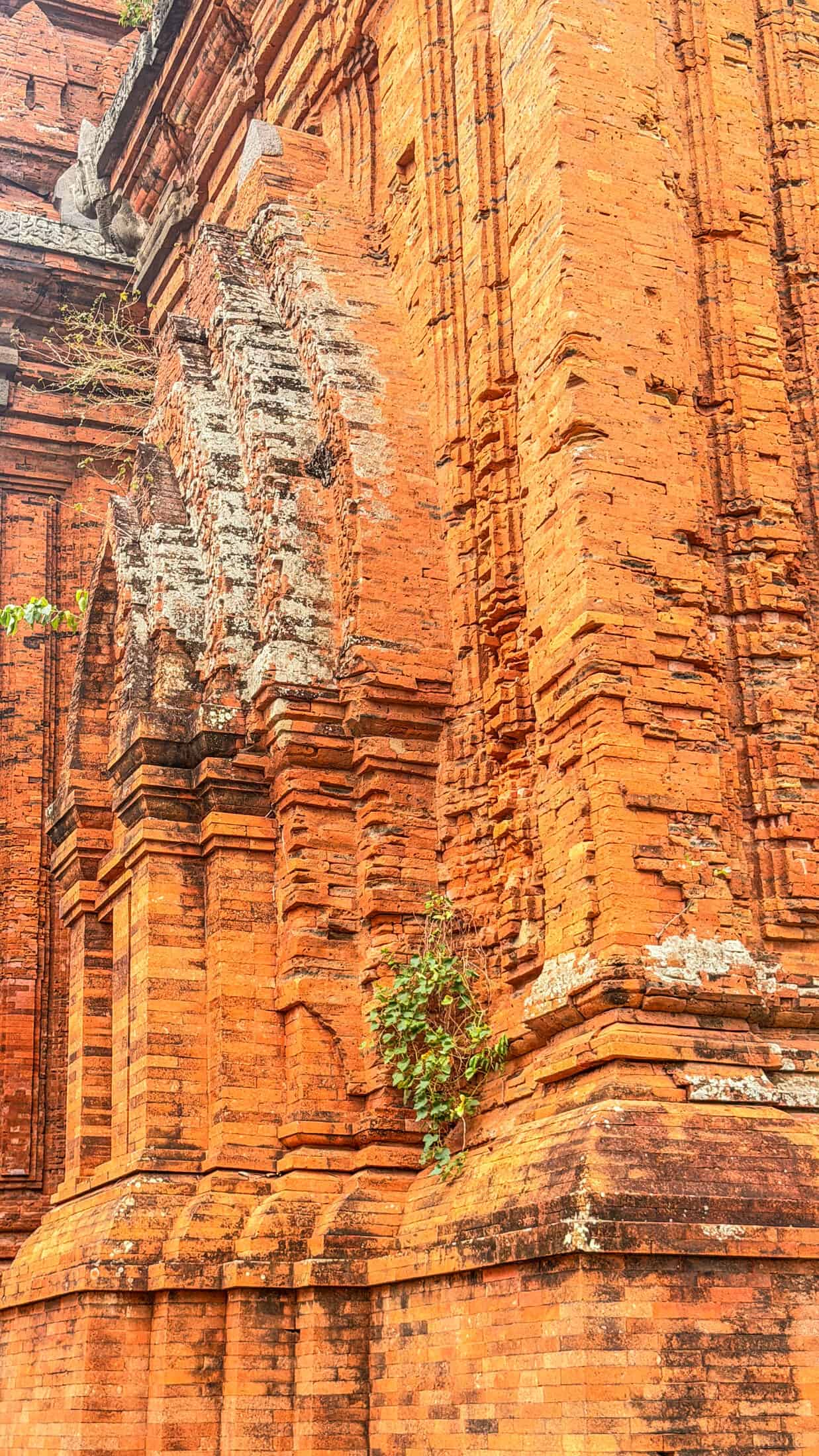
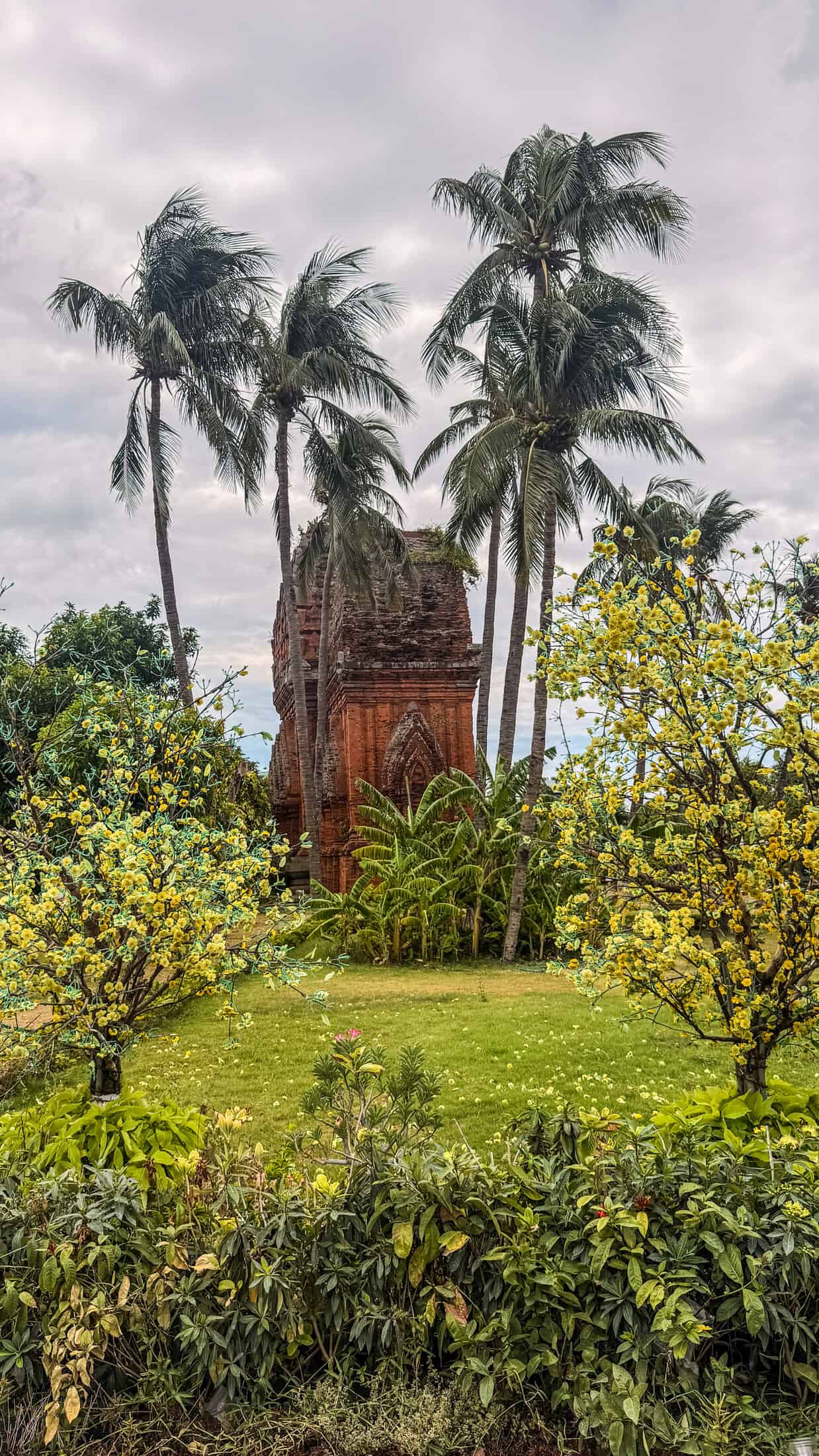
Quy Nhon Green Square
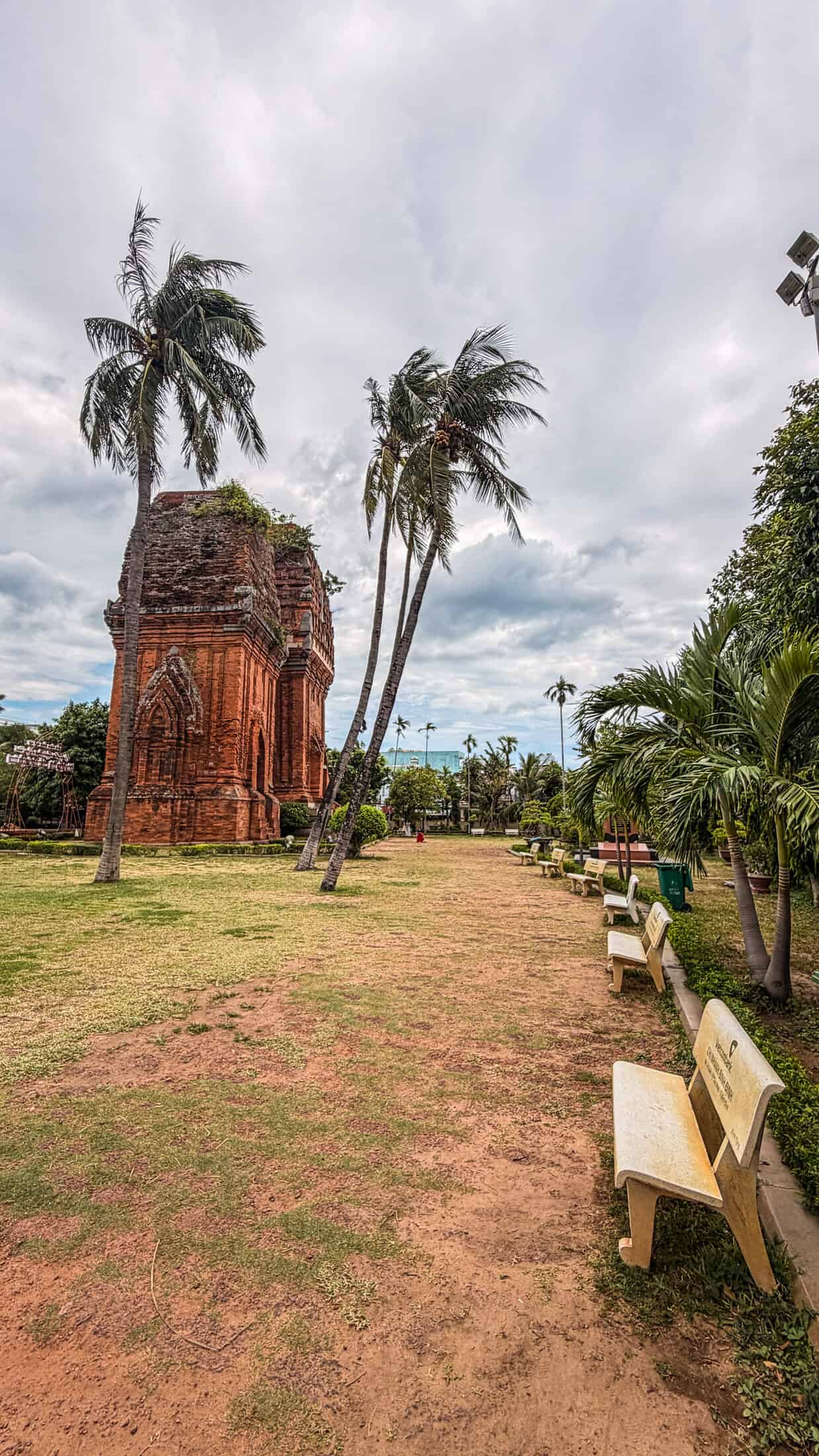
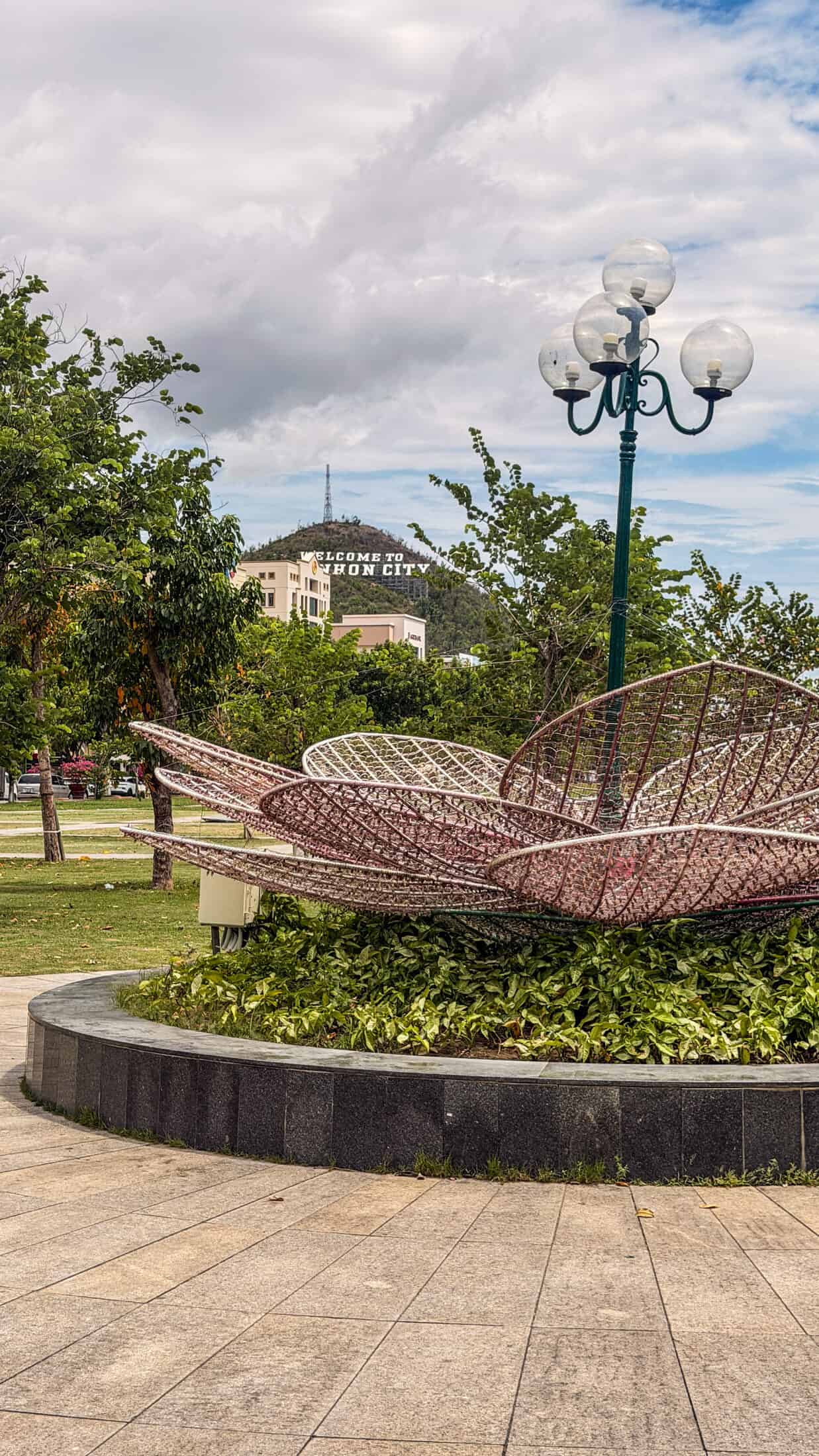
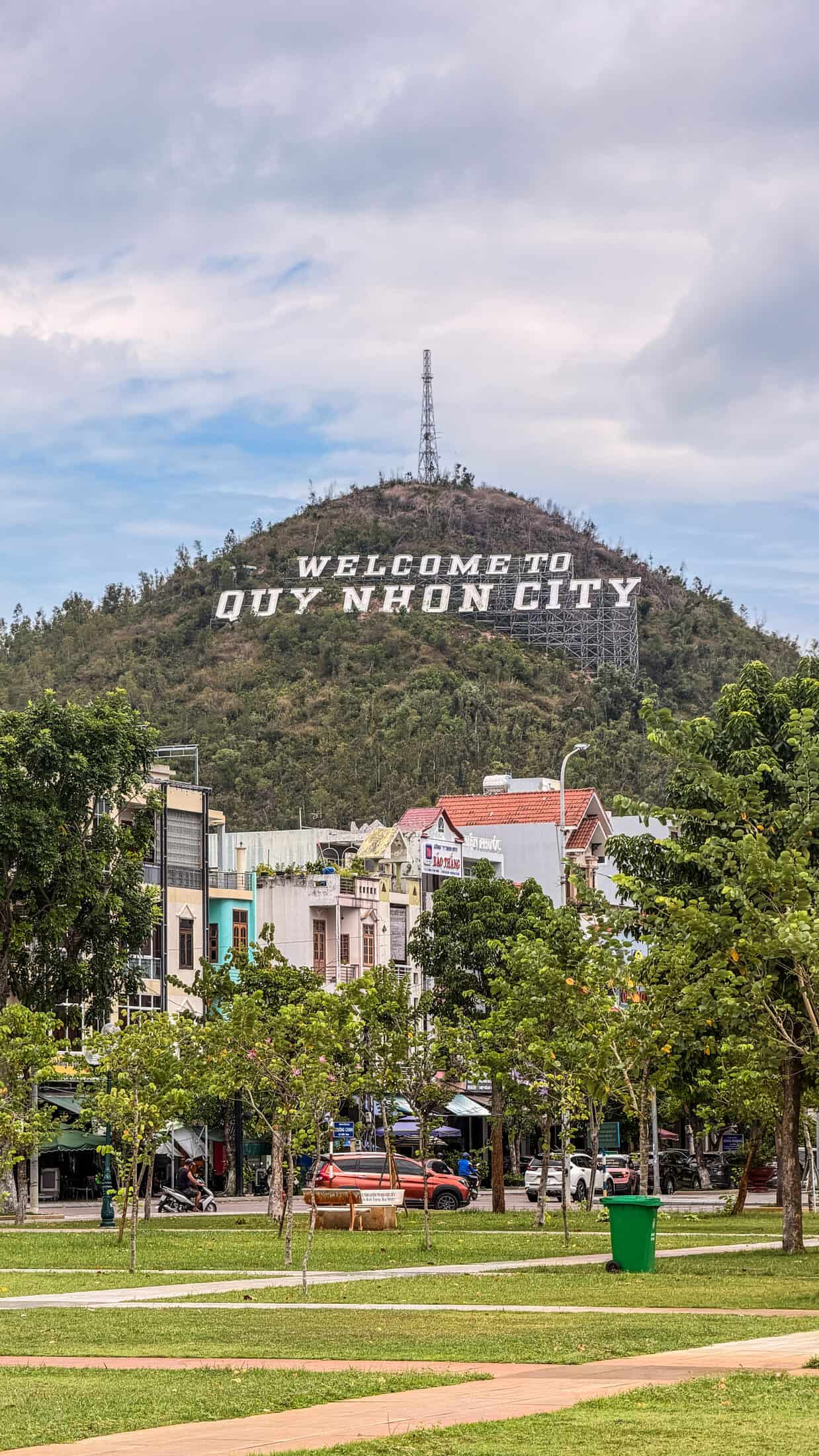
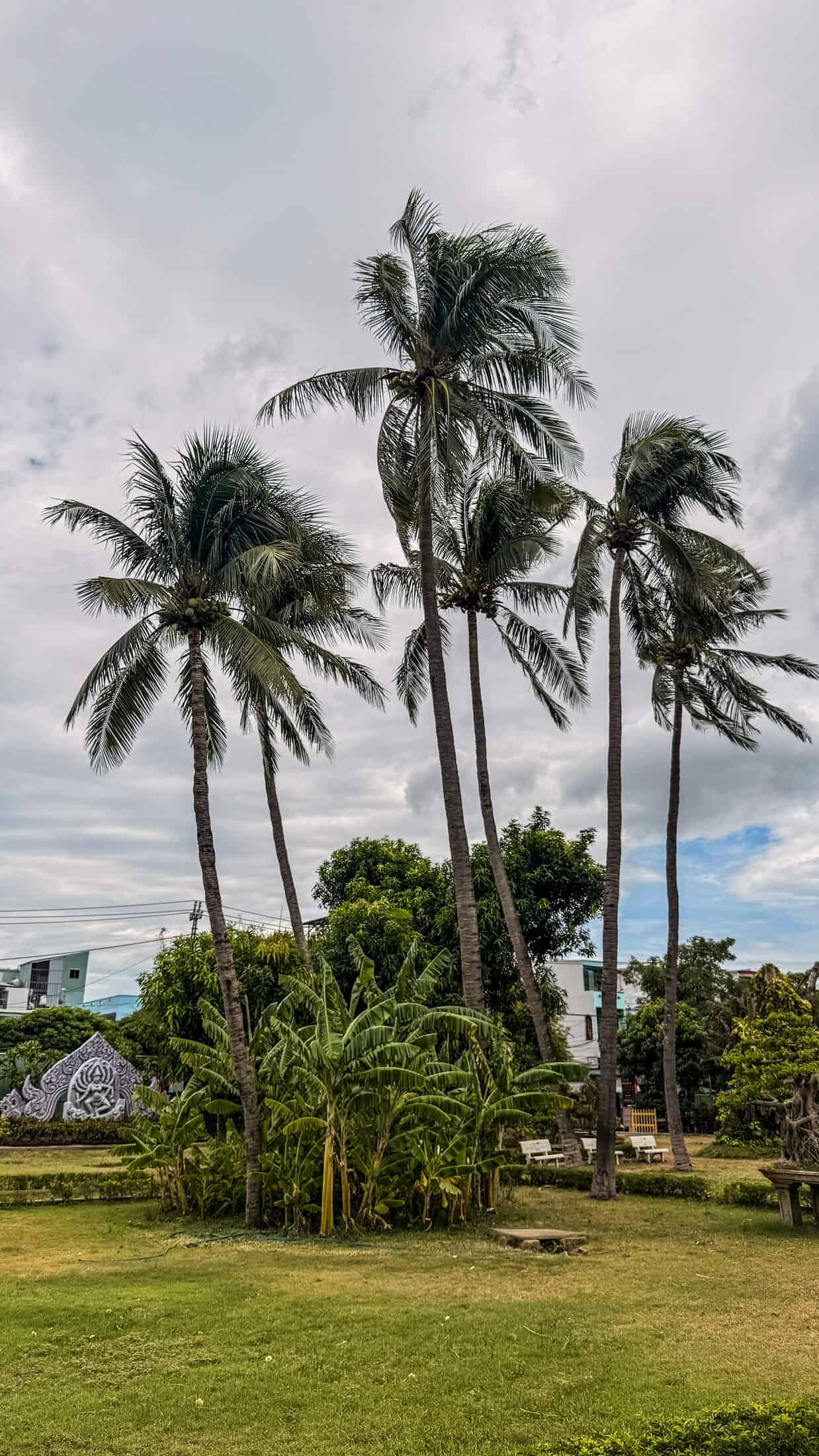
A few minutes from Tháp Đôi, Quy Nhon Green Square is the paved, landscaped square that anchors the newer part of the waterfront district — palm trees, flowering shrubs, open lawns, and a scattering of cafés and hotel towers around the edges.
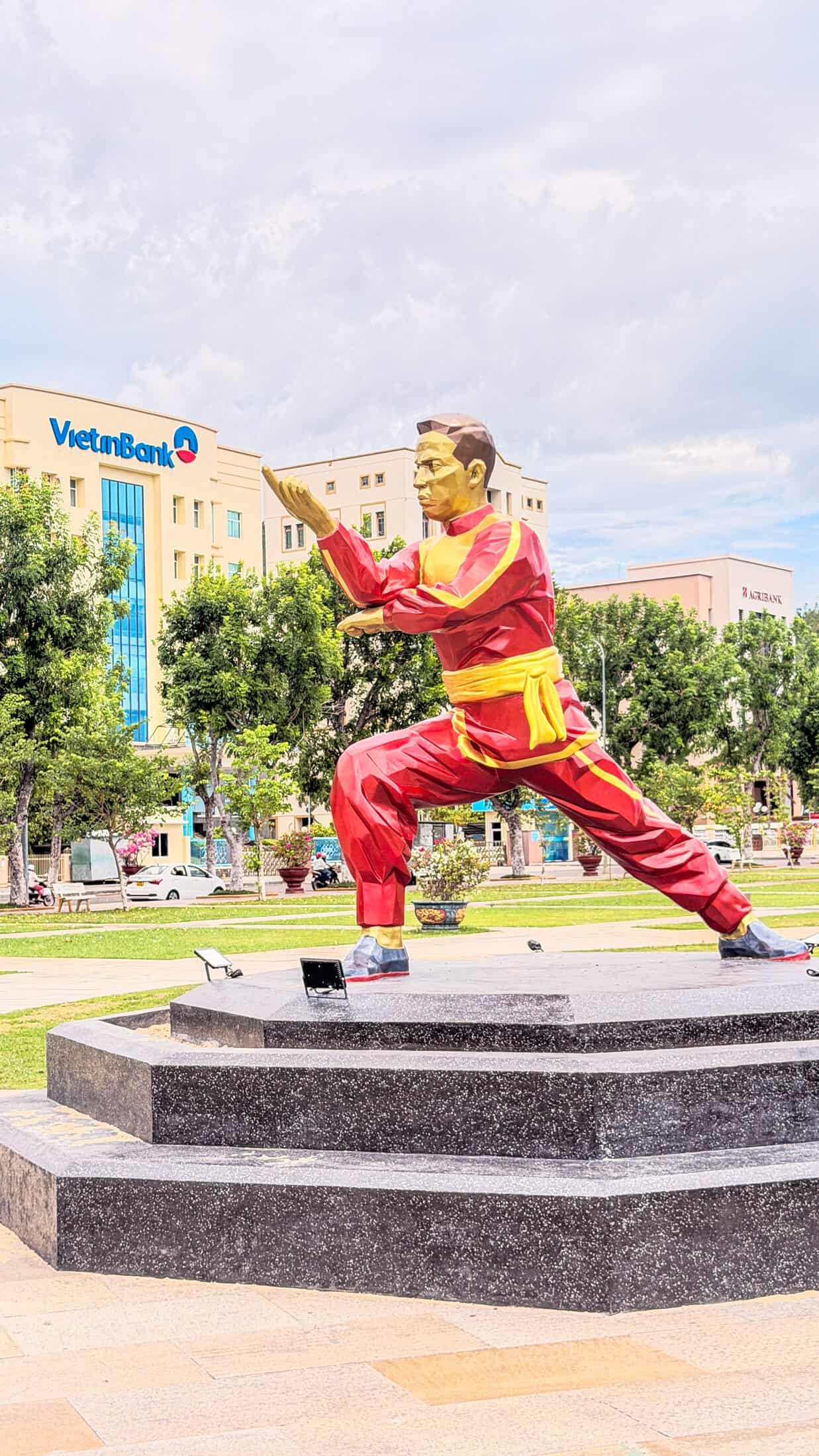
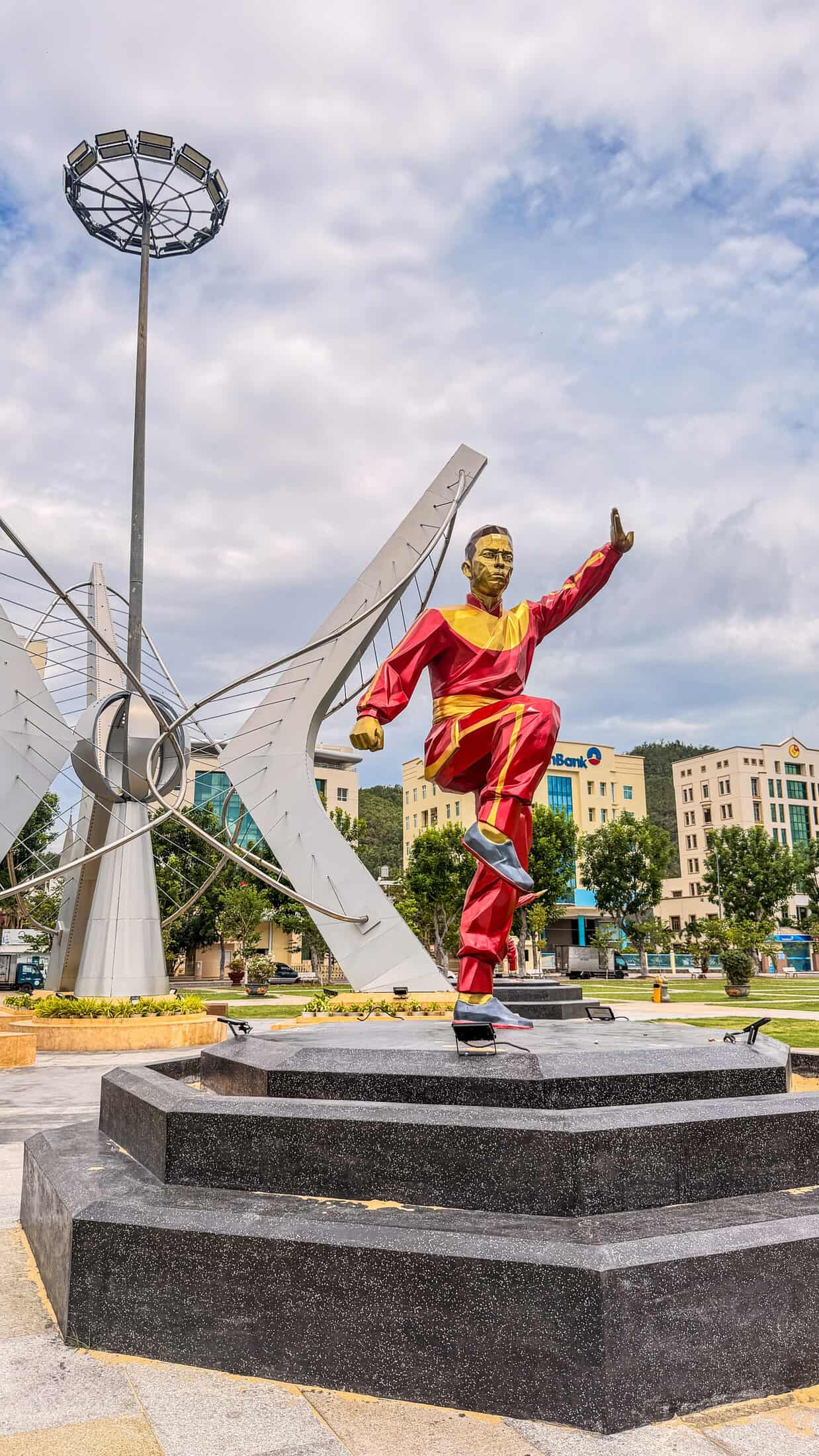
It isn’t a single attraction so much as a pleasant place to be. Locals use it for an evening walk once the heat breaks, and it’s the kind of spot that rewards a slow half hour rather than a five-minute photo stop — there are also a few unusual martial-arts-themed statues scattered around worth a look.
The square is open around the clock, so it works either as a quick daytime cut-through between Tháp Đôi and the museum, or as its own short evening stop.
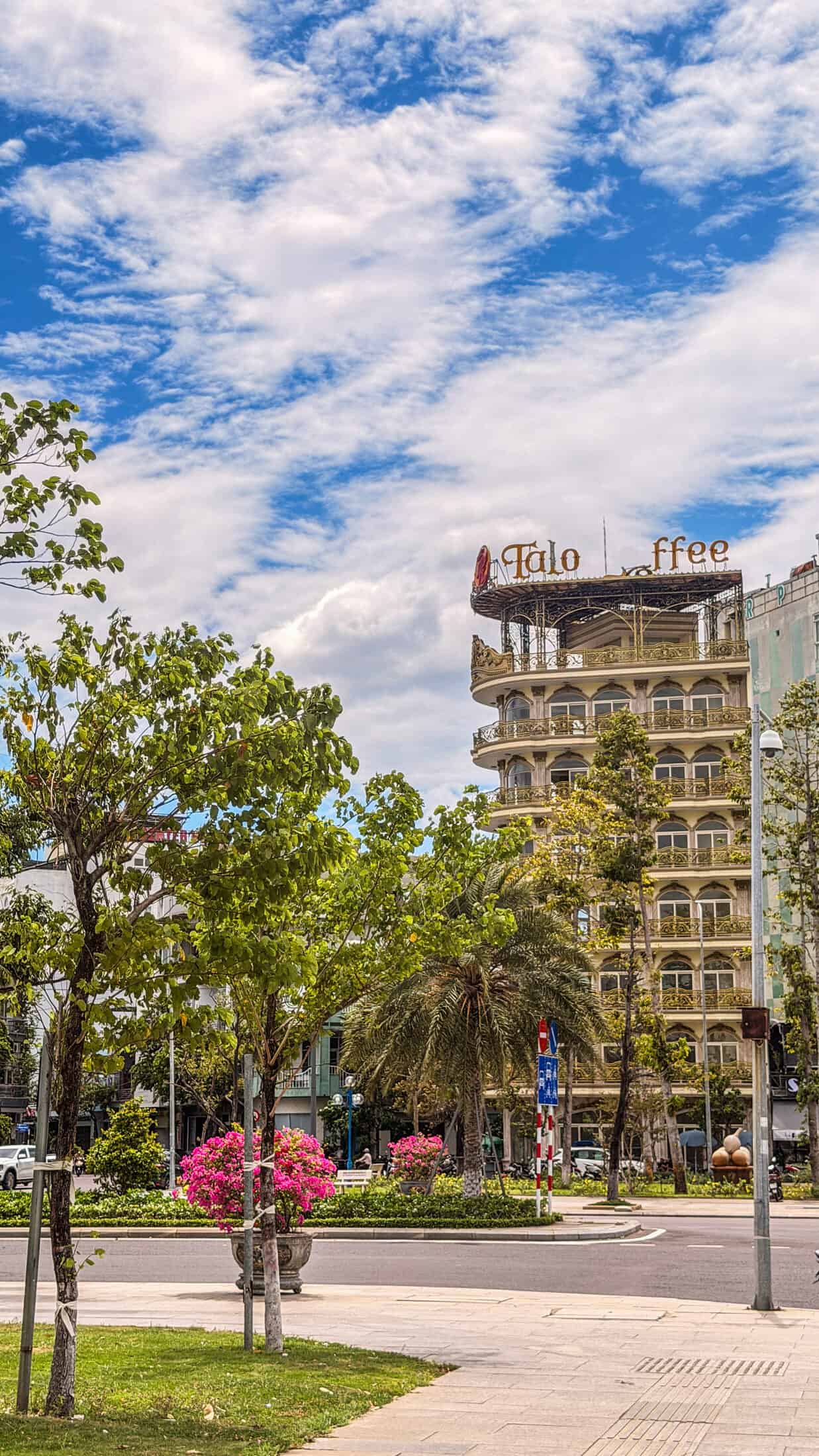
Gia Lai Museum (Despite the Name, It’s in Quy Nhon)
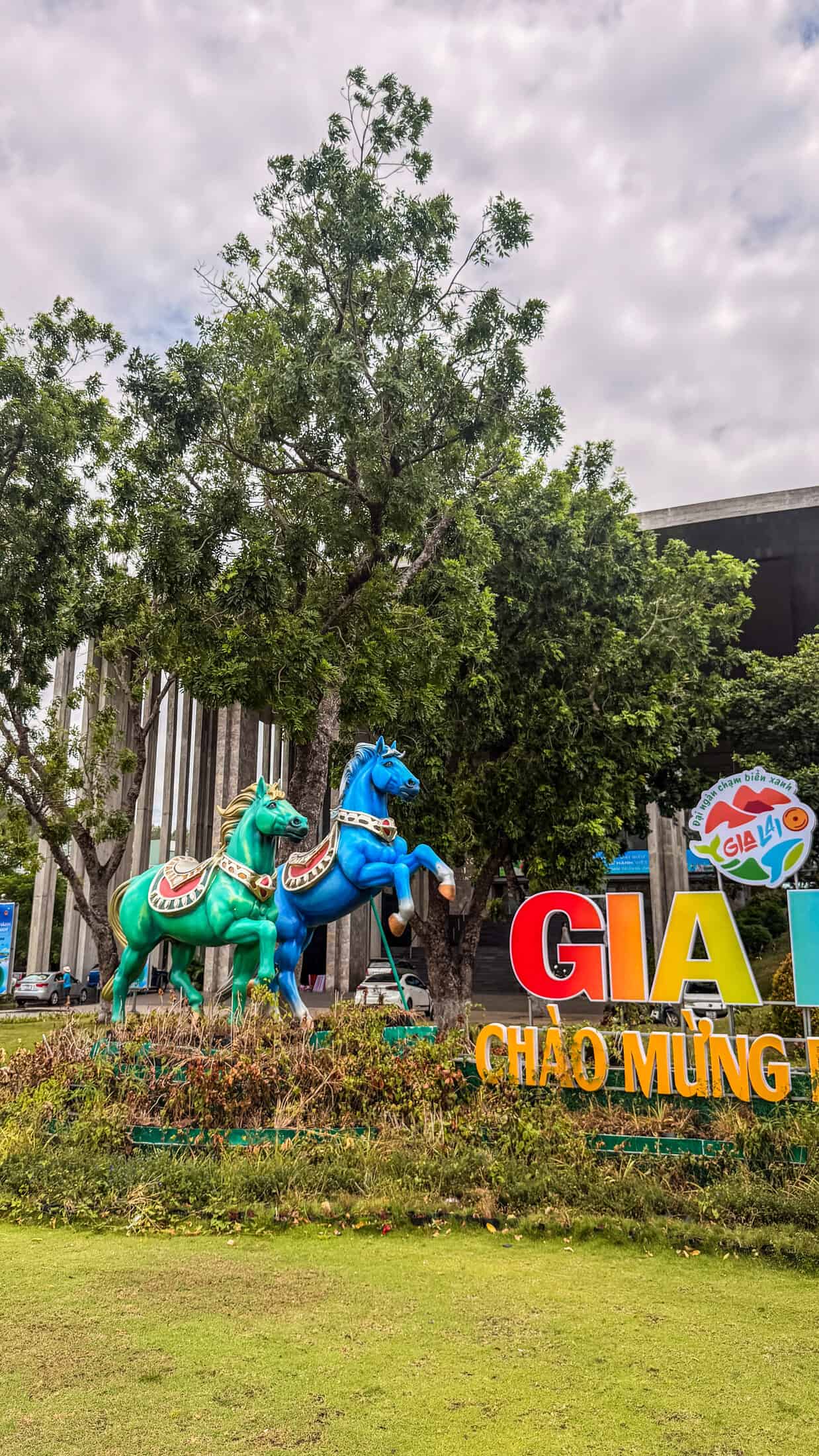
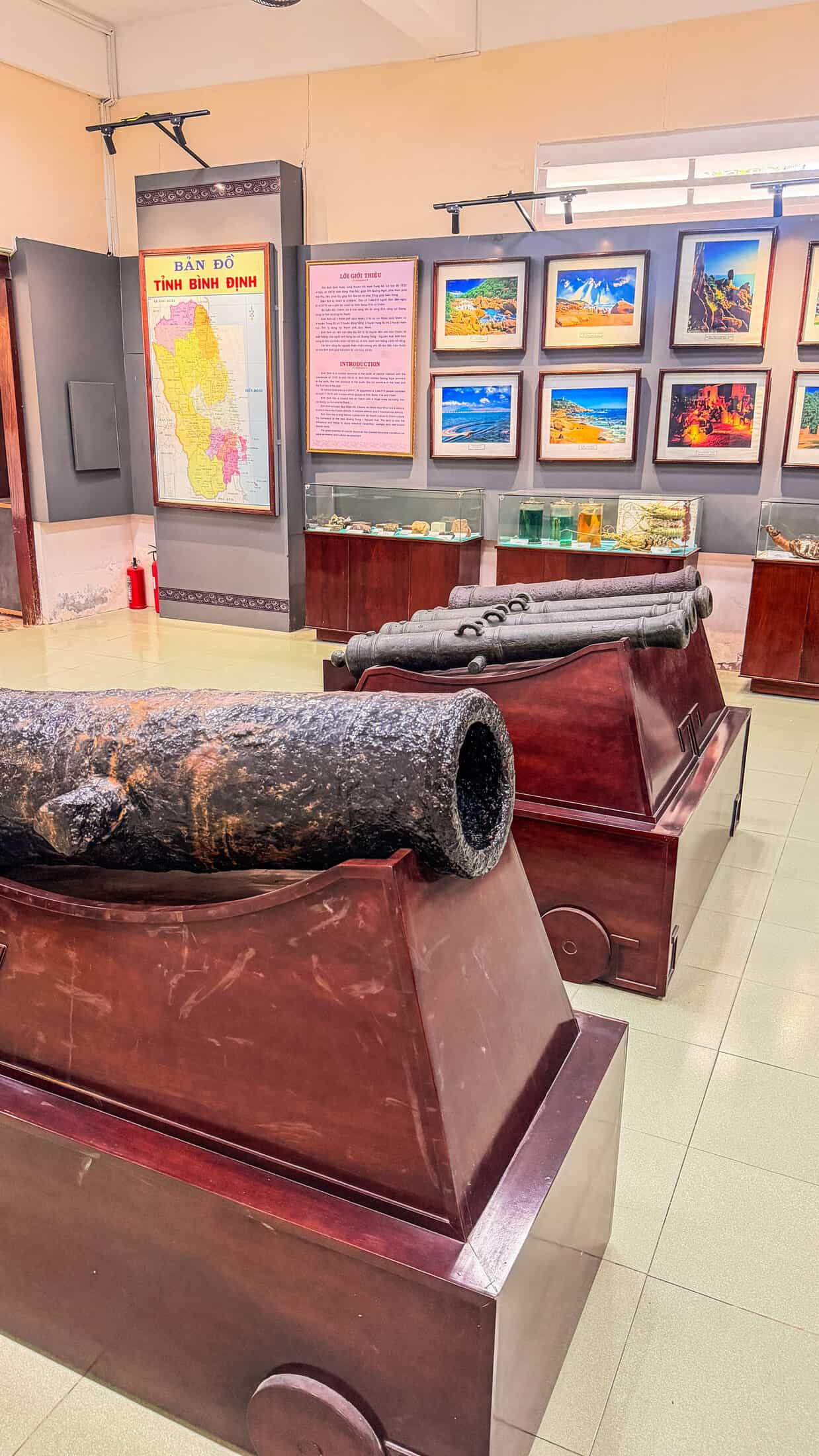
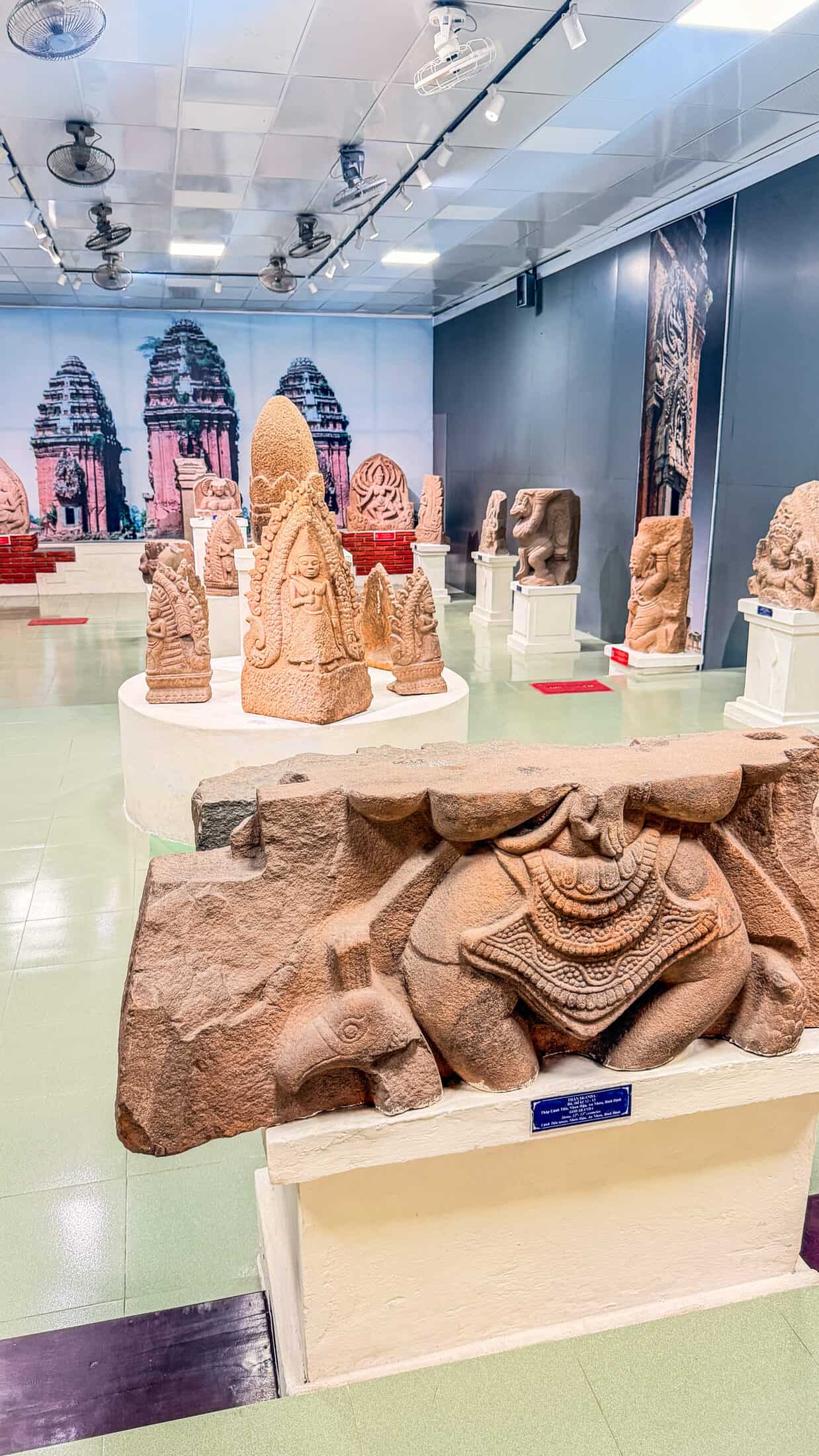
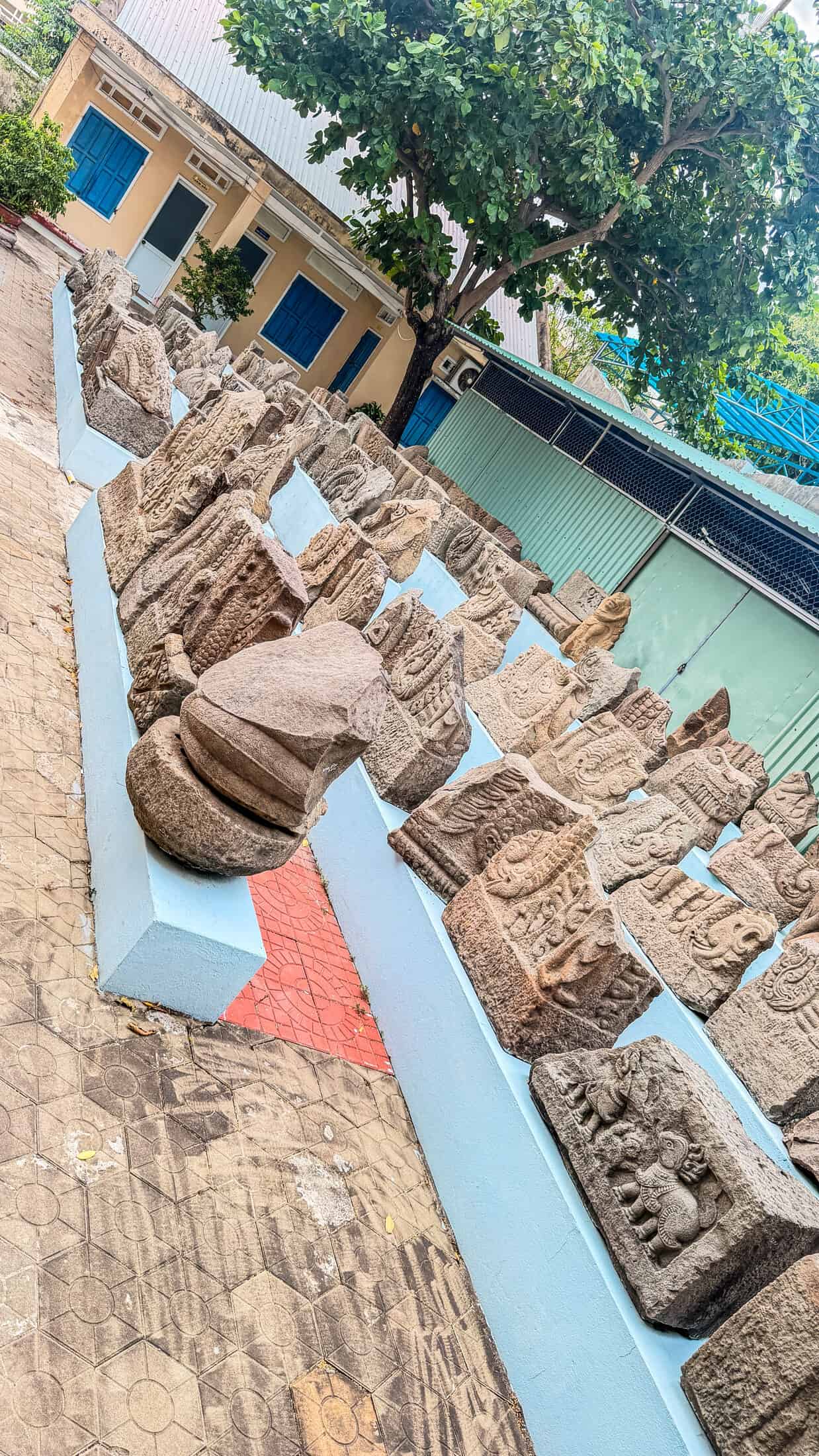
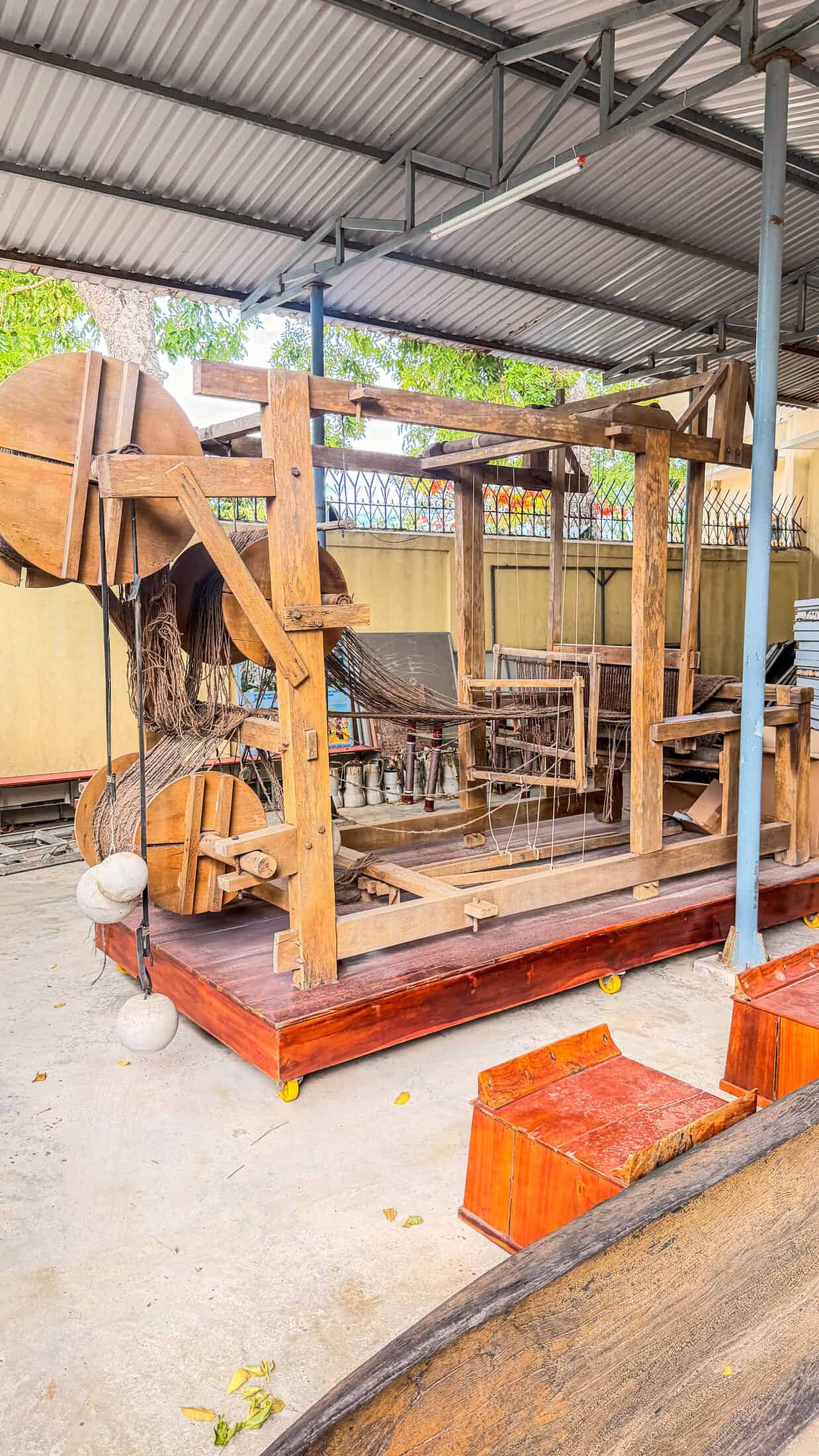
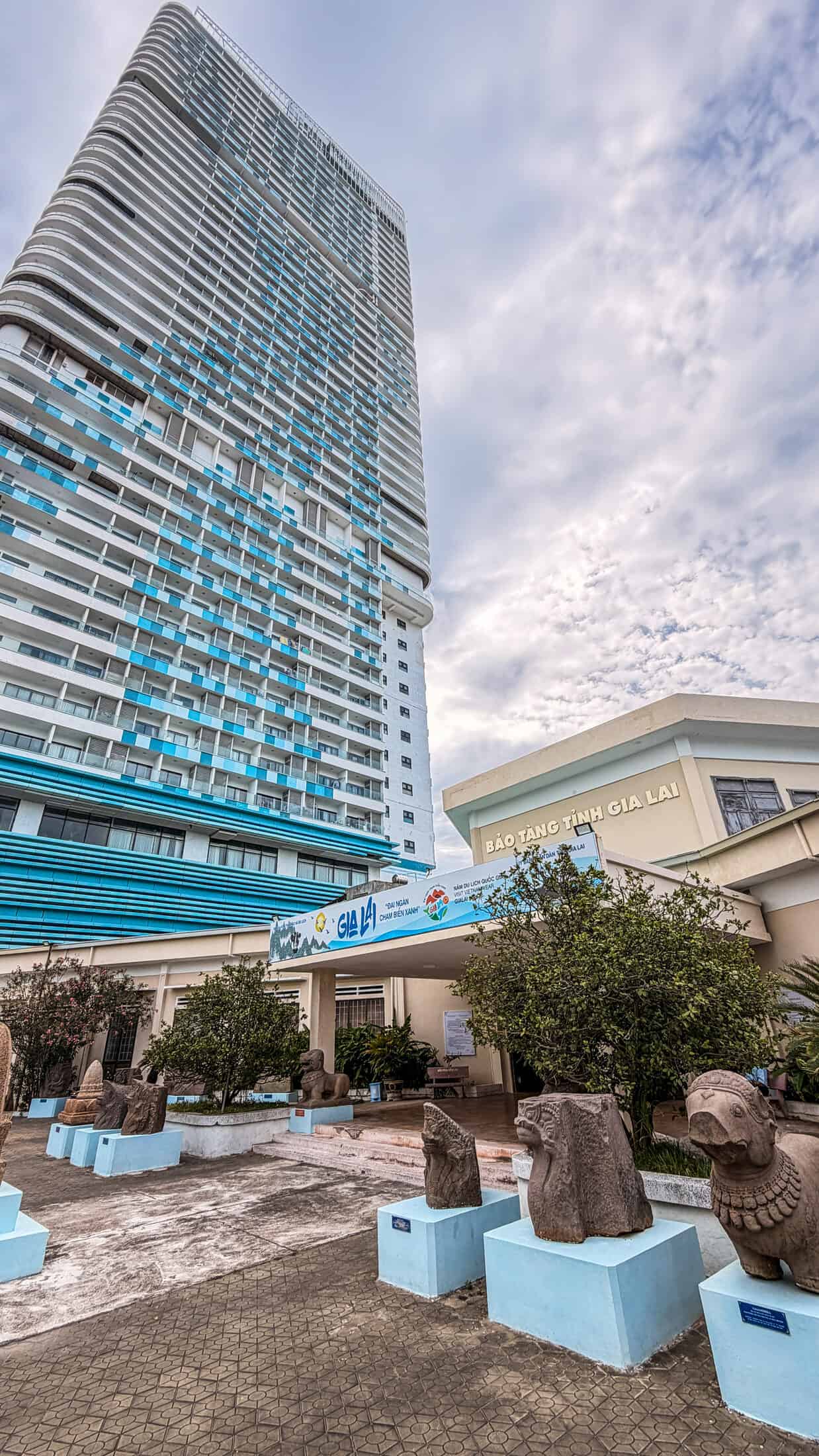
The name throws people off — Gia Lai Museum sounds like it should be in Pleiku, not on the coast. After Vietnam’s 2026 provincial mergers folded Gia Lai into Binh Dinh, the museum kept its original name even though it now sits in Quy Nhon, the merged province’s coastal center.
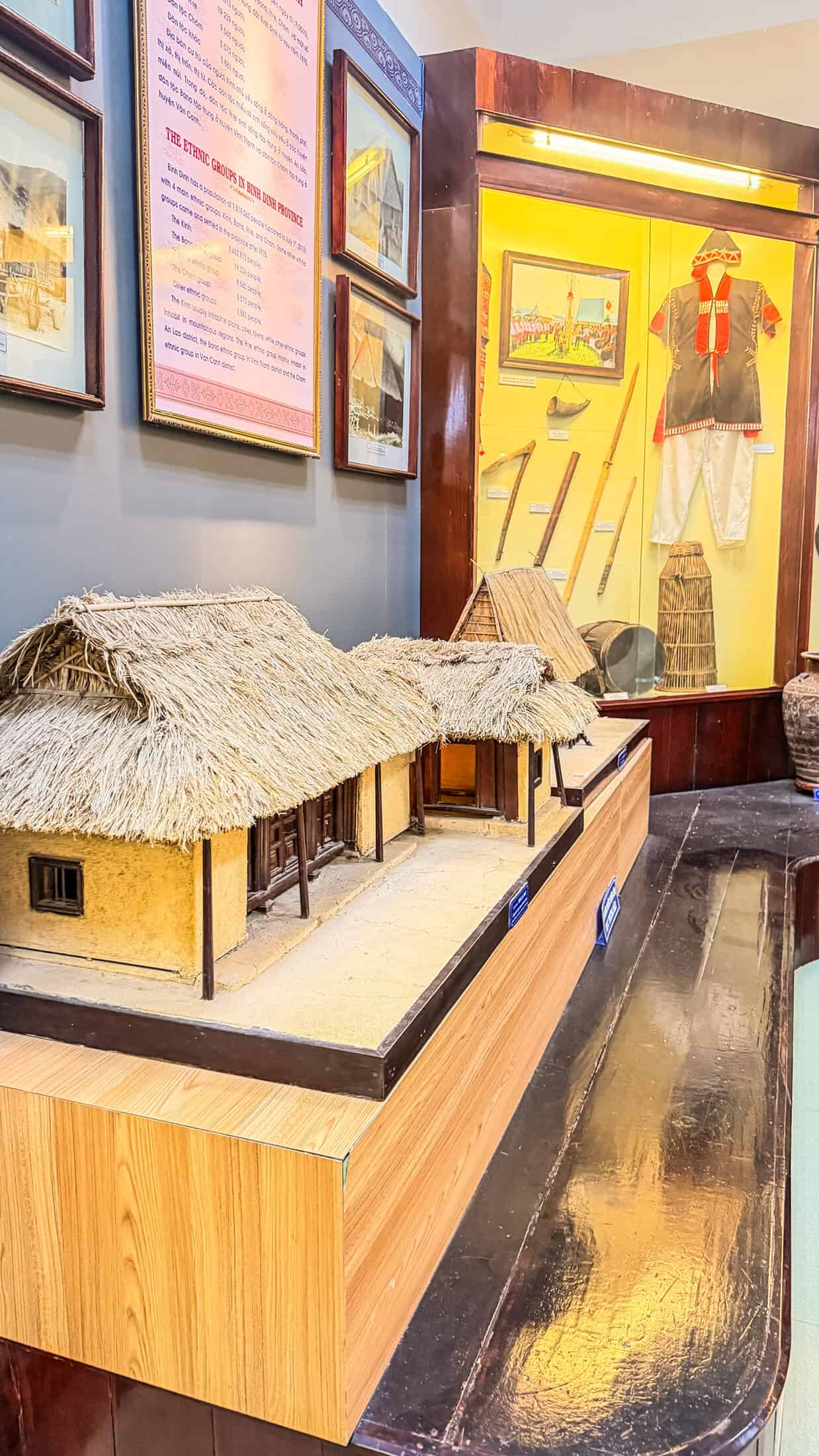
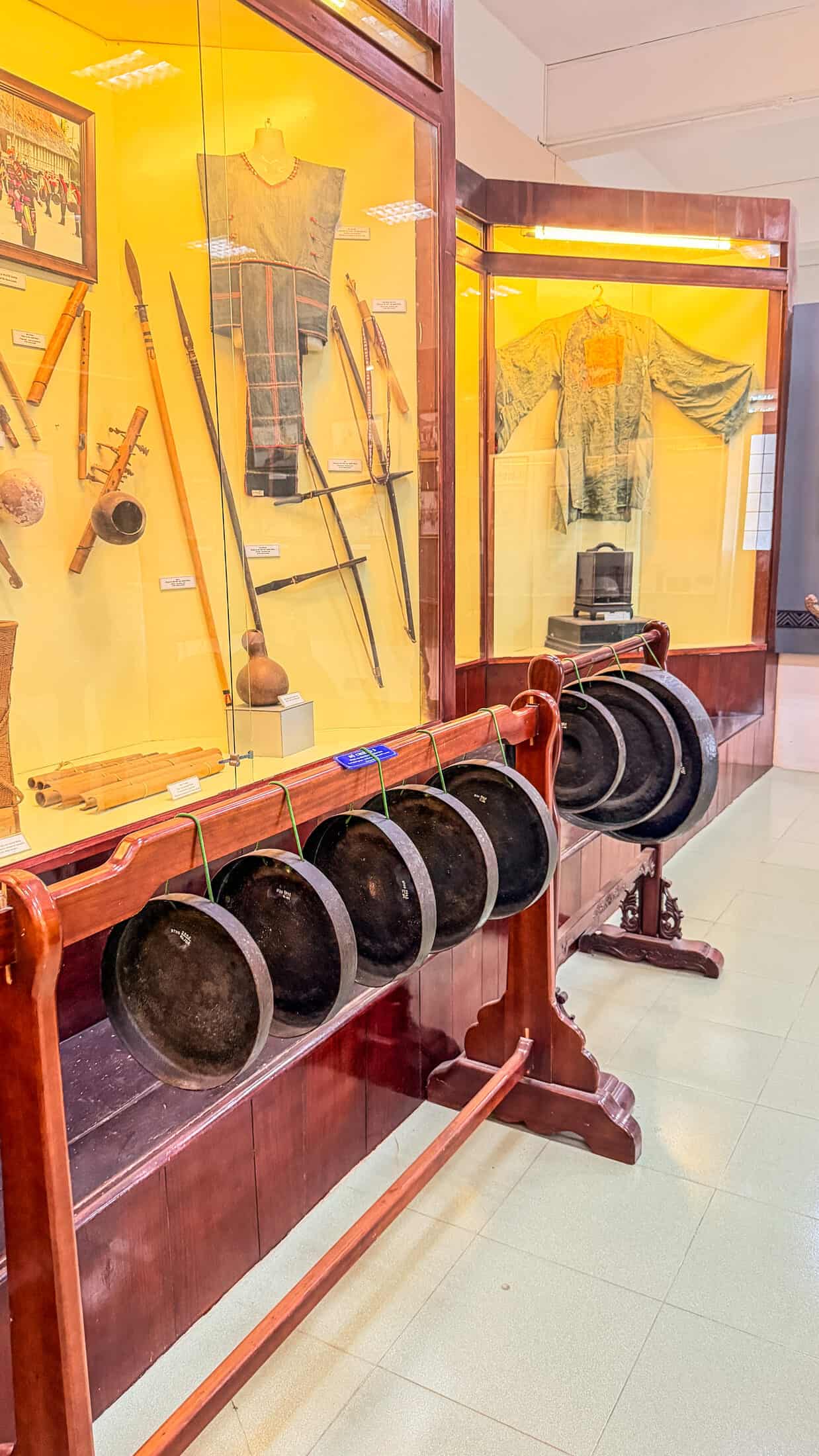
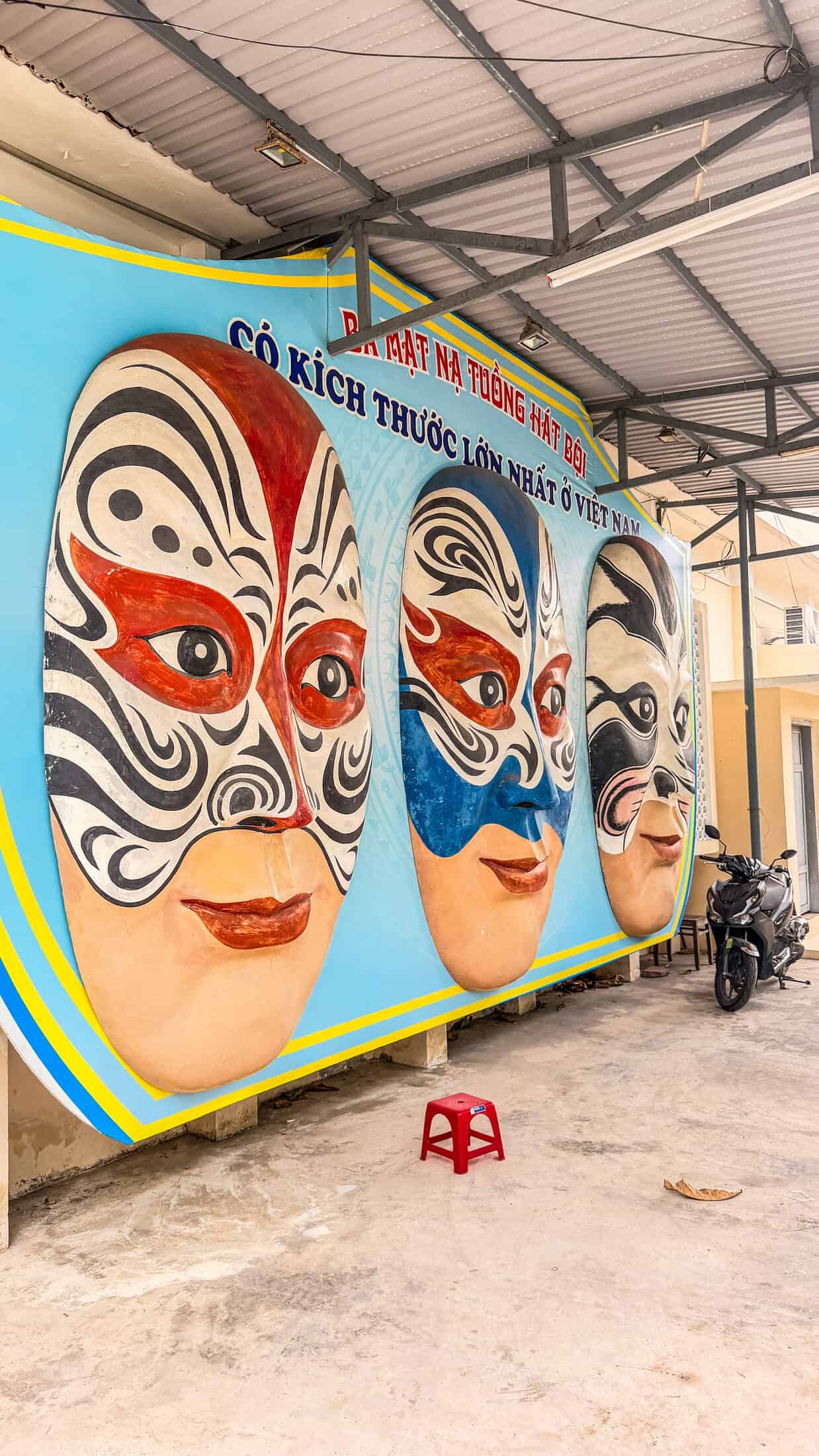
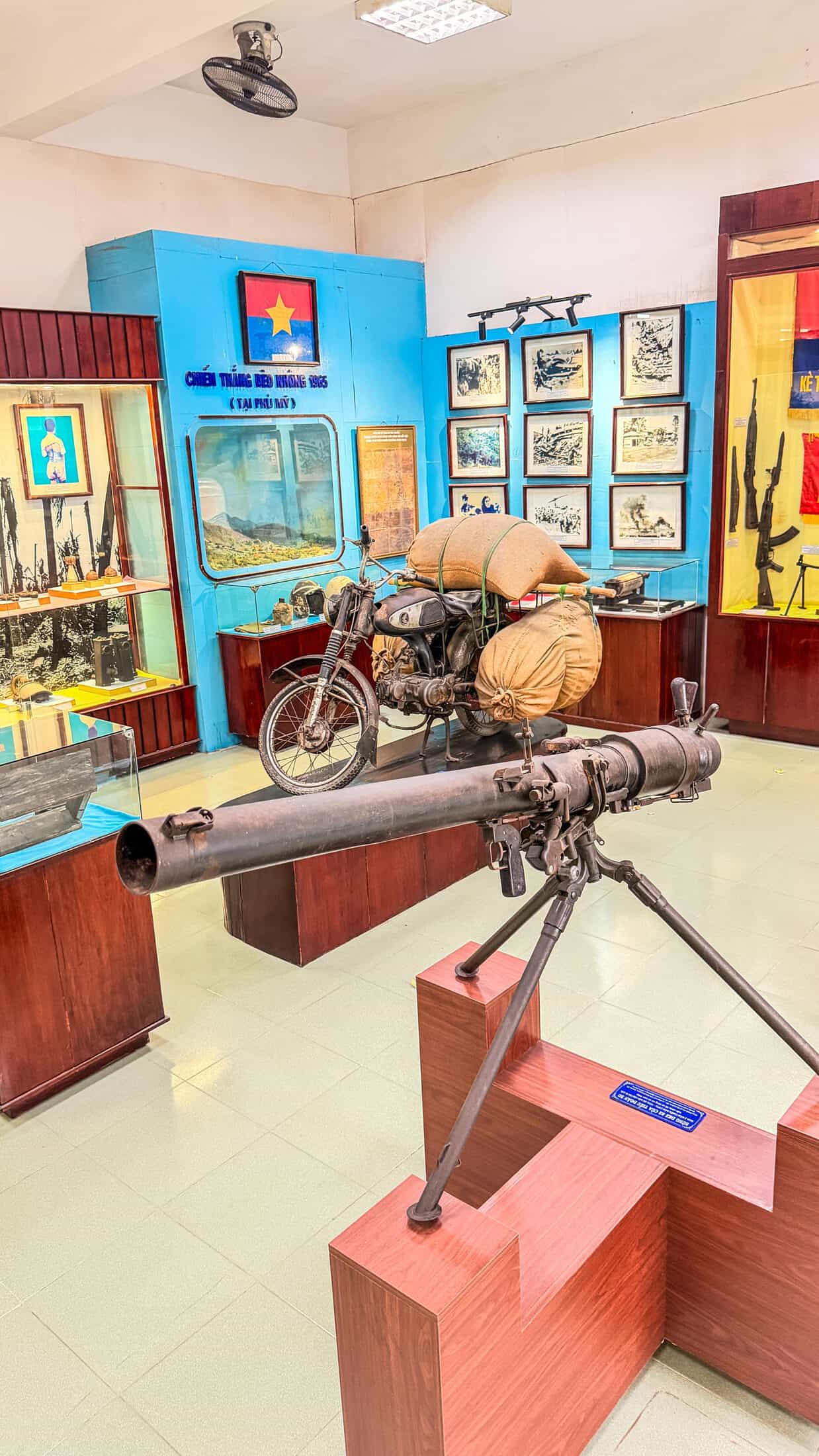
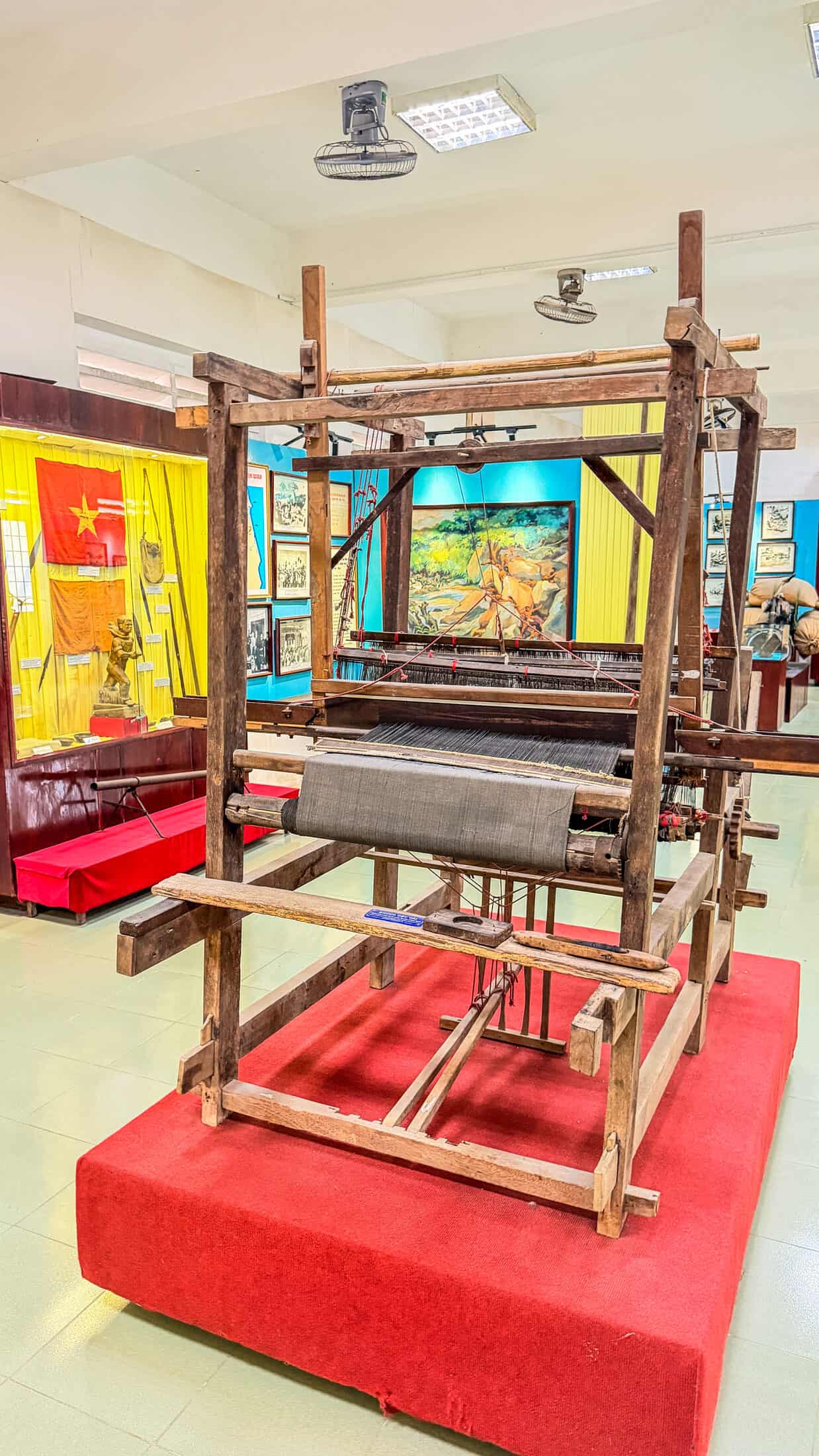
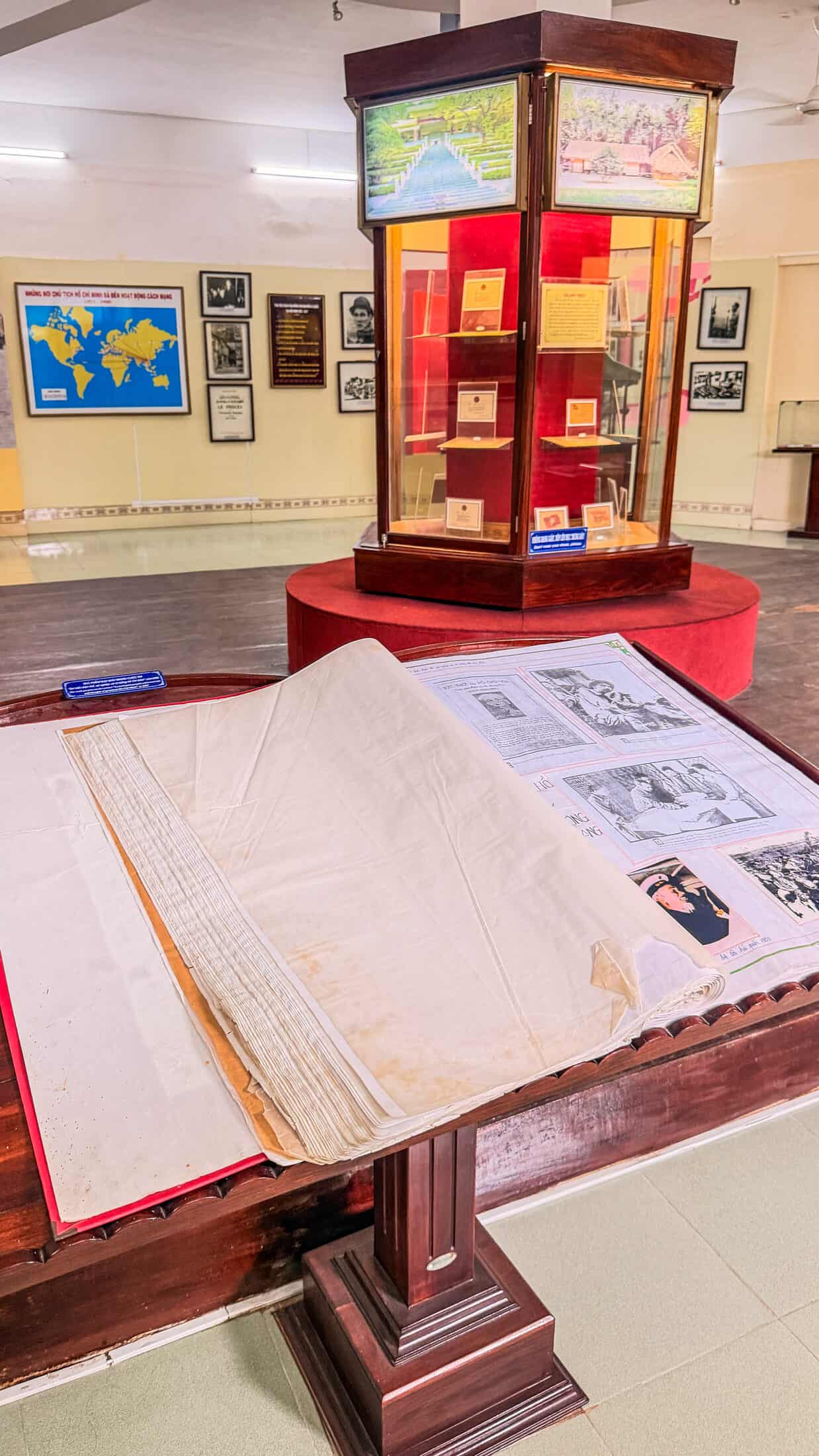
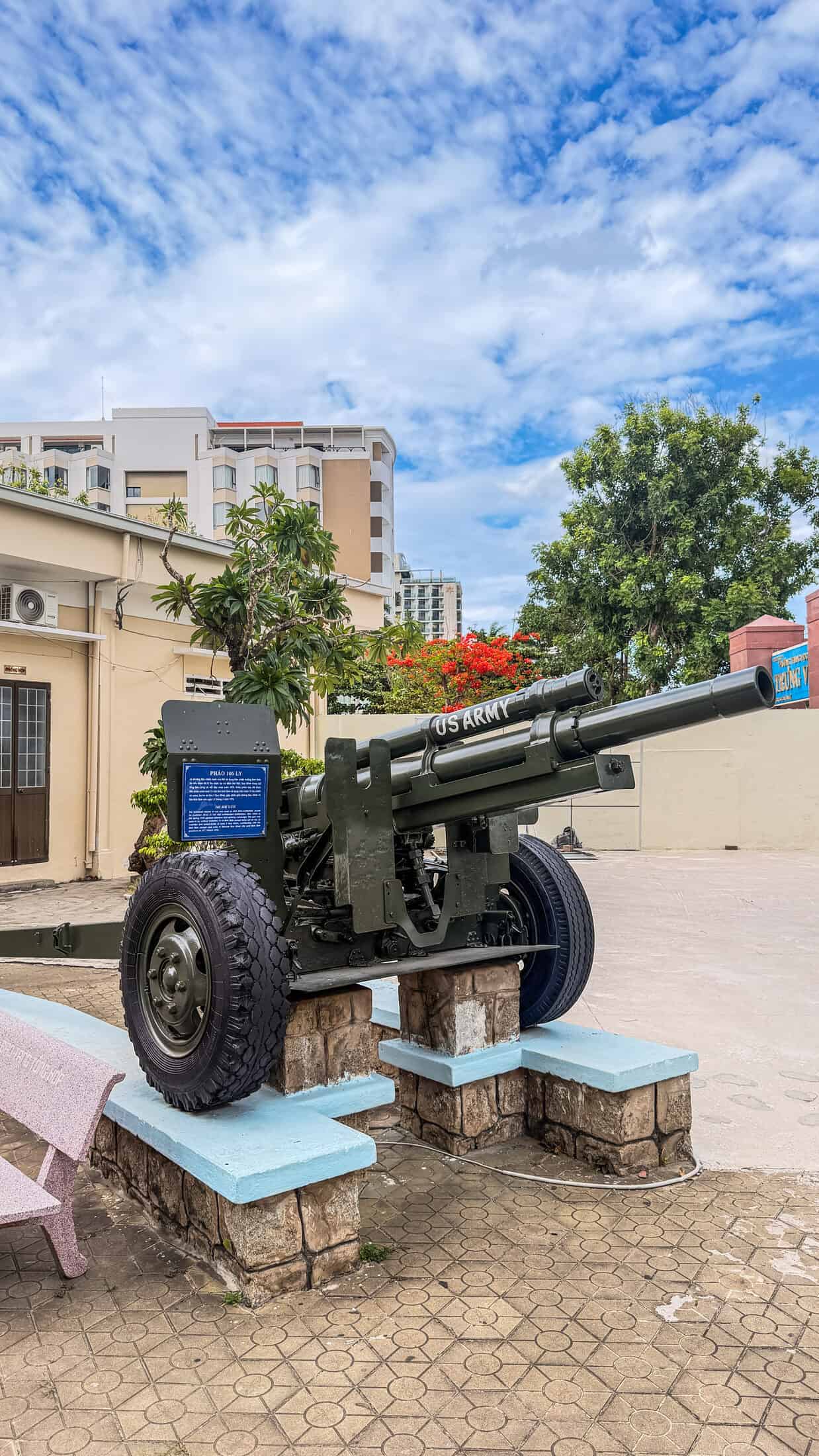
Inside, the collection focuses on the ethnic groups of the wider region — traditional stilt-house models, woven costumes, tools and instruments, displayed alongside descriptive panels. It’s a small, unhurried museum rather than a major national collection, which makes it easy to fit into an hour without feeling rushed.
Like Tháp Đôi, it closes around midday — roughly 11:00 to 13:30 — so plan a morning or late-afternoon visit rather than showing up at lunchtime.
How to Combine All Three
Tháp Đôi, Green Square and the Gia Lai Museum sit close enough together that a taxi or a short walk connects all three without needing a full day. A practical order:
- Start at Tháp Đôi in the morning, before the midday closure.
- Move on to the Gia Lai Museum while it’s still open in the late morning.
- Finish at Quy Nhon Green Square in the late afternoon or evening, when the light and temperature are both better.
- Total time: two to three hours, not counting a coffee stop along the way.
If you’re planning a longer stay in the city, our Quy Nhon for first-timers guide covers the wider trip, and Quy Nhon tours has options for combining Ky Co Beach and Eo Gio on the same trip.
Getting to Quy Nhon’s City Landmarks
All three sit inside the city, not out on the coastal road, so you don’t need a tour or a rented motorbike to reach them. Taxis and ride-hailing apps cover the short hops between them easily, and if your hotel is anywhere near the waterfront, walking between at least two of the three is realistic.
If you’re staying at one of Quy Nhon’s beachfront hotels, expect a short ride rather than a walk to Tháp Đôi and the museum, both of which sit a little further back from the water than Green Square does.
Best Time of Day to Visit
Morning avoids both the heat and the midday closures at Tháp Đôi and the museum. If you’d rather start slow, flip the order — visit the museum and towers in the late afternoon after they reopen, then close the loop at Green Square as the evening cools down, which is when the square is genuinely at its best anyway.
What Makes These Landmarks Different From the Coast
Ky Co and Eo Gio are about nature — cliffs, water, a dramatic coastline. Tháp Đôi, the museum and Green Square are the opposite: history, culture and ordinary city life. Neither replaces the other, but seeing both sides gives a fuller sense of Quy Nhon than a beach-only trip does. For more on how Quy Nhon fits into a wider Central Vietnam route, see our Central Vietnam travel guide.
Quy Nhon City Landmarks Checklist
- Visit Tháp Đôi’s Cham towers (check opening hours before you go).
- Scan the QR code at Tháp Đôi for the audio guide.
- See the Gia Lai Museum’s exhibits on the region’s ethnic groups.
- Walk Quy Nhon Green Square, ideally in the evening.
- Combine all three into one relaxed half-day loop.
Frequently Asked Questions
What is Tháp Đôi in Quy Nhon?
Tháp Đôi (“Twin Towers”) is a pair of red-brick Cham towers built around the late 12th or early 13th century, located inside a small public park in central Quy Nhon.
Why is the Gia Lai Museum located in Quy Nhon?
After Vietnam’s 2026 provincial mergers combined Gia Lai and Binh Dinh, the museum kept its original name even though it’s now based in Quy Nhon, the merged province’s coastal center.
Is Quy Nhon Green Square worth visiting?
Yes, especially in the evening. It’s a landscaped public square with palm trees and cafés, popular with locals for a walk once the heat breaks.
How much time do I need for Quy Nhon’s city landmarks?
Two to three hours covers all three — Tháp Đôi, the Gia Lai Museum and Quy Nhon Green Square — at a comfortable pace.
Do Tháp Đôi and the Gia Lai Museum close during the day?
Yes, both close for a few hours around midday (roughly 11:00–11:30 to 13:30–14:30), so plan a morning or late-afternoon visit.
Final Thoughts
Quy Nhon’s coastline gets most of the attention, and it deserves it. But the city center holds its own low-key half-day — centuries-old Cham brick, a genuinely pleasant public square, and a small museum with a slightly confusing name. Fit it in before or after your Ky Co and Eo Gio day, and you’ll leave with a fuller picture of the city than the beach alone gives you.
Planning a wider Southeast Asia trip?
Cambodia With Me — practical Cambodia travel guides
Siam With Me — Thailand travel guides
Indonesia With Me — Indonesia travel guides
Singapore With Me — Singapore travel guides
Build your Vietnam route — free.