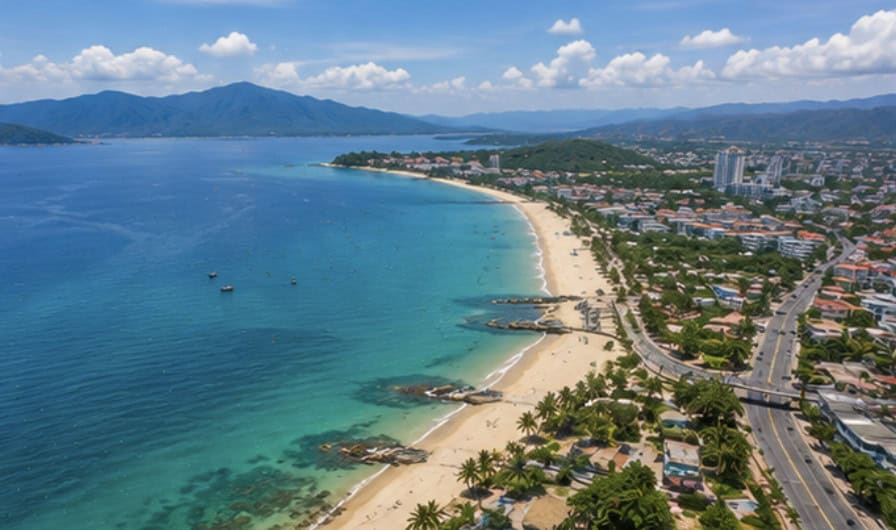
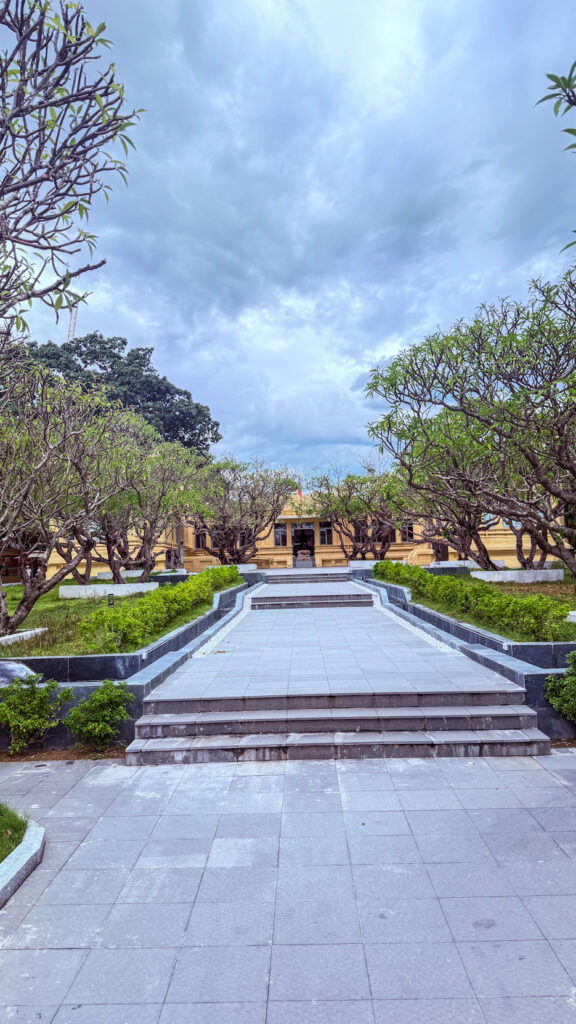
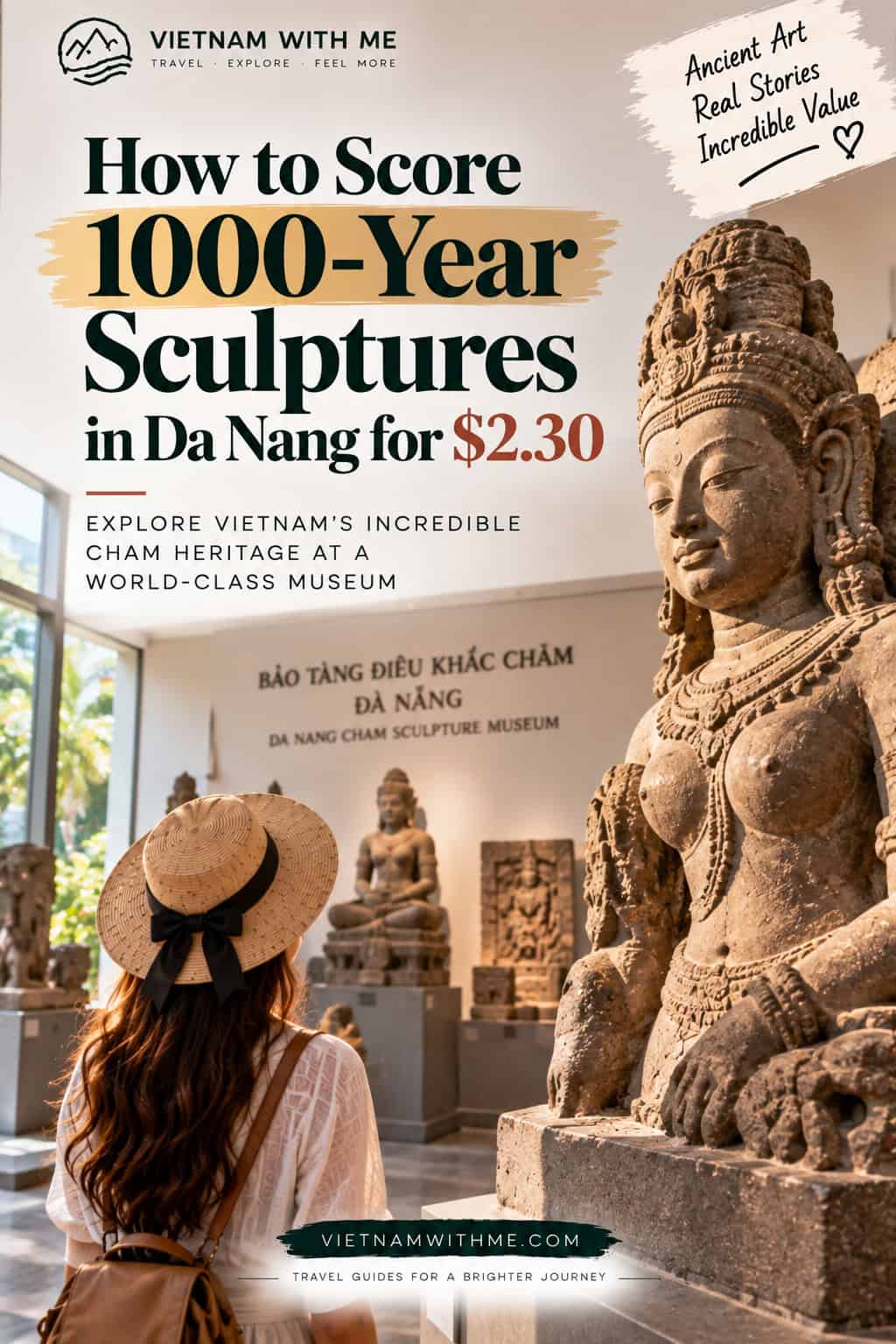
Most travellers in Da Nang head straight to the beach or the Golden Bridge. A few blocks from the Dragon Bridge, a quiet yellow building sits on the street, barely changing the street noise while remaining one of the oldest museums in Vietnam. The Cham Sculpture Museum — Bảo tàng Điêu khắc Chăm — was built by the French in 1915 and remains the only museum in the world dedicated to Cham art. I paid 60,000 VND to get in, and spent the next two hours walking through a thousand years of Hindu mythology carved in sandstone.
🏛️ What’s Inside: 11 Galleries and 3 National Treasures
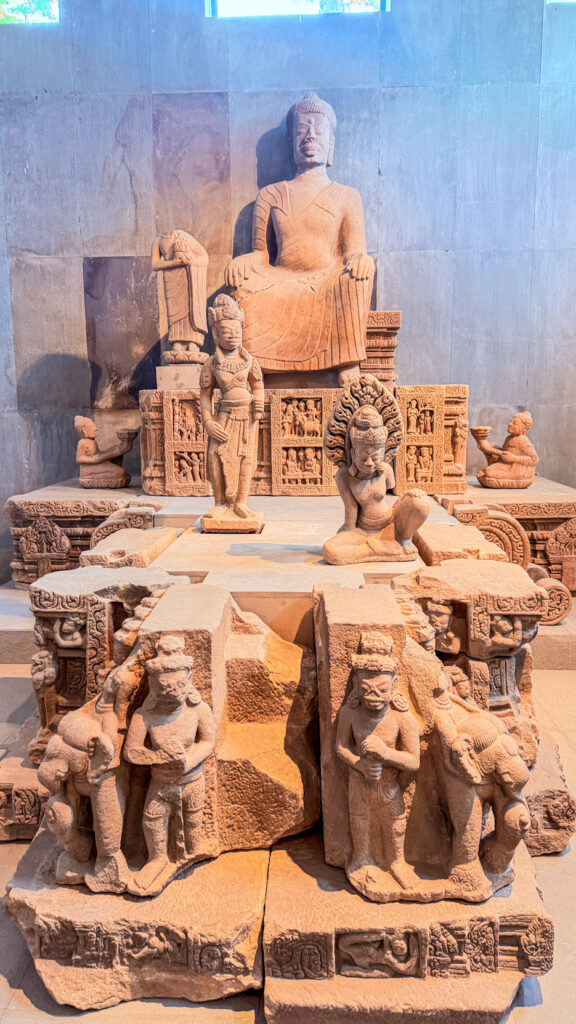
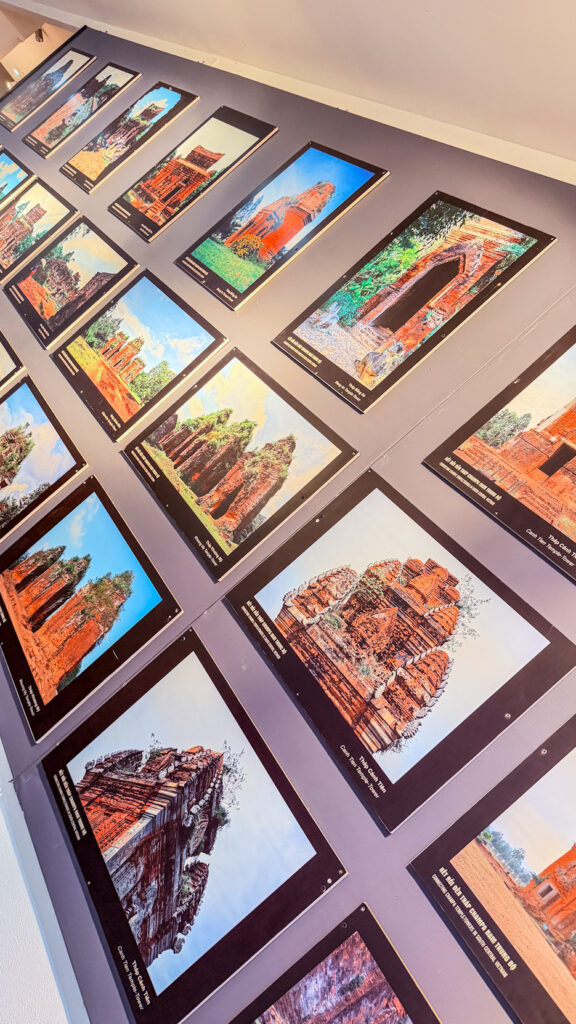
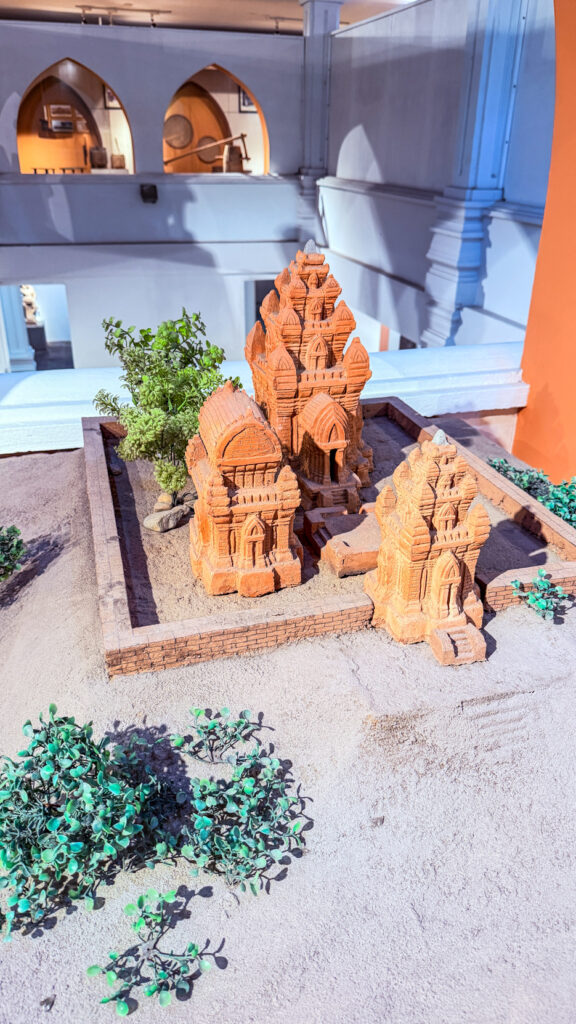
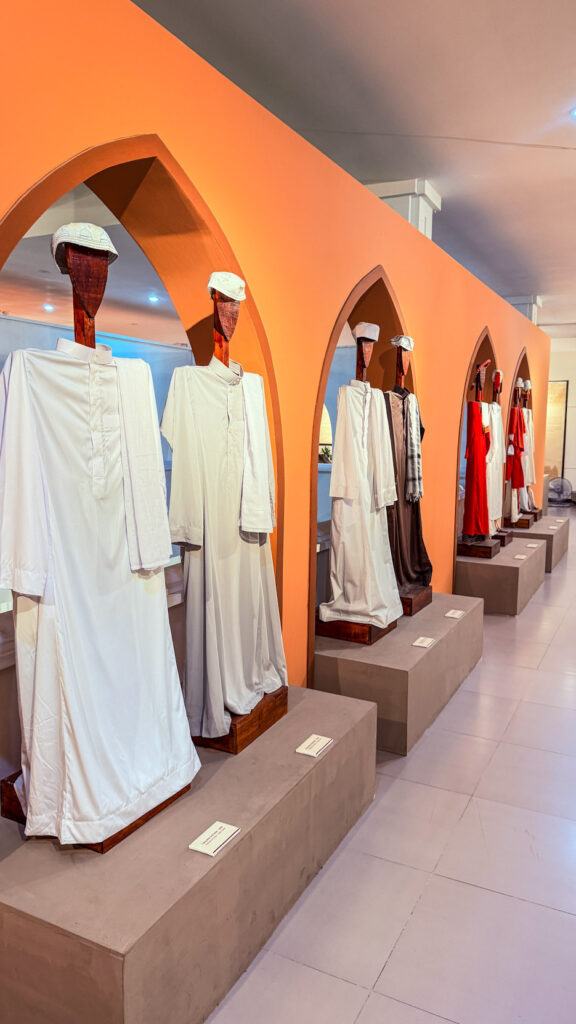
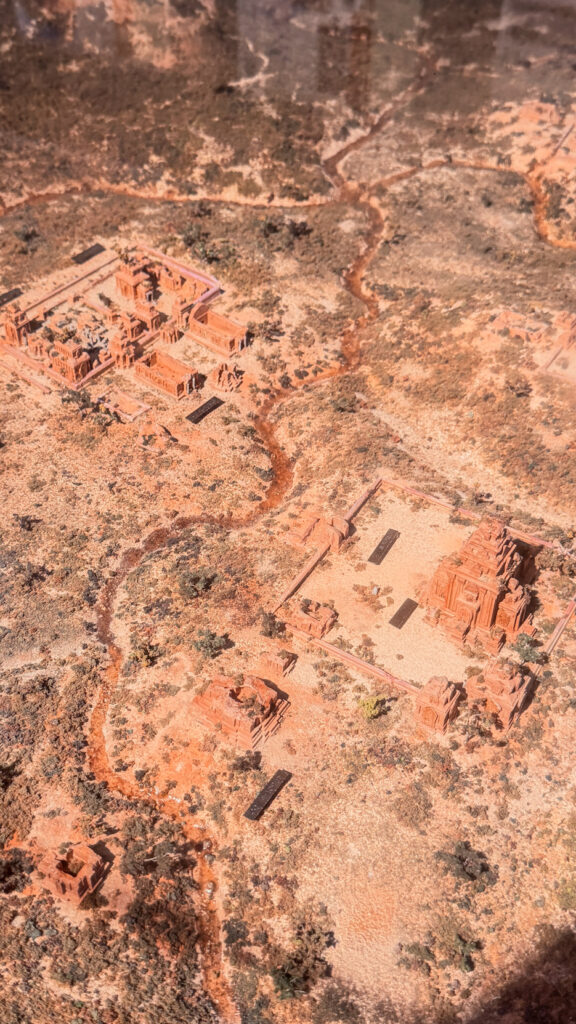
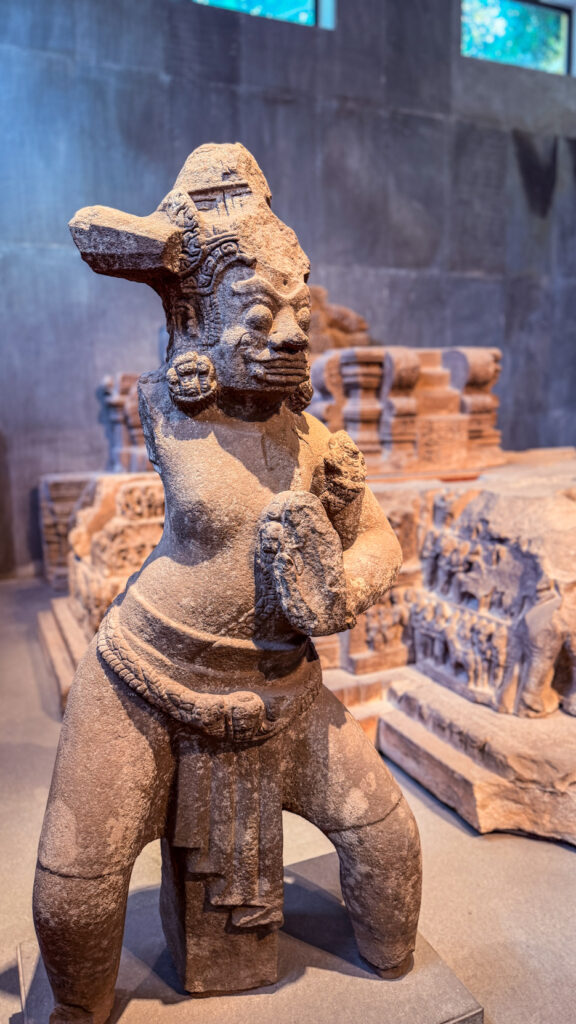
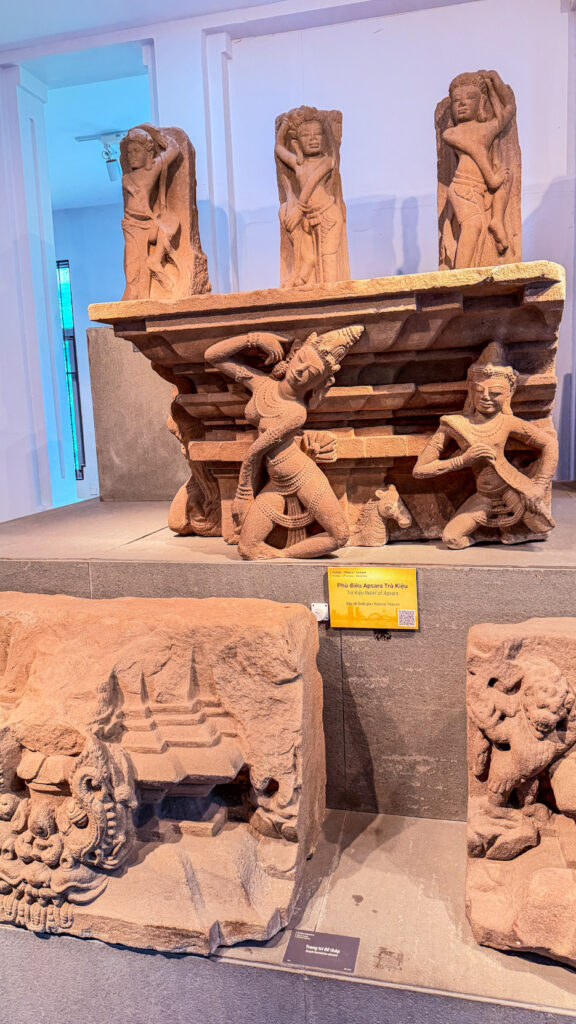
The collection holds over 2,000 artefacts dating from the 5th to the 15th century, of which about 500 are on display. The museum is organized by excavation site — you walk through the My Son Gallery, the Tra Kieu Gallery, the Dong Duong Gallery, and the Thap Mam Gallery, each telling a different chapter of the Cham story. The lighting is soft, the floors are polished stone, and the only sound is the occasional creak of wooden floorboards. There is no multimedia, no touch screens — just the sculptures, standing in rows like ancient guests at a silent banquet.
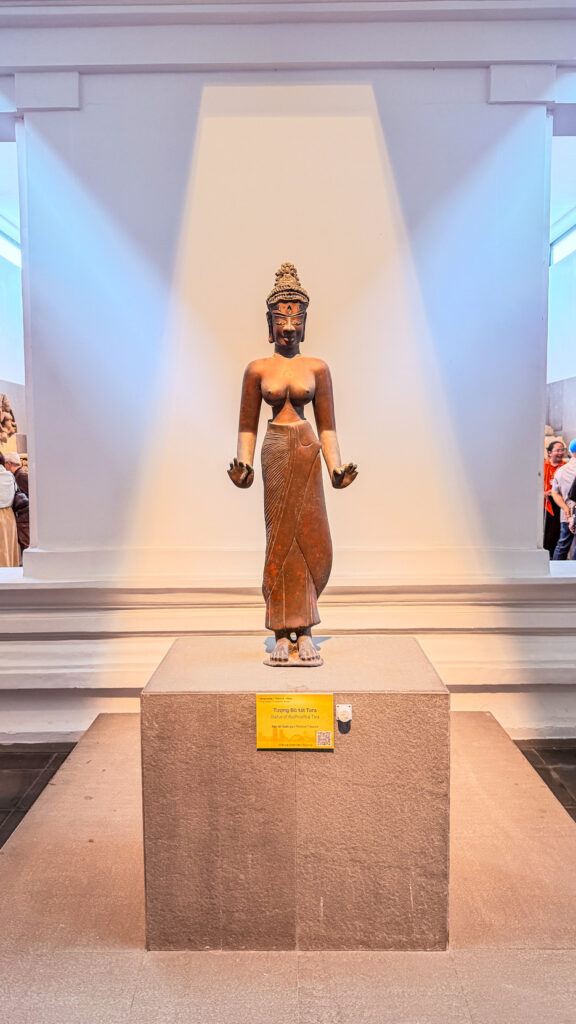
Three pieces are officially recognised as national treasures. The Tra Kieu Altar, from the 10th century, depicts Rama and Sita’s wedding from the Ramayana — the level of detail in the figures’ jewellery and expressions is staggering. The My Son E1 Altar is the most complete record of early Cham ascetic life, with inscriptions that scholars still study. The bronze statue of Bodhisattva Tara, sometimes called the ‘Eastern Mona Lisa,’ stands in its own alcove — it’s smaller than you expect, and that makes the craftsmanship even more impressive. The Cham Sculpture Museum highlights these three pieces as its national treasures.
🗿 Sandstone, Terracotta, Bronze: The Cham World
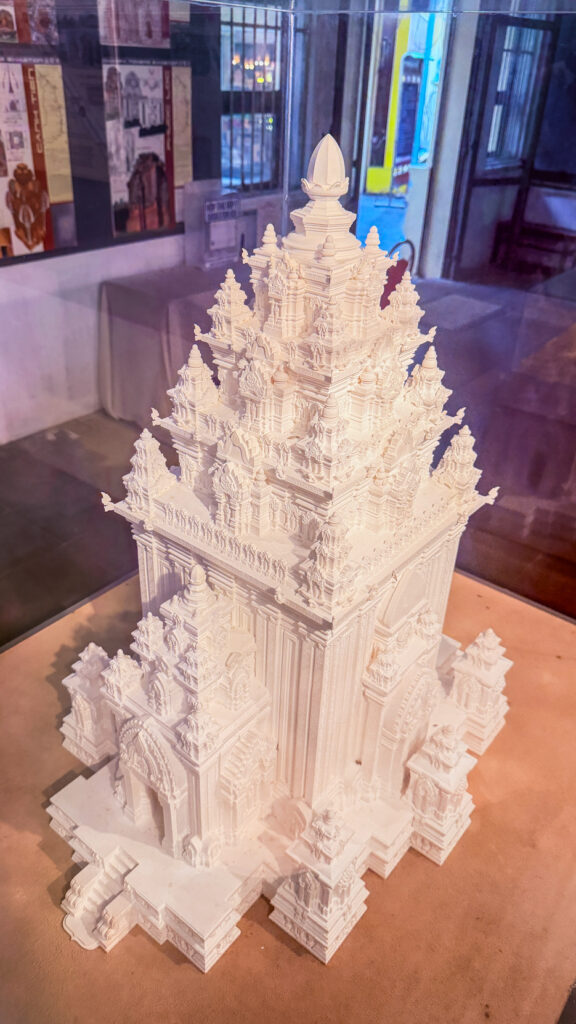
What makes the Cham collection so striking is the range of materials. The sandstone sculptures are the most famous — life-size deities, mythical animals, and architectural decorations that once adorned temple towers. But the terracotta pieces, some still showing traces of original paint, feel more intimate: household objects, small altars, and ritual vessels that connect you to the daily life of a civilisation that dominated central Vietnam for a millennium. The bronze collection is small but exquisite, with several statues that were cast using the lost-wax technique long before it became common in Europe.
📍 Practical Info
Address: 02 Đ. 2 Tháng 9, Hải Châu, Đà Nẵng. Hours are 7:30–11:00 AM and 1:00–5:00 PM, with Mondays closed.
Additionally, the ticket is 60,000 VND (about $2.30). Time needed is 1.5–2.5 hours.
Photo fee is 10,000 VND, payable at the entrance.
I went on a weekday morning, and for the first hour I had the galleries almost to myself. By 10 AM a few small tour groups arrived, but the museum never felt crowded. There’s no café inside, so bring water if you plan to stay long. The museum sits right next to the Dragon Bridge, so after your visit you can walk straight onto the promenade and compare thousand-year-old carvings with a fire-breathing steel dragon.
If you’re looking for a hotel within walking distance, you can browse hotels in Da Nang and filter by Hải Châu District — staying here puts the museum, the river, and the city’s best cafés right on your doorstep.
🗺️ What to Pair It With
The Cham Museum is the oldest museum in the city, but it’s not the only one worth your time. If you want to continue the historical thread, the Hồ Chí Minh Museum – Military Zone 5 is a short Grab ride away and offers a completely different lens on Vietnam’s past. For a full guide to Da Nang’s museum scene, my upcoming 3 Museums in Da Nang article will pull everything together in one place. And if you’re heading south afterward, the Marble Mountains — with their own Cham carvings and panoramic views — are a logical next stop.
💎 The Bottom Line
The Cham Sculpture Museum is not a flashy attraction. It doesn’t have a gift shop, a café, or an audio guide. What it has — a thousand years of Cham art, three national treasures, and the kind of silence that lets you actually look — is rarer in Da Nang than you’d think. Come early, take your time, and leave a small donation if you can. This is the kind of museum that survives on people who care.
Frequently Asked Questions
How much does it cost to visit the Cham Sculpture Museum?
60,000 VND (about $2.30).
When was the museum built?
In 1915, by the French — it remains the only museum in the world dedicated to Cham art.
How many artifacts are on display?
About 500 of the museum’s 2,000+ artifacts, dating from the 5th to 15th century.
What are the three national treasures?
The Tra Kieu Altar (10th century, depicting Rama and Sita’s wedding), the My Son E1 Altar, and the bronze Bodhisattva Tara statue, sometimes called the “Eastern Mona Lisa.”
What are the opening hours?
7:30–11:00 AM and 1:00–5:00 PM, closed Mondays.
Disclosure: This article contains affiliate links. If you book through them, I may earn a small commission at no extra cost to you.
Planning a wider Southeast Asia trip?
Cambodia With Me — practical Cambodia travel guides
Siam With Me — Thailand travel guides
Indonesia With Me — Indonesia travel guides
Singapore With Me — Singapore travel guides
Build your Vietnam route — free.