I bought the ticket for the open‑top bus with a specific plan in mind: ride to the Central Post Office, snap a photo, hop off at the Cathedral, and then maybe wander to the market. But when the bus pulled away from the Opera House, I found myself sinking into my seat on the upper deck and feeling the first genuine breeze I’d felt all day. The engine hummed. The city spread itself out like a sprawling, chaotic tapestry. I stayed put. And I kept staying put, all the way around the loop, until the neon lights of Bitexco Tower flickered on above me and I realized three hours had vanished. That accidental inertia – that simple decision to not move – turned out to be the most revealing thing I did in Saigon. Let me explain why you should do exactly the same.
This isn’t a review of a bus route. It’s a love letter to sitting still while the world moves around you – and to the surprising realisation that sometimes the best way to understand a city is to stop trying to conquer it and let it unfold instead.
🎬 A Moving Cinema at Golden Hour
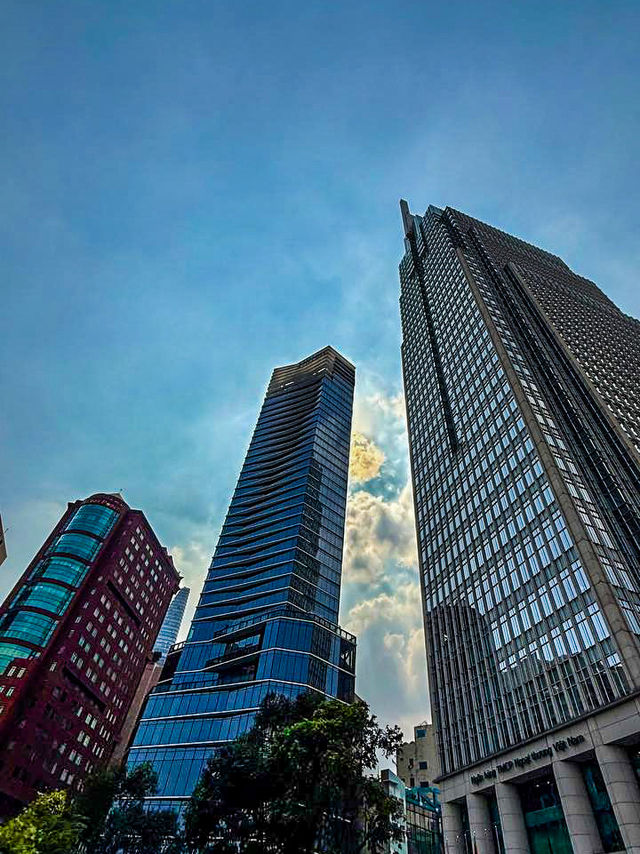
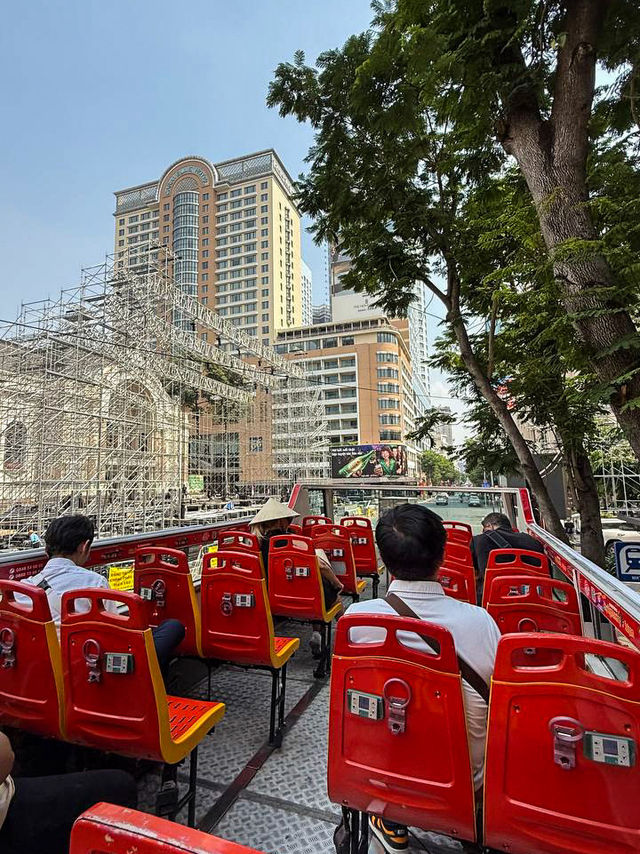
I boarded around 4:00 PM. It turned out to be the perfect time, though I didn’t plan it that way. The late afternoon sun softened into a honeyed glow that made the French colonial facades look like they’d been painted by someone with an extraordinarily gentle brush. Over the next hour, the sky shifted from gold to tangerine to a deep bruised purple, and the city lights began to flicker on one by one. From the upper deck, I watched the Central Post Office slide past – that magnificent Gustave Eiffel‑designed marvel – and then, moments later, the twin spires of Notre‑Dame Cathedral, which felt almost close enough to touch. The bus didn’t stop, and neither did my smile.
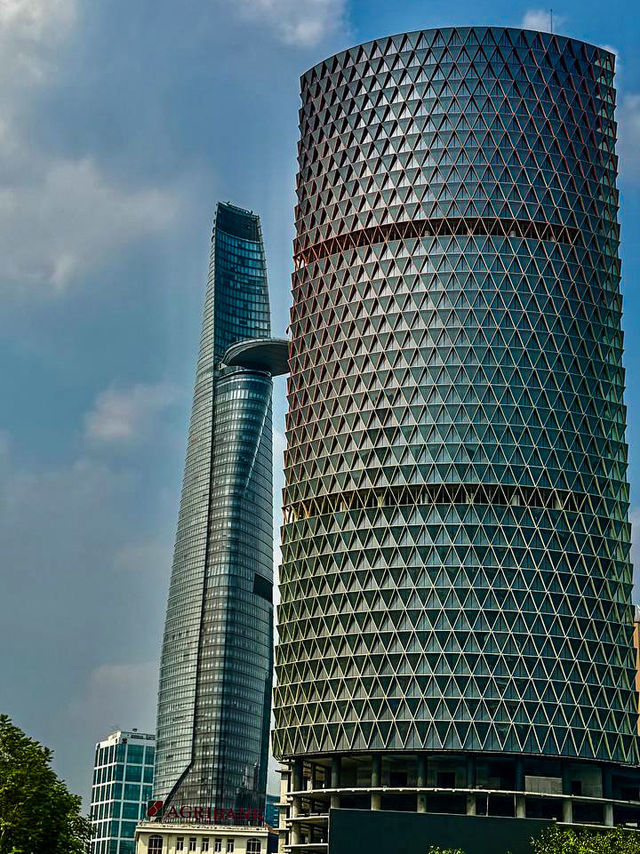
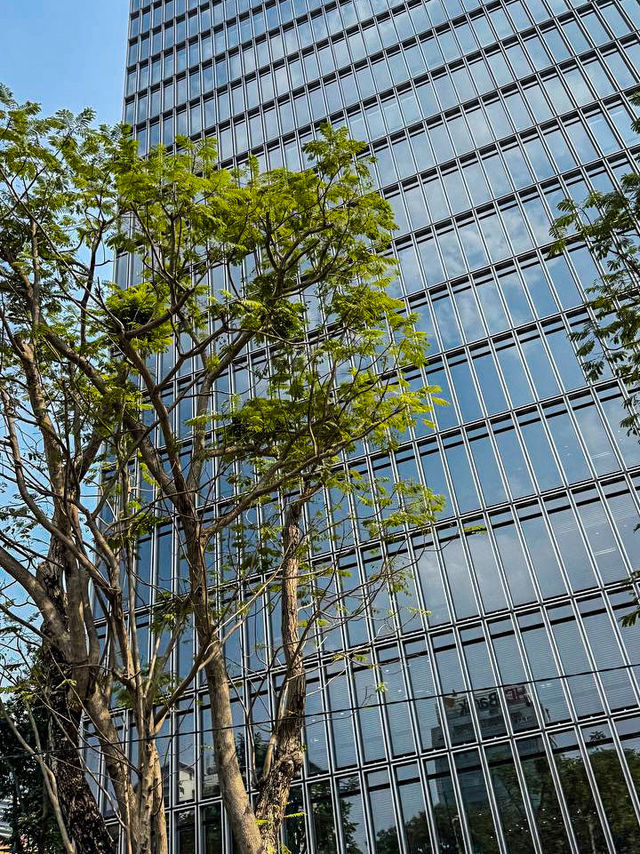
The contrast between the landmarks was mesmerising. One moment I was staring at the glassy, futuristic Bitexco Tower; the next, I was gliding past the elegant, decaying villas on Dong Khoi Street. Walking or taking a taxi never gives you this elevated, cinematic perspective. It felt like watching a documentary edited in real time, with each intersection bringing a new scene. For a completely different kind of elevated experience – one that’s stationary, air‑conditioned, and 79 floors up – the Landmark 81 observation deck offers a breathtaking counterpart to the moving bus. Between the two, you’ll have seen Saigon from every possible angle.
🛋️ Zero Stress, Zero Planning, All Vibe
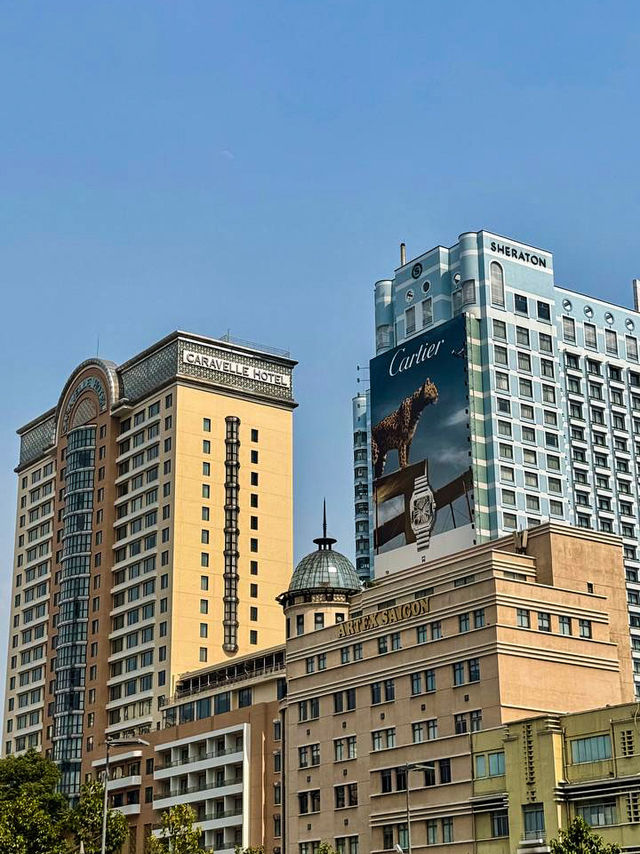
Navigating Saigon on foot or by taxi can feel like a contact sport. The constant honking, the rivers of motorbikes, the sidewalk vendors who somehow always find a way to block your path – it’s thrilling but draining. On the Saigon open‑top bus, there’s none of that. You simply sit, watch, and let the city come to you. The day tours run roughly every half hour from 9:00 AM to 4:00 PM, and a night loop operates from 5:30 PM to 9:00 PM. I didn’t look at a schedule. I just showed up at the Opera House, bought a ticket, and climbed aboard.
The beauty of this approach is that it removes every decision. You don’t have to figure out which landmark to visit next, or whether you have time to squeeze in one more before dinner. The bus decides for you. It is, in a strange way, the most relaxing thing I’ve done in any Vietnamese city. I sat there with my coffee, my camera, and a growing sense of peace, while Saigon’s chaos churned below me like a distant, muted thunder. If you’re the sort of traveller who needs a comfortable base to return to after your bus adventure, my Top 10 Best Hotels in Ho Chi Minh City guide can help – the departure point is right in the heart of District 1, within walking distance of most central accommodation.
🏛️ The Route in Detail (And Why You Don’t Need to Get Off)
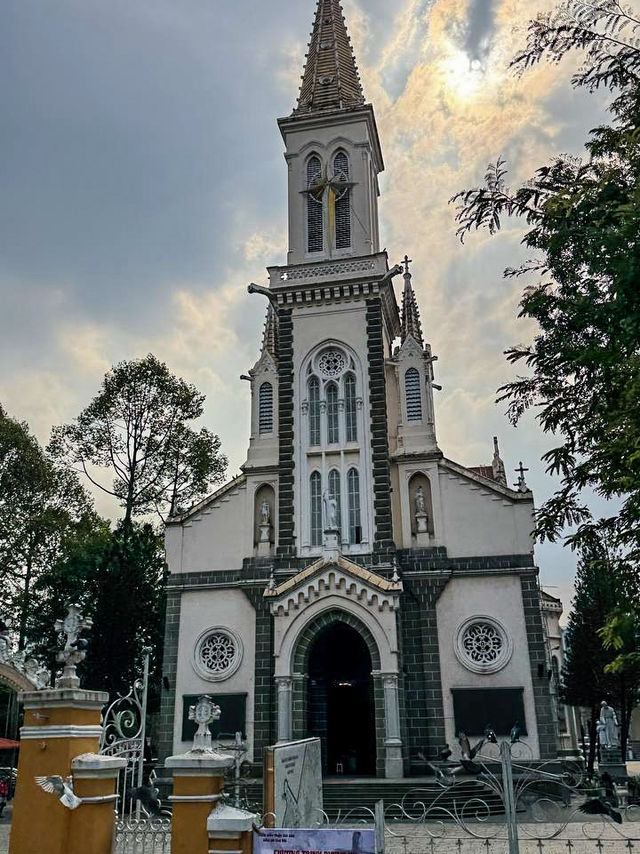
From the Opera House, the bus loops through the city’s most iconic landmarks. You’ll pass the Notre‑Dame Cathedral and the Central Post Office, both stunning examples of French colonial architecture that are even more impressive from above. Then the bus weaves into the roundabout at Ben Thanh Market, where the chaos of street vendors and honking motorbikes reaches its peak – and you’re floating serenely above it all, untouchable. Further along, you’ll catch the Independence Palace and the elegant People’s Committee Building, its iconic yellow facade and French flags glowing in the afternoon light. The bus even ventures beyond District 1, out toward the modern skyline of Phu My Hung and the Crescent Mall, where the city feels suddenly futuristic and planned.
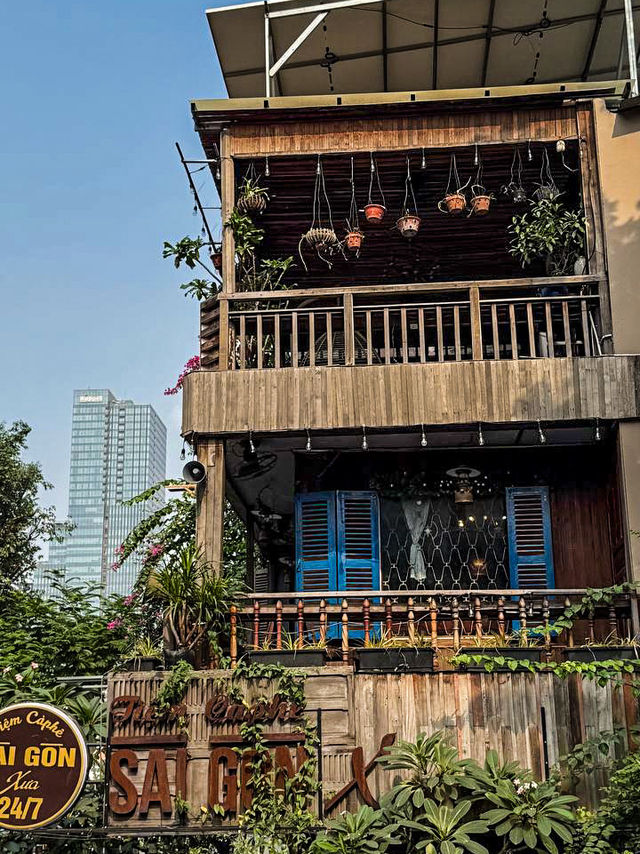
The whole loop takes about an hour, but I stretched it to nearly three by simply staying on. By the third time we passed the Cafe Apartments on Nguyễn Huệ – that old nine‑floor building filled with indie coffee shops – I was making mental notes of which floors I’d explore the next day. The bus became my reconnaissance mission, and it worked brilliantly. For a totally different, ground‑level exploration of the city’s creative heart, those apartments are unmissable.
🎟️ Tickets, Tips, and Practicalities
- 💰 Prices: A 4‑hour pass with unlimited stops costs around 150,000 VND. The night tour (after 5:30 PM) is a fixed route without stops. I recommend the day pass starting around 4 PM – you’ll get both the golden hour and the early evening neon glow in a single loop.
- 🎧 Audio Guide: Available in multiple languages, but honestly, I brought my own headphones and a playlist of old Vietnamese ballads. The audio is hit‑or‑miss, and the view needs no commentary.
- 🧴 What to Bring: A wide‑brimmed hat, sunscreen, and a raincoat. The sun on the open deck is relentless, and tropical showers appear out of nowhere. The bus usually provides raincoats if needed, but your own is better.
- 📸 Photo Tip: Sit on the left side of the upper deck for the best views of the Cathedral and the Post Office. The right side is better for the riverfront and Bitexco Tower. For the sunset itself, the back row gives you an unobstructed view of the sky turning pink behind the skyline.
- 📍 Starting Point: Saigon Opera House (7 Lam Son Square, District 1). You’ll see the red double‑decker buses parked right there, impossible to miss.
- ⏰ Operating Hours: Day tours 9:00 AM – 4:00 PM (every ~30 mins). Night tours 5:30 PM – 9:00 PM.
If you’re arriving from Tan Son Nhat Airport and want to head straight to the bus, a pre-booked airport transfer can drop you at the Opera House in about thirty minutes. For those who prefer to explore on their own after the loop, renting a car or motorbike is straightforward and lets you revisit the spots that caught your eye during the ride. I made a mental note of a charming alley near the Opera House and spent the next morning photographing it properly – something I’d never have found without the bus. A local SIM or eSIM keeps your maps running smoothly as you navigate back to those spots, especially useful in the winding streets of District 1.
🌃 When the Sun Goes Down (Don’t Get Off Yet)
By the time I finished my third loop, the city had transformed completely. The streetlights flickered on in waves – first the golden bulbs of the French quarter, then the neon signs of the Japanese restaurants on Lê Thánh Tôn, and finally the blinding LED displays of the Bitexco Tower, which pulsed softly against the night sky. The bus felt different in the dark – quieter, more intimate, the wind a little cooler. Couples held hands on the deck. A child fell asleep on his mother’s shoulder. The tour guide switched from historical narration to soft music, and for a long stretch, nobody spoke at all.
I disembarked near the Opera House and walked, still buzzing, toward the Book Street on Nguyễn Văn Bình – a 100‑metre pedestrian oasis of silence and fairy lights just steps from the bus stop. It was the perfect landing: from the macro view of the city to a tiny, tree‑shaded lane where the only sound was the rustle of pages. That contrast – the bus’s sweeping panorama and the street’s intimate quiet – is what makes Saigon so endlessly compelling. For another slice of that quiet, but one that’s hidden in a narrow alley and feels like 1975, the hidden vintage cafe in District 3 is a remarkable follow‑up.
💎 Verdict: Stay On, Zone Out, Repeat
I’ve been on open‑top buses in London, Paris, and Barcelona. None of them felt like this. In those cities, the bus is a tool – a way to get from A to B while checking landmarks off a list. In Saigon, the bus is the experience. It’s a moving sanctuary above the chaos, a slow‑motion film screening of one of the world’s most kinetic cities. It is, without question, the best 150,000 VND I’ve ever spent.
So here’s my advice: buy the day pass. Board around 4 PM. Find a seat on the left side of the upper deck. Order a coffee, put your phone down, and just watch. Do not get off at the Cathedral. Do not get off at the Post Office. Stay on, stay still, and let Saigon come to you. That’s the magic of the Saigon open‑top bus. And if you’re the sort of person who likes to be prepared for anything – even a sudden tropical downpour on an open deck – I always recommend having good travel insurance. It’s the kind of thing you never think about until you need it, and then you’re very glad you have it.
Frequently Asked Questions
What time do the open-top bus tours run?
Day tours run roughly every half hour from 9:00 AM to 4:00 PM, and a night loop operates from 5:30 PM to 9:00 PM.
What’s the best time to board for photos?
Around 4:00 PM, to catch the golden hour light shifting into evening city lights.
What landmarks does the route pass?
The Central Post Office, Notre-Dame Cathedral, Bitexco Tower, and Dong Khoi Street’s colonial villas.
Where do the buses depart from?
The Opera House — just show up and buy a ticket.
Is there an alternative elevated view of the city?
Yes, the Landmark 81 observation deck offers a stationary, air-conditioned view 79 floors up.
Disclosure: This article contains affiliate links. If you book through them, I may earn a small commission at no extra cost to you. I only recommend experiences I have personally tested and loved.
Planning a wider Southeast Asia trip?
Cambodia With Me — practical Cambodia travel guides
Siam With Me — Thailand travel guides
Indonesia With Me — Indonesia travel guides
Singapore With Me — Singapore travel guides
Build your Vietnam route — free.