Most people walk straight past it.
They see the weathered facade and the tangle of electrical wires.
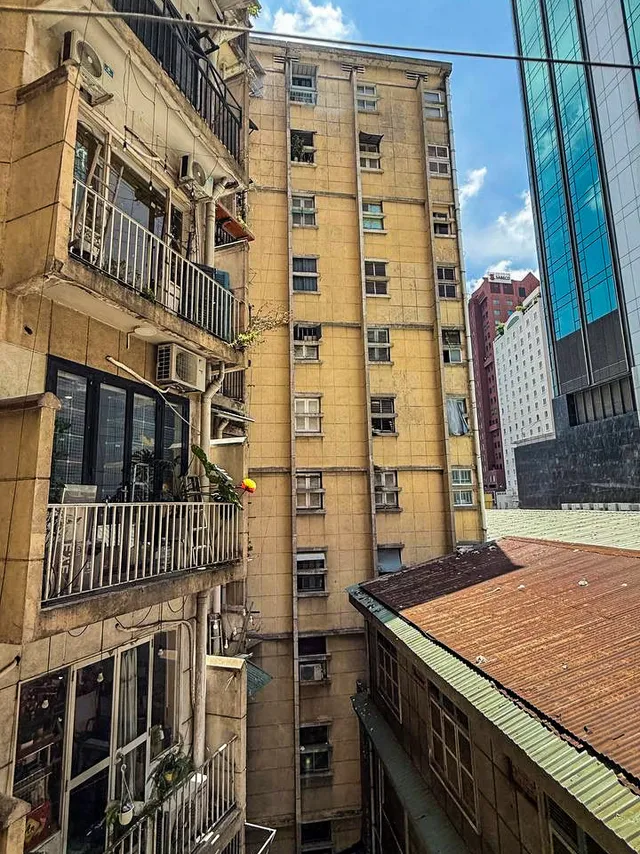
The faded yellow paint catches their eye, but they move toward the shiny malls down Nguyễn Huệ.
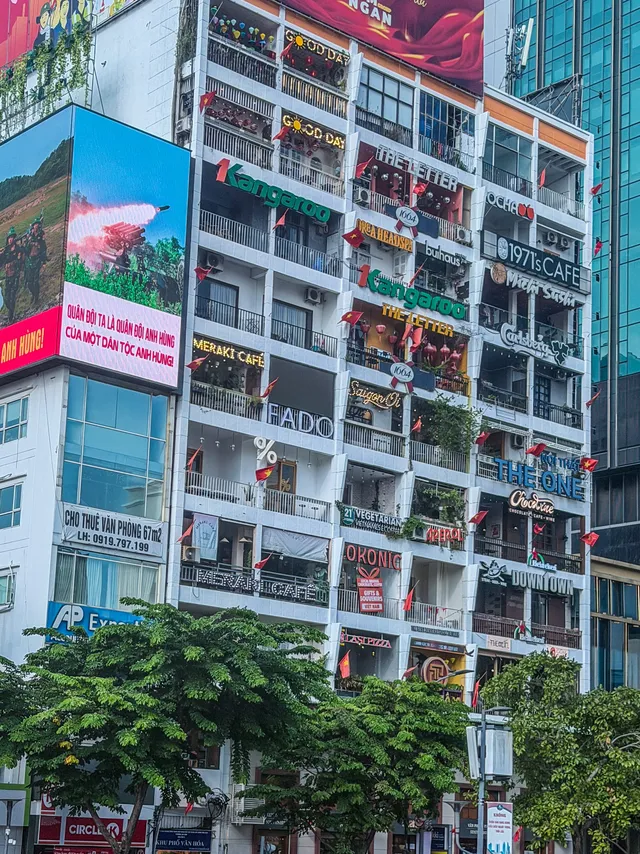
Big mistake — what they have just passed is Cafe Apartments Saigon, a nine-story vertical universe of coffee, creativity, and old-Saigon soul.
I have spent entire afternoons inside this building, and I still have not visited every cafe 🏢.
The address is 42 Nguyễn Huệ, smack in the middle of District 1’s pedestrian walking street.
To understand why this building matters, you have to know what it has been through.
And the story is far more interesting than any guidebook lets on.
If you are already checking flights to Saigon, this is exactly the kind of place.
Cafe Apartments Saigon rewards wandering rather than ticking a tourist checklist.
🏛️ From War to Walking Street
Built in the early 1960s, this nine-story block was originally a dormitory for high‑ranking government officials and American military advisors during the Vietnam War. One of its most notable residents was Trương Bửu Khánh, the personal interpreter of President Ngô Đình Diệm, who lived on the sixth floor from 1961 to 1963. His son Marcelino Truong later captured the family’s chaotic wartime life in a striking graphic memoir, Such a Lovely Little War. American officers occupied the storefront units, while the rest of the building housed South Vietnamese officials and their families.
After the Fall of Saigon in 1975, the building’s fortunes shifted dramatically. Some apartments were given to shipyard workers from the Ba Son Shipyard, and for decades the building remained a modest, lower‑middle‑class residence. In 2015, Nguyễn Huệ was transformed into Saigon’s first pedestrian walking street. Real estate prices along the strip exploded. Small cafes and fashion boutiques, priced out of conventional retail spaces, began approaching the building’s apartment owners with an unusual proposition: let us turn your living room into a coffee shop. The practice was technically illegal — households cannot legally conduct business inside residential units in Vietnam — but people did it anyway, and the building took on a second life.
Today, nearly every front‑facing unit has been converted. The building houses more than 50 independent cafes, boutiques, co-working spaces, and restaurants. Notices of eviction for the businesses occasionally make the news, but for now, they remain. Nobody knows for how long. Which makes every visit feel a little precious. If you want to stay as close as possible to this living piece of history, you can browse hotels near Nguyễn Huệ Street and wake up right in the heart of the old city.
🛗 The Elevator, the Stairs, and the Ritual
You enter through a narrow doorway to the left of the ground‑floor Fahasa Bookstore. Immediately, you face a choice that defines your experience: stairs or elevator. The French‑style stone staircase twists up through the center of the building, its walls lined with faded tiles and decades of wear. Taking the stairs means discovering cafes by accident — hearing music drift out of an open door on the third floor, catching the scent of fresh coffee on the fifth, and deciding on the spot that this is where you will stop.
The elevator is the smart play if you want to start from the top and work down. It costs 3,000 VND per ride (about 12 US cents), and there is usually an operator sitting on a tiny stool inside, collecting coins. Take it to the ninth floor, then wander down. Many cafes will refund the elevator fee when you buy a drink, so hold onto your ticket.
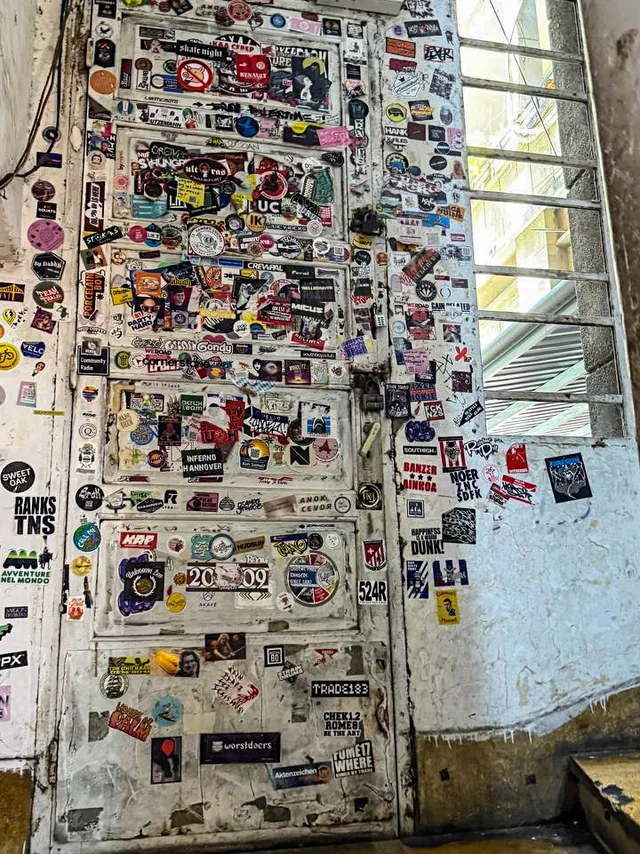
The corridors are narrow, the lighting is dim, and the walls are plastered with dozens of hand‑painted signs for the cafes within. It feels less like a commercial building and more like a secret you have been let in on. If you want a completely different perspective of the city after you leave, check out my guide to riding Saigon’s open‑top bus at sunset — it is the perfect way to see the rest of the landmarks after you have spent the morning inside.
☕ A Cafe for Every Mood
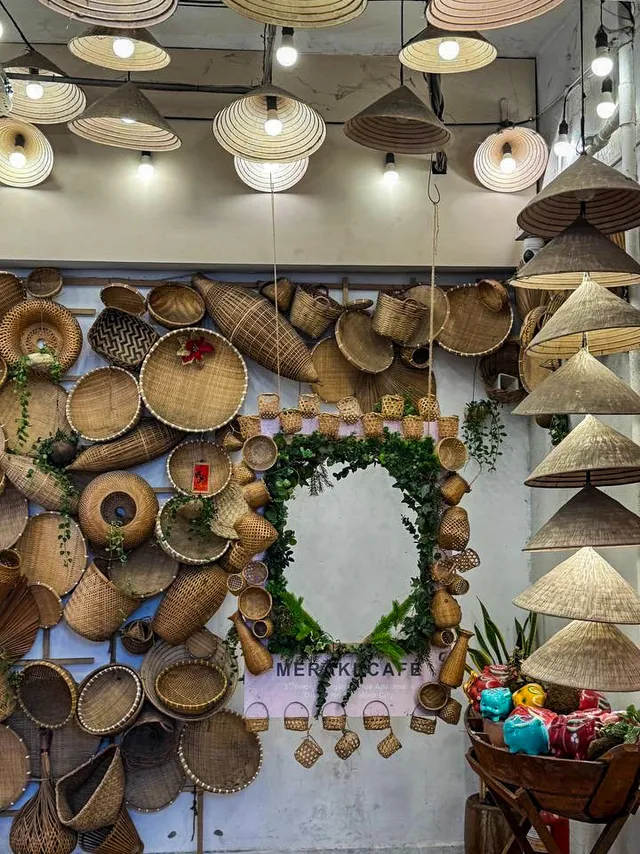
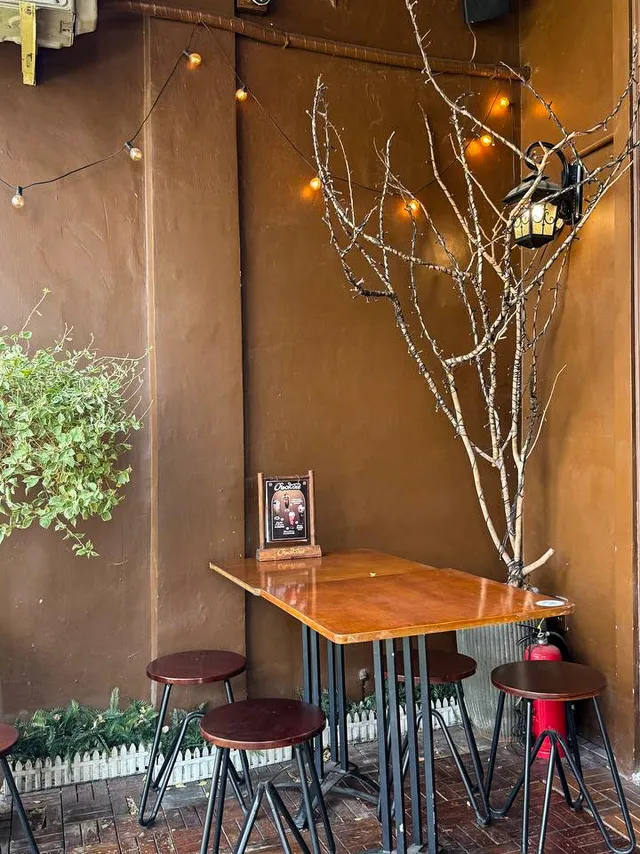
The beauty of The Cafe Apartments is that there is no single “best” spot. Each cafe feels like an extension of someone’s personality. Here are a few that have stuck with me.
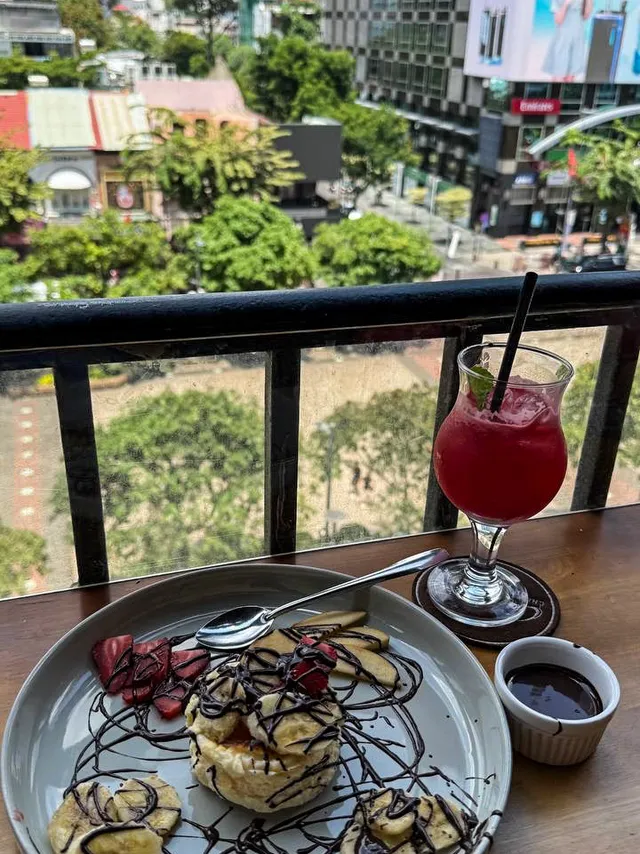
On the fourth floor, Thinker and Dreamer is tiny — just a handful of seats and a lot of plants — but its balcony looks directly down the length of Nguyễn Huệ toward the Bitexco Tower. The minimalist white interior makes the view the star. Coffee runs 50,000–100,000 VND, and the light pastries are surprisingly good for a place this size.
Two floors up, Saigon Oi leans hard into nostalgia. Mismatched vintage furniture, old photographs of Saigon on the walls, and a balcony that fills with golden light around 4 PM. Their cà phê sữa đá is strong enough to wake you from a heat‑induced coma. Many visitors name it their favorite in the building.
On the seventh floor, Orientea offers something completely different — a Chinese and Japanese tea house where the tea arrives in ornate wooden boxes with dozens of flavors to choose from. It is quiet, unhurried, and feels worlds away from the chaos of the street below.
And if you are craving something beyond coffee, the building delivers. The third floor houses Downtown Steakhouse, a surprisingly elegant European‑style restaurant where you can get a proper steak with wine sauce while watching the pedestrian crowds below. Two floors above, Jurong serves Singaporean frog porridge — a dish I did not expect to find in a Saigon apartment block, but it is genuinely excellent. On the ground floor, Fahasa Bookstore sells English‑language books, maps, and stationery — perfect for picking up a Vietnam travel guide before you continue exploring.
🌆 When the Sun Goes Down
By day, The Cafe Apartments (Cafe Apartments Saigon) is a quiet maze of coffee lovers and laptop workers. By night, it transforms.
The balconies flicker on in different colors — neon pink, warm yellow, soft blue — and the building itself becomes a spectacle viewed from the walking street below. The cafes that were serene at 10 AM now hum with chatter, music, and the clinking of glasses. Some spots, like Krystalini Cocktail Bar on the first floor, shift entirely into evening mode, serving inventive cocktails in a dim, intimate setting.
The best seat in the house is any balcony after 6 PM. Below you, Nguyễn Huệ Walking Street fills with families, street performers, and couples strolling between the fountain and the river. The air cools, the city lights reflect off the glass towers, and you realize you have been sitting there for two hours without noticing. This is what people mean when they say Saigon never really sleeps — it just moves indoors and upward.
If you are planning to stay overnight in the city center, there are plenty of excellent hotels near Nguyễn Huệ within walking distance of the building. Waking up and walking straight to your favorite balcony for a morning coffee is a ritual worth building a trip around.
💡 How to Do It Right
The building opens around 7:30–8:00 AM, and most cafes stay open until 10:00 PM. Mornings are quietest — you can wander empty corridors and have balconies almost to yourself. Afternoons fill up, especially on weekends, and by evening the more popular spots can be standing‑room only. Wear comfortable shoes. Bring cash, because not every tiny cafe takes cards. And do not look up reviews before you go. The whole point is to trust your instincts — if a door is open and the vibe feels right, walk in. That is how I found my favorite spot, and I still could not tell you its name.
The Cafe Apartments sit on a street that has reinvented itself multiple times — from a wartime boulevard to a traditional thoroughfare to the pedestrian artery it is today. The building itself may not be here forever. But while it is, it remains the most Saigon thing in Saigon: chaotic, beautiful, and completely uninterested in being anything other than itself.
Frequently Asked Questions
Where is Cafe Apartments Saigon located?
At 42 Nguyễn Huệ, in the middle of District 1’s pedestrian walking street.
When was the building built?
In the early 1960s, originally as a dormitory for government officials and American military advisors.
How many cafes are inside?
More than 50 independent cafes, boutiques, co-working spaces, and restaurants.
When did the building become a cafe destination?
After 2015, when Nguyễn Huệ became Saigon’s first pedestrian walking street and rents nearby exploded.
How do I get up to the different floors?
Through a narrow doorway beside the ground-floor Fahasa Bookstore, choosing between a French-style stone staircase or the elevator.
Disclosure: This article contains affiliate links. If you book through them, I may earn a small commission at no extra cost to you. I only recommend experiences I have personally tested and loved.
More from our travel guide network
Build your Vietnam route — free.