Nha Trang is famous for its beaches. The city’s spiritual side is just as compelling, and far less crowded.
The Stone Church on Thái Nguyên attracts a steady stream of visitors. Several other hidden churches Nha Trang sit quietly on side streets, away from the crowds. Their stories weave into the fabric of the city’s history, adding quiet depth to the area ⛪.
🏰 Stone Church — French Gothic on a Hill
📍 01 Thái Nguyên, Phước Tân, Nha Trang | 🕒 Best visited 8:00–11:30 AM or 2:00–5:00 PM | 🎟️ Free
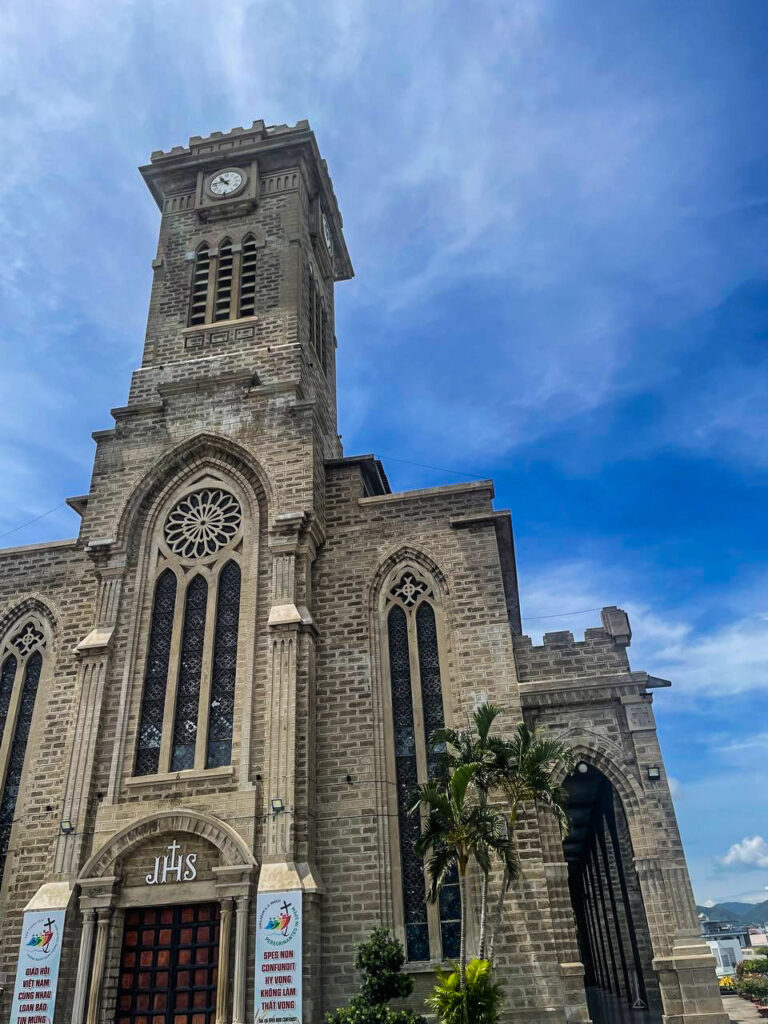
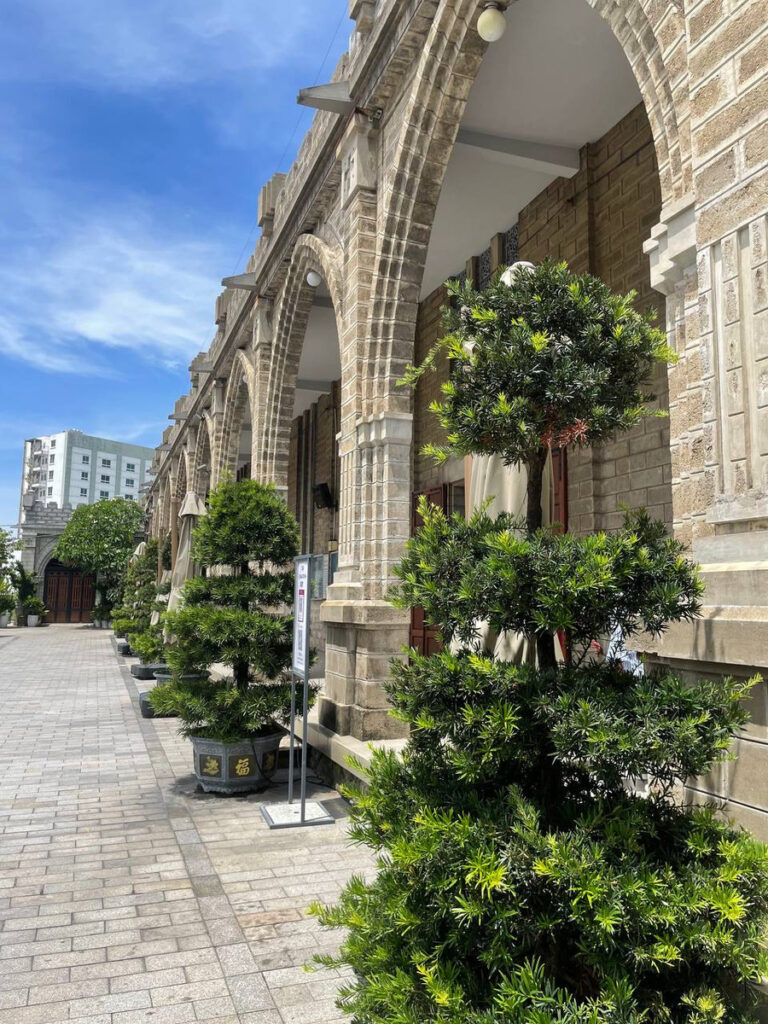
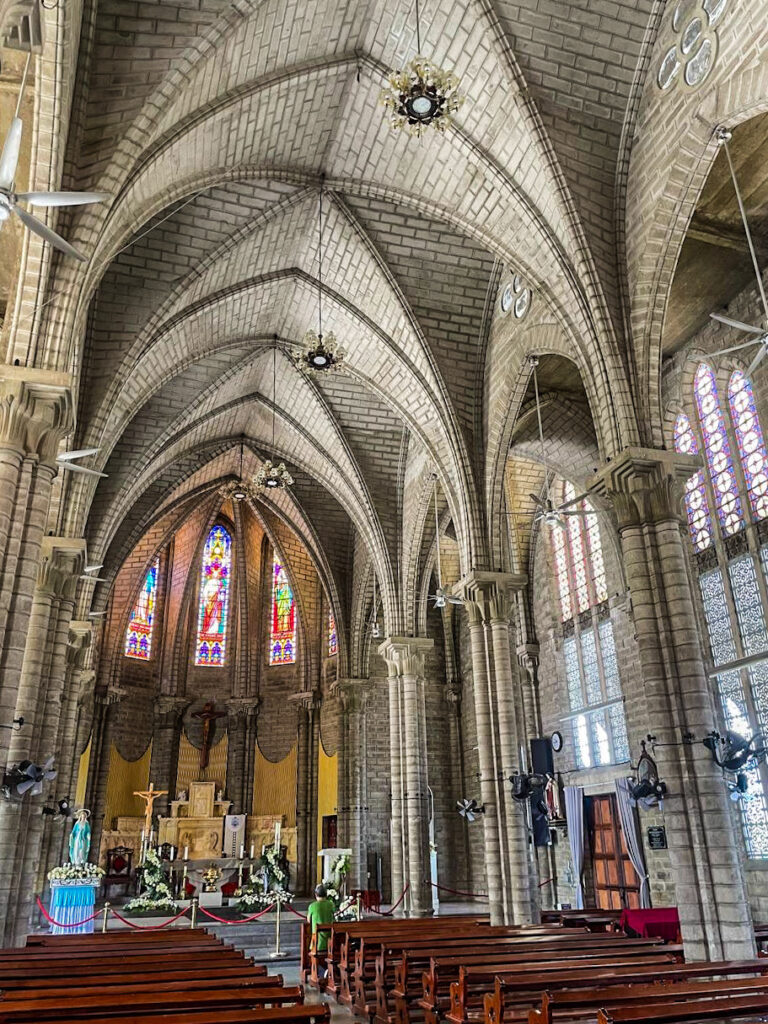
The one church that appears on postcards is Nha Trang Mountain Church, officially Christ the King Cathedral, but widely known as the Stone Church. It is worth visiting for its architecture alone. Built in the early 1930s by French missionary Father Louis Vallet, who blew up the top of Bong Hill with 500 crates of explosives to create a flat foundation, this neo-Gothic structure feels like a piece of medieval Europe dropped among palm trees. The 38-metre bell tower, stained-glass windows, and carved mahogany doors are impressive, and the courtyard view over the city’s red-tiled roofs to the sea is the best in central Nha Trang. Go early in the morning, before the heat and the tour buses arrive. For the full history, including how Father Vallet moved a mountain, read my complete guide to the Stone Church.
🕊️ Khiết Tâm Church — Built by Refugees in 1956
📍 14 Hoàng Diệu, Vĩnh Hoà, Nha Trang | 🕒 Mass: Weekdays 5:15 PM, Sundays 5:00 AM & 5:00 PM | 🎟️ Free
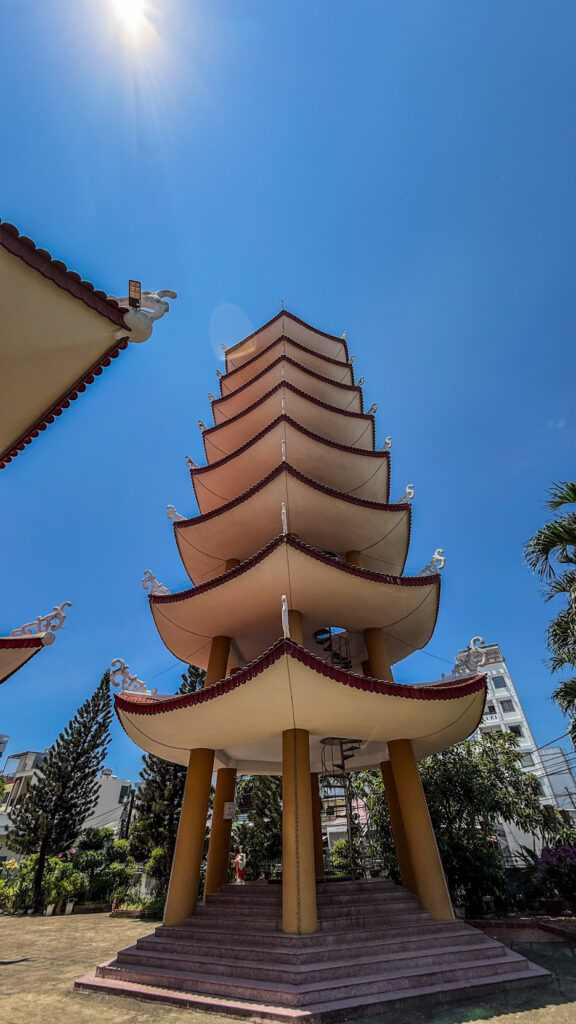
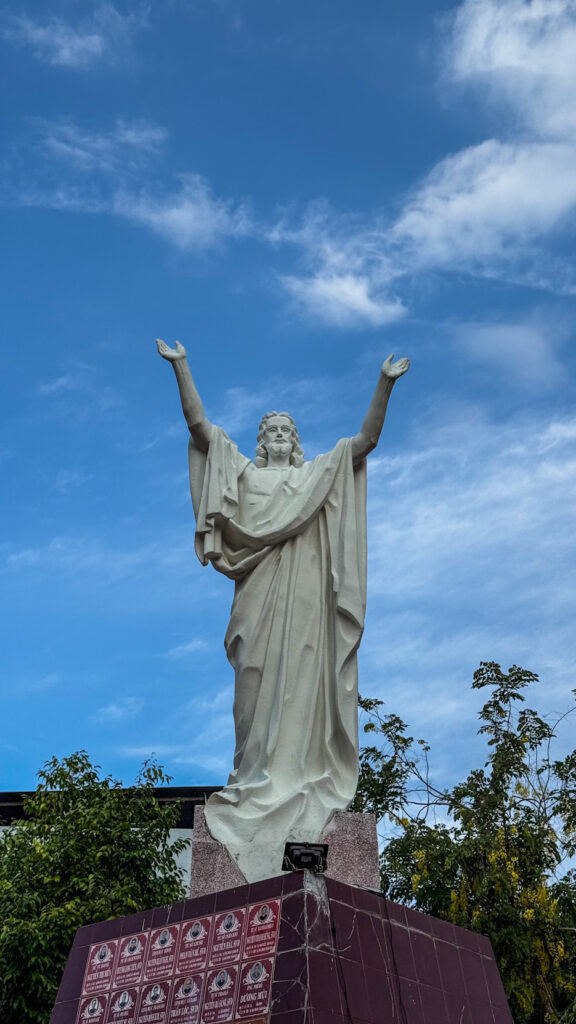
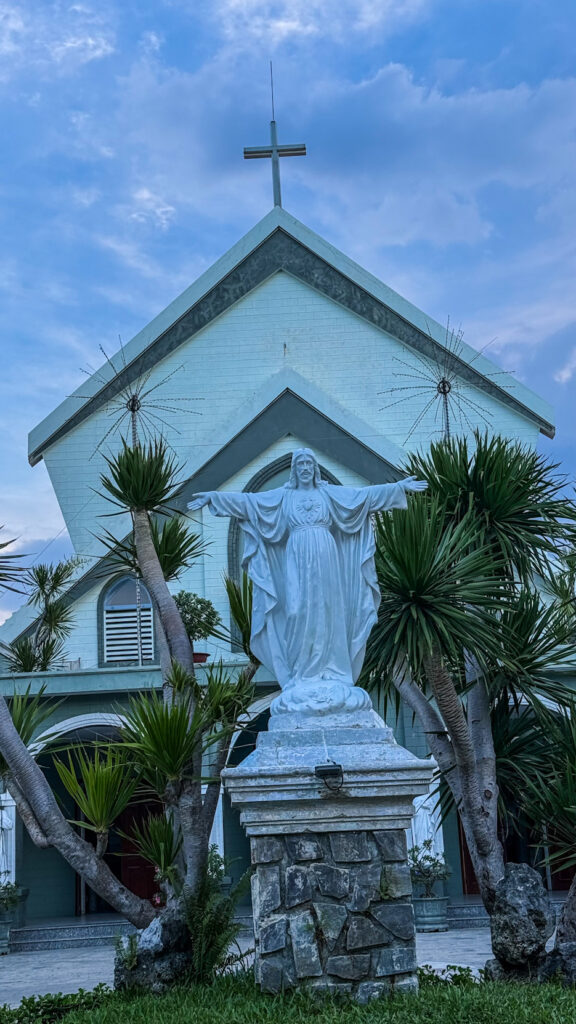
A 15-minute walk south of the Stone Church, Khiết Tâm Church carries a far more dramatic story. After the 1954 Geneva Accords split Vietnam, Catholic families from the North fled south. Around a thousand of them settled near the Nha Trang coast, and in 1956, Khiết Tâm Parish was established to serve them. The first church was built in four days. It was expanded, decayed, demolished, and rebuilt again — the current sanctuary, a striking Asian-inspired design with a 27-metre bell tower, was consecrated in 2006. Inside, stained glass casts colored light across the pews, and the atmosphere is one of quiet resilience. This is an active parish of 1,500 seats, not a museum. Come for a weekday Mass if you want to feel the living heartbeat of the community. My dedicated guide to Khiết Tâm Church has the full timeline. 🙏
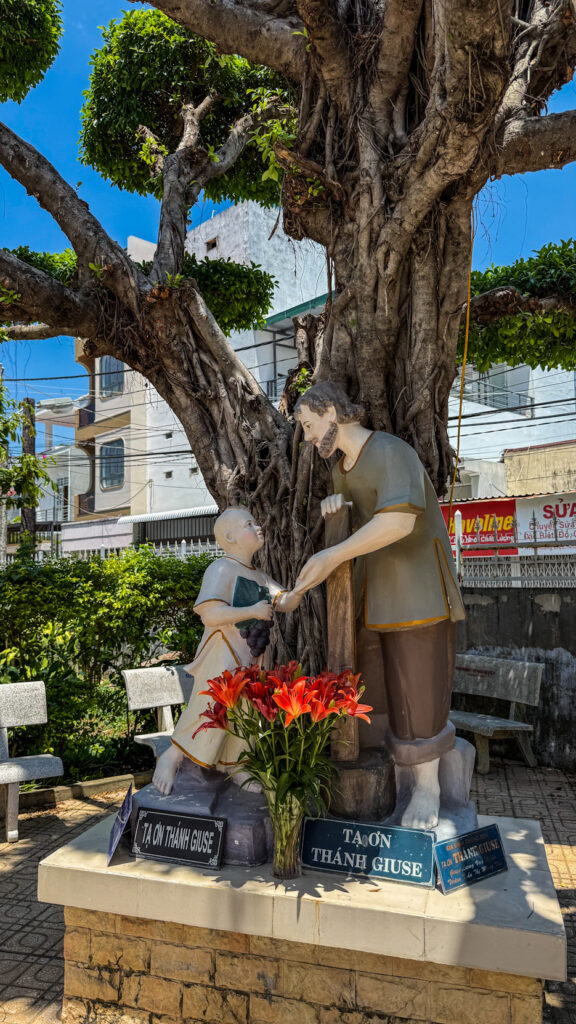
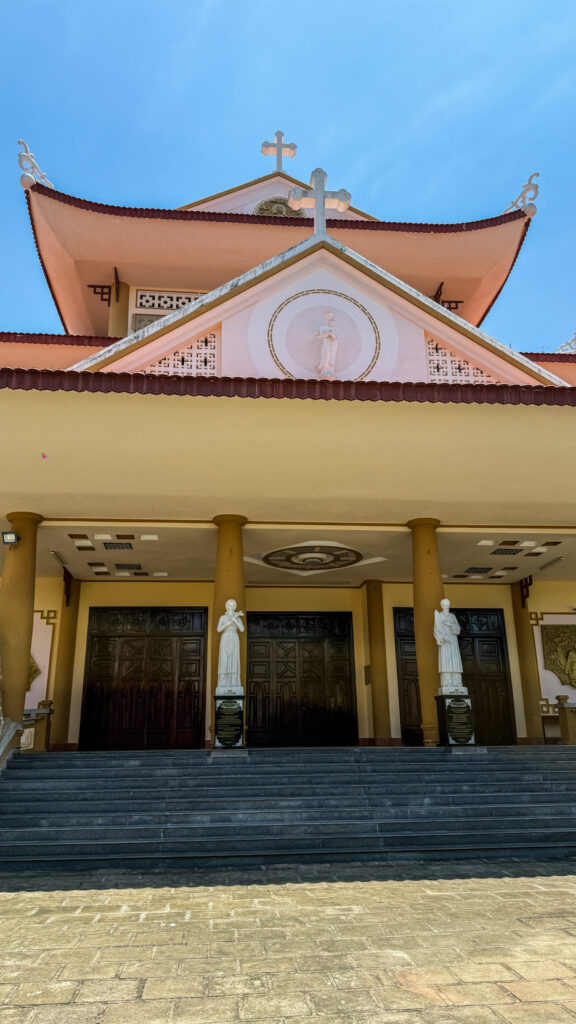
⛪ Thanh Gia Parish — The Church That Moved Twice
📍 48 Võ Thị Sáu, Phước Long, Nha Trang | 🕒 Mass: Sundays 5:30 AM, 7:40 AM, 2:30 PM; weekdays 4:30 AM & 5:30 PM | 🎟️ Free
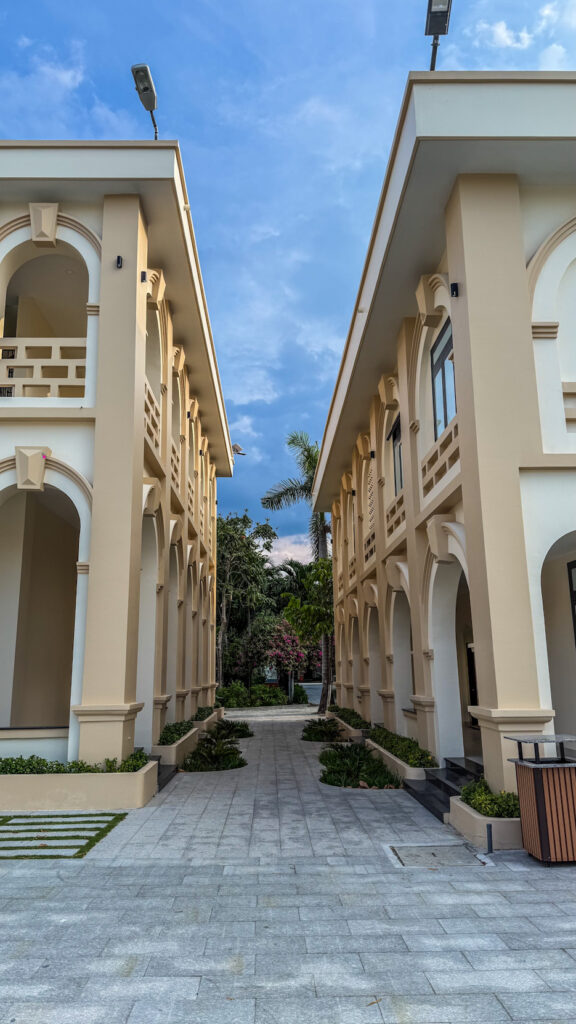
If any church in Nha Trang deserves a documentary, it’s Thanh Gia Parish. Founded in 1955 to serve soldiers from the Bùi Chu – Phát Diệm engineer battalion and other displaced northern Catholics, its first building was never even finished before the priest was recalled to Saigon and the congregation scattered. A second church rose in 1964 — and was demolished. The current sanctuary, completed and consecrated in 2020, is the third version of Thanh Gia, standing on a 10,500 m² plot bought from the Redemptorist order. The architecture is modern and dignified, with a spacious courtyard shaded by mature trees. Unusually, the parish covers two islands — Trí Nguyên and Bích Đầm — extending its pastoral reach out into the bay. For the full 70‑year story of displacement and rebuilding, read my complete guide to Thanh Gia Parish. 🌊
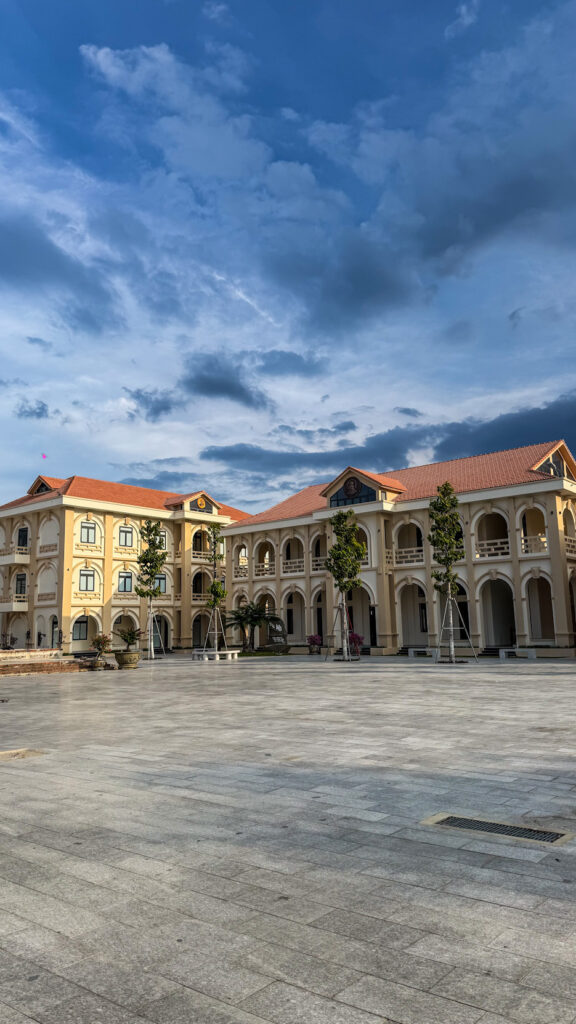
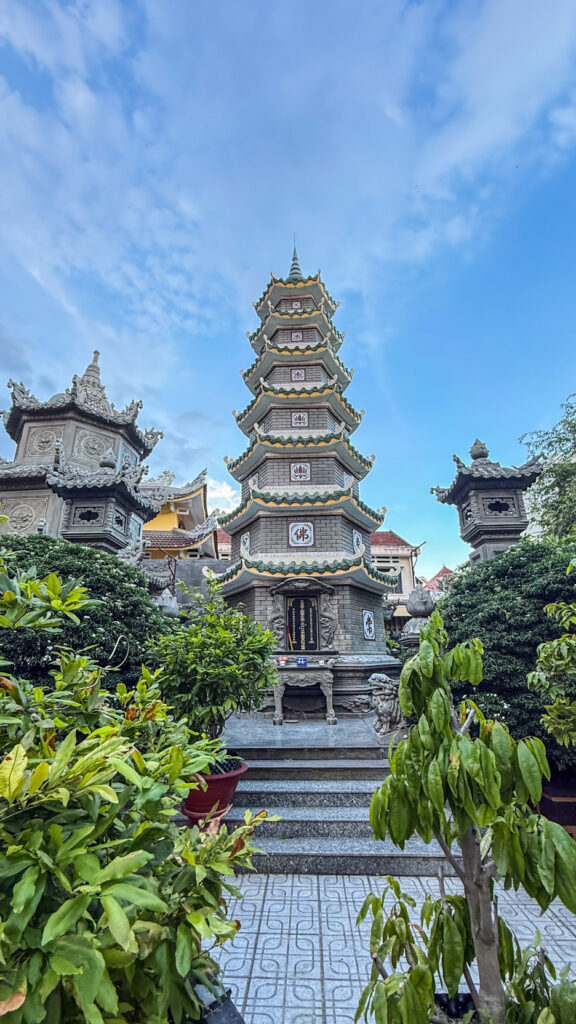
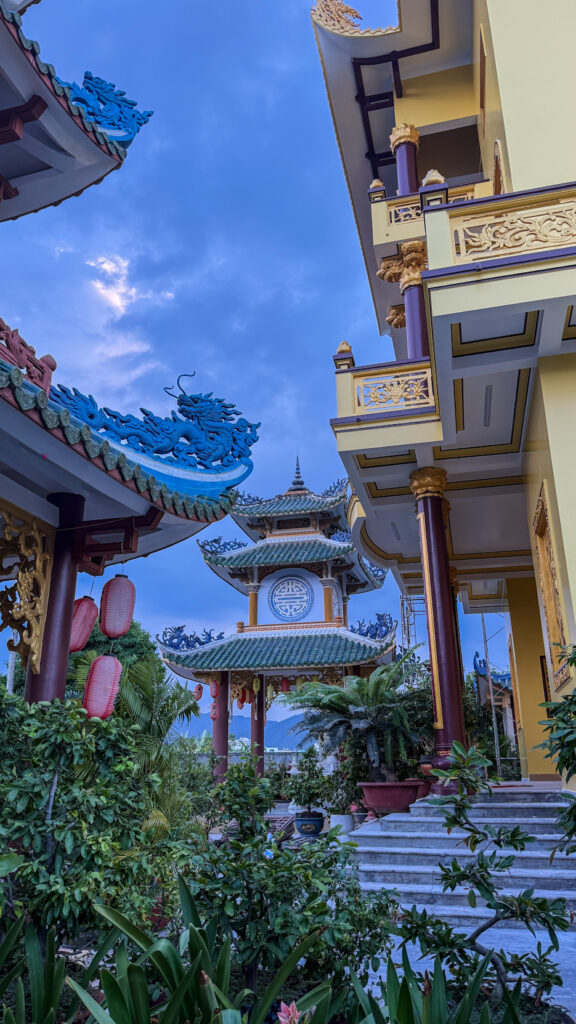
📚 Dòng Thánh Giuse — The Monastery That Moved Its Headquarters
📍 38 Võ Thị Sáu, Phước Long, Nha Trang | 🕒 Best visited early morning or late afternoon | 🎟️ Free
A short walk from Thanh Gia, behind a heavy wooden gate, lies Dòng Thánh Giuse — the Monastery of St. Joseph. This belongs to the Society of the Divine Word (SVD), a missionary order that has been in Vietnam since 1902. In 1955, responding to the refugee crisis, the SVD moved its entire regional headquarters from Quy Nhon to Nha Trang and built this compound as a working base for charity, education, and pastoral care. Today, it remains a living community. The courtyard is wide and shaded, the chapel small and serene, and the library filled with theological texts in Vietnamese, English, and German. Brothers still run social programs from here. You are not a tourist here — you are a guest on someone’s spiritual ground. Dress modestly, keep your voice low, and if you’re lucky, one of the older brothers might share a story. My full article on Dòng Thánh Giuse has more on the SVD’s history in Vietnam. 📖
🏨 Where to Stay & What to Pair It With
These four sanctuaries are spread across Nha Trang — from the city center to the quieter southern wards. If you want to turn a morning of churchgoing into a staycation, my Top 10 Best Hotels in Nha Trang guide can help you pick a base that puts you within walking distance of several of these spots. For a completely different kind of sacred space, my hidden pagodas Nha Trang guide covers five Buddhist temples that feel like secrets. And if you’re mapping out a full day on foot, the Tran Phu Promenade links many of these neighborhoods along the 7km beachfront. 🌊
💎 Verdict: A Quiet Pilgrimage Worth Taking
These four hidden churches Nha Trang are not about grand tourist attractions. They are about refugee resilience, Gothic ambition, and the quiet persistence of faith. Come in the morning, dress with respect, and let the history of these sanctuaries deepen your understanding of the city beyond the beach. ⛪
Frequently Asked Questions
How tall is the Stone Church’s bell tower?
38 meters.
When was Khiết Tâm Church established?
In 1956, to serve Catholic refugees who fled south after the 1954 Geneva Accords; the current sanctuary was consecrated in 2006.
What’s unique about Thanh Gia Parish’s history?
It’s the third version of the church — founded in 1955, rebuilt in 1964 (later demolished), and the current sanctuary was consecrated in 2020.
Are these churches free to visit?
Yes, all three are free.
When is the best time to visit the Stone Church?
8:00–11:30 AM or 2:00–5:00 PM, ideally early morning before the heat and tour buses arrive.
Disclosure: This article contains affiliate links. If you book through them, I may earn a small commission at no extra cost to you. I only recommend places I have personally visited and trust.
More from our travel guide network
Build your Vietnam route — free.