War museums in Saigon are easy to find. They have tanks in the courtyard and queues at the ticket counter. But a short walk from the city centre, on a tree-lined street in District 3, there’s a museum that tells the other half of Vietnam’s story — the half that’s usually left out of the battlefield maps and the political timelines. The Southern Women’s Museum — Bảo tàng Phụ nữ Nam bộ — is dedicated entirely to the women who fought, worked, raised families, and held communities together through decades of war and peace. It’s free, it’s rarely crowded, and it’s one of the most moving collections I’ve found in Saigon. 🌺
🏛️ A Museum That Tells the Untold Story
The building itself is modest — three storeys, clean white walls, tiled floors, and an atmosphere more akin to a library than a museum. It was established in 1985 by the Women’s Union of Ho Chi Minh City, and its mission is simple: to preserve and honour the contributions of southern Vietnamese women throughout history. The collection spans pre-colonial times to the present day, but the heart of it — the part that will stay with you — is the section on the wars of the 20th century. This is not a military museum. There are no tanks or fighter planes. Instead, there are photographs of young female guerrillas, handwritten letters from mothers to sons on the front lines, and the actual tools women used to smuggle weapons and supplies through enemy checkpoints: bamboo baskets with false bottoms, hollowed-out logs, bicycles loaded with sacks of rice that concealed ammunition. One display shows a pair of sandals worn by a liaison agent who walked hundreds of kilometres along the Ho Chi Minh Trail, delivering messages between units. The sandals are small, worn thin, and unbearably human. 🥿
🌾 From Rice Fields to Revolution: What You’ll See Inside
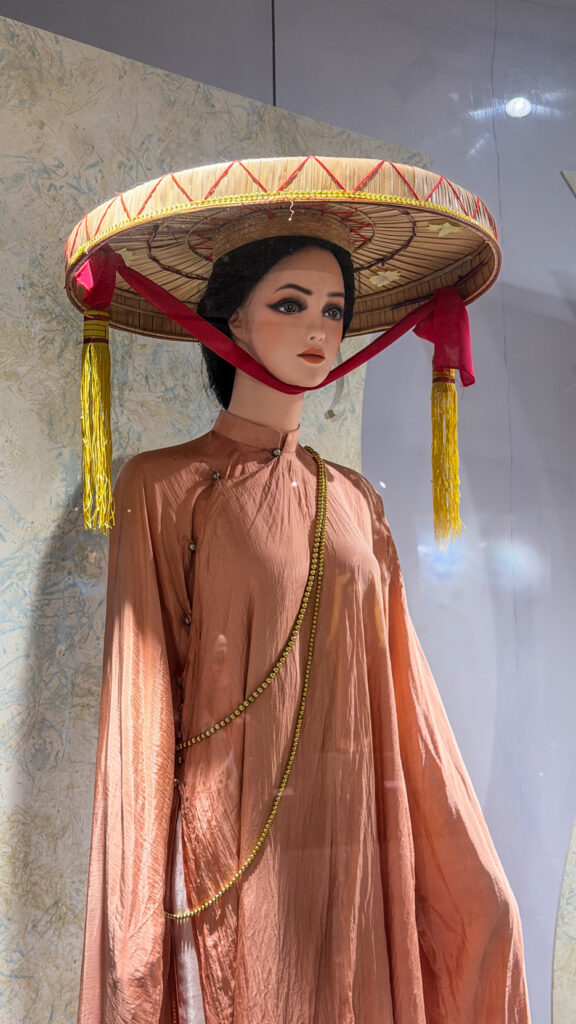
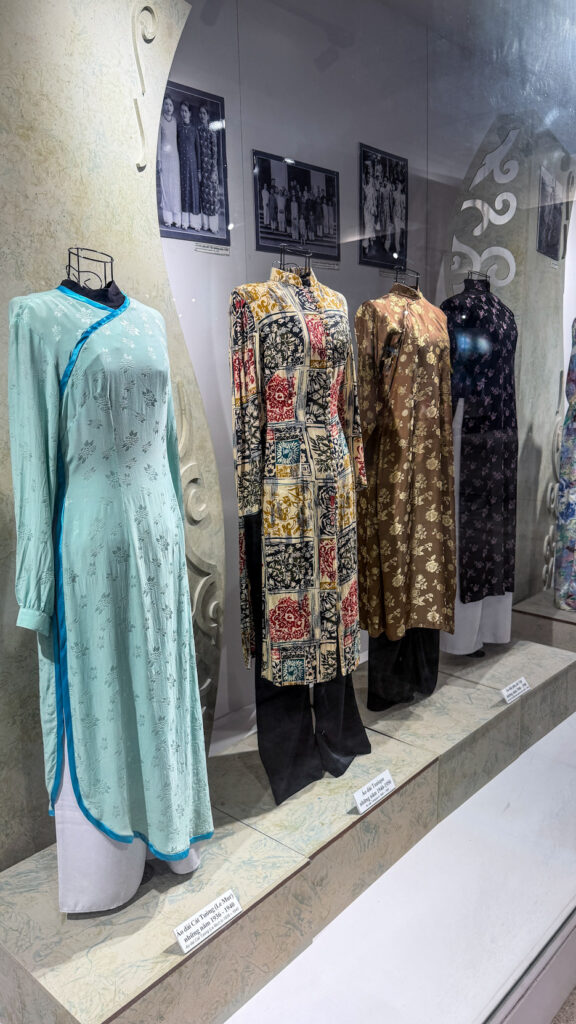
The museum is organised chronologically. The ground floor covers traditional life — agricultural tools, weaving looms, fishing nets, and the áo bà ba, the simple cotton shirt-and-trouser set worn by women in the Mekong Delta for centuries. There’s a reconstruction of a rural kitchen, complete with clay pots, a wood-fired stove, and baskets of dried herbs hanging from the rafters. The second floor moves into the revolutionary period, with exhibits on female intellectuals, activists, and the first women’s organisations that formed in the 1920s and 1930s. Black-and-white portraits line the walls: stern-faced women in traditional dress, many of whom spent years in French colonial prisons. Their stories are told in short, bilingual captions — just enough detail to understand the courage required, without ever feeling like a lecture. 📜
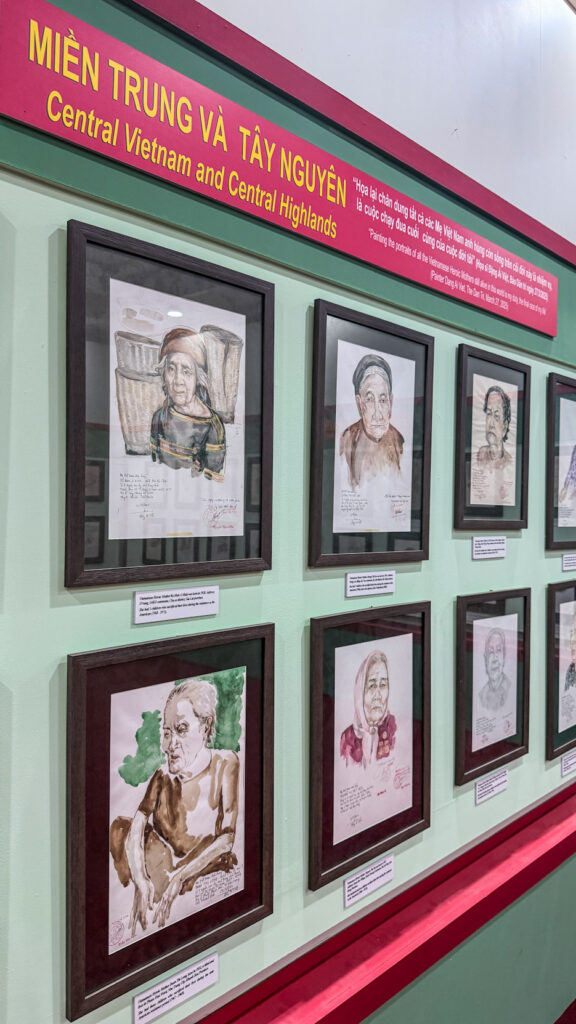
The third floor is the most emotionally intense. It covers the American War — what Vietnamese call the Resistance War Against America — and the postwar period. Here, the exhibits become personal. There are medals, identity cards, and photographs of women who served as nurses, radio operators, and combatants. One wall is covered with portraits of “Vietnamese Heroic Mothers” — women who lost multiple children to the war. The tradition of awarding this title began in 1964, and the museum displays the faces of dozens of these women from the southern provinces, each one a grandmother who buried her sons. It’s not loud or graphic. It’s quiet, and that quiet is devastating. 🕊️
🪷 Beyond the War: Contemporary Women
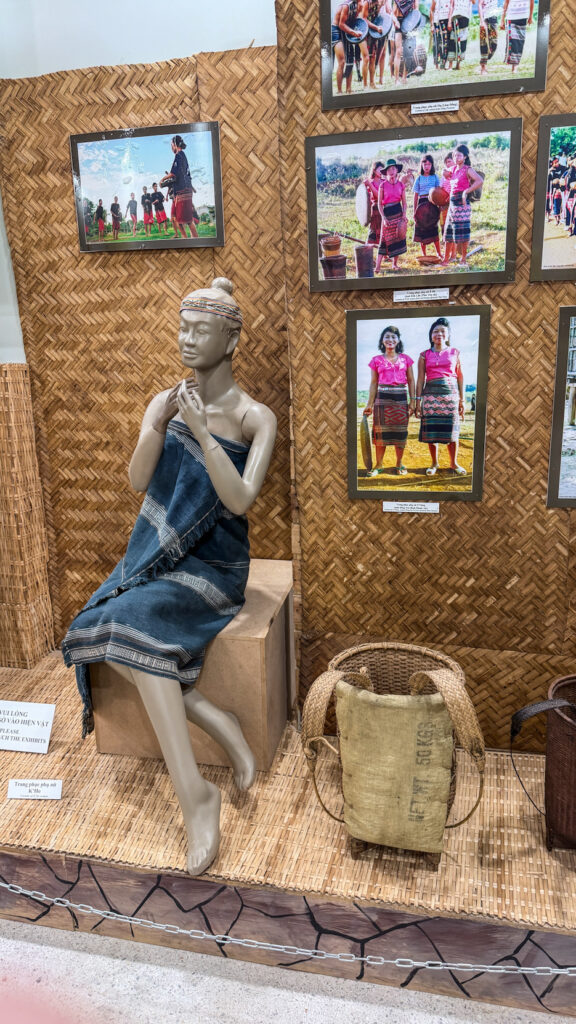
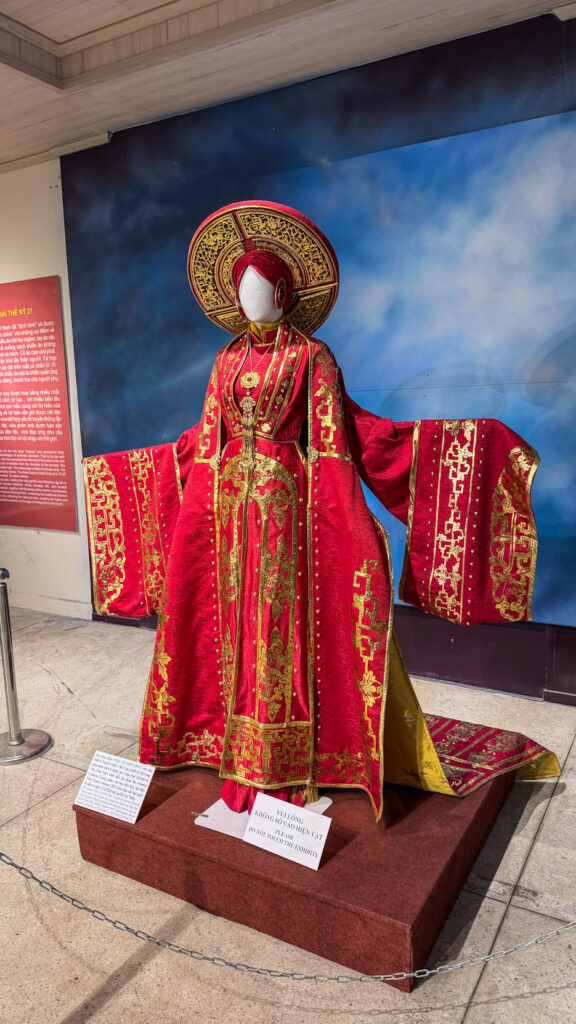
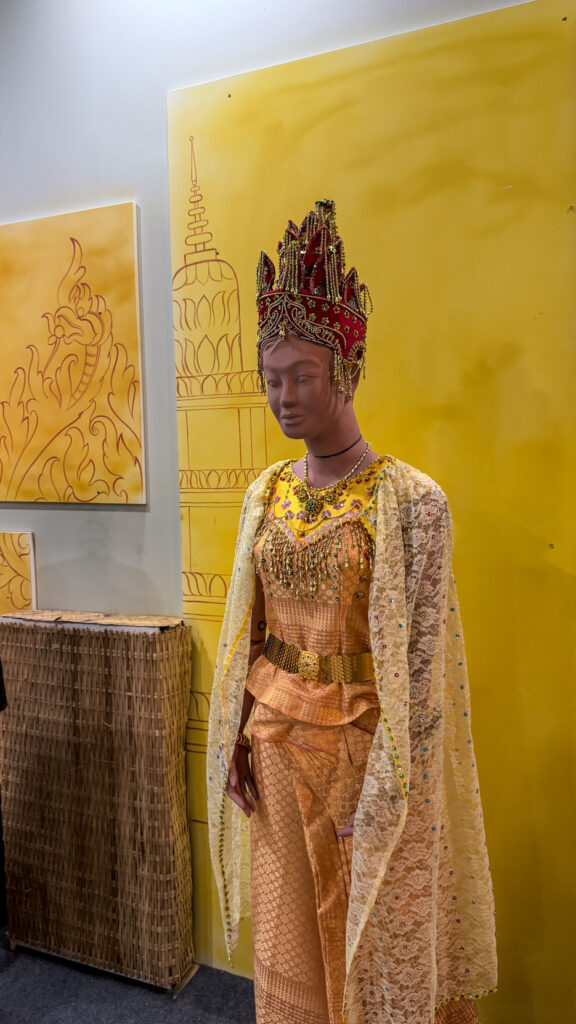
The final section of the museum is dedicated to the postwar era and the present day. It celebrates women in science, education, politics, and business, with displays on female professors, doctors, and entrepreneurs. There’s a small gallery of traditional costumes from Vietnam’s ethnic minorities — elaborate embroidered skirts from the Hmong, silver jewellery from the Dao, and the bright red headscarves of the Chăm. The museum also hosts rotating exhibitions; on my visit, there was a photography show by a young Vietnamese woman documenting street vendors, all women, who wake at 4 AM to sell fruit and vegetables in the city’s wholesale markets. It was a reminder that the story this museum tells is still being written. 🌸
📍 Practical Info
📍 Address: 202 Võ Thị Sáu, Phường 7, Quận 3, Ho Chi Minh City
🕒 Opening hours: Monday to Sunday, 7:30 AM – 11:30 AM and 1:30 PM – 5:00 PM. Closed for lunch — plan your visit around the midday break.
🎟️ Entrance: Free. Donations are welcome but never expected.
👗 Dress code: Casual, but respectful — this is a memorial space as much as a museum.
🚕 Getting there: About 10 minutes by Grab from District 1. Drivers recognise “Bảo tàng Phụ nữ Nam bộ” or the Võ Thị Sáu address.
The museum is in a quiet part of District 3, surrounded by local cafés and street food stalls. You can find a hotel in Ho Chi Minh City in the central districts — staying in District 1 or District 3 puts you within easy reach of this museum and several other landmarks. For the highest-rated stays across all budgets, my Top 10 Best Hotels in Ho Chi Minh City guide has the full lineup.
🔗 What to Pair It With
The Southern Women’s Museum sits in a part of the city rich with history. A short Grab ride north brings you to the Independence Palace — the room where the Vietnam War ended. For a completely different kind of museum experience, the Fine Arts Museum has 22,000 objects and a stained-glass staircase. And if you need a quiet park to reflect, Tao Dan Park — with its hidden national shrine — is just a short walk away. 🌸
💎 Verdict: The Quietest Room in Saigon’s Memory
The Southern Women’s Museum doesn’t have tanks in the courtyard or a queue at the door. What it has — worn sandals, hollow baskets, and the faces of women who carried a country on their backs — is exactly why you should go. It’s free, it’s uncrowded, and it tells a story that most war museums leave out. Come on a weekday morning, take your time, and let the silence do its work. 🌺
Frequently Asked Questions
How much does it cost to visit the Southern Women’s Museum?
It’s free.
When was the museum established?
In 1985, by the Women’s Union of Ho Chi Minh City.
What does the ground floor cover?
Traditional life — agricultural tools, weaving looms, fishing nets, and a reconstructed rural kitchen.
What’s on the third floor?
The most emotionally intense section, covering the American War and postwar period, including medals, ID cards, and photographs of women who served as nurses, radio operators, and combatants.
What’s a standout artifact in the collection?
A pair of worn sandals belonging to a liaison agent who walked hundreds of kilometres along the Ho Chi Minh Trail delivering messages.
More from our travel guide network
Build your Vietnam route — free.