Hoi An for First-Time Visitors will find the best part of the trip isn’t a single attraction.
The appeal lies in many places and experiences.
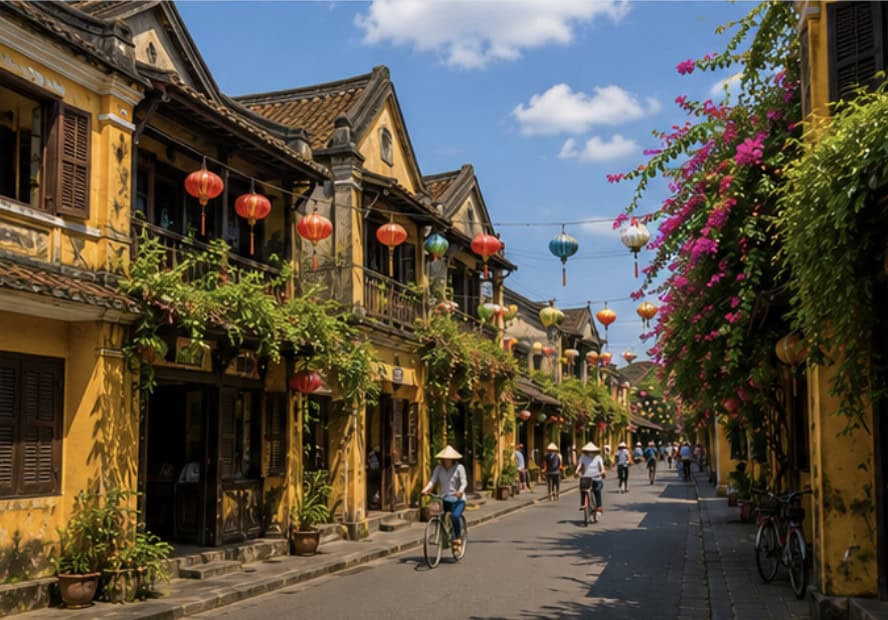
Hoi An for First-Time Visitors combines yellow historic buildings and narrow streets.
The Thu Bon River, lanterns after dark, small restaurants, old merchant houses, and surrounding countryside complete the scene.
That also means Hoi An is easy to visit badly. You can arrive in the middle of the day, walk around for an hour, take a few photos and leave thinking you have seen everything.
You haven’t.
Hoi An changes significantly between daytime and evening, and the surrounding villages, beaches and countryside add another layer to the experience.
This first-time guide explains where to stay, what is actually worth seeing, how long to spend here, what to do after dark, how to get around and how to fit Hoi An into a Central Vietnam itinerary.
Is Hoi An Worth Visiting?
Yes, especially if you enjoy historic towns, food, photography, architecture and slower travel.
Hoi An is very different from Da Nang. Da Nang is a modern coastal city with large beaches, high-rise hotels and a more urban atmosphere. Hoi An feels much smaller and more intimate.
The Ancient Town is the main attraction, but it works best as the centre of a wider trip rather than the entire trip itself.
You can combine the old town with cycling, countryside villages, cooking experiences, beaches and river activities.
If you are traveling through Central Vietnam, our Da Nang for First-Time Visitors Guide is a useful companion because the two destinations work naturally together.
How Many Days Do You Need in Hoi An?
2 to 3 days is the sweet spot for most first-time visitors.
- 1 day: enough to see the Ancient Town, but rushed.
- 2 days: good for the Old Town plus one additional experience.
- 3 days: ideal if you want countryside, beach time and a slower pace.
- 4+ days: better for a relaxed holiday rather than sightseeing.
If you arrive from Da Nang, staying at least one night is much better than treating Hoi An purely as a daytime excursion.
The biggest reason is simple: Hoi An is at its most atmospheric after dark.
Where to Stay in Hoi An
Where you stay changes the experience quite a lot.
Ancient Town
Hoi An Ancient Town hotels are best if you want to walk out of your accommodation and immediately be surrounded by the historic centre.
This is the most convenient option for first-time visitors who want to explore early in the morning and return after dinner.
Riverside
Hoi An riverside hotels are a good middle ground between the old town and the quieter parts of the city.
You get easy access to restaurants and evening walks while still having a more relaxed setting.
Cam An and An Bang Beach
If you want your trip to be partly a beach holiday, look at An Bang Beach hotels.
You will be farther from the Ancient Town, but the beach is right outside your door and you can use a taxi or bike to reach the historic centre.
Countryside and Villages
Hoi An countryside resorts can be a better choice if you want quiet surroundings, gardens and a more local atmosphere.
They are particularly attractive for travelers staying three or more nights.
Deciding how to split time between Hoi An and Hue? Compare the two here.
The Best Way to Experience Hoi An
Do not try to do everything in the middle of the afternoon.
A better rhythm is:
- Explore the Ancient Town in the morning.
- Take a break during the hottest part of the day.
- Use the afternoon for countryside, beach or another activity.
- Return to the Old Town before sunset.
- Stay after dark.
This gives you two completely different versions of Hoi An in the same day.
1. Wander Through Hoi An Ancient Town
Hoi An Ancient Town is the heart of the destination.
The historic centre preserves the character of an old trading port, with narrow streets, traditional houses, assembly halls, temples, shops and cafes.
The mistake is to treat it like a museum where you simply move from one listed attraction to another.
Walk.
Look at the architecture. Go down smaller streets. Stop for coffee. Notice the river. Come back in the evening when the lanterns are lit.
The official heritage centre describes the Ancient Town as a living heritage environment rather than simply a collection of monuments, and current visitor arrangements allow tourists to combine general access with visits to selected historic sites.
2. See the Japanese Covered Bridge
Japanese Covered Bridge is one of the symbols of Hoi An.
The bridge represents the historic connection between Hoi An’s Vietnamese, Japanese and wider international trading communities.
It is small, so do not expect a huge monument. Its importance is historical and architectural rather than its physical size.
If you are buying the Ancient Town sightseeing ticket, check the current inclusion rules because visitor access arrangements can change.
3. Visit Historic Houses and Assembly Halls
Some of Hoi An’s most interesting buildings are easy to miss because they look like ordinary houses from the street.
Hoi An historic houses and assembly halls show how the town developed as an international trading port.
Rather than trying to visit every building, choose a few that interest you and pay attention to the differences in architecture and decoration.
One quieter stop worth adding is Phap Bao Pagoda, a small golden temple away from the busiest streets.
4. Return to Hoi An After Dark

Hoi An Ancient Town at night is almost a different destination.
The yellow buildings become darker silhouettes, lanterns appear throughout the streets and the riverfront becomes the centre of evening activity.
This is the part of Hoi An that you miss if you visit only on a day trip.
The town has long-running evening cultural programs, including traditional performances and folk activities, while lantern-lit streets remain one of the defining features of the destination.
5. Take a Lantern Boat on the River
A Hoi An lantern boat ride is one of the classic evening experiences.
You do not need to spend a long time on the river. The attraction is the atmosphere: lanterns, reflections, historic buildings and the slow pace of the boat.
If the river is busy, do not expect a completely private or peaceful experience. It is still one of the most recognizable Hoi An evenings.
6. Try a Hoi An Cooking Class
Food is such a large part of Hoi An that a Hoi An cooking class makes more sense here than in many other destinations.
Many experiences combine a market visit with cooking, giving you an opportunity to see ingredients before learning how they are used.
This is a particularly good choice for travelers who have already spent enough time sightseeing and want something hands-on.
7. Explore the Countryside by Bicycle

The countryside around Hoi An is one of the easiest ways to escape the tourist crowds.
Hoi An countryside cycling tours can take you through rice fields, small roads and villages outside the Ancient Town.
You do not need to be a serious cyclist. The appeal is the landscape and the slower pace.
8. Visit Cam Thanh Coconut Village
Cam Thanh Coconut Village is another popular excursion from Hoi An.
The area is known for its waterways and basket boats, and tours often combine a boat experience with countryside sightseeing or local activities.
It is easy to fit into a half-day itinerary.
9. Spend Time at An Bang Beach
An Bang Beach is the obvious choice if you want to add a beach day to your Hoi An trip.
The beach is close enough to the Ancient Town to make the two destinations easy to combine.
You can spend the morning sightseeing and the afternoon by the sea, or simply dedicate an entire day to the beach if you are staying longer.
10. Visit Thanh Ha Pottery Village
Thanh Ha Pottery Village provides a look at one of the traditional crafts associated with the Hoi An area.
The village is useful if you want to see something beyond the Ancient Town and learn more about the region’s craft traditions.
Hoi An’s current tourism strategy also places considerable emphasis on community-based tourism and traditional craft villages rather than concentrating all visitor activity inside the old centre.
11. Try Cao Lau
Cao Lau is one of the dishes most closely associated with Hoi An.
The noodles, herbs, greens and meat create a dish that feels very different from the soups you will encounter elsewhere in Vietnam.
Try it at least once in the city rather than assuming every Vietnamese restaurant outside Hoi An will serve the same thing.
12. Try White Rose Dumplings
Hoi An White Rose dumplings are another local specialty.
They are small steamed dumplings with delicate wrappers and a savory filling, usually served with a light sauce.
They are easy to order alongside other dishes, which makes them useful when you want to sample several local foods.
13. Eat Banh Mi in Hoi An
Hoi An Banh Mi is a simple but essential food stop.
There is no need to make the meal complicated. Grab one, find a small café or riverside spot and keep exploring.
14. Experience Hoi An During a Festival or Cultural Night
If your dates happen to coincide with a cultural event, Hoi An can become considerably more atmospheric.
The city continues to hold traditional festivals, folk performances and cultural programs throughout the year.
For example, the official heritage center’s 2026 calendar includes the Nguyên Tiêu Festival, traditional performances and other activities connected with the living heritage of the Ancient Town.
Do not build your entire trip around a festival unless you have checked the current dates, but if one happens to overlap with your visit, it is worth considering.
Hoi An During the Day vs Hoi An at Night
| Day | Night |
|---|---|
| Historic houses | Lanterns |
| Museums | Riverfront |
| Shopping | Night market |
| Architecture | Street atmosphere |
| Quieter streets | More visitors |
Both are worth experiencing.
If you only see Hoi An during daylight hours, you miss one of the main reasons people remember the town.
How to Get Around Hoi An
Walking
Walking is the best way to explore the Ancient Town.
You will notice much more than you would from a car, and many streets are far more enjoyable without traffic.
Bicycle
A bicycle is excellent for traveling between the Ancient Town, countryside and beach.
It is also one of the easiest ways to turn transportation into part of the experience.
Taxi and Grab
Grab and taxi rides in Hoi An are useful for longer journeys, particularly if you are traveling with luggage or heading to the beach.
Private Transfer
A private transfer from Da Nang to Hoi An is convenient if you are arriving from Da Nang International Airport or traveling with several people.
How to Get to Hoi An
Most international visitors reach Hoi An through Da Nang.
Da Nang International Airport is the main gateway, followed by a road transfer to Hoi An.
You can choose between taxi, Grab, private transfer or an organized transfer.
If you are flying into Central Vietnam, Da Nang flights are the most practical option to compare.
Once you arrive, our Da Nang guide can also help if you are splitting your stay between the two destinations.
Da Nang to Hoi An
The road connection between Da Nang and Hoi An makes it easy to combine the two.
For couples or groups, a private car can be convenient because you can travel directly between hotels without worrying about schedules.
Independent travelers can use Grab or another local transport option.
The important point is that you do not need to choose between Da Nang and Hoi An unless your itinerary is extremely short.
Is Hoi An Expensive?
Hoi An can be surprisingly affordable if you eat locally and choose a simple hotel.
The biggest differences in budget usually come from accommodation, organized tours and higher-end restaurants.
You can spend very little on walking around the Ancient Town itself, then choose one or two paid experiences such as a cooking class, boat trip or countryside tour.
For a wider picture of Vietnamese travel expenses, our Vietnam Travel Cost Guide is a useful reference.
When Is the Best Time to Visit Hoi An?
Hoi An’s weather matters because the best experiences involve walking, cycling and spending time outdoors.
Rain can also change the character of the Ancient Town considerably, particularly when you are planning a long evening outside.
If you are traveling around Vietnam rather than visiting Hoi An alone, compare the seasonal conditions with our Vietnam Weather by Month Guide.
And remember that the weather can vary considerably from one part of Vietnam to another.
Is Hoi An Good for Families?
Yes.
The town is relatively easy to explore at a slow pace, and families can combine the Ancient Town with the beach, countryside and hands-on activities.
A cooking class, bicycle trip or basket boat experience can be more engaging for children than spending an entire day visiting historic buildings.
Families should also consider staying somewhere with a pool if they are visiting during hot weather.
Is Hoi An Good for Couples?
Very much so.
Hoi An is particularly good for couples because the evening atmosphere does much of the work for you.
You can walk through the lantern-lit streets, have dinner near the river, take a short boat ride and finish the evening without needing a complicated plan.
Hoi An boutique hotels are worth considering if you want the accommodation to match the character of the destination.
Is Hoi An Good for Solo Travelers?
Yes.
The Ancient Town is easy to explore alone, cafes are everywhere and group tours provide an easy way to meet other travelers without having to organize a private experience.
A bicycle or walking tour can be particularly good for solo visitors because the destination is much more interesting when you are not simply moving between attractions by car.
A One-Day Hoi An Itinerary
Morning
Start early in the Ancient Town while the streets are relatively calm.
Visit a few historic buildings and stop for coffee.
Lunch
Try Cao Lau, White Rose dumplings or Hoi An Banh Mi.
Afternoon
Choose between the countryside, Cam Thanh, a cooking class or An Bang Beach.
Evening
Return to the Ancient Town before sunset.
Walk along the river, have dinner and stay after dark to experience the lantern-lit streets.
A Better Two-Day Hoi An Itinerary
Day 1: Old Hoi An
Ancient Town, historic houses, local food, riverside walk and evening lanterns.
Day 2: Beyond the Old Town
Choose a countryside cycling tour, Cam Thanh, cooking class or An Bang Beach.
Return to the Old Town for another evening if you enjoyed it the first time.
What to Bring to Hoi An
- Comfortable walking shoes.
- Light clothing.
- Sun protection.
- Small umbrella or rain protection.
- Small day bag.
- Swimwear if you are staying near the beach.
Do not underestimate how much walking you may do. Comfortable shoes are more useful here than dressing specifically for photographs.
Our Vietnam Packing List covers the general essentials for the rest of your trip.
Hoi An First-Time Visitor Checklist
- Stay at least one night if possible.
- Explore the Ancient Town in the morning.
- Return after sunset.
- See the Japanese Covered Bridge.
- Visit several historic houses or assembly halls.
- Try Cao Lau.
- Try White Rose dumplings.
- Consider a cooking class.
- Explore the countryside.
- Visit An Bang Beach if you have enough time.
- Consider Cam Thanh or Thanh Ha for a different side of Hoi An.
Final Thoughts
Hoi An is not a destination that rewards rushing.
The Ancient Town is obviously the centerpiece, but the best trip usually happens when you stop treating it as a checklist.
Walk through the old streets in the morning. Leave the centre for a few hours. Ride through the countryside or go to An Bang Beach. Come back before sunset. Then see Hoi An again when the lanterns come on.
That change from daytime to evening is one of the things that makes the town memorable.
For most first-time visitors, two or three days is enough to experience the essential Hoi An without feeling like you have spent the entire trip inside one tourist attraction.
When planning your stay, compare Hoi An hotels, Hoi An tours and experiences and flights to Da Nang.
Frequently Asked Questions
Is Hoi An worth visiting for first-time travelers?
Yes. Hoi An is one of Vietnam’s best destinations for travelers interested in historic architecture, food, culture and a slower pace.
How many days should I spend in Hoi An?
Two to three days is ideal for most visitors. One day is possible but does not allow much time beyond the Ancient Town.
Is Hoi An better during the day or at night?
Both. Daytime is better for architecture and historic sites, while the evening is when the lanterns and riverfront create the atmosphere Hoi An is famous for.
Should I stay in Hoi An or Da Nang?
If you want beaches, modern infrastructure and a larger city, Da Nang is the better base. If you want historic atmosphere and slower evenings, stay in Hoi An. Many travelers can comfortably visit both.
Can I visit Hoi An as a day trip from Da Nang?
Yes. It is easy to travel between the two, but staying overnight is preferable if you want to experience Hoi An after dark.
What food is Hoi An famous for?
Cao Lau, White Rose dumplings and Hoi An-style Banh Mi are among the local specialties worth trying.
Is Hoi An good for families?
Yes. The Ancient Town, beach, countryside and hands-on activities give families plenty of options beyond traditional sightseeing.
Is Hoi An expensive?
It can be affordable, although boutique hotels, organized tours and higher-end restaurants can increase the budget.
Planning a wider Southeast Asia trip?
Cambodia With Me — practical Cambodia travel guides
Siam With Me — Thailand travel guides
Indonesia With Me — Indonesia travel guides
Singapore With Me — Singapore travel guides
Build your Vietnam route — free.