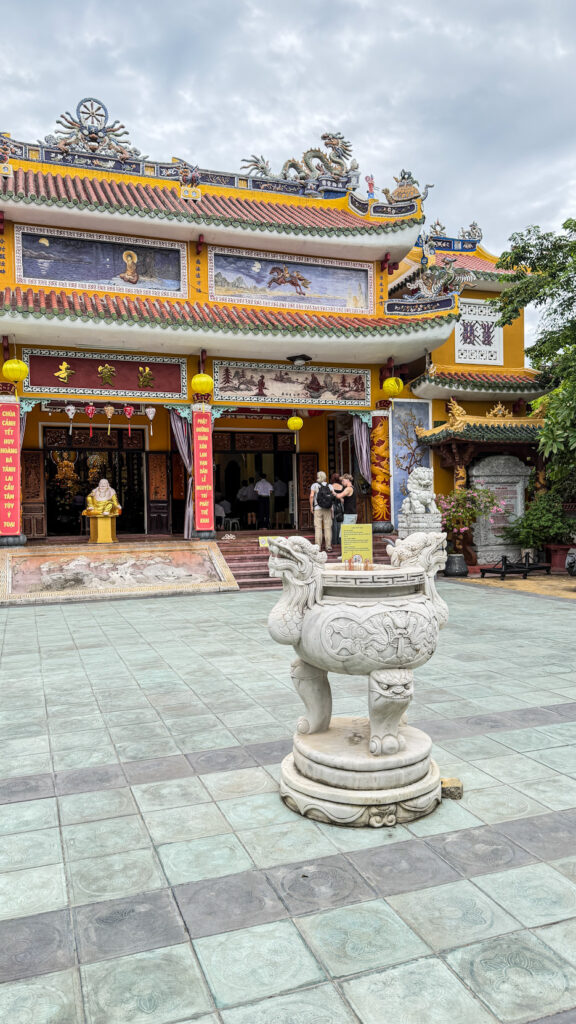
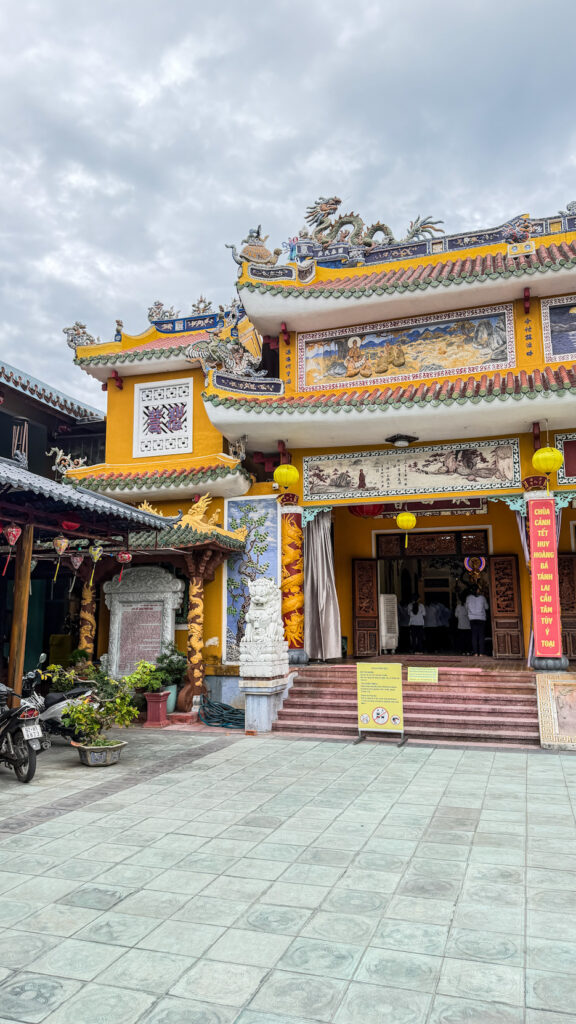
We left Hai Bà Trưng away from Old Town crowds. We reached Phap Bao Pagoda Hoi An, a two-story temple with orange tiles and a quiet courtyard. There were no ticket booths, no queues, only the sound of a bell and a few monks. Walking through the garden, a few monks passed by.
Phap Bao Pagoda Hoi An is the largest Buddhist temple in Hội An. It is not one of the oldest. However, it is among the most important, having served as the headquarters of Hội An’s Buddhist Association. The name ‘Phap Bao’ means ‘treasure of the law’ in Buddhism.
If you need a break from the lanterns and souvenirs, Phap Bao Pagoda Hoi An is near the Old Town. It’s quiet, free, and still feels like a real place of worship — not a museum.
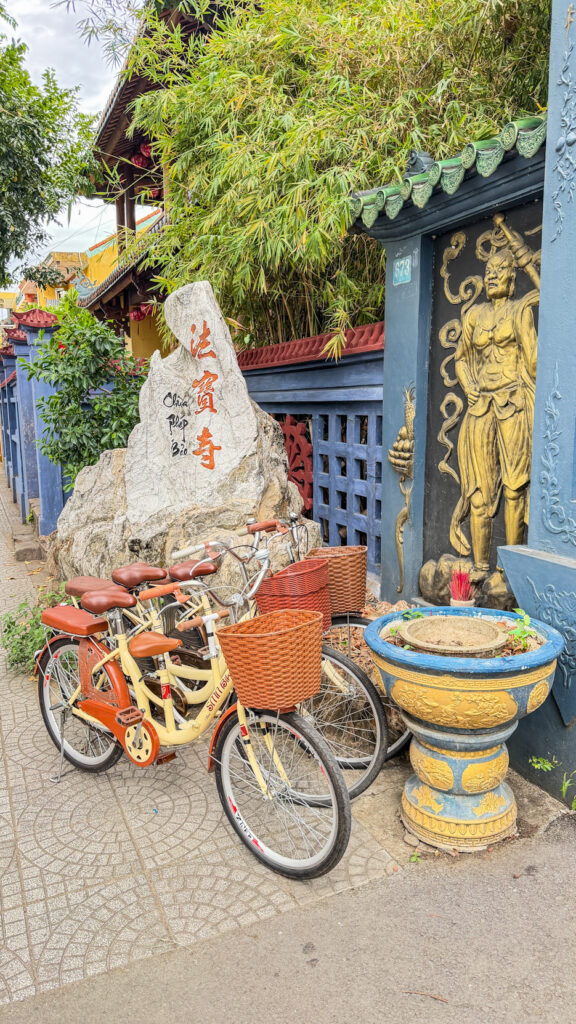
📜 A Bit of History
In 1934 and 1935, two monks came from Huế to establish Buddhist associations in Hội An. By 1936, local Buddhists had raised enough money to buy the land where the pagoda now stands and built a temple called Tinh Hoi Pagoda. In 1967, it was renamed Phap Bao after the founding monk of the Chuc Thanh Zen sect.
The pagoda played a significant role in the spiritual life of Hội An’s Buddhist community for decades. It served as the headquarters of the Hội An Buddhist Association, making it a center of religious activity and community gatherings. Today, it remains an active place of worship where locals come to pray and offer incense.
🏯 What You’ll See
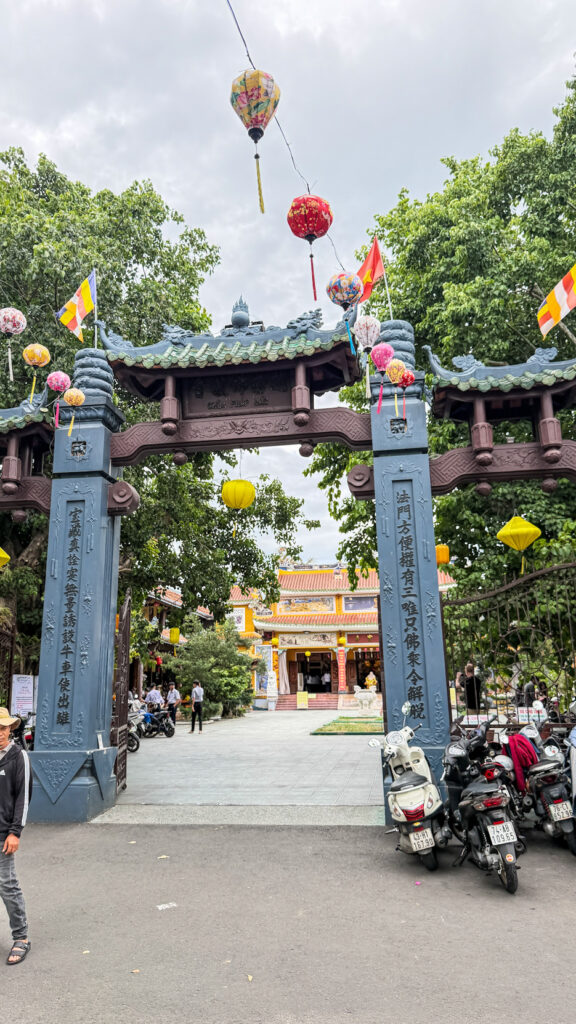
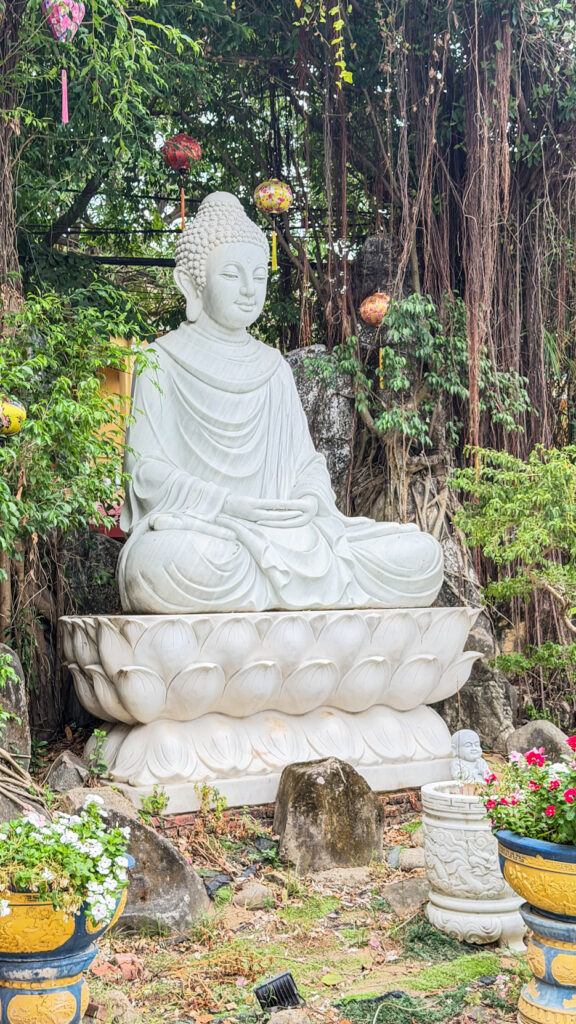
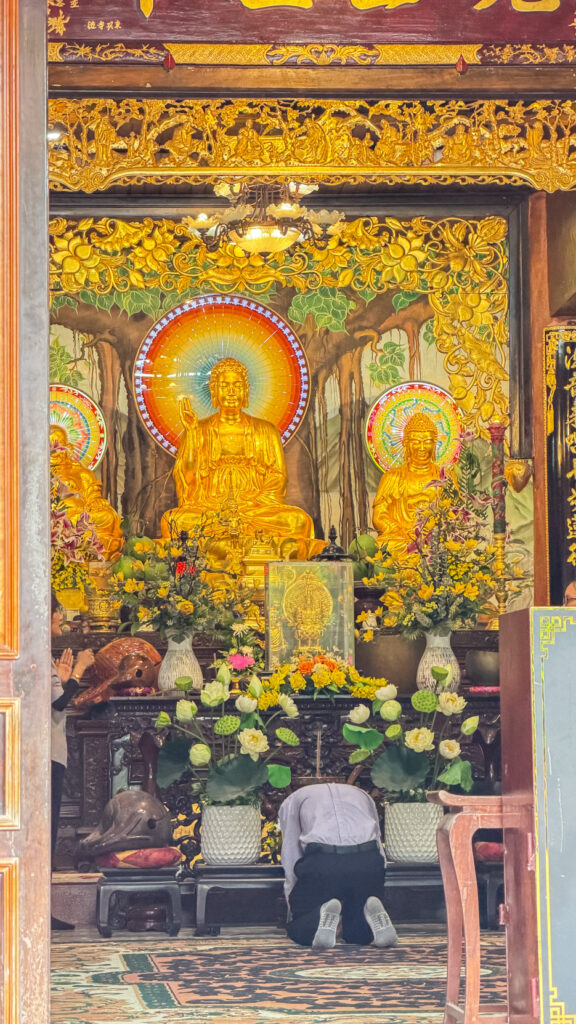
The architecture is traditional Vietnamese, with vibrant orange roofs and intricate carvings. The two-story structure stands out against the sky, and the courtyard is calm and well-maintained. Inside, you’ll find massive golden Buddha statues that catch the afternoon light beautifully.
The grounds include a quiet courtyard with bonsai trees, flowers, and statues. It feels like a world away from the street vendors and souvenir shops nearby. The pagoda is still an active place of worship — you’ll see monks and locals going about their daily rituals.
Some sources mention a 5-storey tower on the grounds, though it’s not the main feature of the pagoda. The real draw is the peaceful atmosphere and the orange-tiled roof that glows in the late afternoon sun.
📌 Practical Information
- 📍 Address: 07 Hai Bà Trưng, Minh An, Hội An, Quảng Nam
- 🕒 Open: 7:00 AM – 9:00 PM daily
- 🎟️ Entry: FREE — no Old Town ticket required
- 👗 Dress code: shoulders and knees covered (it’s a living temple)
- 🤫 Atmosphere: quiet, respectful, meditative
📸 Best Time to Visit
The pagoda looks best around 4:00 PM, when the light turns the orange tiles golden. The courtyard is quiet, the heat has subsided, and you can hear the bell and the birds. If you’re planning a visit, this is the time to aim for.
Morning visits are also good — the pagoda opens at 7:00 AM, and the Old Town is still quiet. You’ll have the place almost to yourself.
💡 What I’d Do Differently
I’d spend 20–30 minutes here — enough to walk through the courtyard, see the statues, and sit quietly for a few minutes. It’s not a place to rush. The pagoda is small, but the atmosphere is what makes it worth the detour.
If you’re visiting the Precious Heritage Museum or the Old Town, Phap Bao is a short walk away. It’s a good spot to reset before heading back into the crowds.
Once you’ve visited the pagoda, check out my Hội An Ancient Town guide for more things to do, and Precious Heritage Museum for a free cultural experience nearby.
🏨 Where to Stay & What to Pair It With
After the pagoda, it’s time to book your accommodation. You’ll find everything from budget homestays to luxury resorts in Hội An — check hotels in Hội An to compare prices and read guest reviews. For a broader overview, I’ve put together guides to the best hotels in Da Nang and best hotels in Hanoi if you’re continuing your journey.
Pair the pagoda with a visit to Hội An Ancient Town and Hội An Memories Show for a full day of culture and history.
Frequently Asked Questions
How much does it cost to visit Phap Bao Pagoda?
It’s free, with no Old Town ticket required.
What are the opening hours?
7:00 AM–9:00 PM daily.
When was the pagoda built?
Local Buddhists raised money to buy the land and build a temple (originally called Tinh Hoi Pagoda) in 1936; it was renamed Phap Bao in 1967.
Is this the oldest temple in Hoi An?
No, but it’s the largest Buddhist temple in Hội An and served as the headquarters of the Hội An Buddhist Association.
What’s the best time to visit?
Around 4:00 PM, when the light turns the orange tiles golden.
Planning a wider Southeast Asia trip?
Cambodia With Me — practical Cambodia travel guides
Siam With Me — Thailand travel guides
Indonesia With Me — Indonesia travel guides
Singapore With Me — Singapore travel guides
Build your Vietnam route — free.