Stunning Sunrise at the Giant’s Handprint Rock
Honestly, I almost skipped this place. It was 5:30 AM, and the sky was bruised purple from the night.
A short ride north of the city center, Hon Chong had been on my list for weeks. It was filed under ‘coastal rock formation – maybe if I have time.’
I almost rolled over. But curiosity, that stubborn little engine, dragged me upright and onto the motorbike.
What I found wasn’t just a rock formation.
It was giants handprint rock, glowing gold in the first light of dawn.
Not a single other tourist was in sight.
The giants handprint rock sits about four kilometers north of Nha Trang’s center. Locals know it as Hon Chong, or Five Finger Rock. It’s the kind of place you can breeze through in ten minutes, snap a photo, and leave.
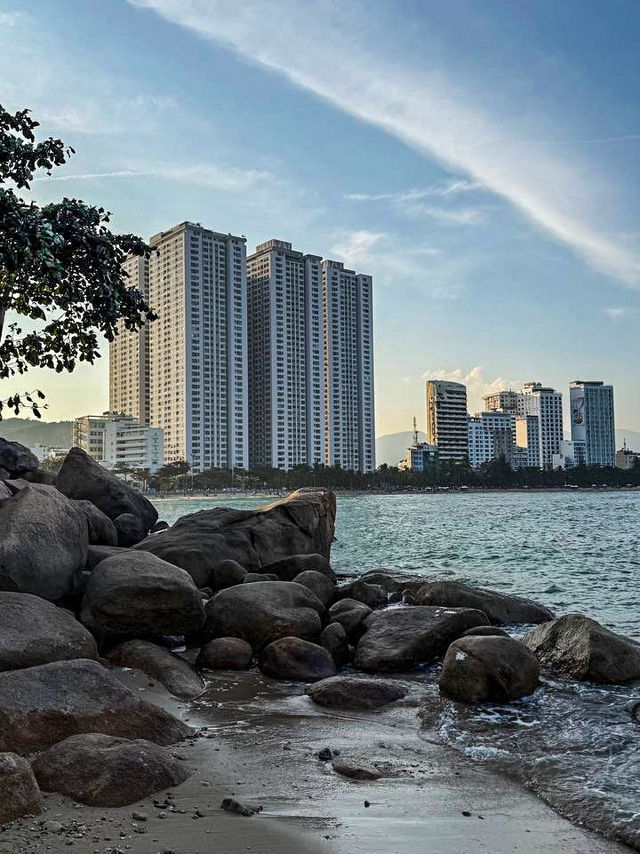
But if you arrive early, before the tour buses rumble in and the selfie sticks bloom, it becomes something else entirely — a quiet, windswept perch where legend and geology collide, and the sunrise over the bay feels private.
If you’re the sort of traveler who chases moments like that, check flight deals to Cam Ranh. The airport is less than an hour’s drive from Hon Chong. You could land in the afternoon and stand on these rocks by sunrise.
Having your own wheels makes the early start easier. I usually rent a car at the airport and drive straight to the coast.
👣 The Legend That Lives in the Stone
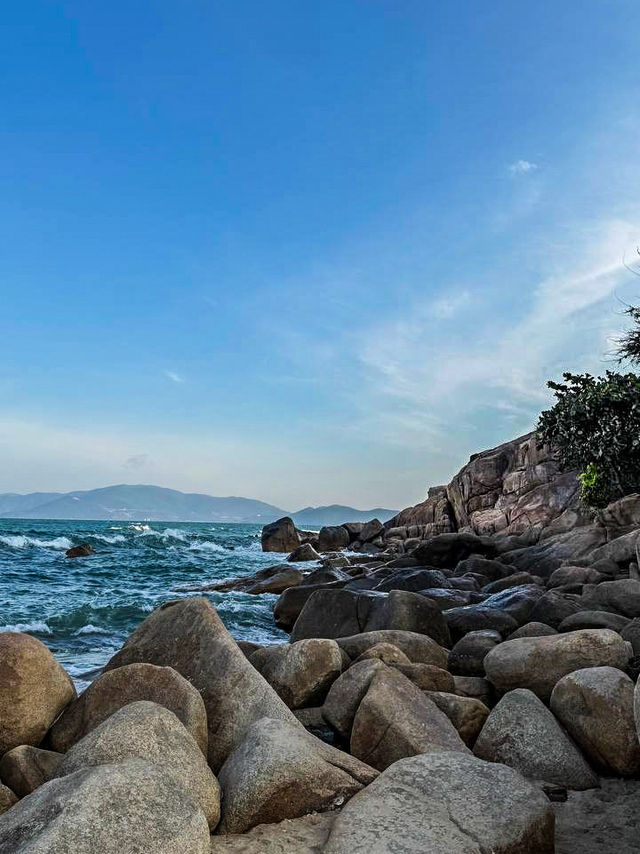
You’ll know the rock when you see it. Among the scattered granite boulders, one bears a deep, unmistakable five‑fingered imprint – so precise it looks like someone pressed their hand into wet clay and the clay hardened to stone. Local legend tells of a giant fisherman caught in a storm, his boat splintering against the cliffs. As the sea tried to drag him under, he slammed his palm against the rock face and held on, leaving this permanent mark. It’s the reason Hon Chong is also called “Five Finger Rock.”
What surprised me most was how it felt to touch it. I’d assumed it would be a quick photo and a nod to the story. Instead, I stood there with my own hand hovering over the giant’s print, and for a strange, suspended moment, the myth felt real. The stone was cool and smooth where centuries of waves had worn it down, and I could almost hear the storm that must have raged here. That’s the thing about Hon Chong – it doesn’t shout for your attention the way a pagoda or a theme park does. It simply waits, ancient and indifferent, for you to notice it. For a different kind of ancient wonder – one built by human hands rather than mythical ones – the Po Nagar Cham Towers sit just a short drive away, their thousand‑year‑old bricks holding stories of a vanished kingdom.
⛰️ A Tale of Two Rocks
The handprint is the star, but it’s not the only story here. Hon Chong actually consists of two main rock clusters. The offshore formation is Hon Chong – “Husband Rock.” The onshore cluster is Hon Vo – “Wife Rock.” Together, they represent a devoted couple, standing side by side against the storms, forever facing the sea. On the morning I visited, the tide was halfway out, exposing a ribbon of wet sand between the two formations, and the metaphor felt impossibly perfect – a husband and wife, separated by a stretch of water, yet bound by the same shoreline. I sat on a flat boulder and watched the waves lace between them, and for a long while I forgot about my phone entirely.
The terrain itself is rugged and uneven, a natural playground of granite that’s been shaped by millennia of salt and wind. Wear proper footwear – sneakers or sport sandals with grip, not flip-flops – because the rocks can be genuinely slippery, especially near the waterline where algae grows in dark green patches. Near the entrance, a small Cultural House displays old photographs and faded maps that trace the history of the site, along with a collection of traditional fishing tools that remind you this coast was a working shoreline long before it became a tourist stop. It’s modest, but worth five minutes of your time. Afterward, I wandered up the road to a tiny café I’d read about – the same one I mentioned in my guide to the hidden cave coffee built into the cliffs – and ordered an iced coffee so strong it could have woken the giant himself.
🕘 Sunrise Strategy (and Other Practicalities)
Let me be blunt: arriving at 9 AM is a mistake. By then the tour groups are already swarming, the light has turned harsh and flat, and the giant’s handprint is partially obscured by a queue of people waiting to photograph their own hand hovering over it. The magic evaporates. Instead, aim for 6:00–6:30 AM, when the gates open and the sky is still shifting from indigo to rose. You’ll share the rocks with maybe two or three other early risers, and the sunrise over the bay – the water turning from silver to gold, the fishing boats bobbing in the distance – is worth every lost minute of sleep. I had the handprint to myself for nearly twenty minutes, and the silence was so complete I could hear the soft clink of a distant buoy far out at sea.
- 💰 Entrance Fee: 30,000 VND for adults, 15,000 VND for children. Pocket change for what you get. The area is open from 6:00 AM to 6:00 PM.
- 🎒 What to Bring: Sunscreen, a hat, water, and a fully charged phone. The sun is relentless by mid‑morning, and there’s limited shade on the rocks. I also packed a small snack – a bánh mì from a street vendor near the entrance – and ate it while watching the waves. A decent travel insurance policy is also a good idea if you plan on clambering over those uneven boulders.
- 🚗 Getting There: A Grab or taxi from central Nha Trang costs around 50,000–70,000 VND. If you’re on a scooter, follow Trần Phú Street north, cross Trần Phú Bridge onto Phạm Văn Đồng, and you’ll see signs on your right. For maximum freedom, renting a motorbike or car lets you combine Hon Chong with other coastal stops in a single morning.
- 🛵 Coastal Loop Tip: After Hon Chong, continue north along the coast road. You’ll pass fishing villages, quiet coves, and eventually reach Hang Heo Cave Coffee, the cliffside café I mentioned. It’s a perfect two‑stop morning: sunrise and legends at Hon Chong, followed by strong Vietnamese coffee inside a literal cave. A local SIM or eSIM keeps your maps working smoothly along the whole route, even when the coastal signal dips.
🏨 Where to Base Yourself
Hon Chong sits in the northern stretch of the city, an area that’s quieter than the touristy center but still well‑connected. If you want to be within easy reach of sunrise visits, consider staying in one of the hotels along Phạm Văn Đồng or the northern end of Trần Phú. My full area guide to Nha Trang breaks down the neighborhoods in detail, from the lively European Quarter to the quiet hillside pockets. Staying in this area puts you within walking distance of the handprint by sunrise.
No matter what time of year you visit, the giants handprint rock at Hon Chong is a sunrise spectacle you won’t forget. Put it on your itinerary, set your alarm early, and don’t forget your camera – or your sense of wonder.
Frequently Asked Questions
How far is Hon Chong from Nha Trang?
About four kilometers north of the city centre.
What is the legend behind the handprint?
A giant fisherman caught in a storm slammed his palm against the rock to hold on, leaving a permanent five-fingered imprint.
Why is it also called “Five Finger Rock”?
Because of the deep, five-fingered handprint pressed into one of the granite boulders.
What are the two rock formations called?
Hon Chong (“Husband Rock”) offshore, and Hon Vo (“Wife Rock”) onshore.
When is the best time to visit?
Early morning, before the tour buses arrive, for a quiet sunrise over the bay.
Disclosure: This article contains affiliate links. If you book through them, I may earn a small commission at no extra cost to you. I only recommend experiences I have personally tested and loved.
Planning a wider Southeast Asia trip?
Cambodia With Me — practical Cambodia travel guides
Siam With Me — Thailand travel guides
Indonesia With Me — Indonesia travel guides
Singapore With Me — Singapore travel guides
Build your Vietnam route — free.