Vung Tau has a surprising number of Vung Tau temples and pagodas packed into a relatively small area. In some parts of the city, you can walk for only a few minutes and find another gate, another Buddha statue, another small shrine or another pagoda tucked into the hillside.
That makes Vung Tau particularly interesting if you enjoy exploring places beyond the usual beaches and viewpoints.
You do not need to visit every temple in the city. Instead, follow a balanced temple and pagoda trail that includes Vung Tau temples and pagodas with beaches, mountains and waterfront.
Here is how I would organize it.
Quick Answer: Which Temples in Vung Tau Are Worth Visiting?
| Temple or Pagoda | Why Visit | Area | Effort |
|---|---|---|---|
| Thich Ca Phat Dai | Large Buddhist complex and statues | Big Mountain | Moderate |
| Quan The Am Bo Tat Pagoda | Large Quan Yin statue and sea views | Big Mountain | Low to moderate |
| Nirvana Vihara | Reclining Buddha and hillside setting | Small Mountain | Moderate |
| Tu Quang Pagoda | Quiet Buddhist temple near the coast | Small Mountain | Low |
| Linh Son Ancient Temple | Historic local temple | Central Vung Tau | Low |
| Phuoc Hai Pagoda | Theravada Buddhist architecture | Central Vung Tau | Low |
| Bồ Đề Pagoda | Small hillside temple | Big Mountain | Moderate |
If you only have a few hours, concentrate on Thich Ca Phat Dai and Quan The Am Bo Tat.
Additionally, if you have more time, add smaller city temples along the way to Vung Tau temples and pagodas.
1. Why Vung Tau Has So Many Temples
One of the interesting things about Vung Tau is how closely Buddhist temples are connected with the city’s geography.
The mountains rise directly behind the coastal areas, creating natural locations for religious complexes. As you move along the roads around the mountains, temples appear between houses, trees and rocky slopes.
This is why a visit to Vung Tau can easily turn into an unplanned temple walk.
You may start by visiting one famous pagoda and then discover several smaller ones within walking distance.
For a broader overview of the city, see our Best Things to Do in Vung Tau guide.
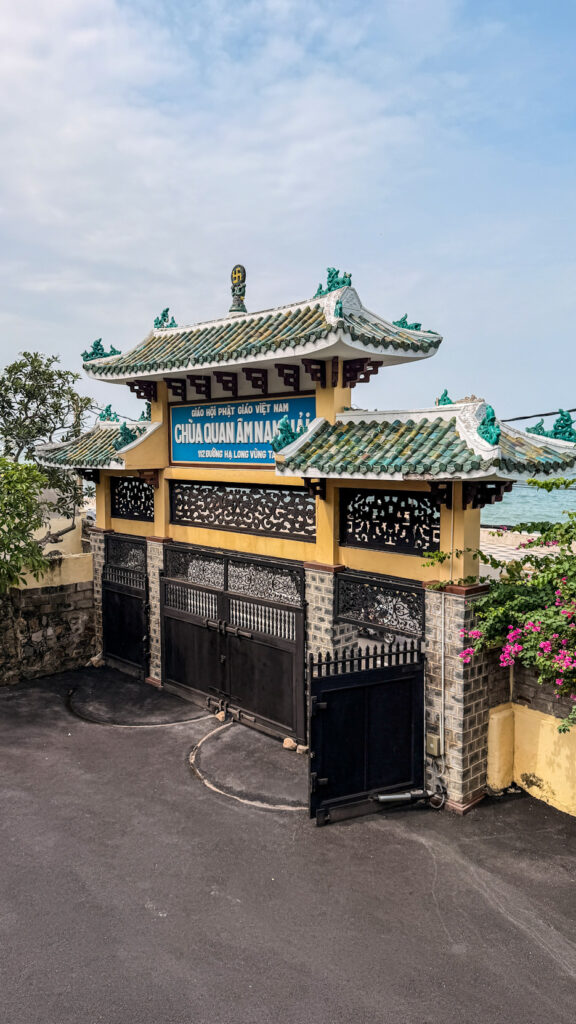
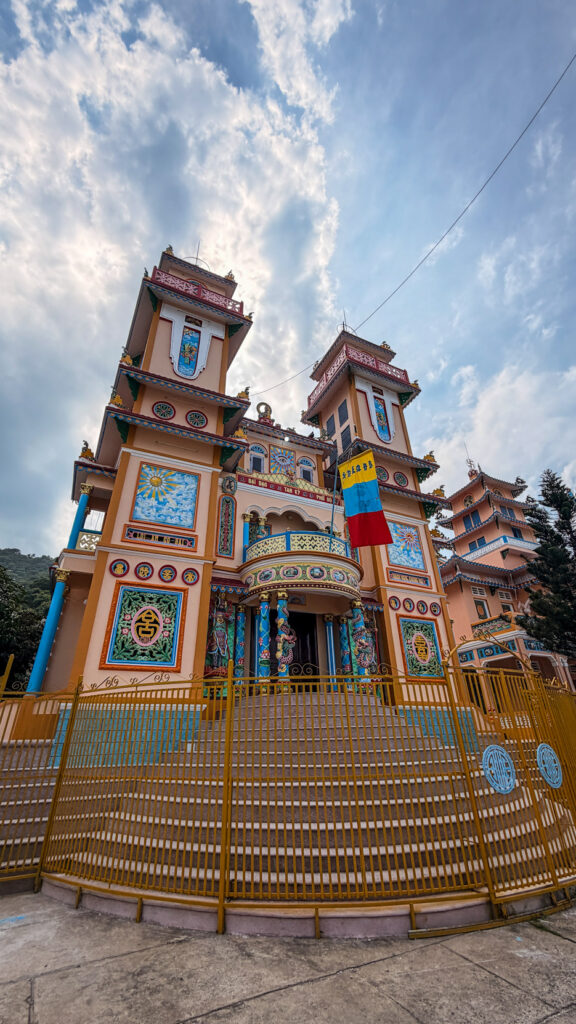
2. Thich Ca Phat Dai
Best for: a large Buddhist complex and major religious architecture
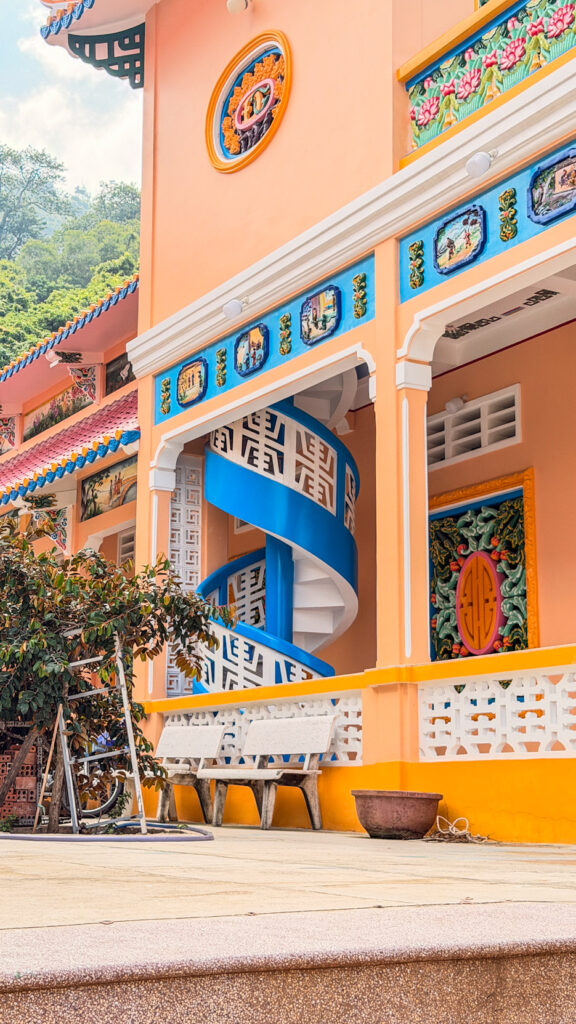
Thich Ca Phat Dai is one of the most important Buddhist sites in Vung Tau.
The complex is built on the slopes of Big Mountain and is considerably larger than the small neighborhood temples that you will find around the city.
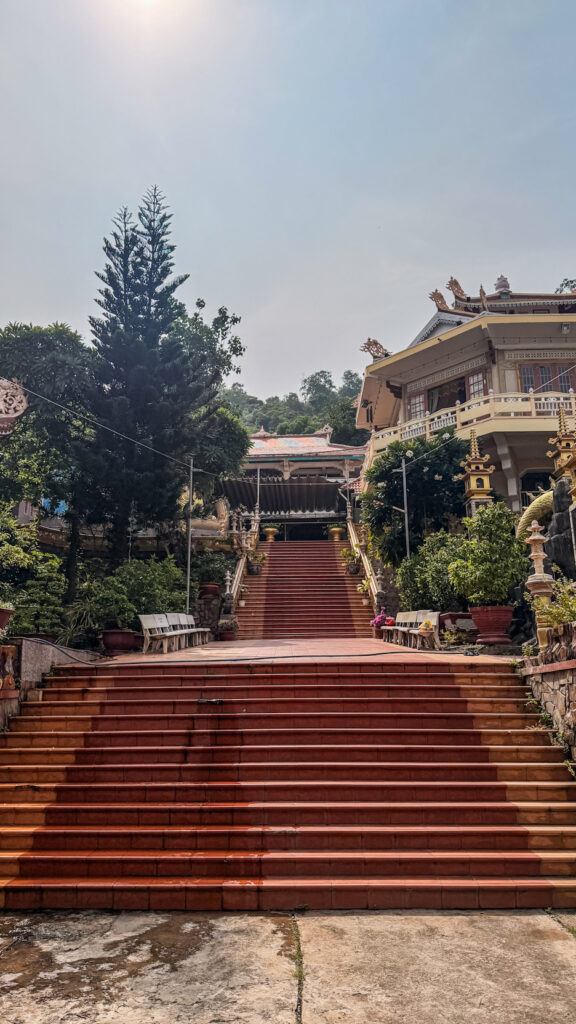
The site is arranged across several levels, with Buddhist statues, landscaped areas and religious structures connected by paths and stairs.
The setting is one of the main reasons to visit. Instead of feeling like a single building, the complex feels more like a religious park built into the mountain.
Official tourism information currently lists admission as free and suggests allowing around an hour for a visit.
If you are interested in Buddhist architecture, this is one of the places I would put near the top of your Vung Tau list.
You can also combine it with other attractions on the Big Mountain side of the city and then continue toward the waterfront.
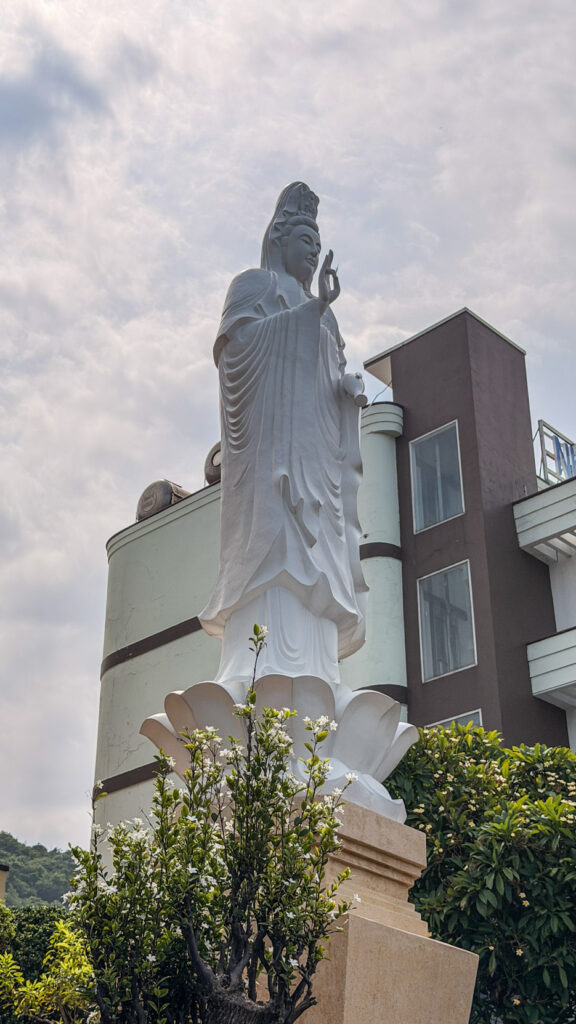
3. Quan The Am Bo Tat Pagoda
Best for: a quieter temple and the large Quan Yin statue
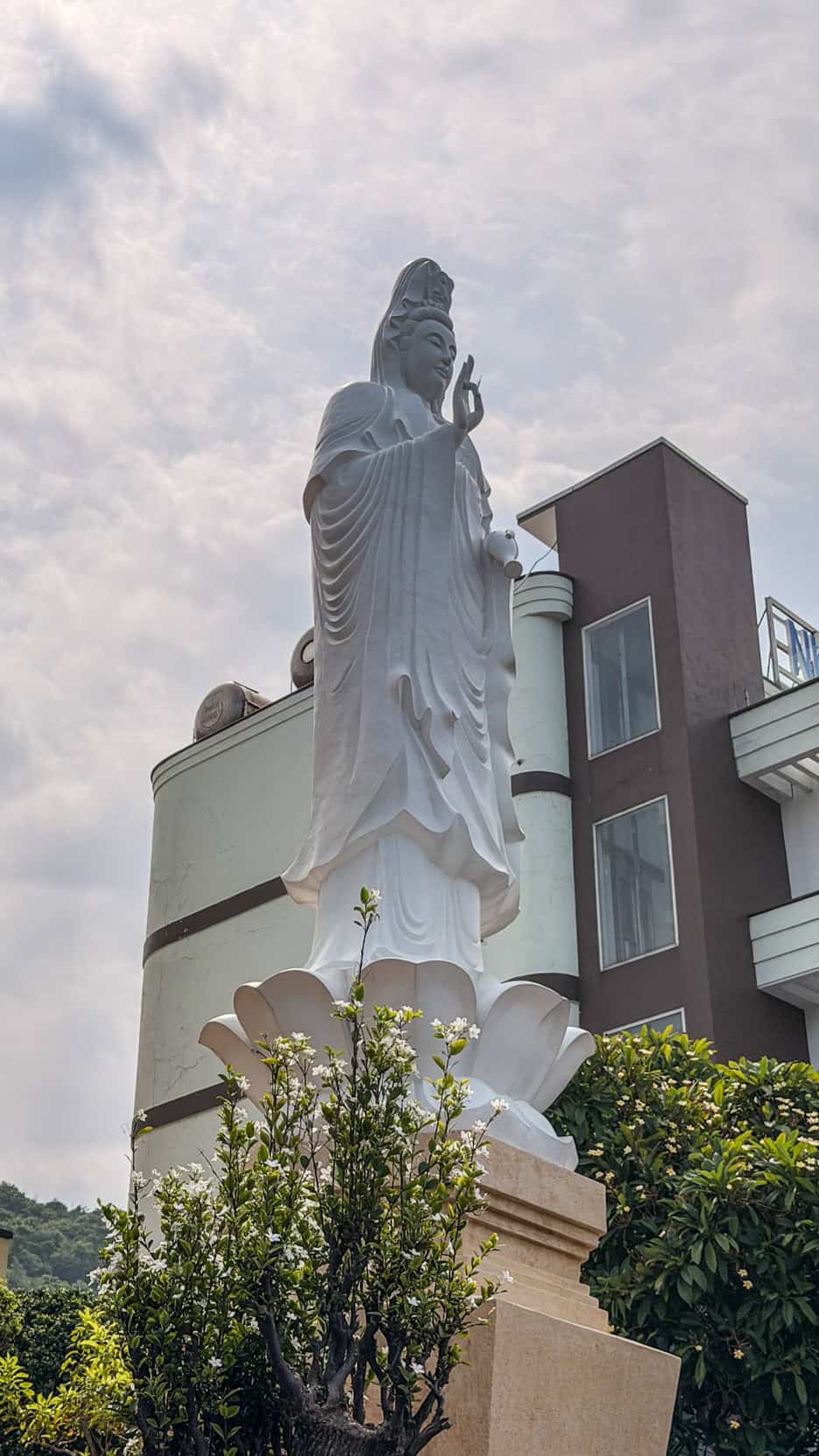
Quan The Am Bo Tat is a much smaller temple than Thich Ca Phat Dai, but it is immediately recognizable because of the large white statue of Quan Yin.
The temple sits on the Big Mountain side of Vung Tau, close to Bai Dau.
The National Authority of Tourism describes the temple as a relatively small pagoda established in 1976, with a 16-metre reinforced-concrete statue of Quan Yin facing toward the sea.
This is a good example of why I would not judge Vung Tau’s temples only by their size.
Some of the smaller places have a completely different atmosphere from the major tourist attractions.
If you are already exploring Vung Tau, this is an easy place to add to a sightseeing route around Big Mountain.
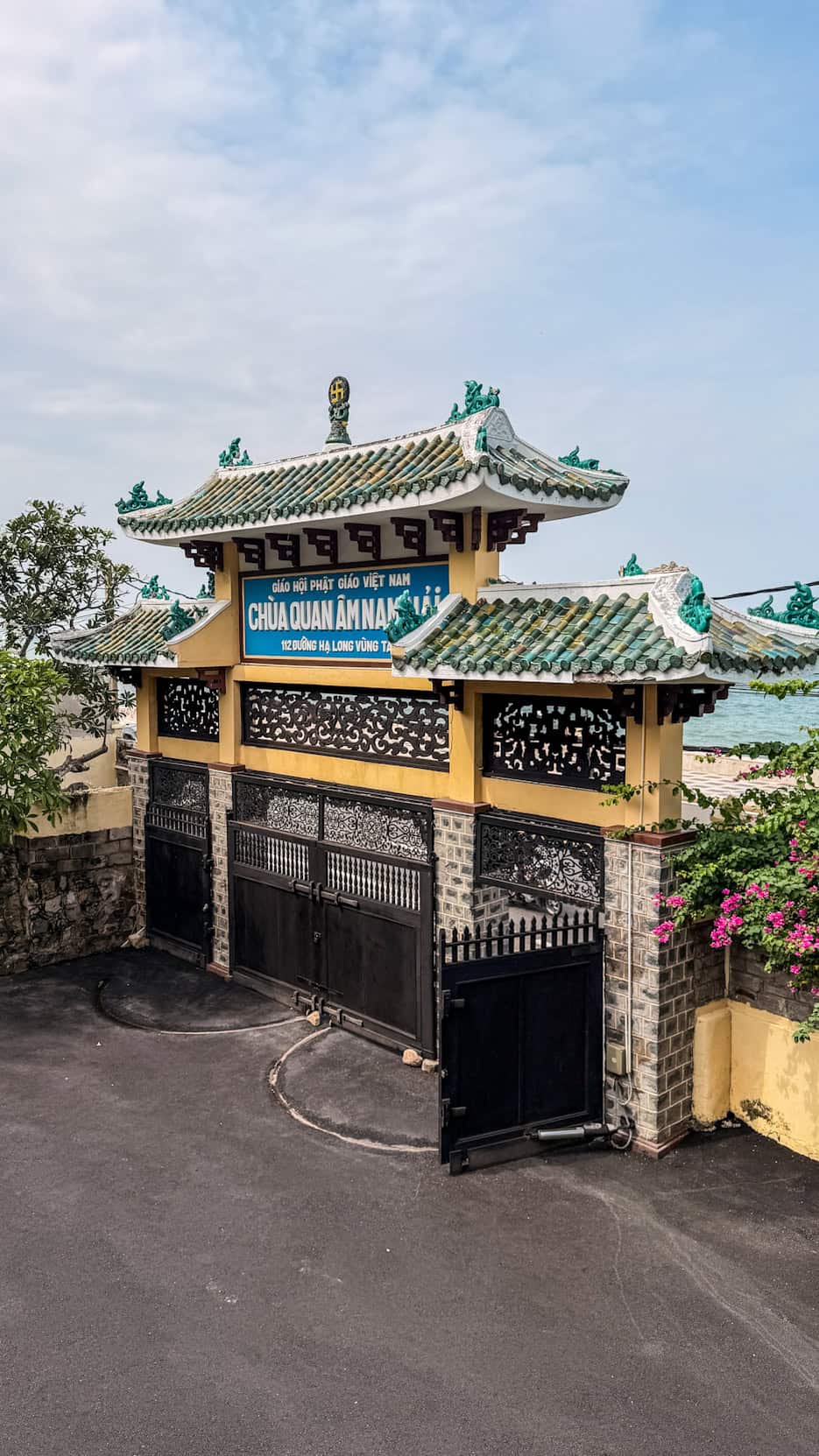
4. The Temples Around Big Mountain
The area around Big Mountain is particularly interesting if you want to explore several religious sites in one outing.
Instead of treating every temple as a separate destination, think of the entire area as one long sightseeing zone.
You can move between larger complexes and smaller temples, stopping whenever something catches your attention.
Some of the smaller temples are much less visually impressive than the major pagodas, while others are surprisingly beautiful once you walk through the entrance.
This is also one of the best areas to explore if you prefer discovering places yourself rather than following a rigid tourist itinerary.
5. Nirvana Vihara — The Reclining Buddha Pagoda
Best for: one of Vung Tau’s most recognizable Buddhist attractions
Nirvana Vihara, also known as the Pagoda of the Reclining Buddha, is located on the slopes of Small Mountain.
The pagoda is famous for its large reclining Buddha and its position overlooking the coastal part of the city.
The complex is built into the hillside, so reaching the main areas involves stairs.
Inside, the reclining Buddha is the obvious highlight, but there are several other details worth looking at, including decorative mosaics, religious statues and the overall design of the complex.
The combination of the temple, mountain and sea makes this one of the more visually interesting pagodas in Vung Tau.
If you are already visiting the Vung Tau Lighthouse or Mũi Nghinh Phong, this part of the city is easy to incorporate into the same general sightseeing day.
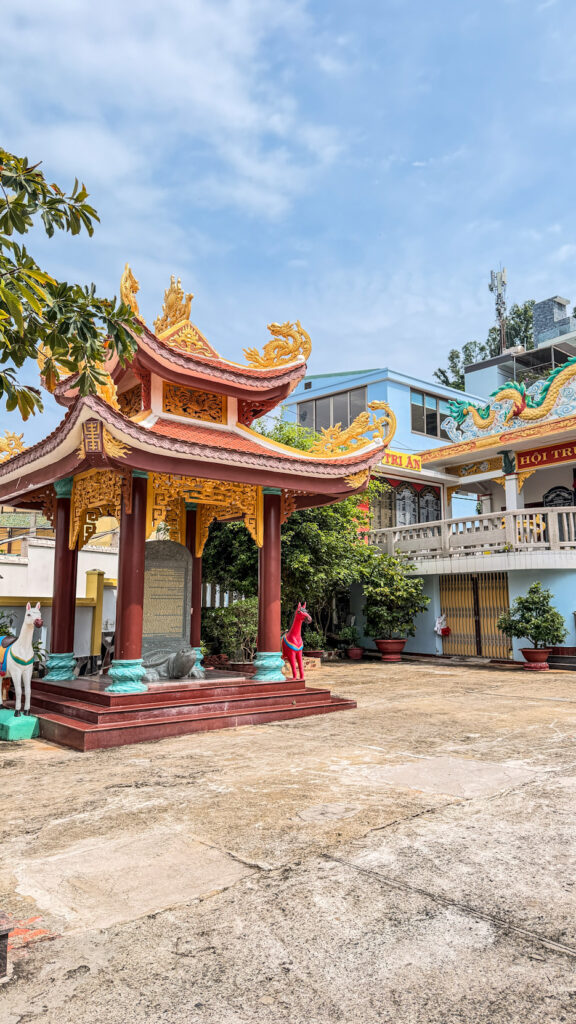
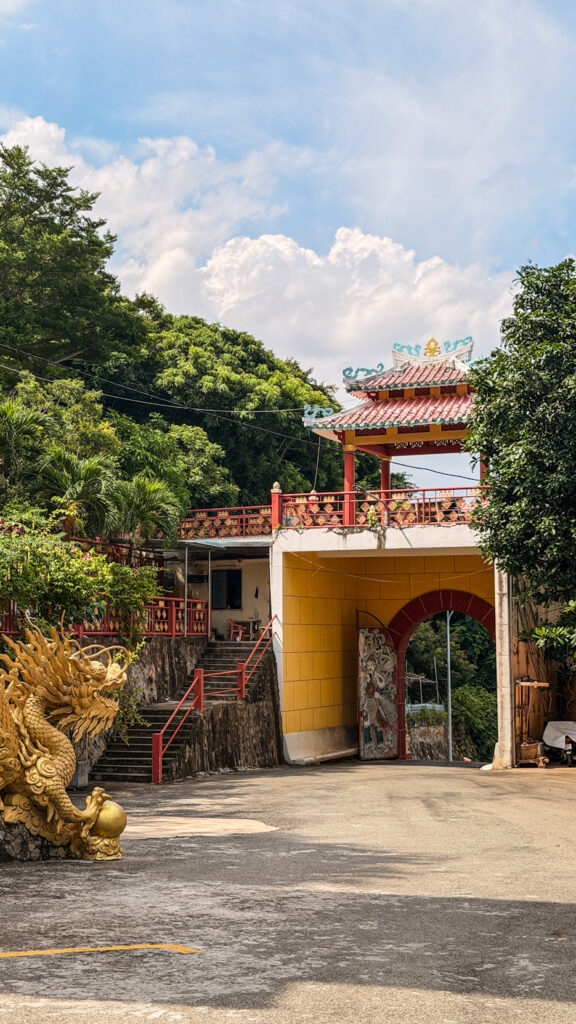
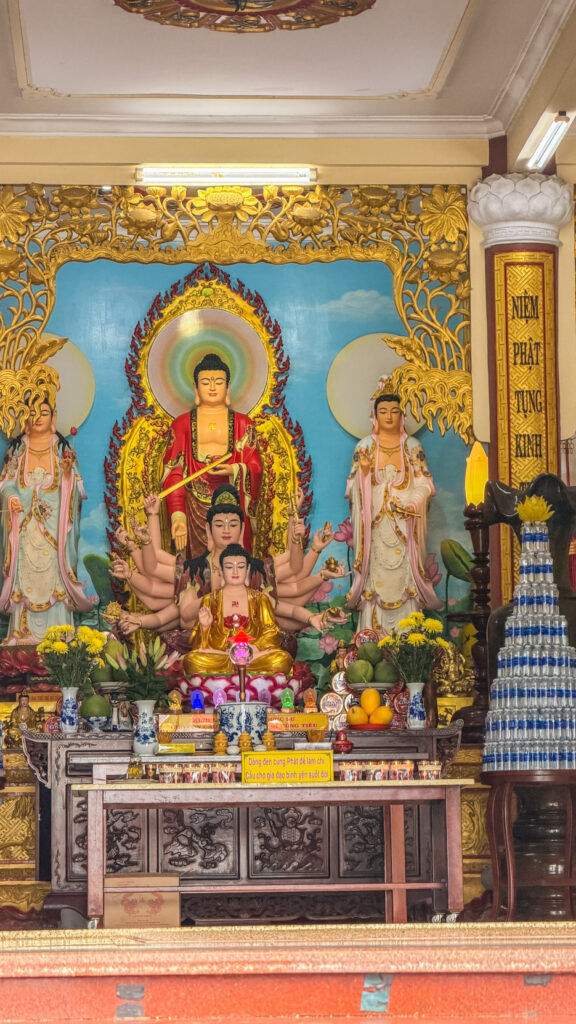
6. Tu Quang Pagoda
Best for: a quieter stop on the Small Mountain side
Tu Quang Pagoda is another Buddhist temple located along Hạ Long Road.
It is much less of a major tourist attraction than the famous Christ statue or lighthouse, which is precisely why it can be interesting.
The temple provides another example of how densely religious sites are distributed around Vung Tau’s mountains.
You can visit it as part of a broader walk through the area rather than making a special trip across the city just to see it.
This is a recurring theme with Vung Tau’s temples: the experience is often better when you combine several smaller stops rather than visiting one isolated temple.
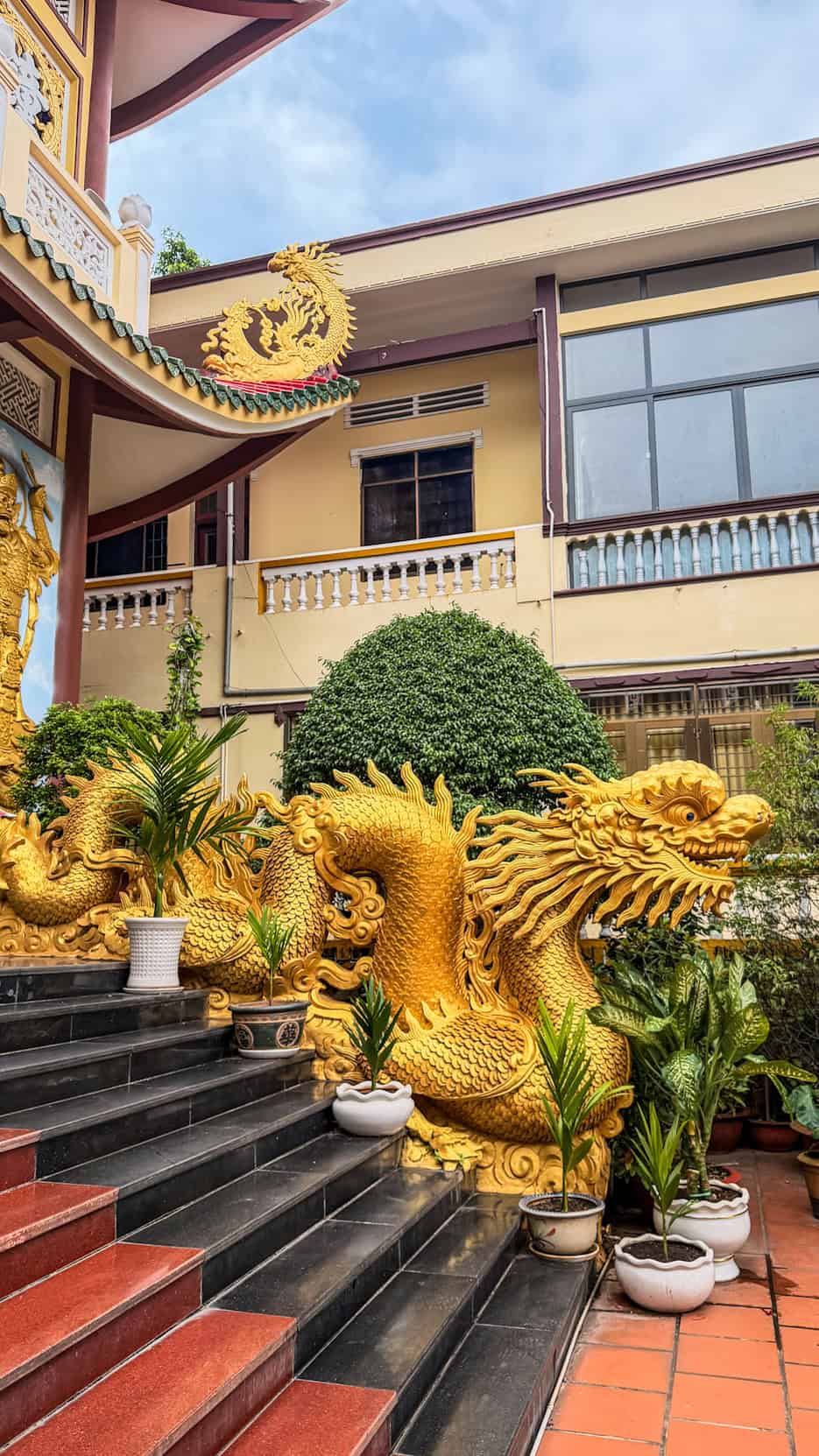
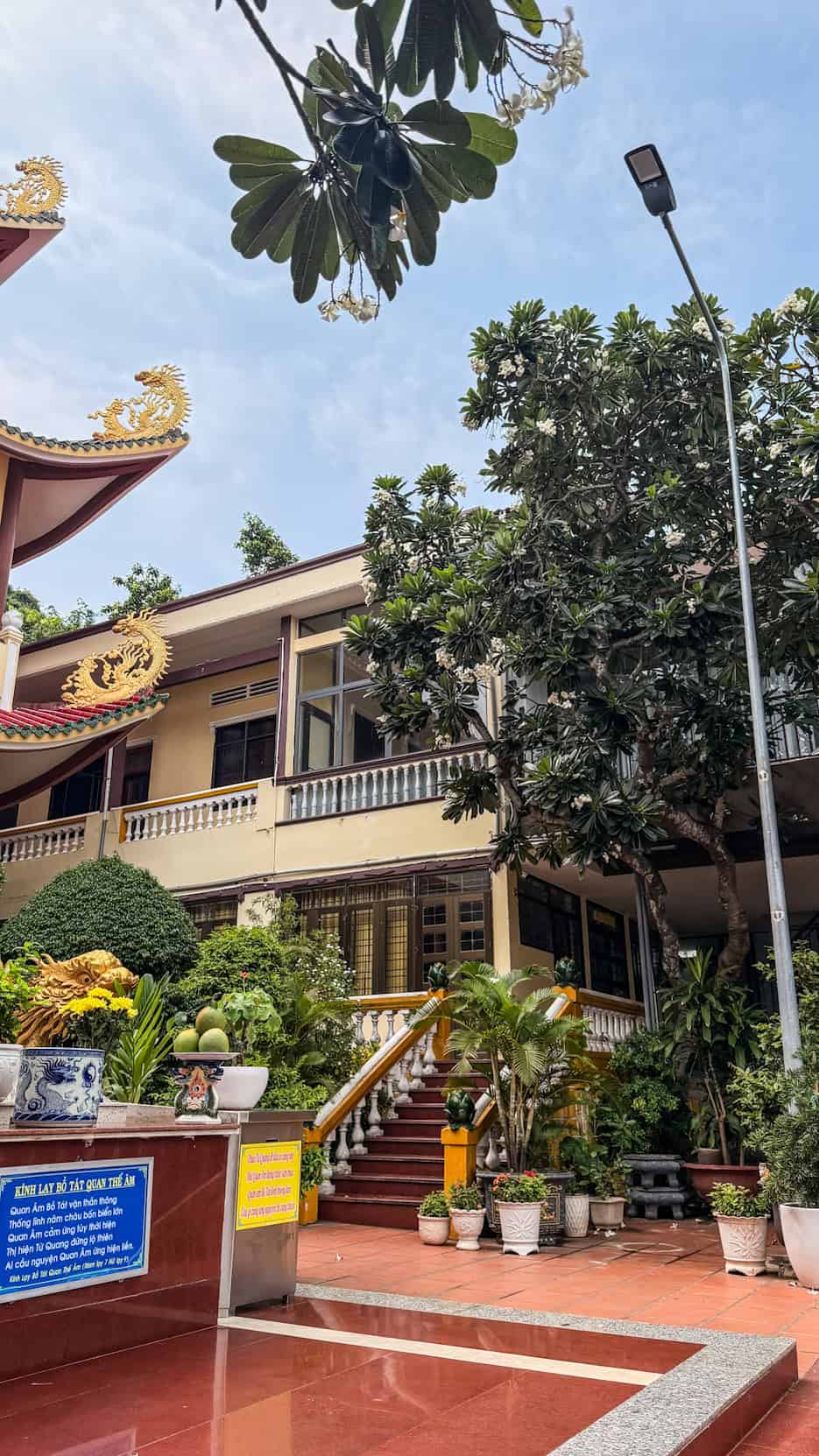
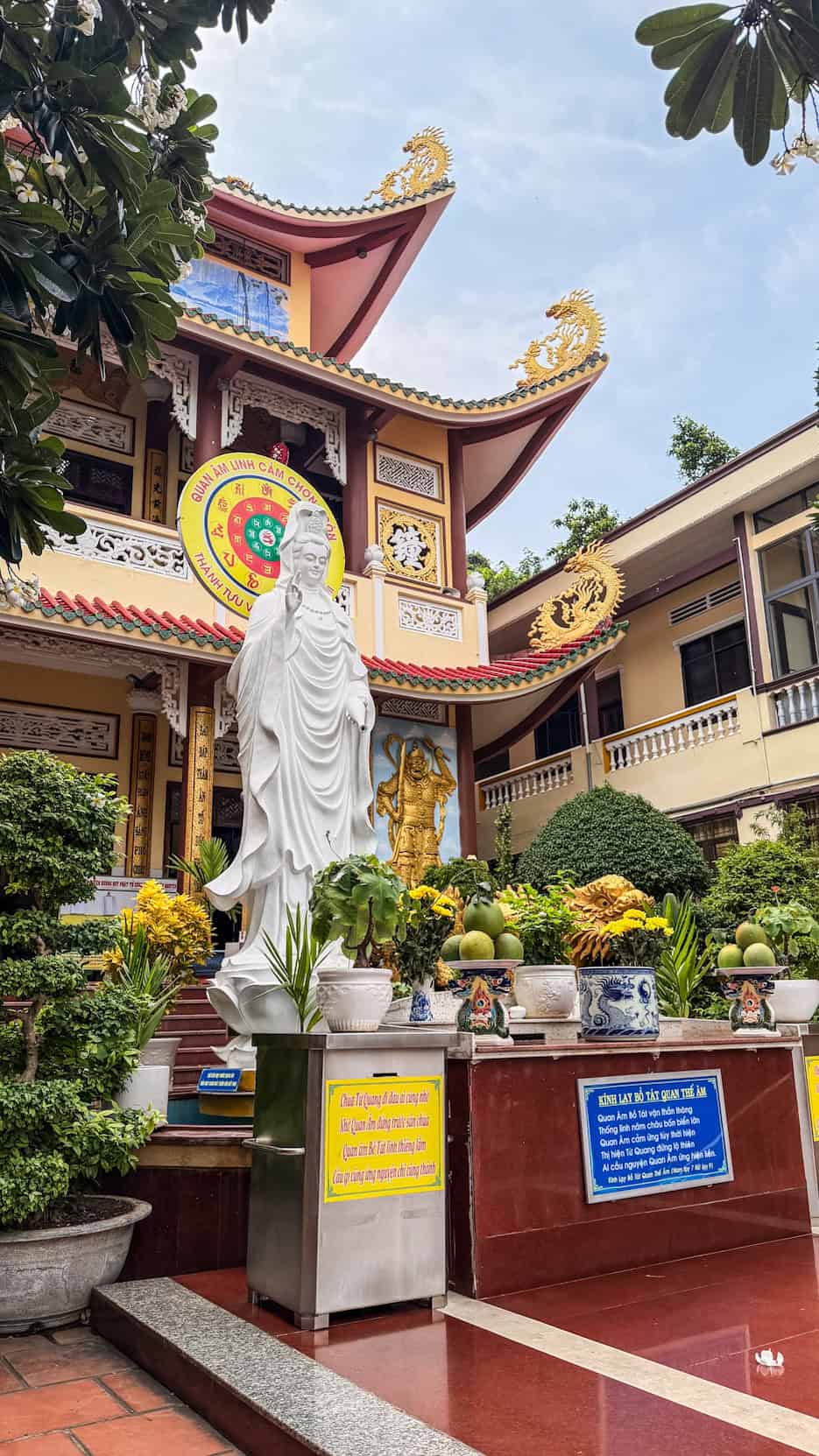
7. Linh Son Ancient Temple
Best for: history and a more traditional local temple atmosphere
Linh Son Ancient Temple is located in the central part of Vung Tau and is one of the city’s older Buddhist temples.
It is considerably smaller than the large mountain complexes, but it has a more traditional neighborhood-temple atmosphere.
The temple is a good reminder that Vung Tau’s religious architecture is not limited to the mountain slopes.
You can find important temples directly inside the urban fabric of the city, surrounded by streets, restaurants and everyday life.
That makes Linh Son particularly easy to combine with a normal day of exploring central Vung Tau.
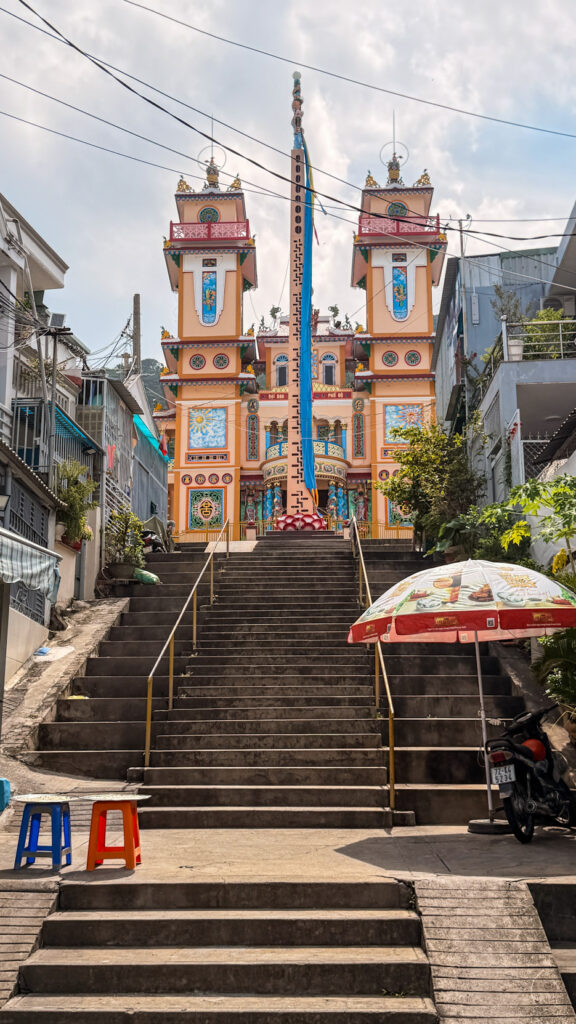
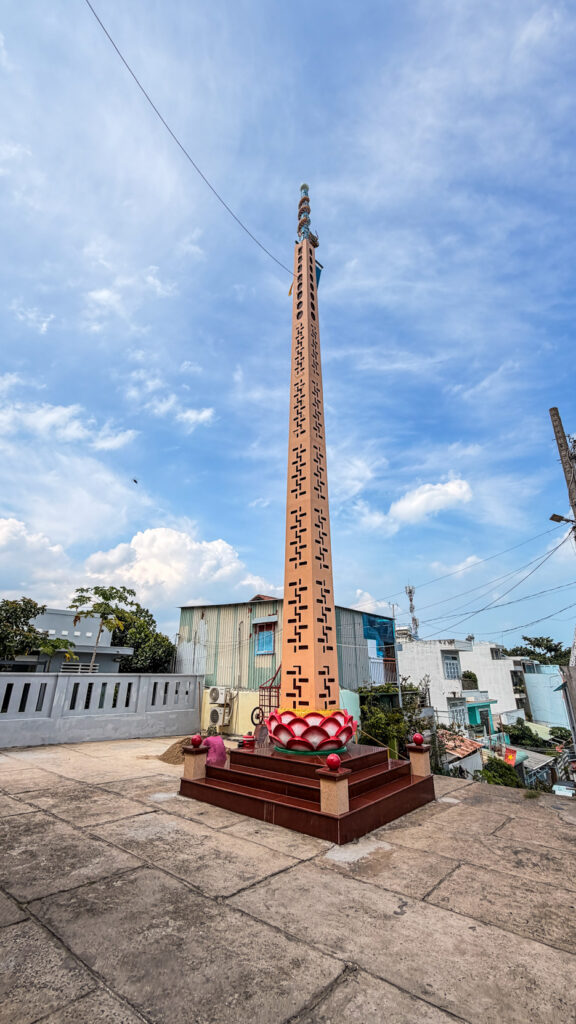
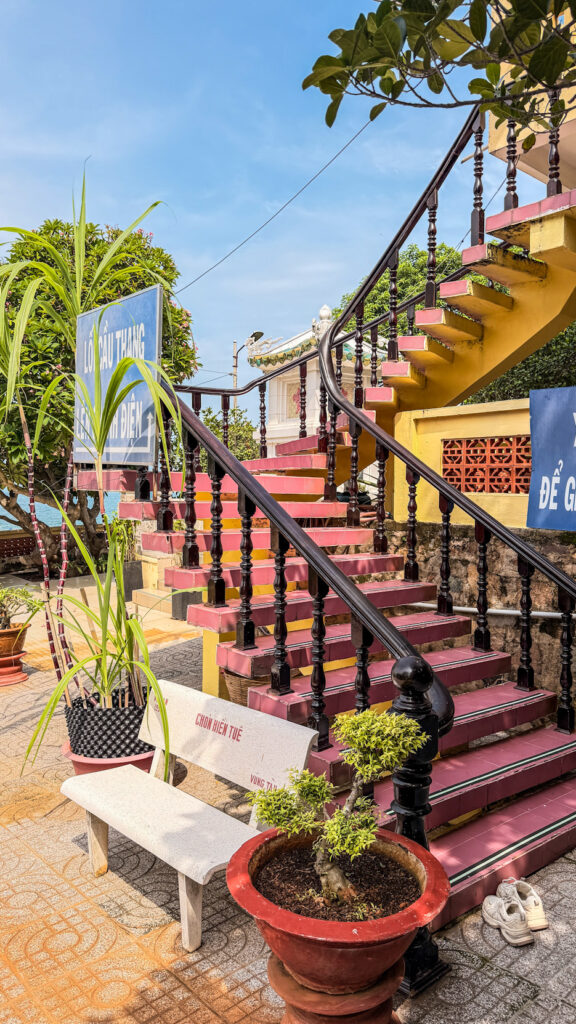
8. Phuoc Hai Pagoda
Best for: visitors interested in different Buddhist traditions
Phuoc Hai Pagoda is another interesting stop in central Vung Tau.
Unlike some of the better-known Vietnamese Buddhist temples, this site is associated with the Theravada tradition.
That makes it useful for travelers who want to see more variety than simply visiting several temples with similar architecture.
If you have already visited the major Vietnamese Buddhist complexes, adding a Theravada temple gives you a slightly different perspective on Buddhism in Vietnam.
9. Bồ Đề Pagoda
Bồ Đề Pagoda is another smaller Buddhist site located around the Big Mountain area.
It is the kind of place that makes the Vung Tau temple experience different from visiting a city with only two or three famous pagodas.
Here, the attractions are spread through the hills and streets, meaning you can encounter several different religious sites during the same walk.
I would not necessarily travel across Vung Tau just to visit this temple by itself. Instead, include it if it fits naturally into your route.
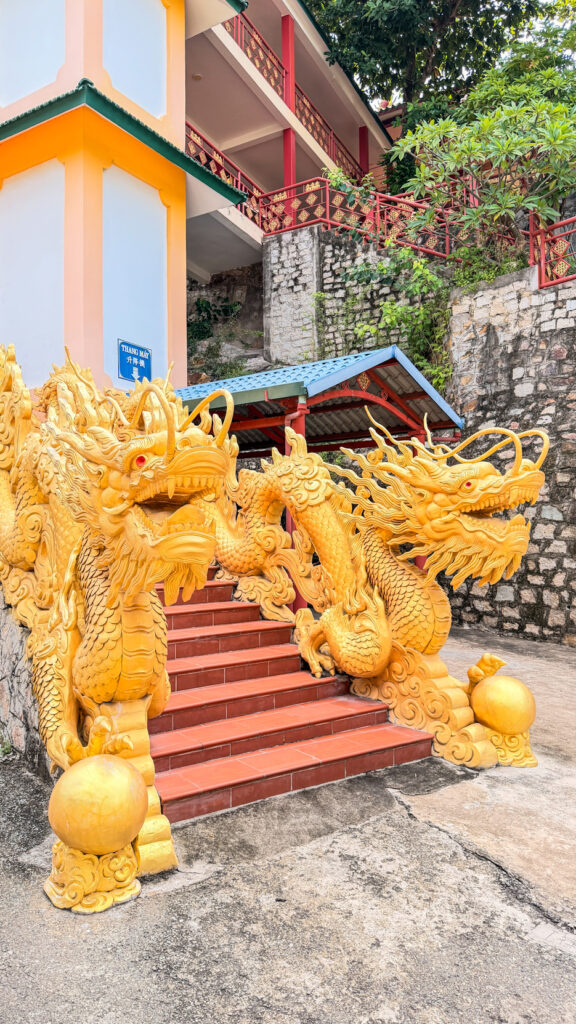
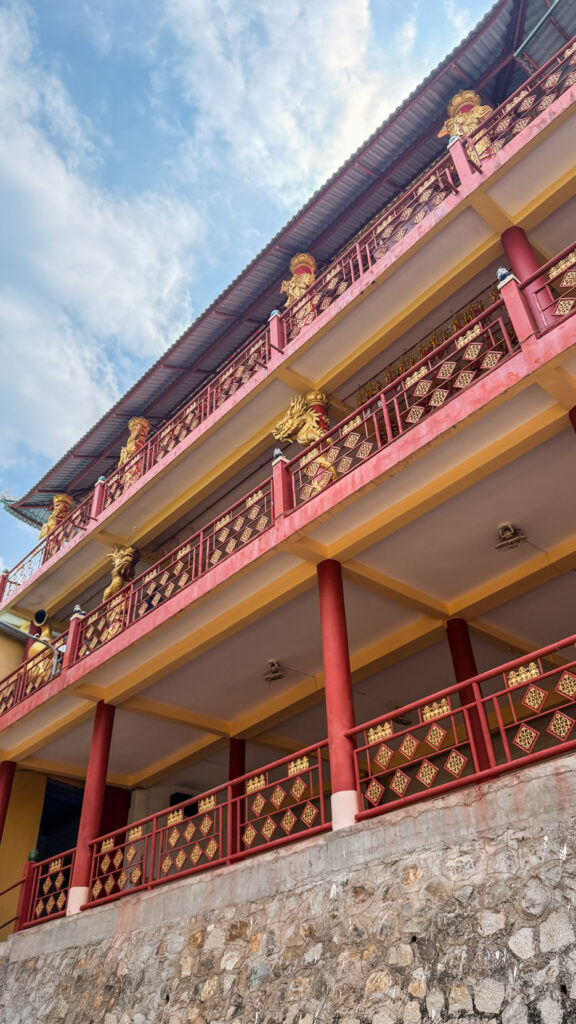
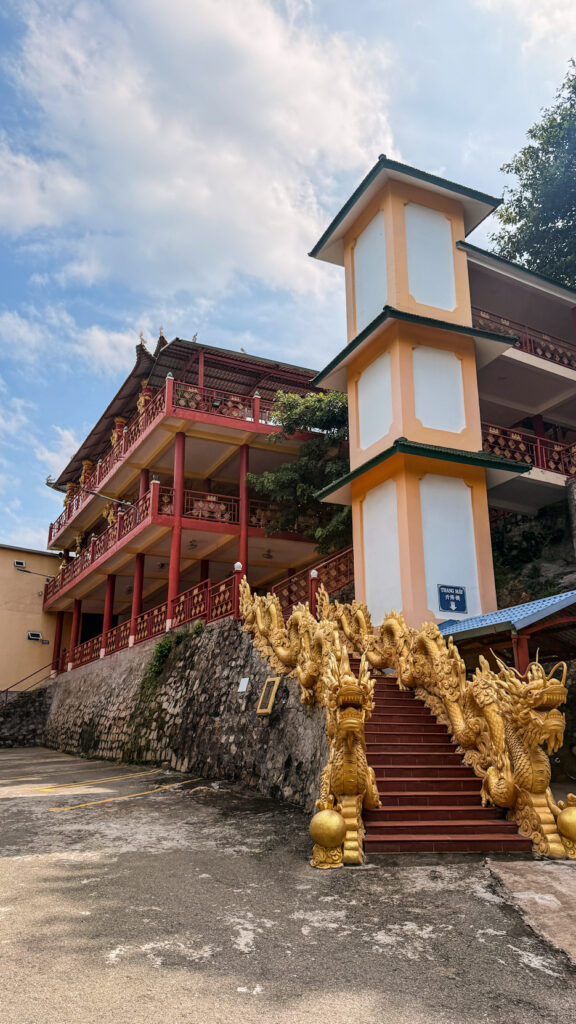
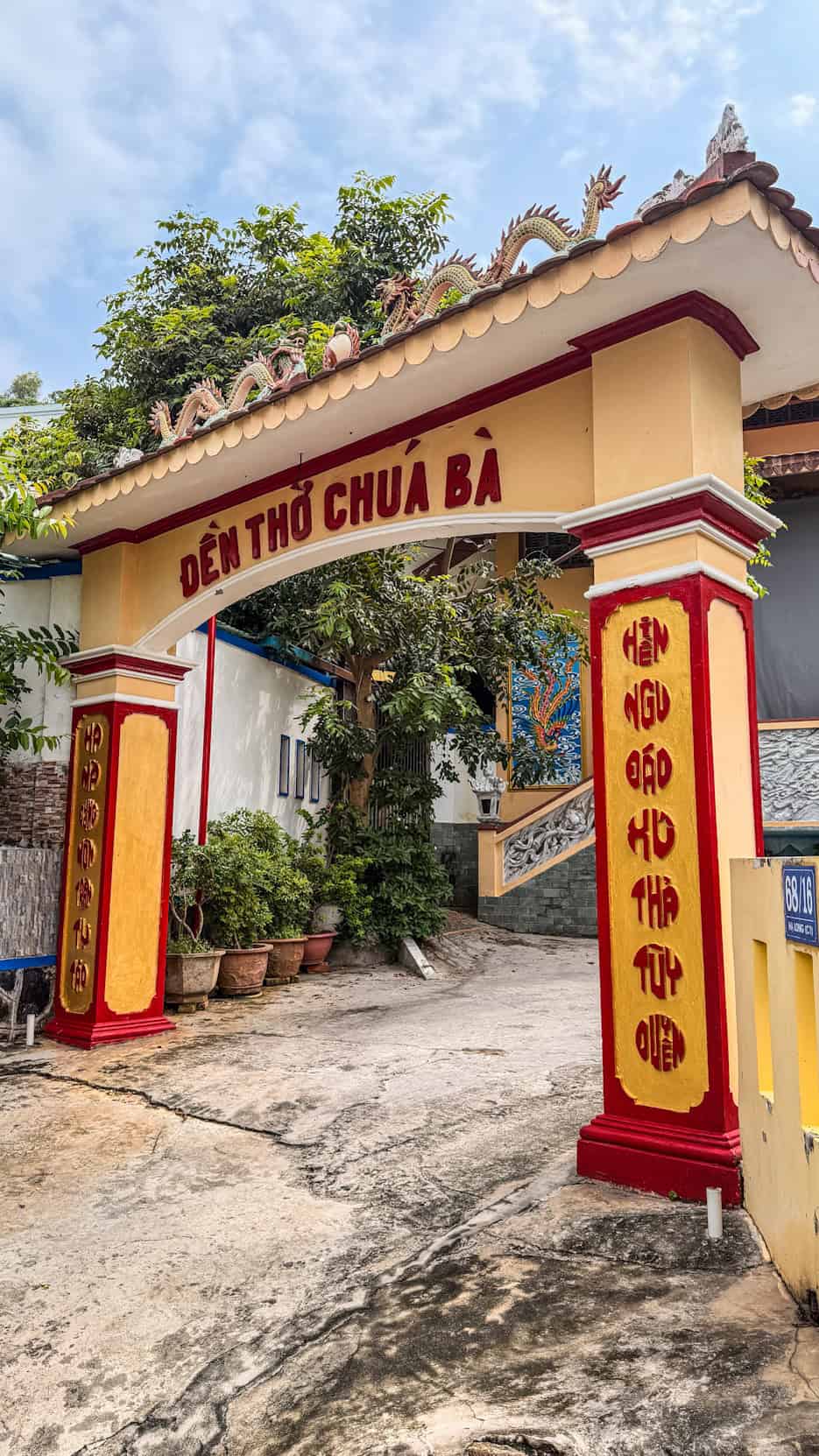
Đền Thờ Cô Bà (Lady Shrine)
Best for: an active local shrine with dragon-flanked stairways
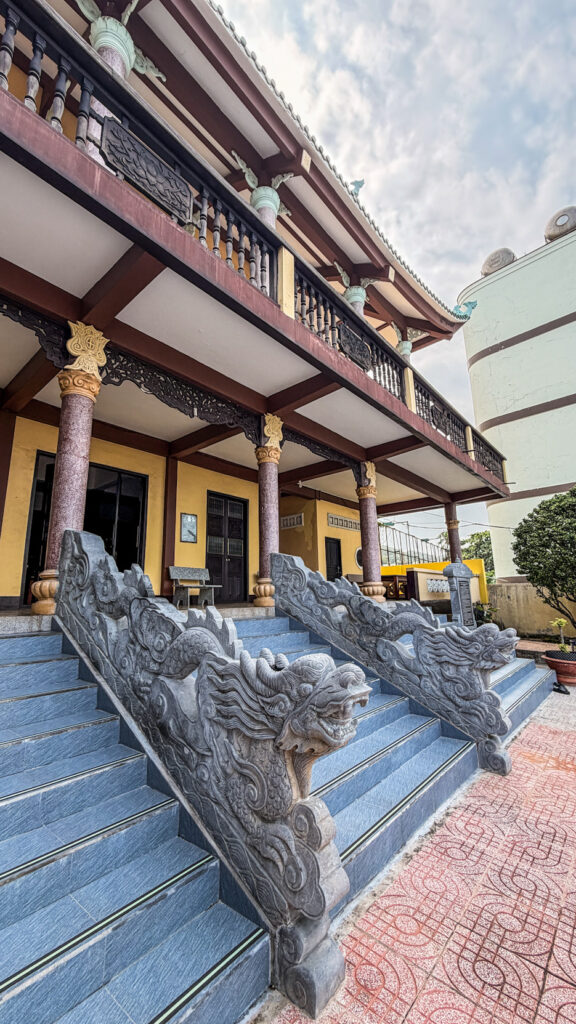
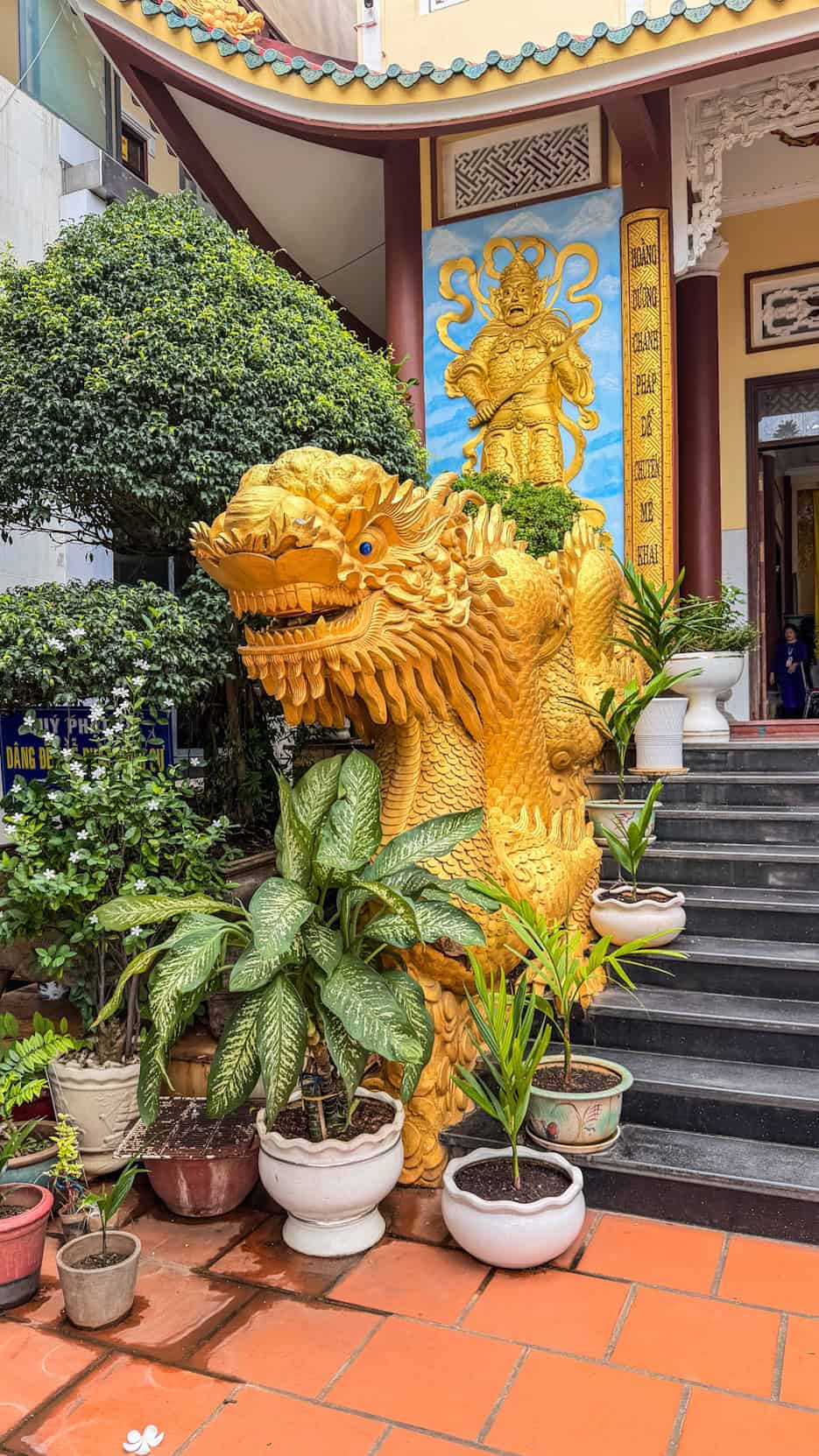
Đền Thờ Cô Bà sits on a hillside lane and is one of the more elaborately decorated shrines on this trail, with long dragon-lined staircases leading up through a tropical garden to a series of altars.
It’s a working local shrine rather than a museum piece — expect incense smoke, small offerings, and the kind of everyday devotion that doesn’t get staged for tourists.
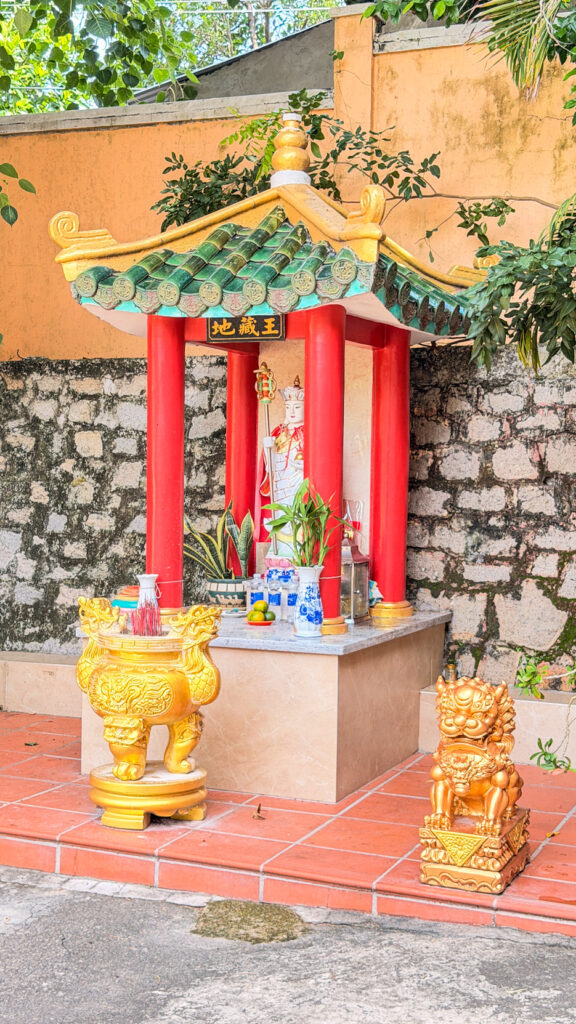
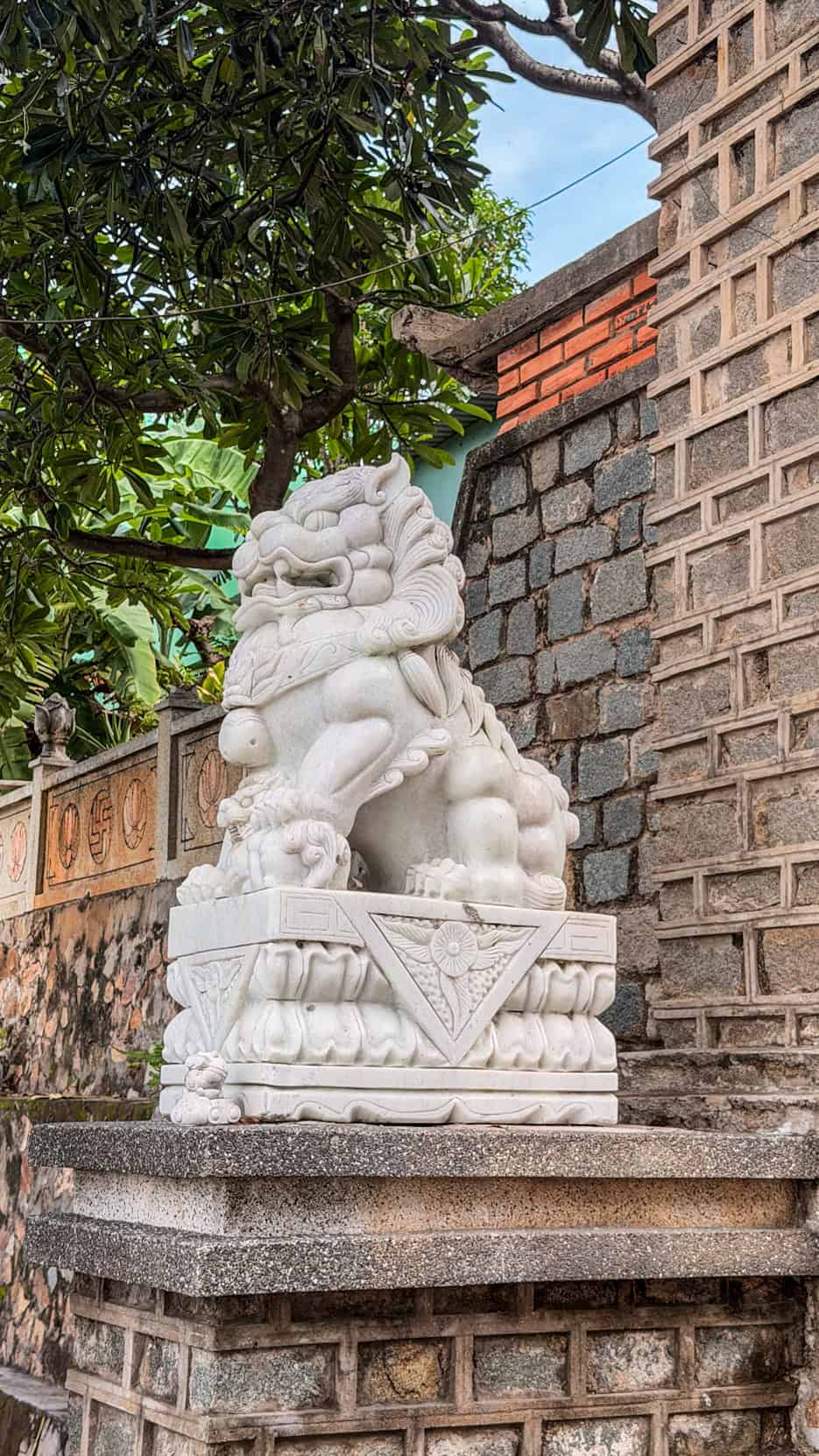
The climb up the stone stairs is worth it for the golden dragon details and the Earth God shrine partway up, with the Guanyin statue and a white lion guarding one of the upper terraces.
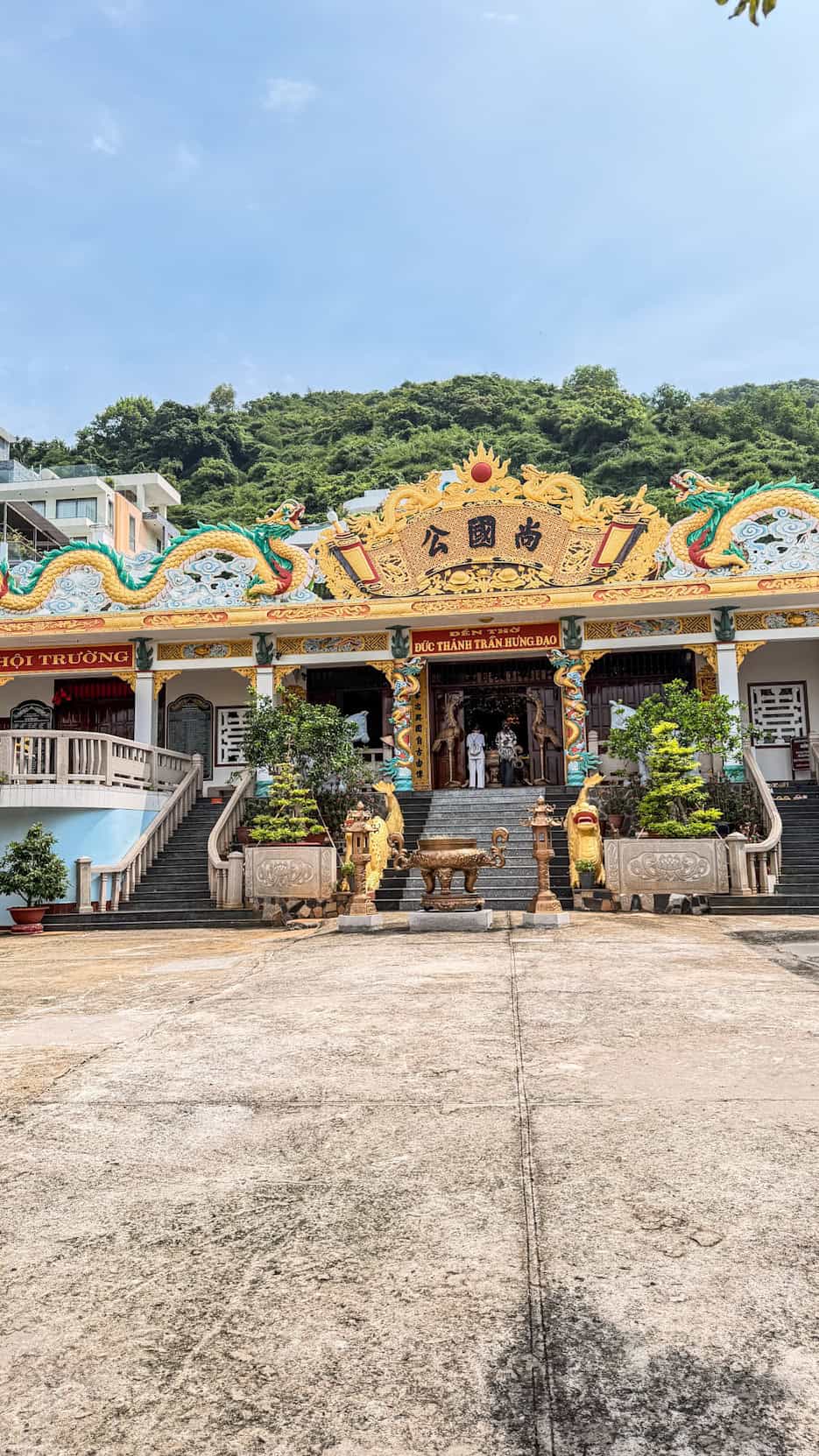
Tran Hung Dao Temple
Best for: honoring a national hero away from the main pagoda circuit
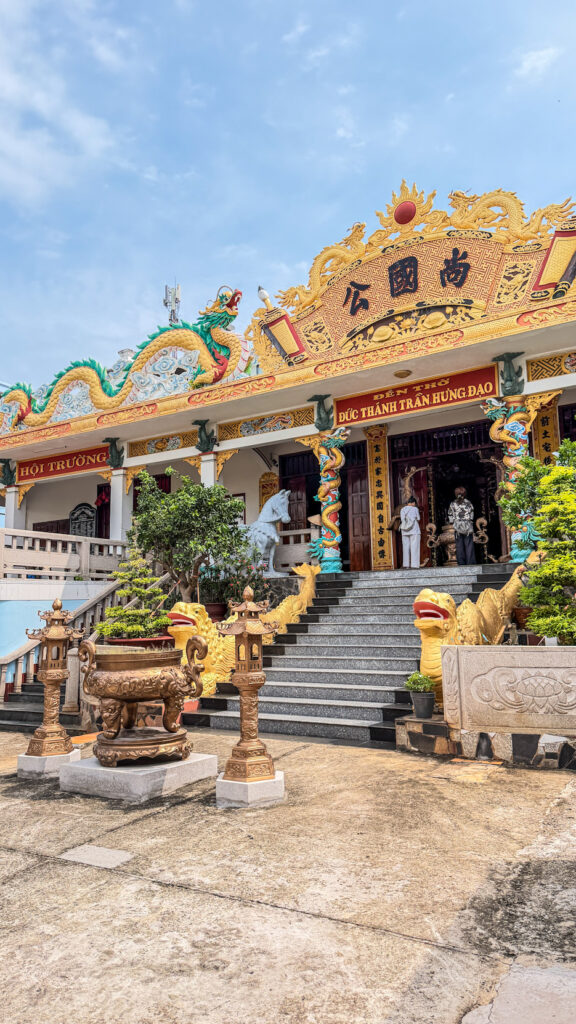
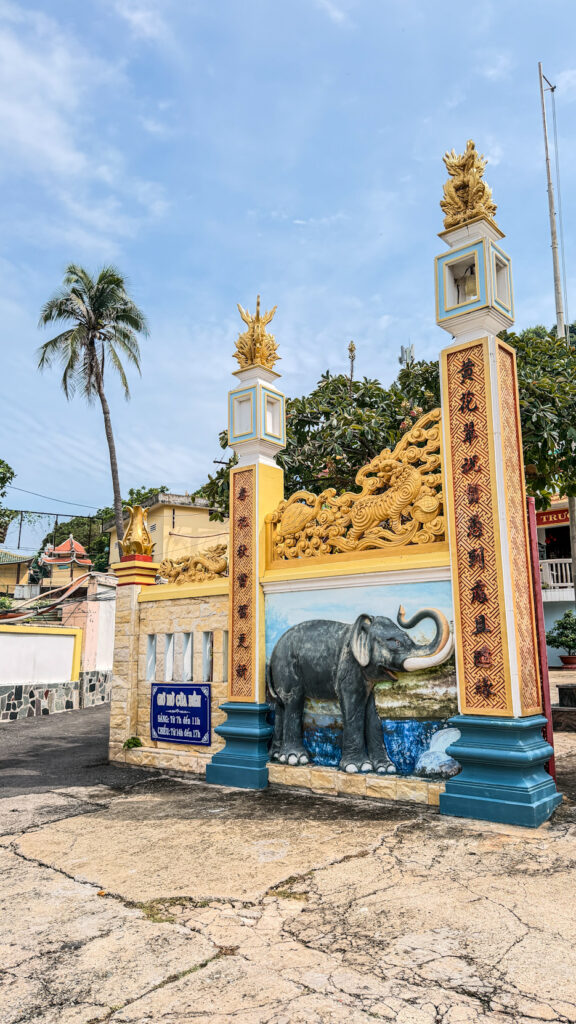
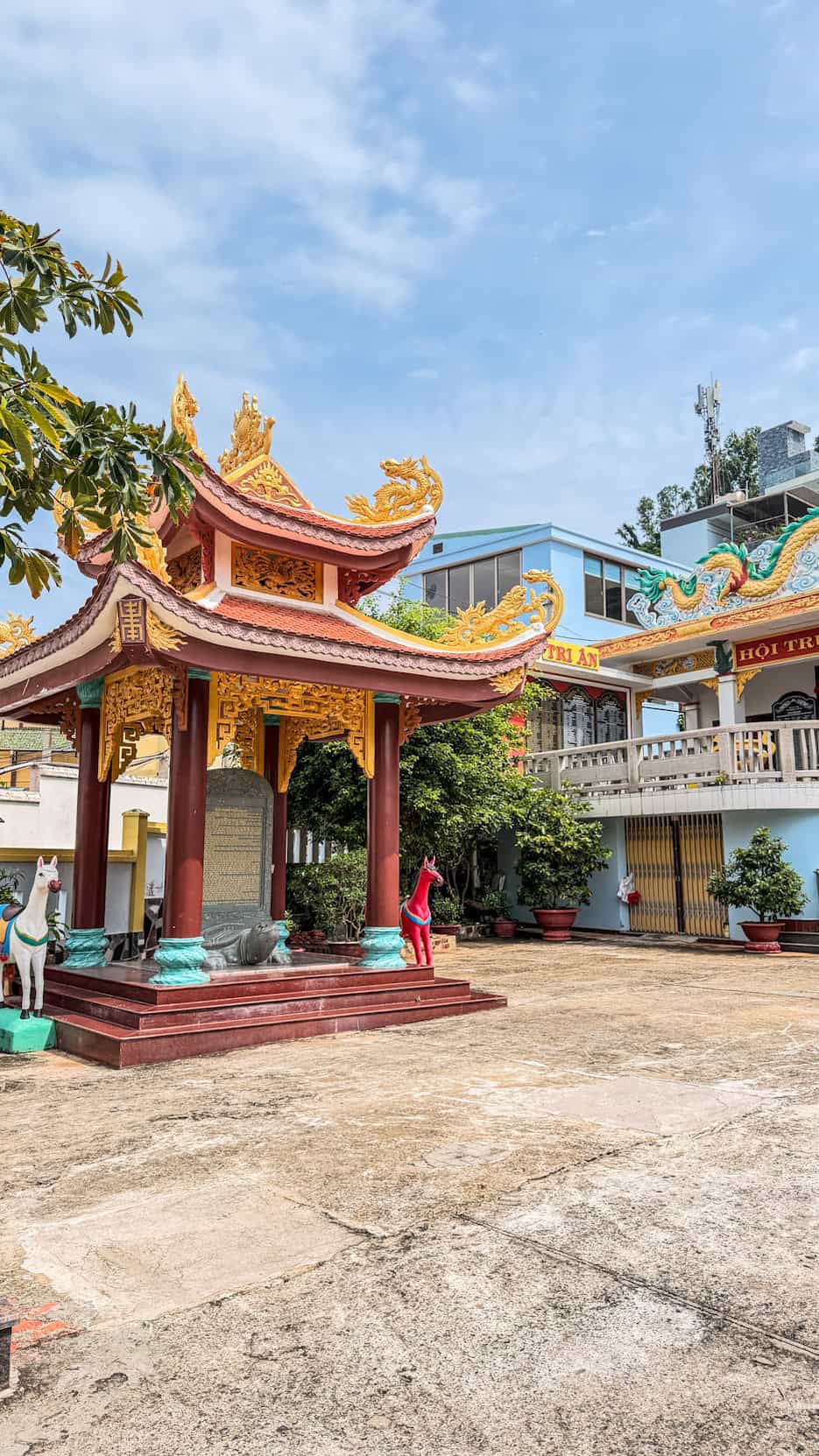
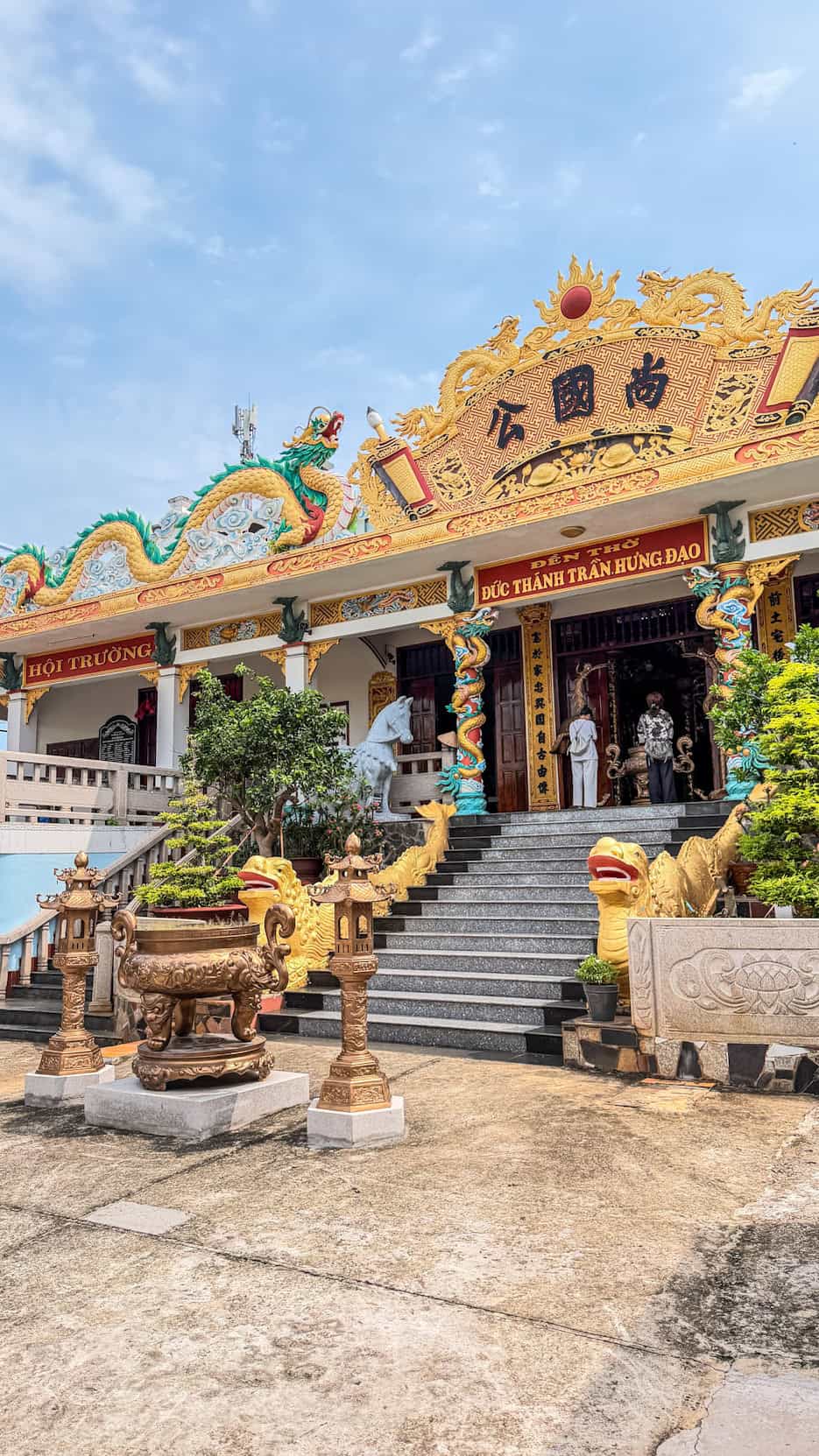
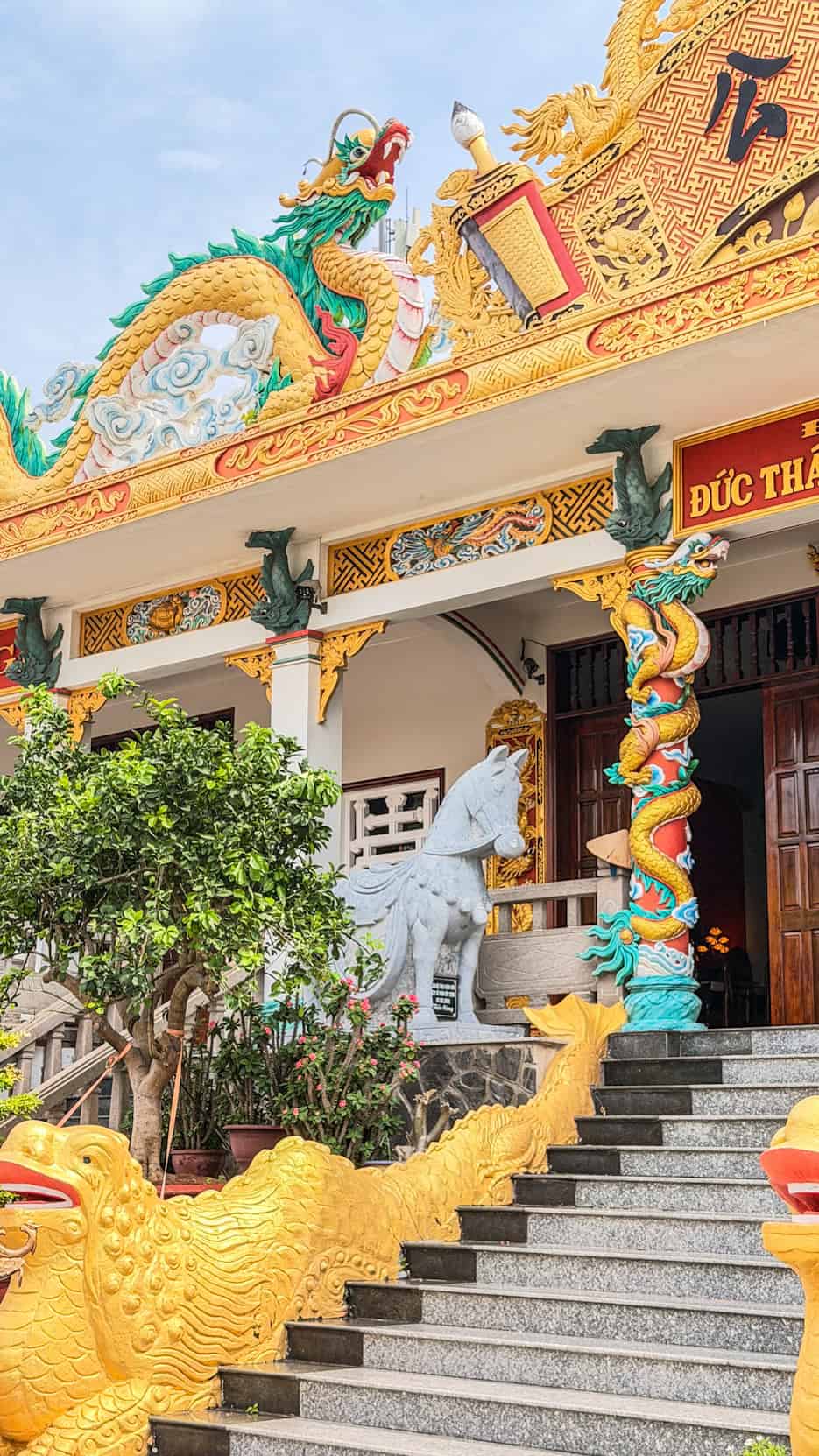
Tran Hung Dao Temple is dedicated to the 13th-century general who repelled the Mongol invasions, rather than to a Buddhist deity, which makes it a different kind of stop from the rest of this list.
The courtyard has an elephant-relief wall and a quieter, more civic atmosphere than the hillside pagodas — a good add-on if you’re combining temples with a bit of Vietnamese history.
10. The Best Way to Explore Vung Tau’s Temples
I would not try to visit every temple in one day.
There are simply too many, and after the first few large Buddha statues and pagoda gates, the experience can start to blur together.
A better approach is to choose three to five interesting places and combine them with other attractions.
For example:
- Start around Big Mountain.
- Visit Thich Ca Phat Dai.
- Continue toward Quan The Am Bo Tat.
- Explore another small temple if you see one that interests you.
- Move toward the coast.
- Continue to Small Mountain.
- Visit Nirvana Vihara or another temple in the area.
- Finish around the lighthouse, Mũi Nghinh Phong or the waterfront.
This gives you a much more varied day than spending several hours visiting temples one after another.
11. A Temple Walk Through Vung Tau
If you enjoy walking, Vung Tau is particularly rewarding because the temples are not always isolated attractions.
You can walk along roads around the mountains and repeatedly come across small religious buildings, statues and temple entrances.
Some are tiny and almost hidden behind trees or walls. Others are large enough to immediately attract your attention.
This is one of those situations where having a destination in mind is useful, but leaving some room for spontaneous exploration makes the experience better.
If you are planning a longer walking day, our Vung Tau Promenade guide is useful for combining the temple areas with the coast.
12. Can You Visit the Temples Without Climbing a Mountain?
Yes.
This is important because Vung Tau’s religious attractions are not all huge mountain climbs.
Some temples are directly on city streets and require very little physical effort. Others are built into hillsides and involve considerably more stairs.
If you have limited mobility or simply do not want to spend your day climbing, choose the smaller city temples and easier-access sites.
And if one temple looks like it requires too many stairs, there is no shortage of alternatives nearby.
13. How Long Does a Vung Tau Temple Trail Take?
A short route can take around two to three hours.
If you want to explore several major temples, stop for photographs, sit quietly for a while and combine the route with other attractions, allow half a day.
You can also spread the temples across a two-day visit rather than trying to see everything at once.
For a complete weekend plan, see our Vung Tau 2-Day Itinerary.
14. What Should You Wear to Vung Tau Temples?
Remember that these are functioning religious sites, not simply tourist attractions.
Wear clothing that is reasonably respectful and avoid entering temples in beachwear.
If you are wearing shorts or beach clothing during the day, it is worth carrying something light that can cover your shoulders or legs when necessary.
Inside the temple, keep your voice down and follow any signs or instructions from the people looking after the site.
15. Can You Take Photos Inside Vung Tau Temples?
Photography is common around many of Vung Tau’s temples, particularly in outdoor areas, courtyards and around statues.
However, do not assume that every interior area can be photographed.
If you see a sign prohibiting photography or people are praying nearby, put the camera away and enjoy the place without taking pictures.
The most interesting photographs are often outside anyway: temple gates, Buddha statues, mountain vegetation, decorative details and views toward the sea.
16. Temples vs Vung Tau’s Other Attractions
If this is your first visit to Vung Tau, I would not spend the entire day visiting temples.
The city works best when you mix different experiences.
You can visit a pagoda in the morning, explore a museum, walk along the beach, have seafood for lunch and finish with a viewpoint or rooftop bar.
Our Best Museums in Vung Tau guide is useful if you want to add some history to the day, while the Best Rooftop Bars in Vung Tau guide covers places for the evening.
You can also browse Vung Tau attractions and activities if you want to add something more organized to your itinerary.
17. A Simple One-Day Temple & Sightseeing Route
If you want to combine temples with the city’s main attractions, this is a practical structure:
| Time | Plan |
|---|---|
| Morning | Thich Ca Phat Dai and Big Mountain temples |
| Late morning | Quan The Am Bo Tat and nearby sights |
| Lunch | Seafood or Vietnamese food near the coast |
| Afternoon | Nirvana Vihara and Small Mountain |
| Late afternoon | Vung Tau Lighthouse or Mũi Nghinh Phong |
| Evening | Beach, seafood or a rooftop bar |
This route gives you religious sites, mountain scenery, coastal views, history and food in one day.
If you want a more general version of this itinerary, see our Vung Tau 1-Day Itinerary.
18. How Many Temples Are There in Vung Tau?
There is no particularly useful single number because the answer depends on what you count as a temple, pagoda, monastery, shrine or religious site.
What is clear when you explore the city is that there are a lot of them.
Several are major tourist attractions, while many others are small local places that you can discover while walking through the city.
That is why I would not recommend an article that simply tries to rank every temple in Vung Tau.
The better experience is to choose a few major landmarks and then allow yourself to discover the smaller ones along the way.
19. My Favorite Way to Explore Vung Tau’s Temples
The best thing about Vung Tau’s temples is actually the density.
You do not have to plan an elaborate pilgrimage around the city. You can simply choose one or two major pagodas, start walking and see what you find.
Some temples are impressive because of their size. Others are interesting because of a single statue, a beautiful gate, a hillside location or a completely unexpected view of the sea.
That makes the temple trail feel less like ticking attractions off a list and more like exploring another side of Vung Tau.
If you have already seen the beaches and the main viewpoints, I would definitely spend at least a few hours exploring this side of the city.
Frequently Asked Questions
What is the most famous pagoda in Vung Tau?
Thich Ca Phat Dai is one of the city’s best-known Buddhist complexes. Nirvana Vihara, also known as the Reclining Buddha Pagoda, is another major religious attraction.
Is Thich Ca Phat Dai free?
Current tourism information lists admission as free. Visitors can also make voluntary donations if they wish.
Which Vung Tau temple has the Reclining Buddha?
Nirvana Vihara, also known as the Pagoda of the Reclining Buddha, is famous for its large reclining Buddha statue.
Are Vung Tau temples free to visit?
Many of the city’s temples and pagodas are free to enter, although individual sites can have different rules and donation practices.
Can I visit several Vung Tau temples in one day?
Yes. The concentration of temples around the city’s mountains makes it possible to visit several in a few hours. I recommend choosing three to five rather than trying to see every single one.
Are Vung Tau temples suitable for tourists?
Yes, provided that visitors treat them as active religious sites. Dress respectfully, keep noise down and follow local rules about photography and access.
What else can I combine with a Vung Tau temple tour?
The temples work particularly well with Mũi Nghinh Phong, Vung Tau Lighthouse, the beaches, museums and the waterfront. This makes it easy to create a full sightseeing day without spending the entire day inside religious sites.
More from our travel guide network
Build your Vietnam route — free.