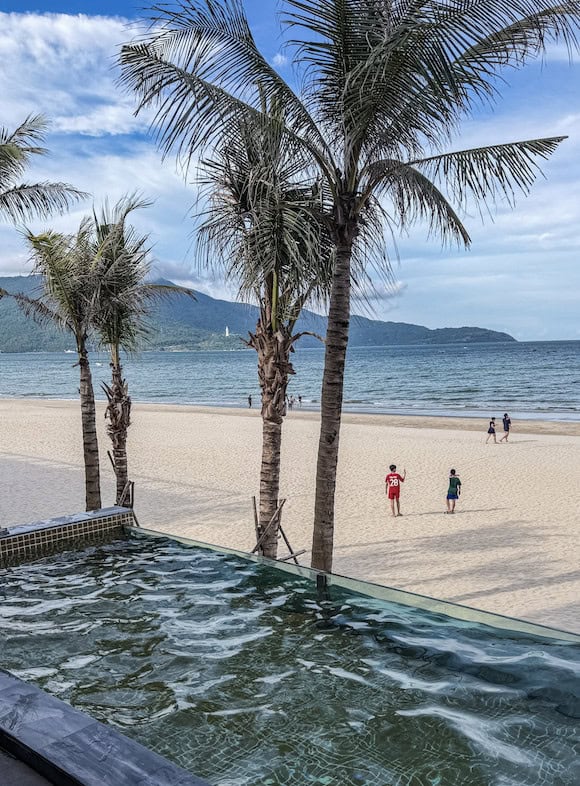
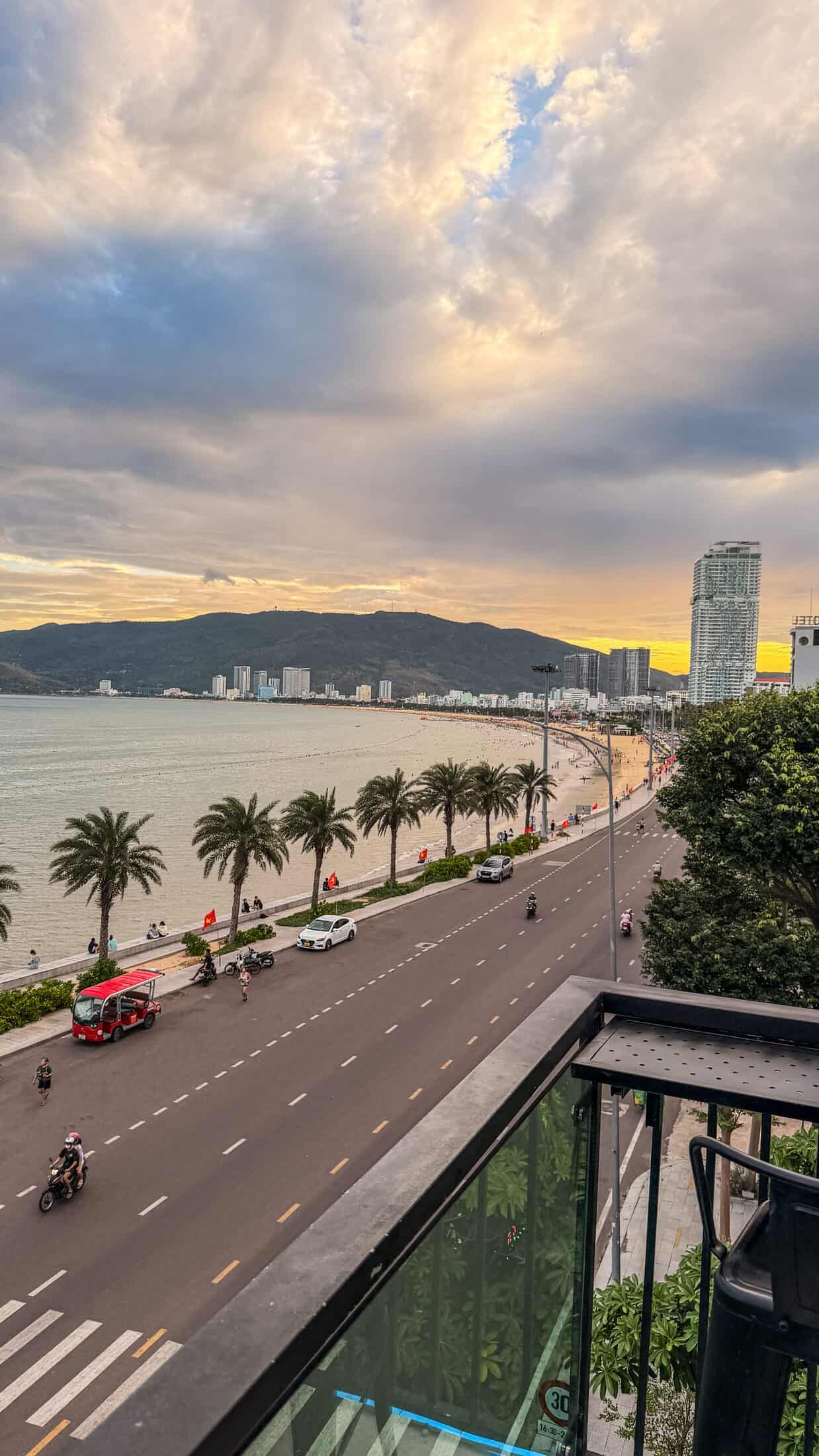
Quy Nhon’s promenade is really two things happening side by side: a long curve of open beach on one side, and a wall of new high-rises on the other, with the road and the sand running parallel for most of the length of the bay.
It’s easy to treat it as a single afternoon stop, but the promenade genuinely changes character depending on when you walk it. The beach reads differently in the quiet of the morning than the skyline does at sunset, and the same stretch turns into a different place again once the towers light up at night.
This is one full pass along it, roughly in the order a day here actually plays out — morning sand, midday skyline, sunset, and the promenade after dark.
Morning: Open Sand and Quiet Water
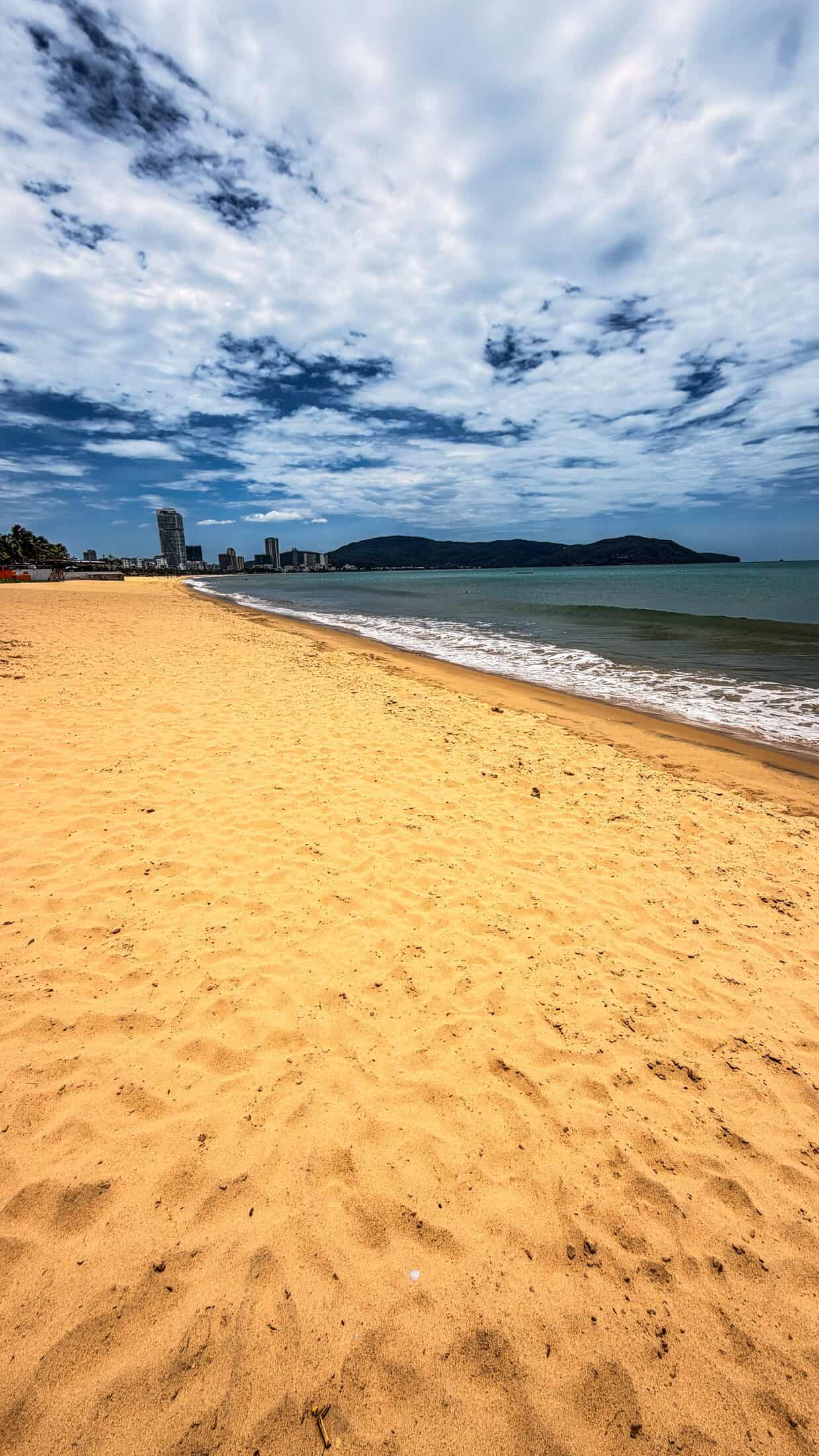
Early on, before the heat builds, the beach side of the promenade is close to empty. Patches of beach morning glory vine spread across the sand, the water sits somewhere between turquoise and green, and a scattering of boats sits out near the horizon.



The Curve of the Bay
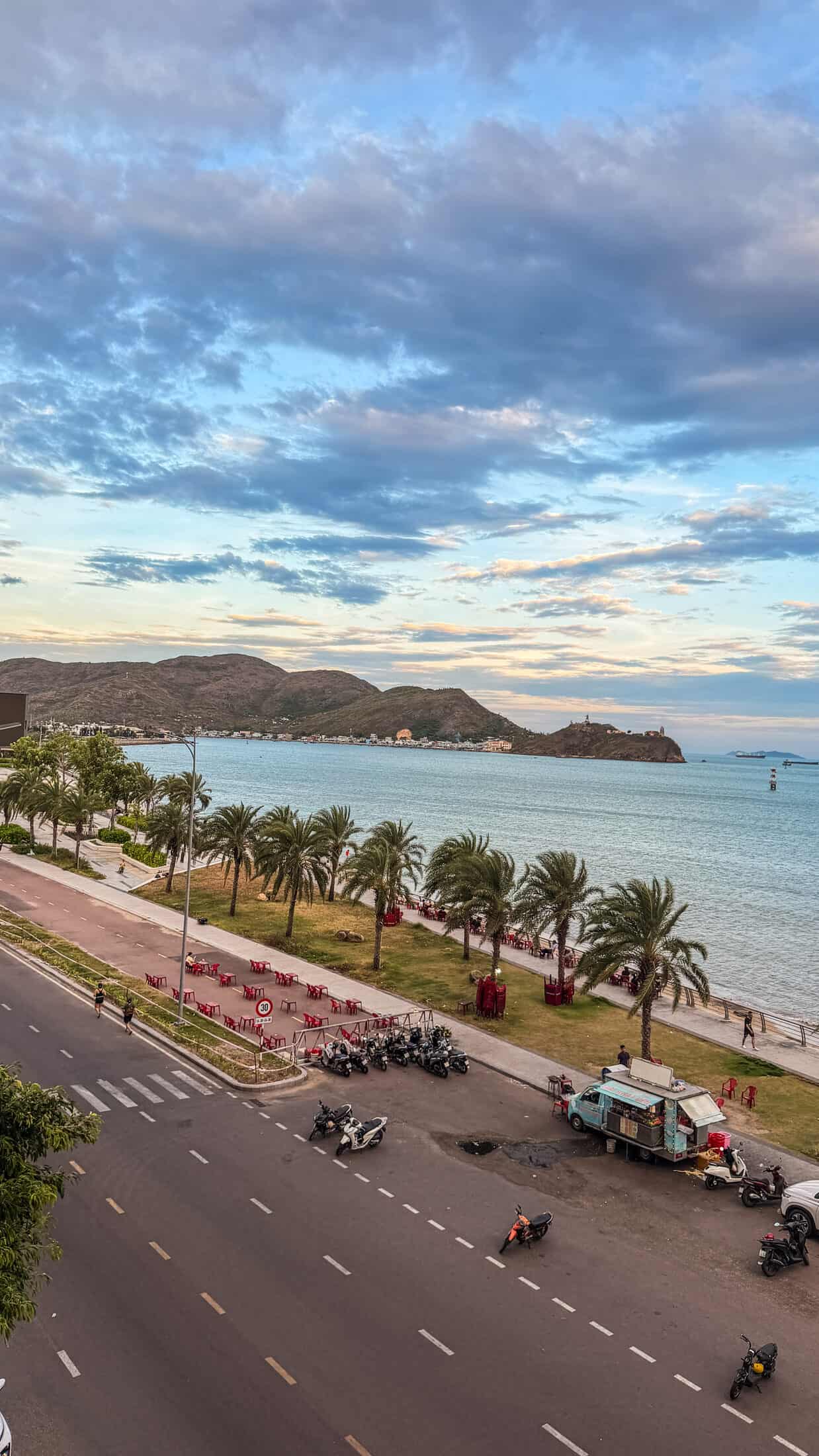
Quy Nhon’s beach isn’t straight — it curves in a long crescent, and walking it means watching the skyline gradually come into view ahead of you, with a headland closing off the far side of the bay. It’s one of the clearest ways to understand the shape of the city from ground level.
Where the City Meets the Beach
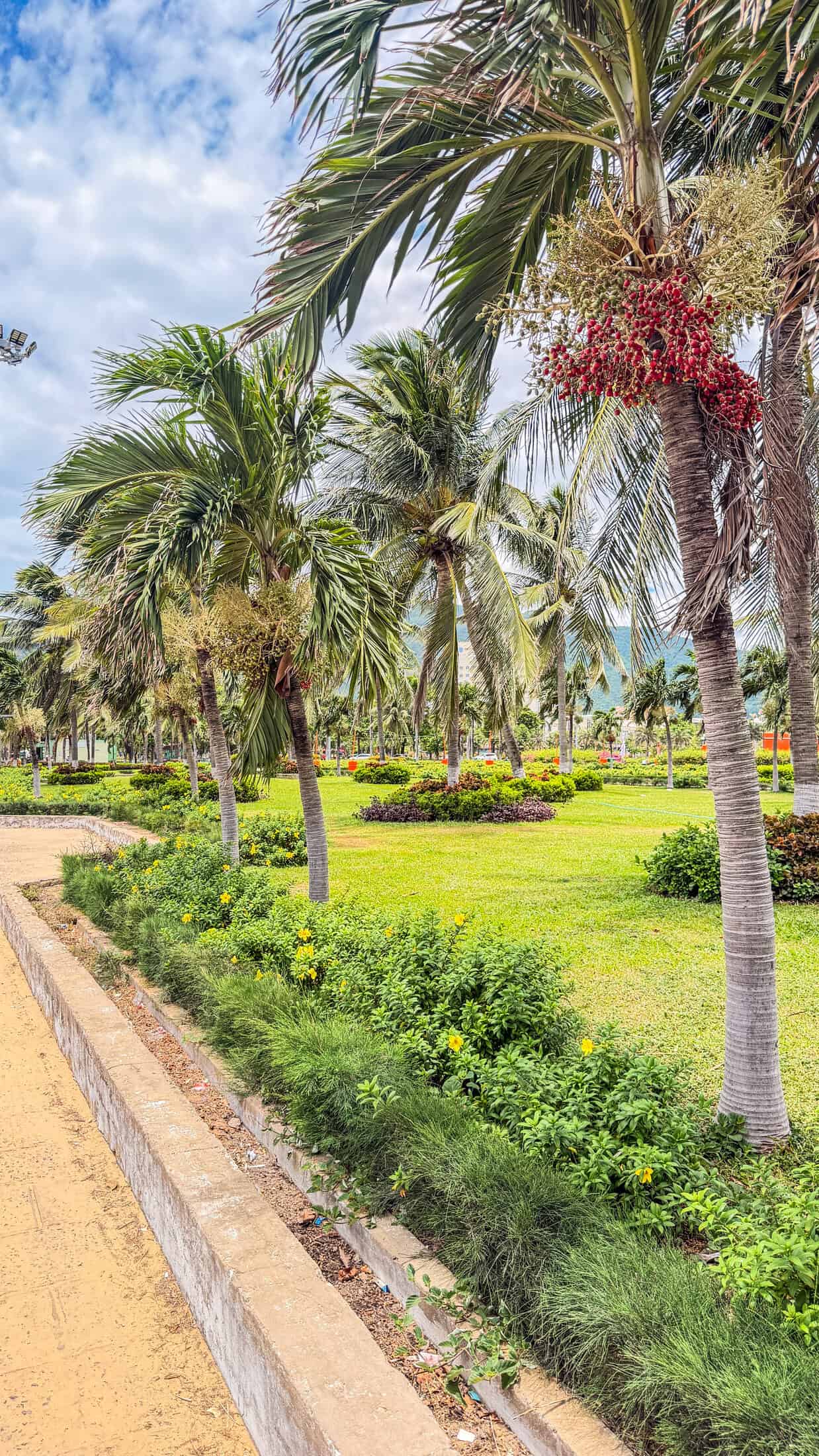
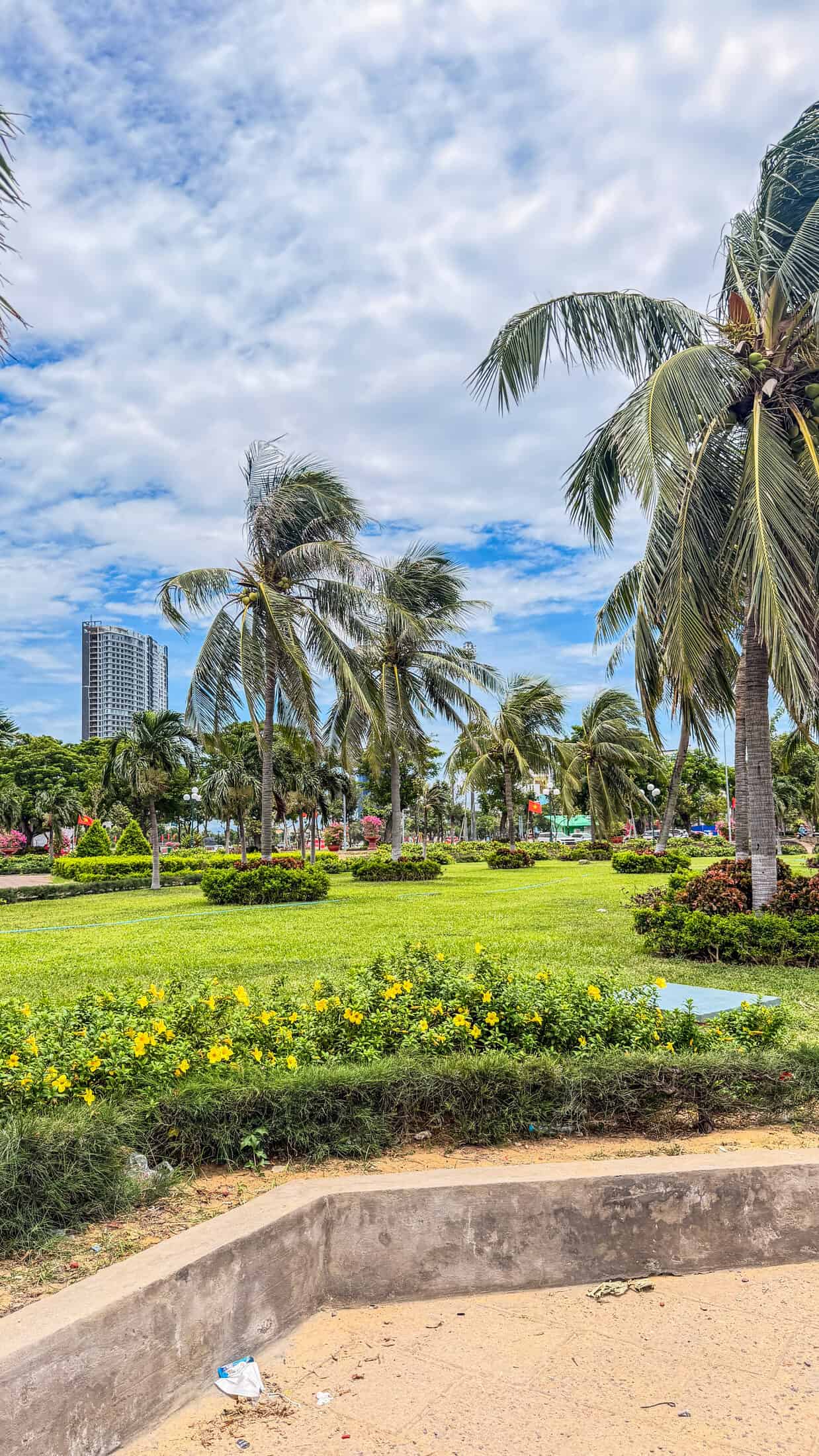
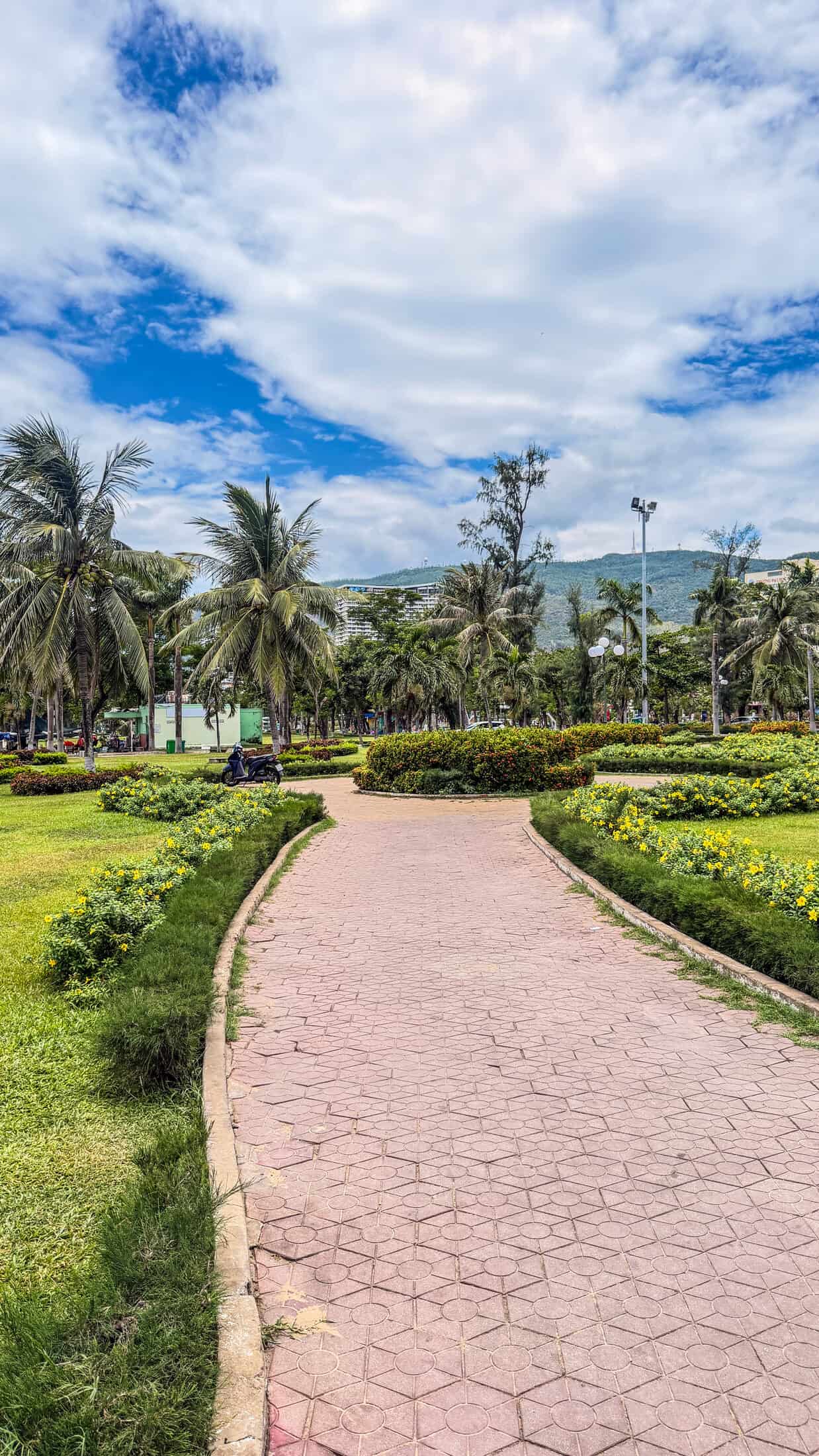
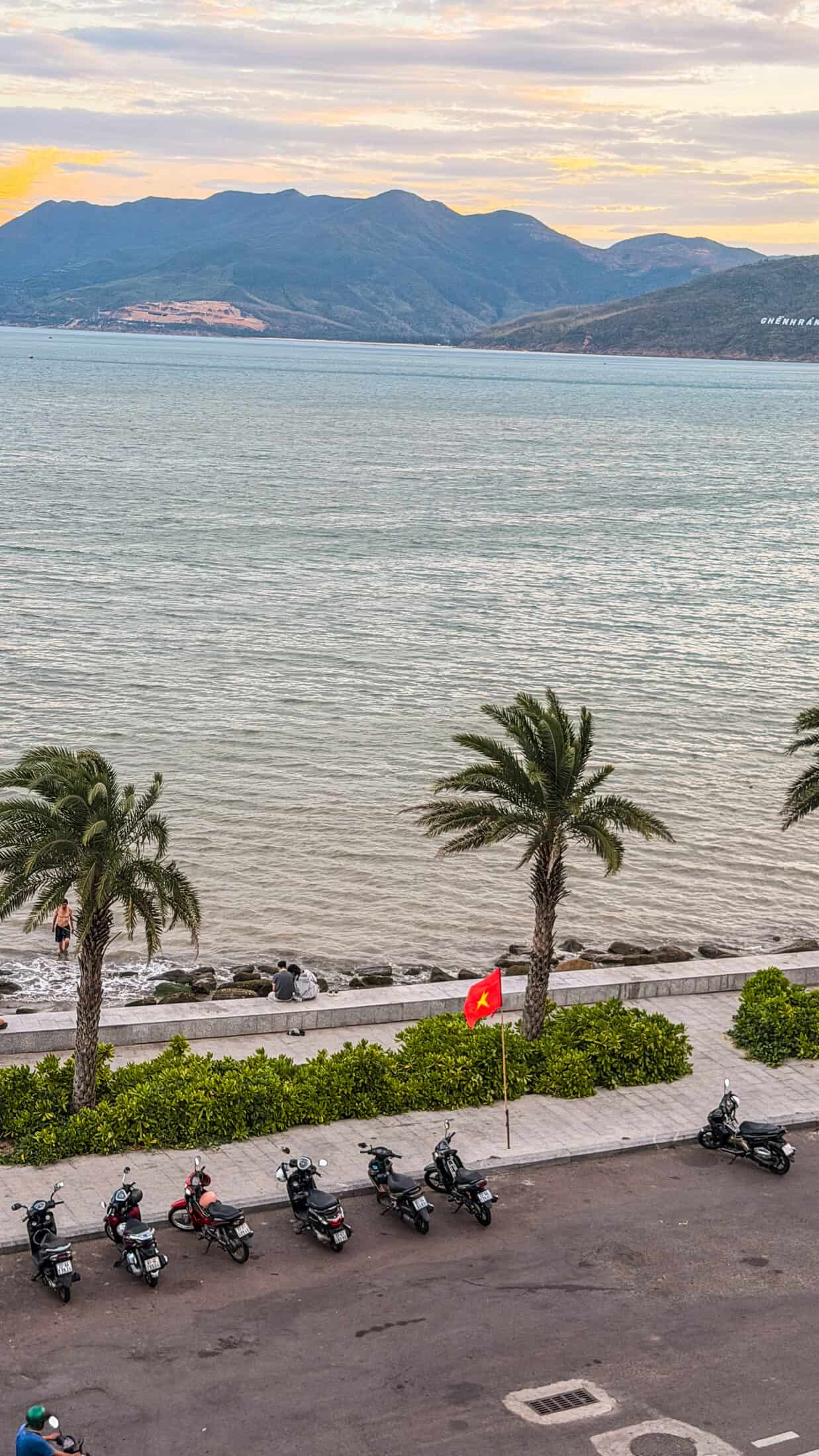
Move off the sand and onto the promenade road itself, and the feel changes completely. This stretch is wide, palm-lined and built for walking, with crosswalks connecting the beach side to hotels, cafés and the newer residential towers going up along the water. Quy Nhon Green Square, covered in our Quy Nhon landmarks guide, sits just a few minutes off this same stretch.

The High-Rise Side
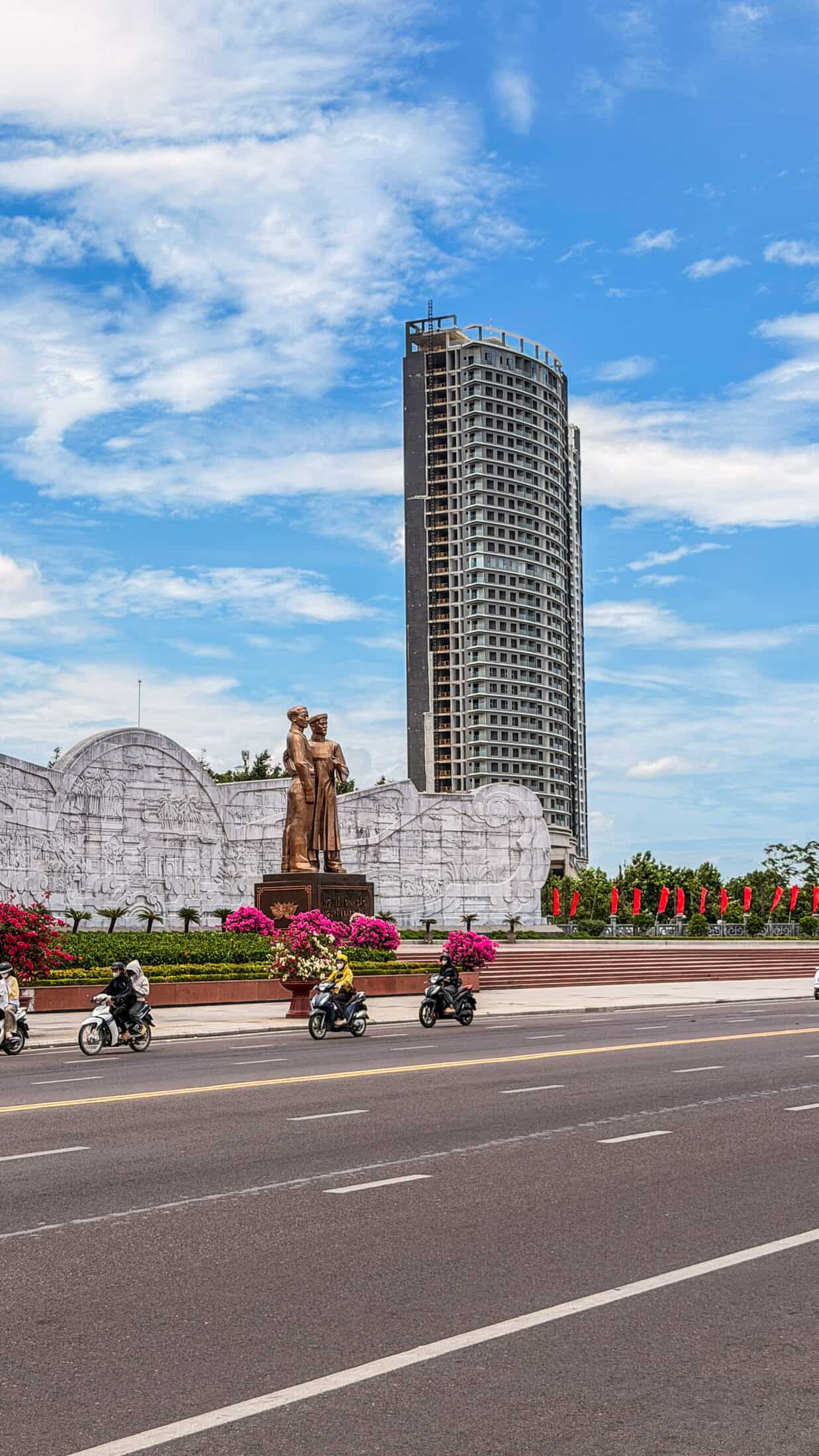
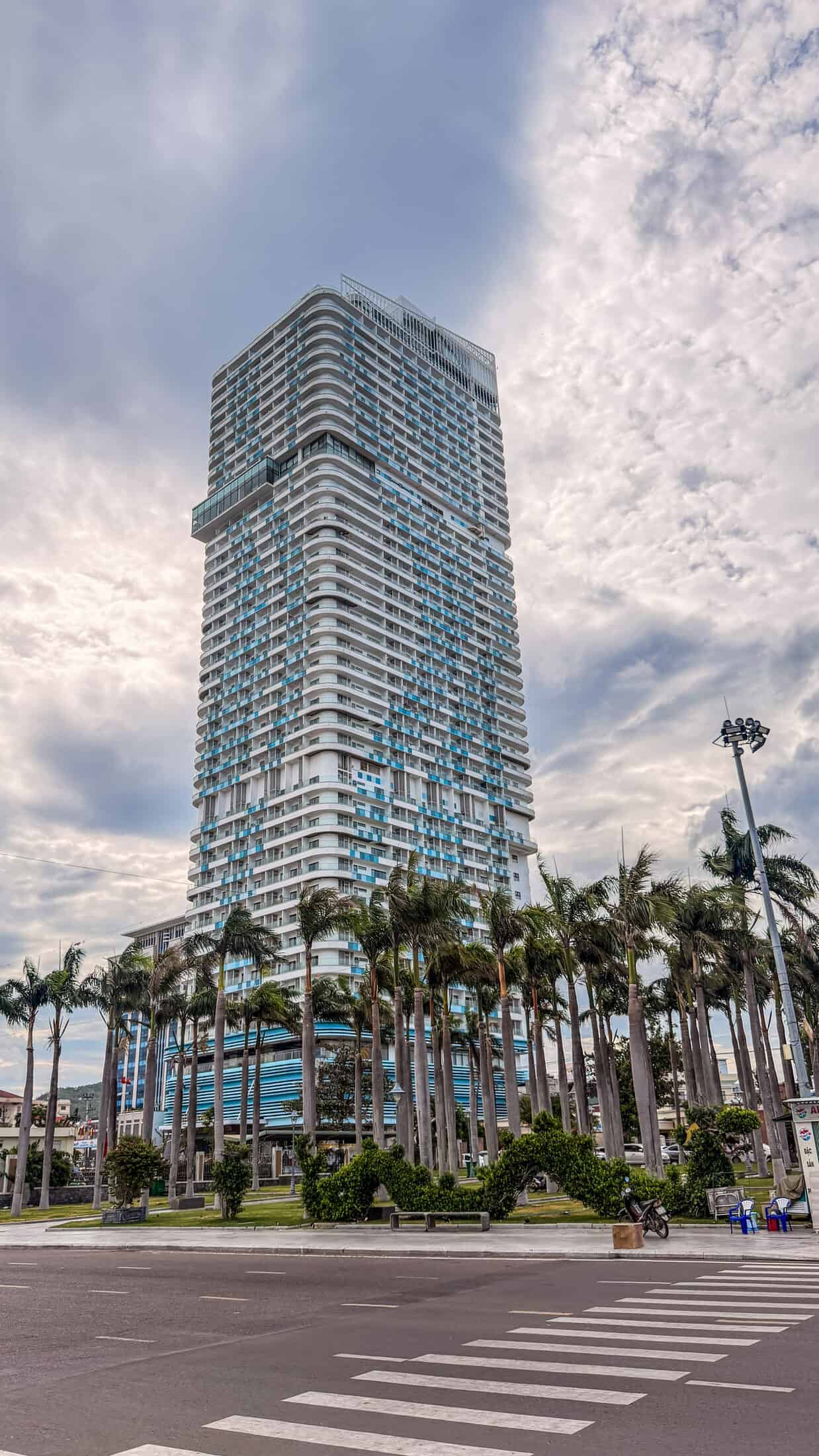
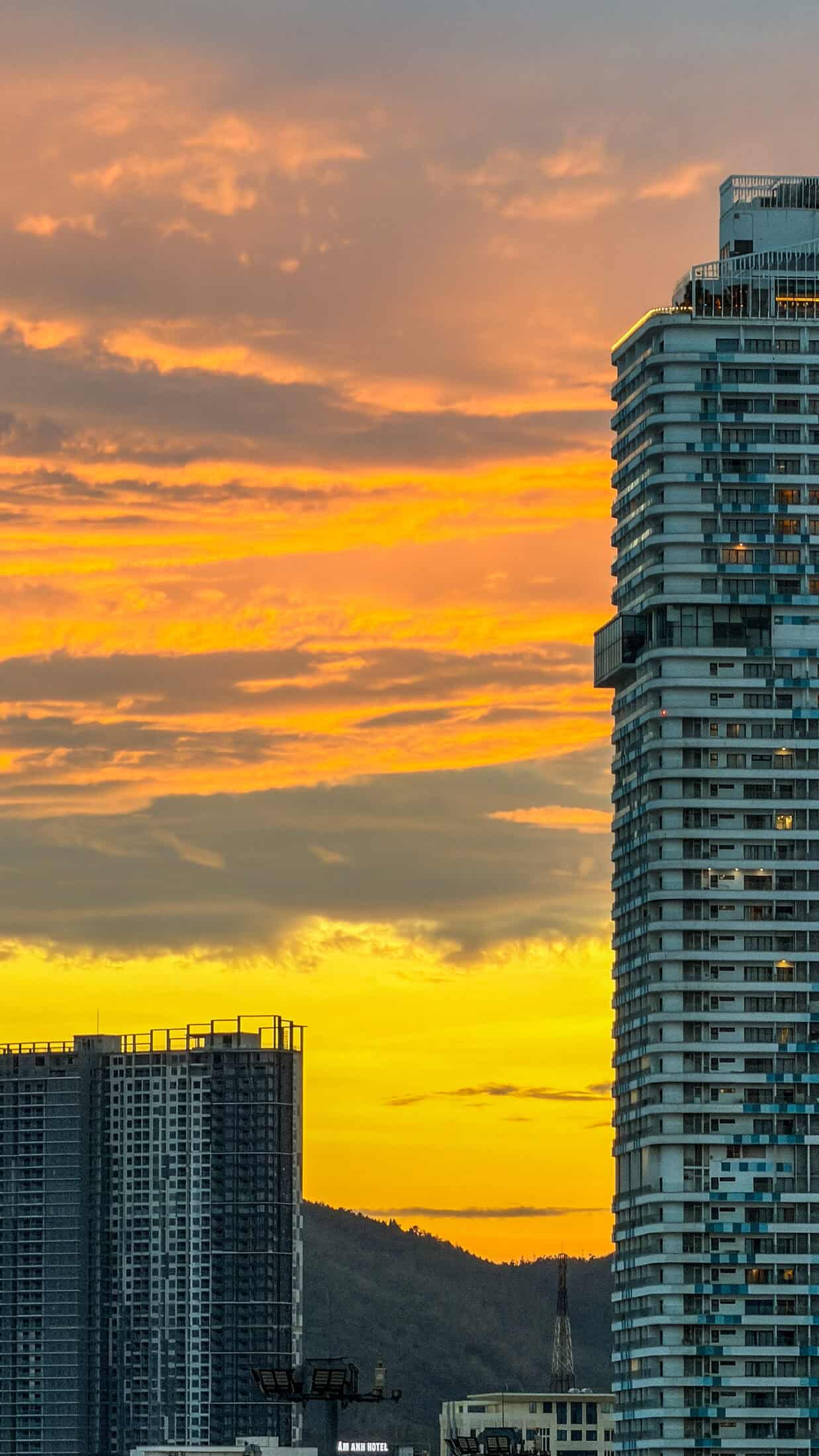
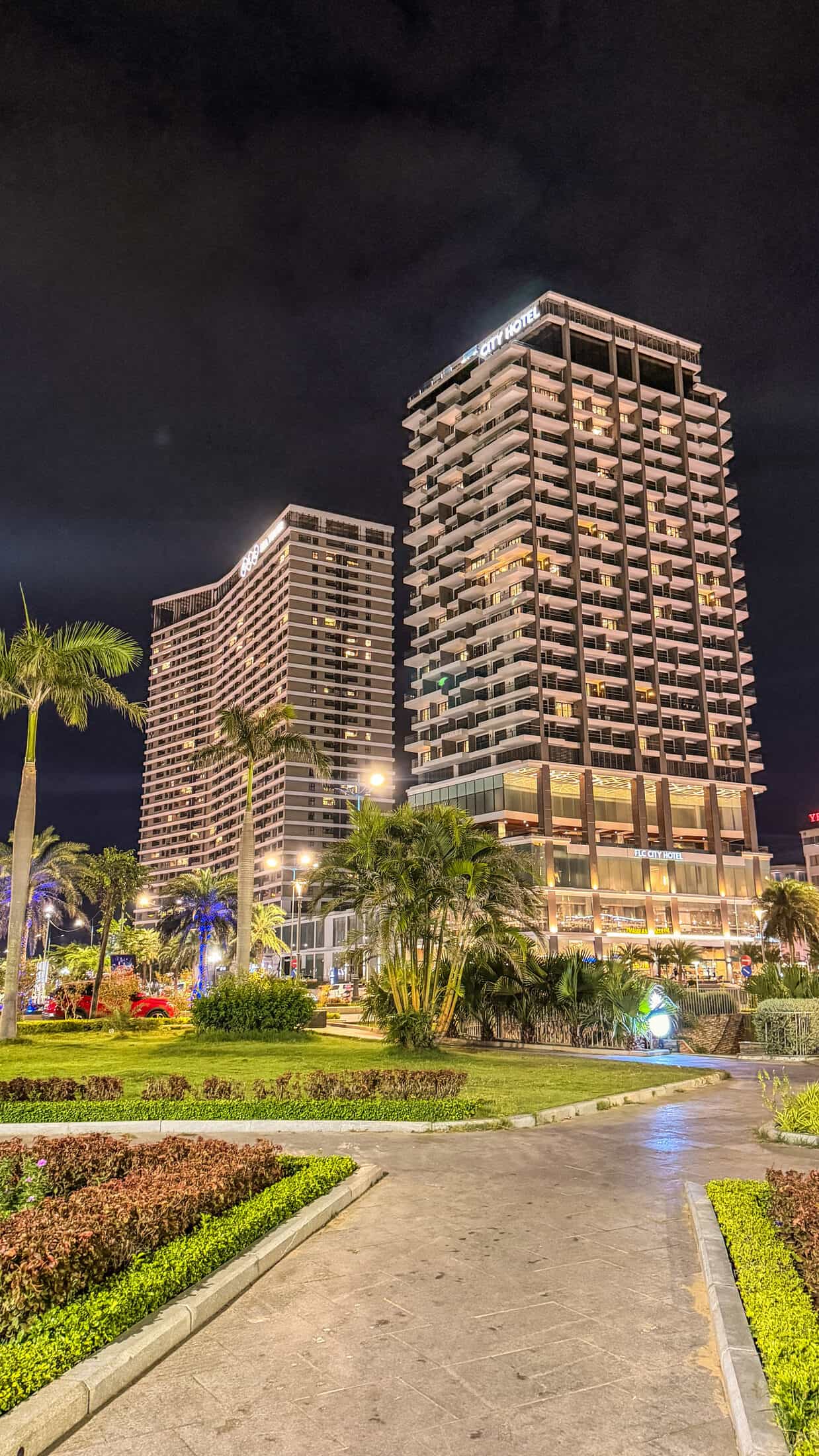
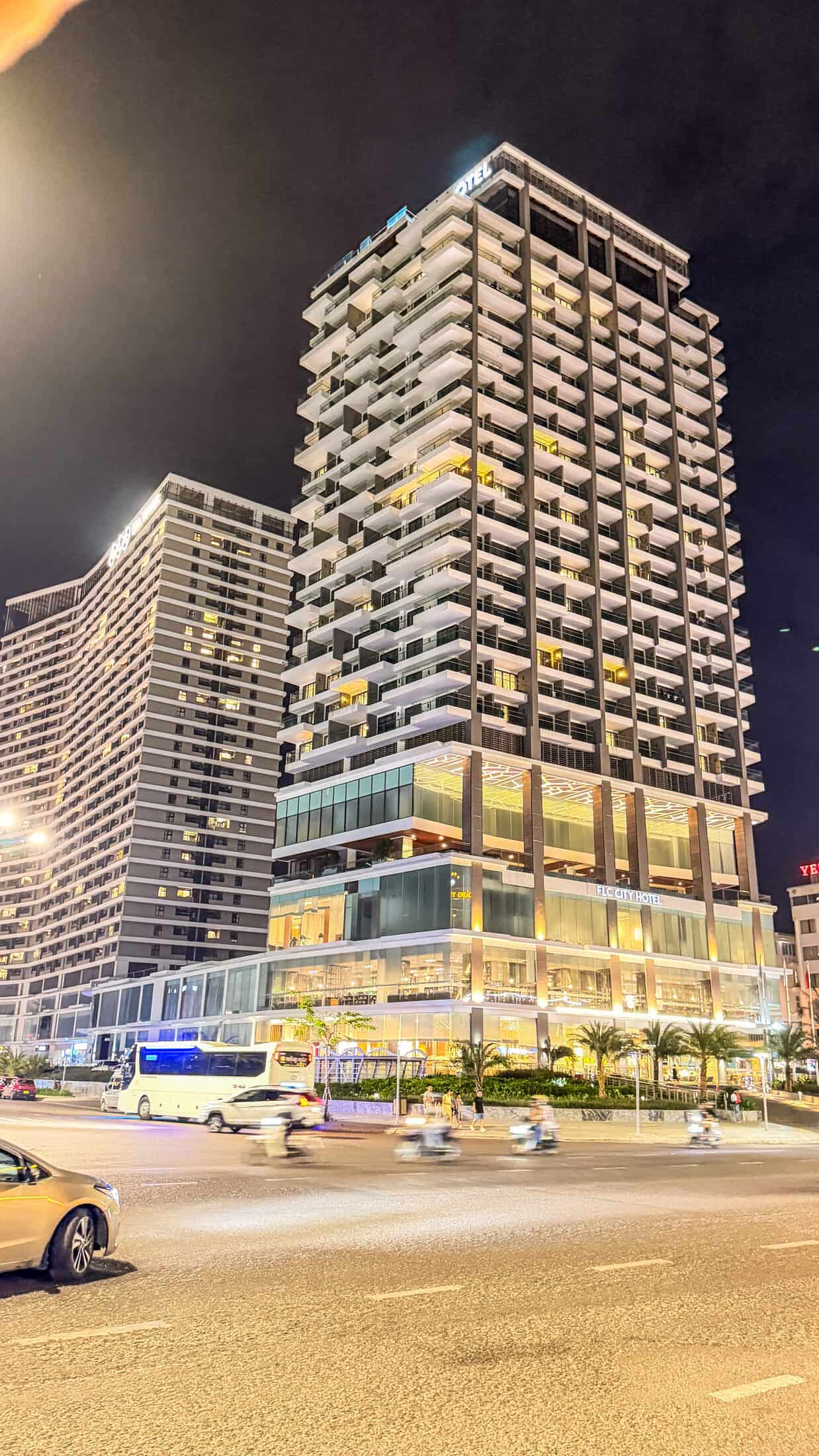
Quy Nhon’s skyline is newer than you’d expect for a city this size — a run of high-rise hotels and residential towers now lines a good part of the promenade, a visible sign of how quickly the city’s beachfront has been building up. If you’re looking at where to stay, our beachfront hotels in Quy Nhon guide covers several of the properties along this exact stretch.

Sunset Along the Promenade
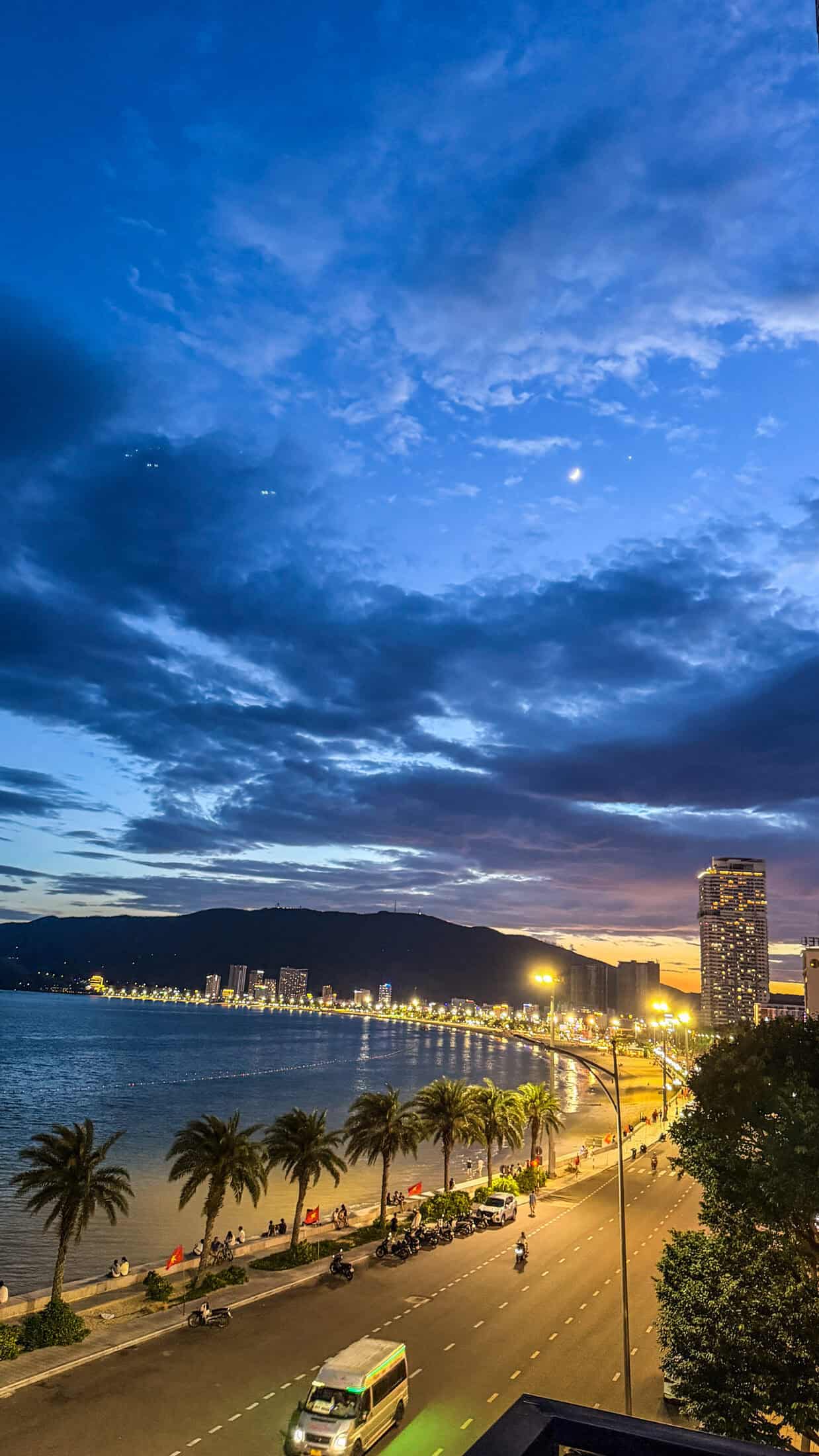
This is when the promenade is at its best. The sky behind the towers turns orange and gold for a stretch of maybe twenty minutes, and it’s worth timing your walk — or just a drink at a beachfront spot — to catch it rather than rushing past.
After Dark
Once the sun is down, the promenade turns into a different kind of place entirely. The towers light up, traffic and motorbikes pick up along the road, and the beach side goes quiet again while the street side gets busier — a good time for a slow walk rather than a swim.
Practical Tips for Walking the Promenade
- Go early morning or late afternoon — the middle of the day is hot with very little shade on the beach side.
- The promenade road itself has more shade than the sand, thanks to the palm trees lining it.
- Sandals or flip-flops are enough; you won’t need real walking shoes for a flat paved stretch like this.
- Evenings are the busiest and most atmospheric time, especially around sunset.
- The beach clubs and bars along this stretch are worth building into the same outing — more on those separately.
How the Promenade Fits Into a Quy Nhon Trip
The promenade isn’t really a single attraction so much as the spine that connects most of what’s worth seeing in the city itself. For the wider trip, our Quy Nhon for first-timers guide and Quy Nhon tours guide cover the coastal excursions outside the city, while the promenade itself is best treated as something to fold into any day you’re already spending near the beach.
How Quy Nhon’s Promenade Compares
Vietnam has no shortage of beachfront promenades — Nha Trang’s is busier and more built up, Vung Tau’s promenade is shorter and closer to Ho Chi Minh City, Da Nang’s stretches for kilometers past resort after resort. Quy Nhon’s version is smaller and quieter than any of those, with fewer crowds and a skyline that’s still visibly under construction rather than finished. That’s less impressive on paper, but it also means you can actually hear the water at 7am, which isn’t true everywhere on this coast.
If you’ve walked one of the bigger promenades elsewhere in the country and found it overwhelming, Quy Nhon’s is the version that lets you slow down.
Frequently Asked Questions
How long is Quy Nhon’s seafront promenade?
It runs the length of the city’s main beach, curving with the bay. Walking it end to end at an easy pace takes about an hour, longer if you stop along the way.
What’s the best time to walk the Quy Nhon promenade?
Early morning for a quiet beach walk, or late afternoon into sunset for the best light and the liveliest atmosphere.
Is the Quy Nhon promenade shaded?
The road side has palm trees and some shade; the open beach side has very little, so midday walks are hot.
What’s along the Quy Nhon promenade?
Beachfront hotels and high-rise towers, cafés, beach clubs and bars, and Quy Nhon Green Square just off the main stretch.
Is the promenade safe to walk at night?
Yes, it’s well lit and busy with pedestrian and motorbike traffic in the evening, which makes it one of the more comfortable areas of the city after dark.
Final Thoughts
Most visitors walk some version of Quy Nhon’s promenade without really thinking of it as an attraction in its own right — it’s just how you get from the hotel to dinner. But taken as its own slow pass, from quiet morning sand through to a lit-up evening skyline, it’s one of the clearest ways to feel the shape and rhythm of the city.
Planning a wider Southeast Asia trip?
Cambodia With Me — practical Cambodia travel guides
Siam With Me — Thailand travel guides
Indonesia With Me — Indonesia travel guides
Singapore With Me — Singapore travel guides
Build your Vietnam route — free.