There are plenty of places in Vung Tau where you can see the sea. However, standing on Small Mountain, you get a unique view from one of Vietnam’s oldest lighthouses, the Vung Tau Lighthouse.
Vung Tau Lighthouse sits high above the coastline on Núi Nhỏ, also known as Tao Phùng Mountain. The lighthouse itself is beautiful, but for me, the real reason to come is the journey up and the views waiting at the top.
It is one of those Vung Tau attractions that costs almost nothing to visit, takes relatively little time, and fits very easily into a sightseeing route around the city.
What Is Vung Tau Lighthouse?
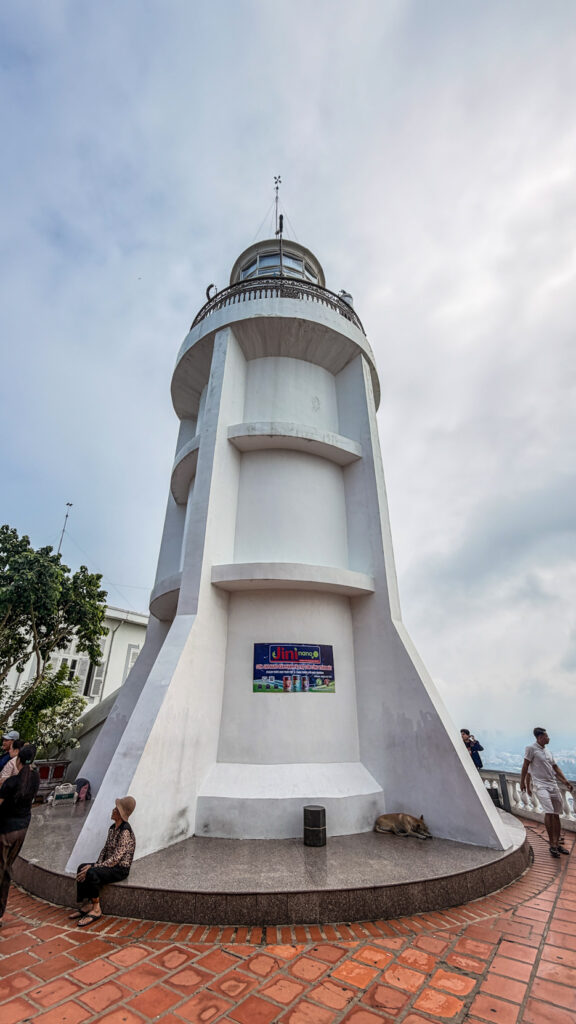
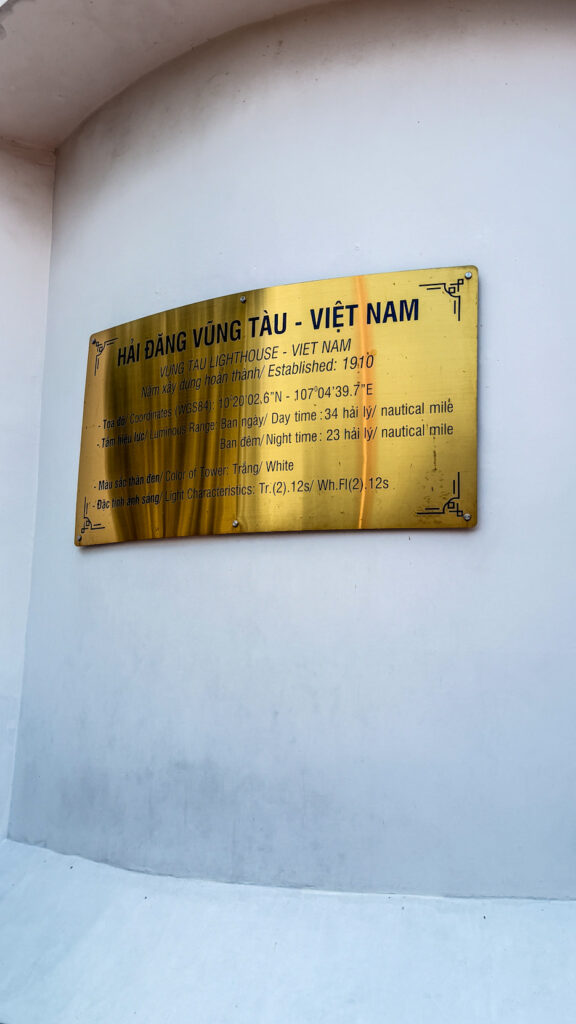
Vung Tau Lighthouse is a historic French-built lighthouse overlooking the city and surrounding coastline. It was constructed in 1862 and later restored and raised in 1913, giving it the appearance visitors see today.
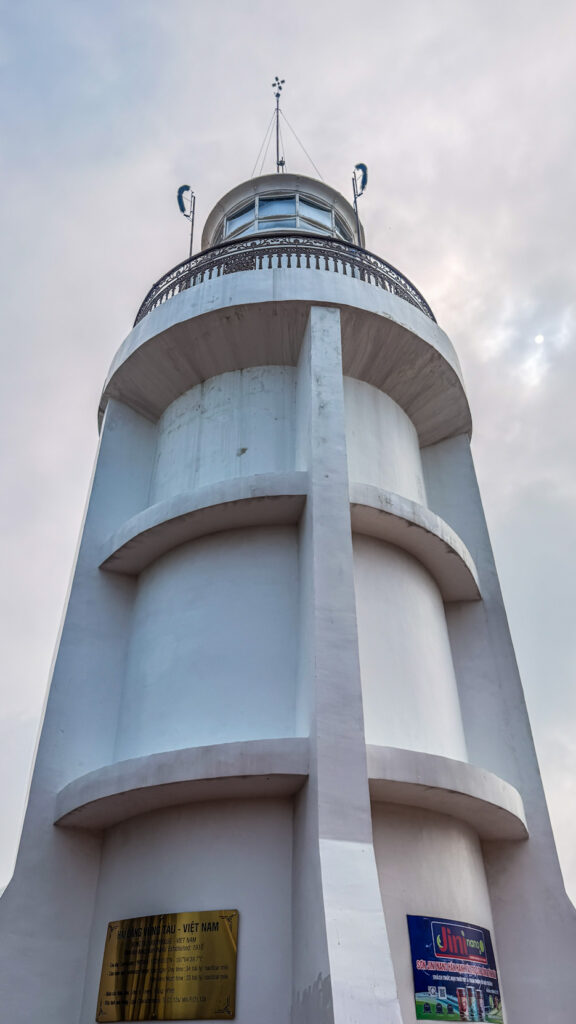
The Vung Tau Lighthouse sits on Small Mountain at roughly 170 meters above sea level. The tower itself is about 18 meters tall and has a distinctive cylindrical white design.
Inside the tower is a spiral staircase leading toward the lantern room, while the balcony around the top provides wide views over Vung Tau, the beaches and the open sea.
The Road Up Is Part of the Experience
One thing I would not skip is the road leading up the mountain.
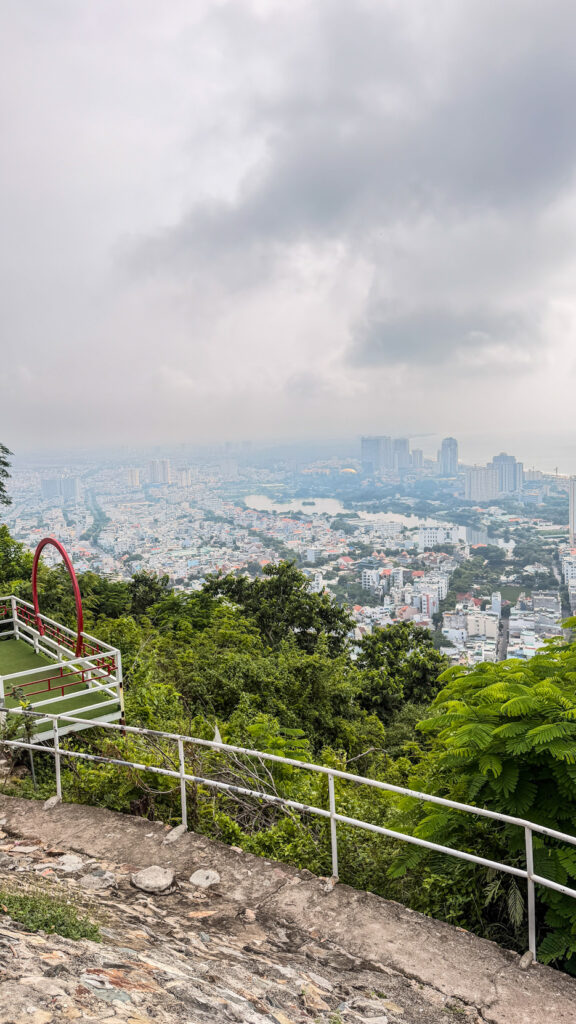
The route winds through greenery, with trees providing shade in several sections. As you climb, the views gradually open up and you start seeing more of Vung Tau between the trees.
It does not feel like you are simply driving to a viewpoint and getting out of a car. The mountain road itself is part of the attraction.
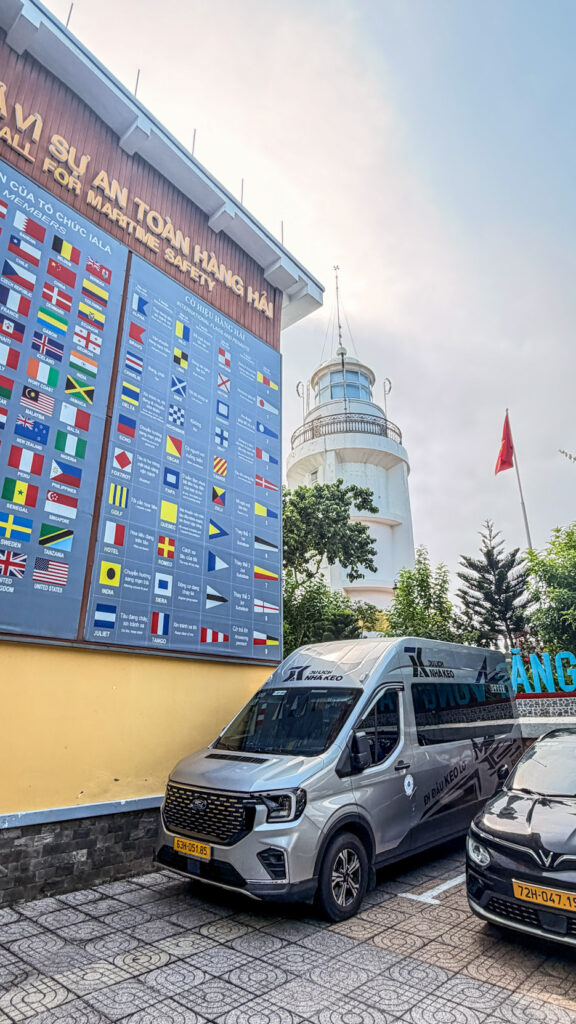
If you are traveling around Vung Tau by motorbike or taxi, getting to the lighthouse is straightforward. You can also combine it with several other attractions on the same side of the city.
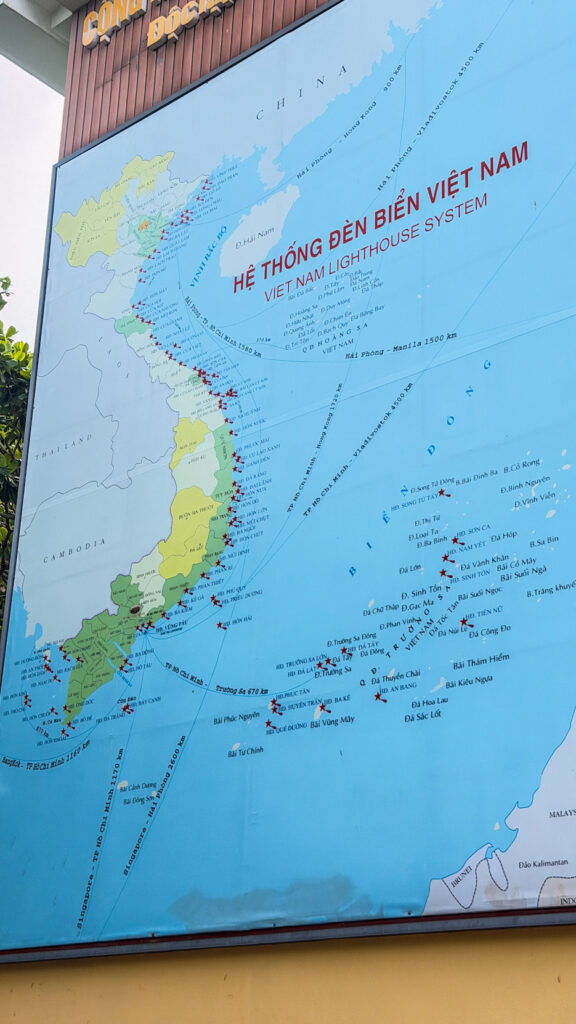
What Can You See from Vung Tau Lighthouse?
The views are the main reason most visitors make the trip up here.
From the lighthouse area, you can look across large parts of Vung Tau and see the coastline stretching away in both directions.
- Bãi Sau and the Thùy Vân beachfront
- Vung Tau city centre
- The open sea and surrounding coastline
- Hòn Bà offshore
- Parts of Núi Nhỏ and the surrounding hills
- The coastal road winding through the city
On a clear day, the combination of blue water, the city below and the white lighthouse makes this one of the most photogenic viewpoints in Vung Tau.
Can You Go Inside the Lighthouse?
The lighthouse has an internal spiral staircase leading toward the lantern room, although access to the tower itself can depend on the conditions and current visitor arrangements.
Even if you cannot access every part of the tower during your visit, the surrounding viewpoint is still worth the trip. The mountain-top setting gives you much more than just a photograph of the lighthouse building.
How Much Does Vung Tau Lighthouse Cost?
Entrance to Vung Tau Lighthouse is currently free.
The official Vung Tau tourism portal lists the entrance fee as 0 VND and gives an estimated visit duration of around 30 minutes.
You may still have small expenses such as parking or transport to the mountain, but there is no standard attraction entrance ticket to pay.
How Long Should You Spend There?
If you only want to see the lighthouse and take a few photographs, 30–60 minutes can be enough.
I would personally allow around 1–1.5 hours if you want to take your time, enjoy the views and photograph the surrounding area without rushing.
The official tourism information suggests around 30 minutes as a typical visit duration, but there is no reason to hurry if you are already exploring the mountain.
When Is the Best Time to Visit?
There is no single perfect time because the experience changes throughout the day.
Morning is good for cooler temperatures and clearer light, especially if you want photographs with the city and sea visible below.
Late afternoon is another excellent option. The light becomes softer, and the coastline can look completely different as the sun drops lower.
If you are interested in sunset viewpoints, Mũi Nghinh Phong is another excellent option nearby. You can read my Mũi Nghinh Phong Vung Tau guide and combine the two locations in one sightseeing route.
Is Vung Tau Lighthouse Difficult to Reach?
The lighthouse is located on Small Mountain rather than in the flat city centre, so there is some uphill travel involved.
The easiest option for most visitors is to take a motorbike, taxi or car up the mountain road. Once you reach the lighthouse area, you can walk around the viewpoint and explore the surroundings.
If you are coming from Ho Chi Minh City, you can first read our Vietnam Transport Guide and our upcoming guide to How to Get from Ho Chi Minh City to Vung Tau.
What Should You Combine with the Lighthouse?
This is where Vung Tau Lighthouse becomes particularly useful when planning a full day.
You can combine the lighthouse with Mũi Nghinh Phong, the Christ the King Statue, Bãi Sau and the Thùy Vân beachfront. From there, you can continue along Hạ Long Street and discover some of the temples and pagodas concentrated around the southern part of the city.
That makes it possible to turn the lighthouse into one stop on a much larger sightseeing route rather than traveling all the way up the mountain for one short visit.
For accommodation, you can check Vung Tau hotels on Trip.com and compare different areas of the city before deciding where to stay.
If you are looking for organized sightseeing experiences, you can also check Vung Tau activities and attractions on Trip.com.
Vung Tau Lighthouse and Mũi Nghinh Phong: Which Should You Visit?
If you have enough time, I would not choose just one.
The two places offer different experiences. Vung Tau Lighthouse gives you an elevated view over the city and coastline, while Mũi Nghinh Phong puts you right at the edge of the sea.
The good news is that they are close enough to combine during the same day.
Start at the lighthouse, enjoy the mountain views, then continue toward Mũi Nghinh Phong and the coast. Later, you can head back toward the city centre for lunch, coffee or one of Vung Tau’s rooftop bars.
Is Vung Tau Lighthouse Worth Visiting?
Yes.
It is free, historic, easy to combine with other attractions and gives you one of the best elevated views of Vung Tau.
What I like most is that the lighthouse does not feel like an isolated tourist attraction. It is part of the mountain, the road, the coastline and the city below.
If you are visiting Vung Tau for the first time, I would definitely put it on your list alongside Mũi Nghinh Phong and the city’s beaches.
For more ideas, keep an eye on our upcoming Best Things to Do in Vung Tau guide, where I will bring together the city’s main attractions, viewpoints, beaches and places worth adding to your itinerary.
Quick Facts
- Location: Small Mountain (Núi Nhỏ / Tao Phùng), Vung Tau
- Built: 1862
- Restored and raised: 1913
- Height of the tower: About 18 meters
- Elevation: About 170 meters above sea level
- Entrance fee: Free
- Typical visit: Around 30–60 minutes
- Best for: City views, photography, history and coastal scenery
Frequently Asked Questions
Is Vung Tau Lighthouse free to visit?
Yes. The official Vung Tau tourism portal currently lists the lighthouse as free to enter.
When was Vung Tau Lighthouse built?
The lighthouse was originally built by the French in 1862 and was later restored and raised in 1913.
How high is Vung Tau Lighthouse?
The lighthouse stands on Small Mountain at approximately 170 meters above sea level. The tower itself is about 18 meters tall.
How long do you need at Vung Tau Lighthouse?
A quick visit can take around 30 minutes, while 1–1.5 hours gives you more time for photographs and enjoying the views.
Can you combine Vung Tau Lighthouse with Mũi Nghinh Phong?
Yes. The two attractions are close enough to combine in the same sightseeing route. The lighthouse gives you an elevated city view, while Mũi Nghinh Phong offers a completely different perspective from the coast.
What else is near Vung Tau Lighthouse?
Mũi Nghinh Phong, the Christ the King Statue, Bãi Sau, Thùy Vân Beach and several temples and pagodas along Hạ Long Street can all be incorporated into a wider Vung Tau sightseeing route.