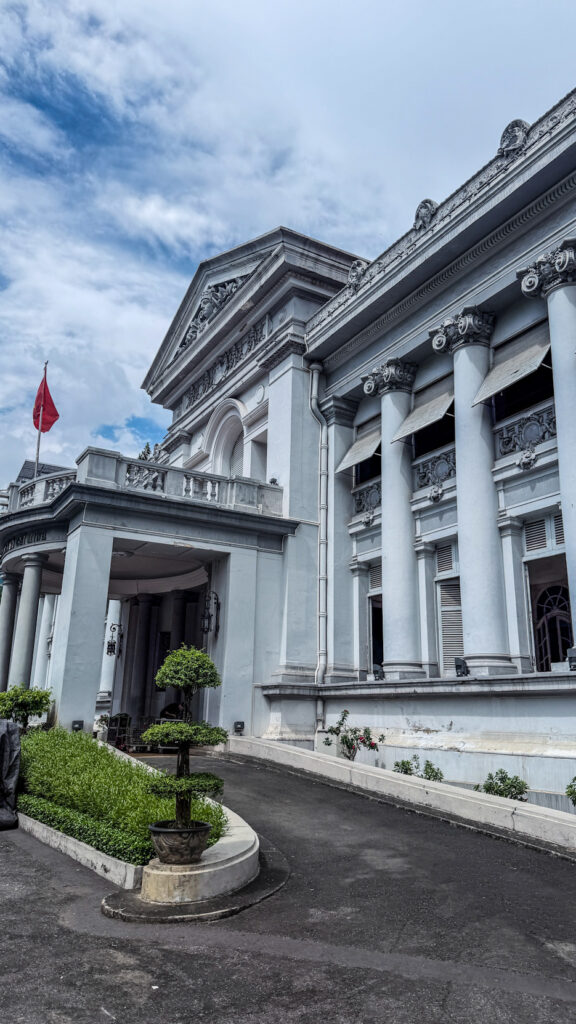
Everybody goes to the War Remnants Museum. Hardly anyone walks two blocks further to the pale yellow mansion with the green shutters. That’s a shame, because the Museum of Ho Chi Minh City — Bảo tàng Thành phố Hồ Chí Minh — is the best-looking history lesson in Saigon, and you can see it all in under an hour. No crowds, no queues, no ticket price that makes you wince. Just a graceful colonial building filled with artefacts that tell the story of this city from its swampy beginnings to the fall of Saigon. 🌿
🏛️ A Mansion with Nine Lives
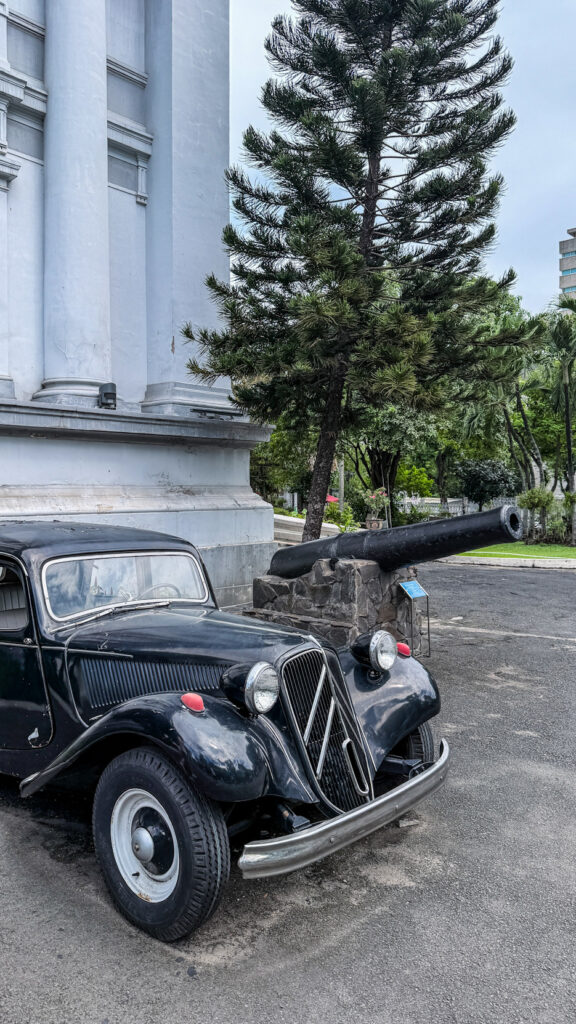
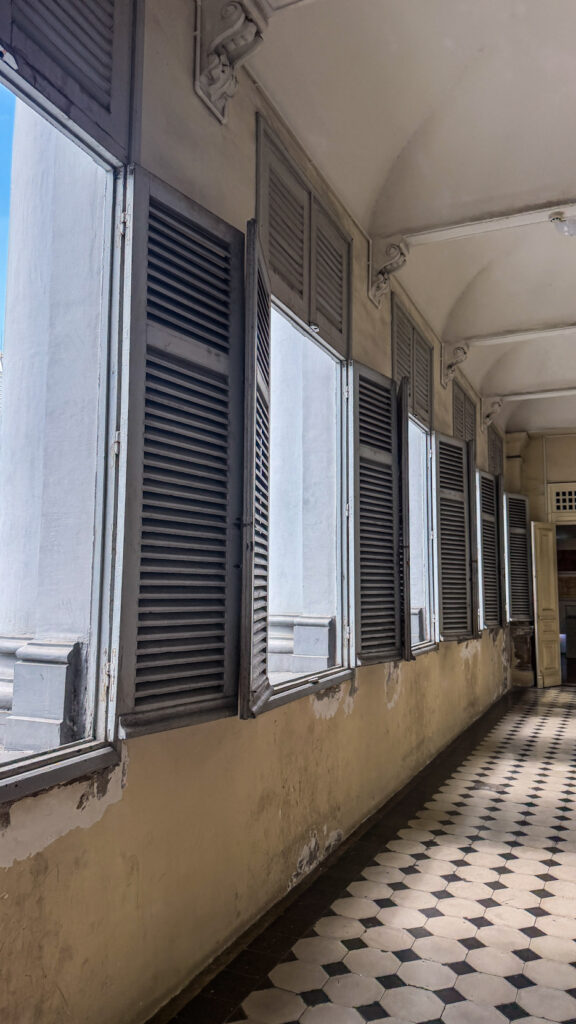
Before it held the city’s memory, the building itself was a witness to power. It was completed in 1890 as a private residence for a French merchant, then became the office of the Governor of Cochinchina, and later the headquarters of the People’s Committee of Saigon after 1975. During the Vietnam War, it served as a revolutionary base for the National Liberation Front. The architecture is classic French colonial — high ceilings, shuttered windows, a wide central staircase, and a soft yellow-and-cream façade that photographs beautifully in the morning light. A small garden wraps around the entrance, with a fountain, bronze bells, and a few benches where you can sit and listen to the city hum just beyond the gates. The garden itself holds a 155 mm howitzer, a tank, and an anti-aircraft gun — military hardware displayed in a peaceful courtyard, a sharp visual contrast.
📜 The Ground Floor: From Swamp to Trading Port
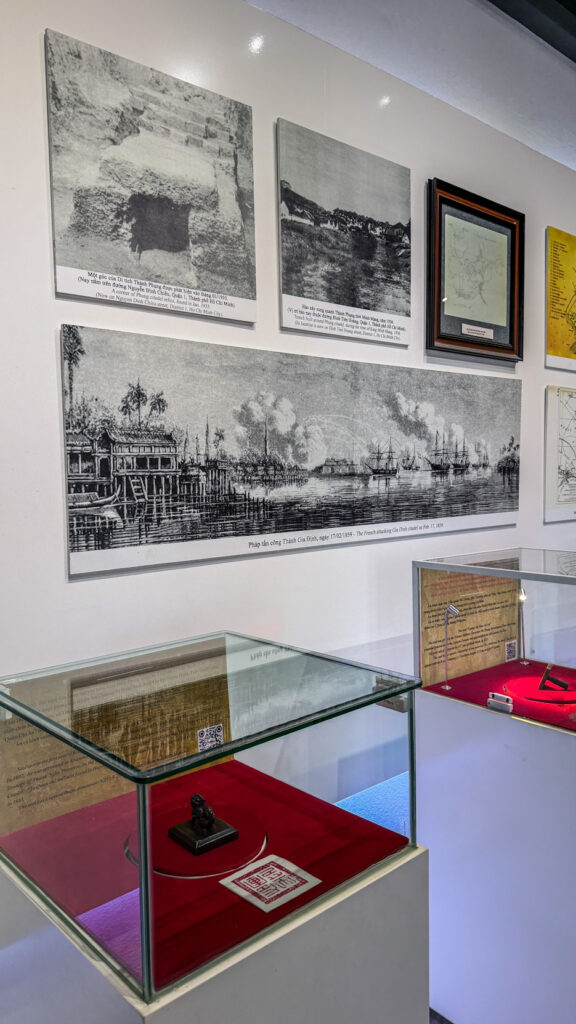
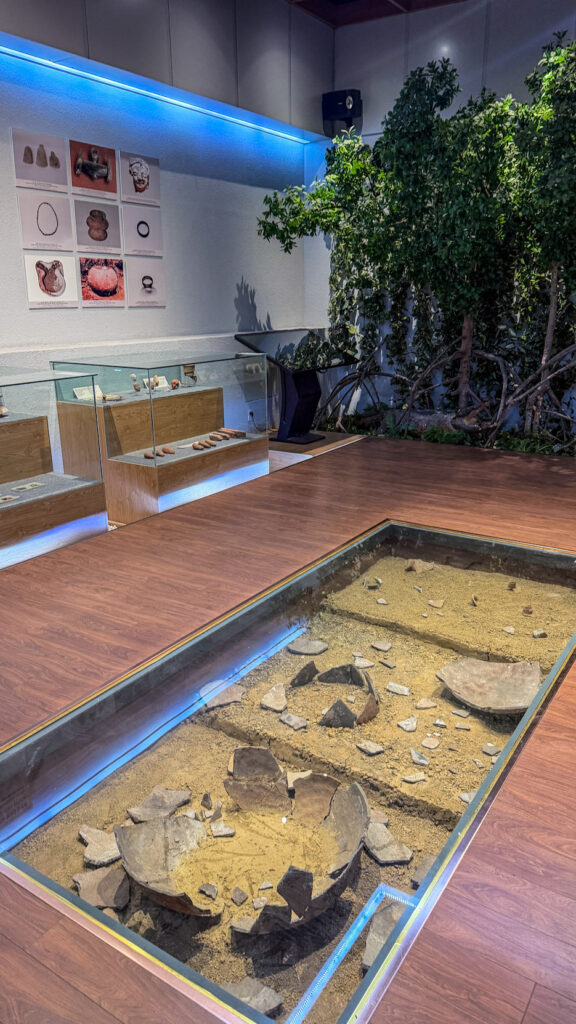
The permanent collection spans two floors and a basement, laid out chronologically. The ground floor tells the earliest chapter: geology, archaeology, and the long history of human settlement along the Saigon River. Glass cases hold stone tools, bronze drums, and ceramic shards that date back thousands of years. One display shows a collection of wooden fishing boats and traps used by the first river communities — a reminder that Saigon was built on water long before it was paved over. You’ll also find a detailed model of the city’s citadel, maps of early Nguyen-era settlements, and a bilingual timeline that traces the evolution from marshland to a bustling 19th-century trading port.
⚔️ The Upper Floor: Revolution and Independence
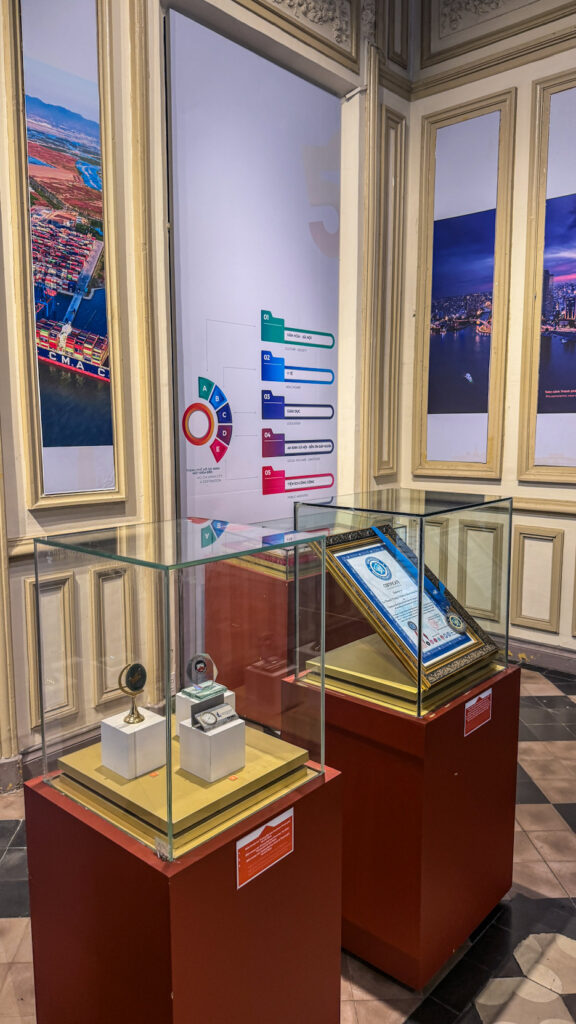
Climb the wide wooden staircase to the second floor, and the atmosphere shifts. This section covers the colonial period, the rise of anti-French resistance, and the long war for independence. The displays are old-fashioned but well-kept: glass cases filled with antique rifles, propaganda leaflets, medals, and personal belongings of revolutionary soldiers. One room is dedicated to the 1968 Tet Offensive, with maps, photographs, and the typewriters and radios used by the liberation forces. Another hall focuses on the fall of Saigon in 1975, displaying the very desk and documents that were in use during the final days of the war. The walls are lined with black-and-white photographs of street scenes from the 1920s to the 1960s — cyclo drivers, market vendors, French soldiers, and schoolchildren — capturing a city that was already a whirlwind of cultures.
💰 The Basement: Money, Trade, and the Underground
Don’t skip the basement. It’s easy to miss, but it holds one of the museum’s most unexpected collections: a history of Saigon’s currency and commerce. Glass cabinets display coins from the Funan and Chenla kingdoms, silver bars from the French colonial era, and paper currency from the Republic of Vietnam. There’s also a section on the city’s famous markets — Bến Thành, Bình Tây, and others — showing how trade has shaped Saigon’s identity for centuries. The low ceilings and cool air make it a quiet, almost secretive space, and the atmosphere is entirely different from the sunlit halls upstairs.
If you are also interested in Vietnam’s wartime history, you can visit the separate Ho Chi Minh Campaign Museum.
📍 Practical Info
📍 Address: 65 Lý Tự Trọng, Phường Bến Nghé, Quận 1, Ho Chi Minh City
🕒 Opening hours: Monday to Sunday, 8:00 AM – 5:00 PM. Ticket sales close around 4:30 PM.
🎟️ Entrance: 30,000 VND for adults.
👗 Dress code: Casual, but it’s a museum — show the usual respect.
🚕 Getting there: The museum is a short walk from Bến Thành Market and the Fine Arts Museum. Any Grab driver will recognise “Bảo tàng Thành phố Hồ Chí Minh”.
You can find a hotel in Ho Chi Minh City near Bến Nghé Ward — staying in District 1 puts you within walking distance of this museum, the Fine Arts Museum, and the Independence Palace. For the highest-rated stays across all budgets, my Top 10 Best Hotels in Ho Chi Minh City guide has the full lineup.
🔗 What to Pair It With
The City Museum sits in the middle of Saigon’s historical quarter. A five-minute walk south takes you to the Independence Palace — the room where the Vietnam War ended. For a completely different kind of collection, the Fine Arts Museum is just a short stroll west, with 22,000 objects and a stained-glass staircase. And if you need a quiet park to rest your feet, Tao Dan Park — with its hidden national shrine — is a ten-minute walk north. 🌸
💎 Verdict: The Quietest Hour in District 1
The Museum of Ho Chi Minh City doesn’t shout. It doesn’t need to. It sits in its pale yellow mansion with its green shutters, holding the story of Saigon in its cool, quiet rooms, waiting for the curious to wander in. Come in the morning, take your time, and leave with a deeper sense of the ground beneath your feet. 🏛️
Frequently Asked Questions
How long does a visit take?
Under an hour — it’s compact, with no crowds or queues.
What was the building before it became a museum?
Completed in 1890 as a private residence for a French merchant, later the office of the Governor of Cochinchina, then the People’s Committee headquarters after 1975.
What’s displayed in the garden?
A 155mm howitzer, a tank, and an anti-aircraft gun, set in an otherwise peaceful courtyard.
What does the ground floor cover?
Early history — geology, archaeology, and settlement along the Saigon River, including stone tools and bronze drums.
What does the upper floor cover?
The colonial period, anti-French resistance, the 1968 Tet Offensive, and the fall of Saigon in 1975.
More from our travel guide network
Build your Vietnam route — free.