Saigon has no shortage of museums. The War Remnants Museum draws crowds. The Fine Arts Museum attracts Instagrammers. The FITO Museum appeals to those curious about herbal medicine. Beside the Botanical Gardens sits the Vietnam History Museum Saigon, in a pale-yellow building with tiered green roofs and carved dragons on the eaves. It’s almost always empty. I walked through its halls on a Tuesday morning and had entire galleries to myself. What I found spans 3,000 years. It includes a mummified woman from the 19th century. This is not a dusty archive. It’s the quietest, most comprehensive history lesson in the city.
🐉 A Museum Built Like a Temple
The building itself is part of the collection. It was designed by French architect Auguste Delaval and opened in 1929 as the Musée Blanchard de la Brosse, named after the governor of Cochinchina at the time. The architecture is a deliberate fusion of French colonial and traditional Vietnamese styles — wide verandas, shuttered windows, and a pagoda-style roof with upturned eaves adorned with ceramic dragons and phoenixes. The entrance hall is octagonal, with a high ceiling and a polished stone floor that reflects the light filtering through carved wooden screens. It’s a building that was designed to impress, and nearly a century later, it still does. The museum was renamed after 1954 and has been under the management of the Vietnamese government ever since, steadily expanding its collection to over 40,000 artefacts. ✨
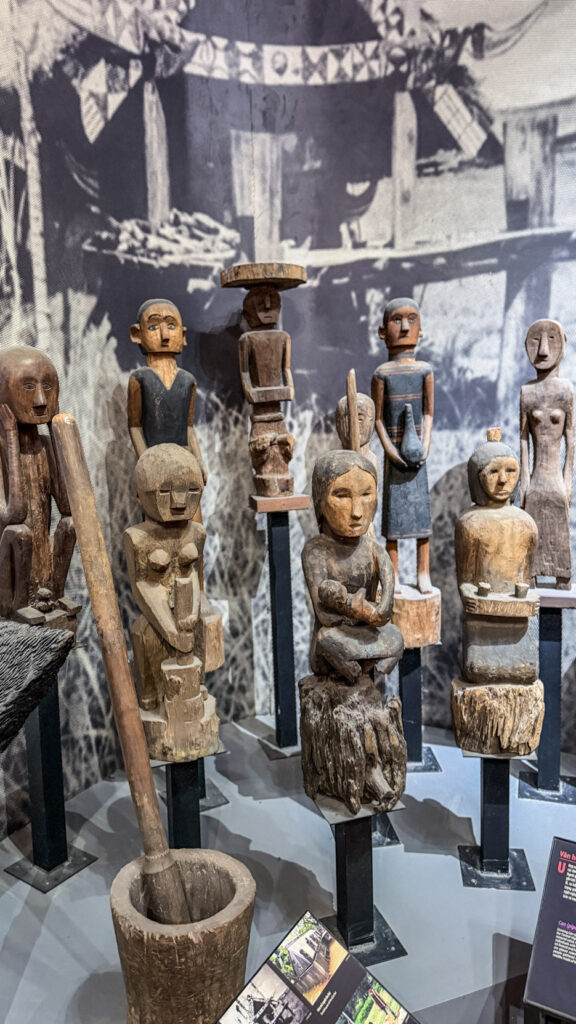
🪓 Gallery 1: The Stone Age and Bronze Age
The chronological journey begins on the ground floor, to the left of the entrance. Gallery 1 is dedicated to prehistoric Vietnam, and the sheer age of the objects here is staggering. Glass cases hold polished stone axes, grinding stones, and ceramic shards from the Hòa Bình and Bắc Sơn cultures, some dating back 10,000 years. The centrepiece is a collection of Đông Sơn bronze drums — massive, intricately decorated instruments that were used in rituals and warfare between 600 BC and 300 AD. The largest drum in the room is over a metre tall, its surface covered in geometric patterns, stylised birds, and scenes of daily life: rice pounding, canoe racing, musicians playing. These drums were cast without moulds, using a lost-wax technique that still isn’t fully understood. Standing in front of one, you’re looking at the work of a civilisation that had mastered bronze long before Rome was a republic. 🥁
🗿 Gallery 2: The Kingdoms of Champa and Funan
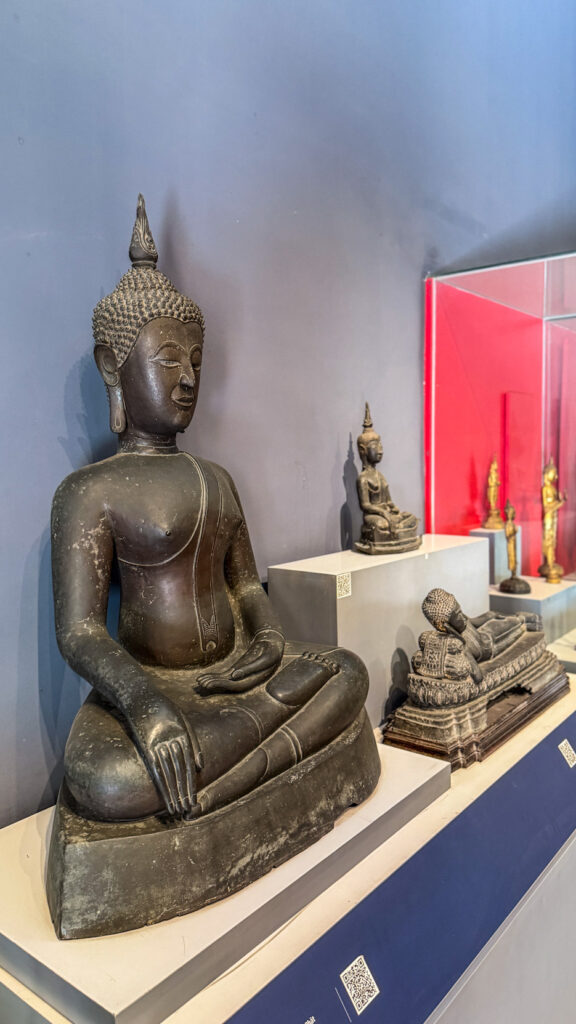
Further along the ground floor, Gallery 2 shifts focus to the ancient kingdoms that once dominated central and southern Vietnam. The Funan civilisation, which flourished in the Mekong Delta from the 1st to the 6th century AD, is represented by delicate gold jewellery, ceramic vessels, and stone lingas — phallic symbols representing the Hindu god Shiva. The Champa collection is larger and more striking. Cham sandstone sculptures from the 7th to 13th centuries line the walls: serene Buddhas, dancing Shivas, Ganesha with his elephant head, and apsaras — celestial dancers — carved in high relief. The most captivating piece is a sandstone statue of a Cham queen, her face calm and slightly smiling, her hands folded in a gesture of meditation. The craftsmanship is exquisite, and the gallery’s soft lighting gives the stone a warm, almost living glow. 🪷
👑 Gallery 3: The Nguyễn Dynasty and the Mummy
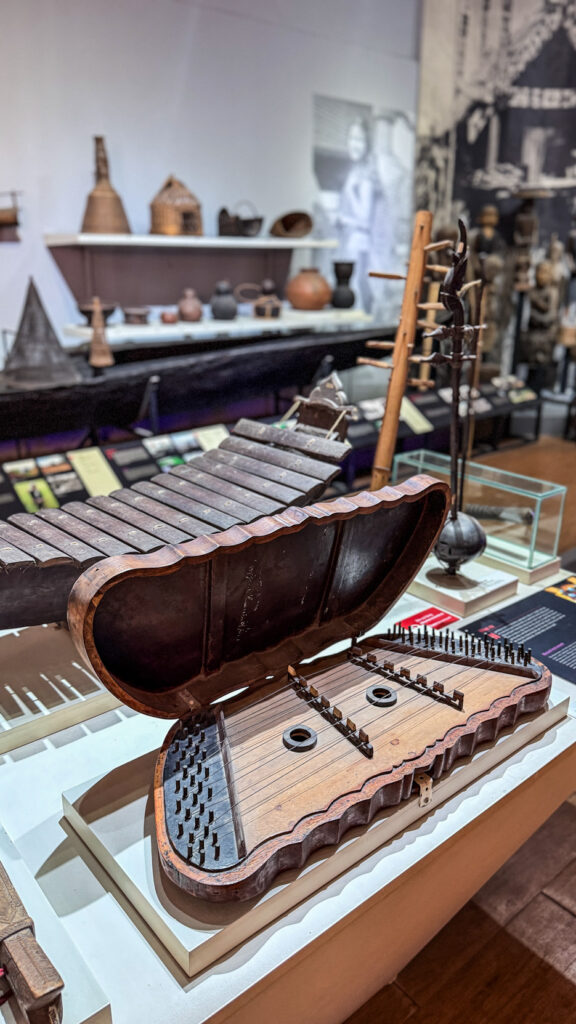
Upstairs, the collection moves into the imperial era. Gallery 3 focuses on the Nguyễn Dynasty (1802–1945), the last ruling family of Vietnam. Display cases hold royal garments embroidered with gold thread, ceremonial swords, porcelain from the imperial kilns, and a complete set of court musical instruments. There’s a palanquin — a covered sedan chair carried by attendants — that once transported a princess through the halls of the Citadel in Huế. But the object that stops every visitor is in the corner of the room: a glass case containing the mummified body of a woman who died in 1869. She was discovered in a tomb in District 5 during construction work in 1994, her body naturally preserved by the clay soil. She lies on her side, knees slightly bent, her skin dark and papery, her fingernails still visible. It’s not gruesome — it’s strangely peaceful, and it’s the closest you’ll come in Saigon to touching the 19th century with your own eyes. ⚰️
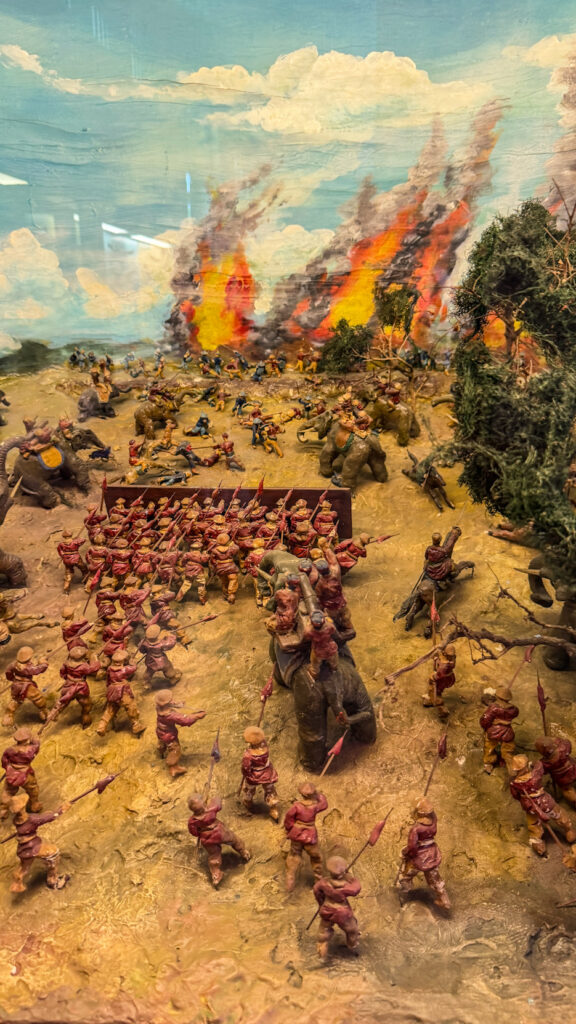
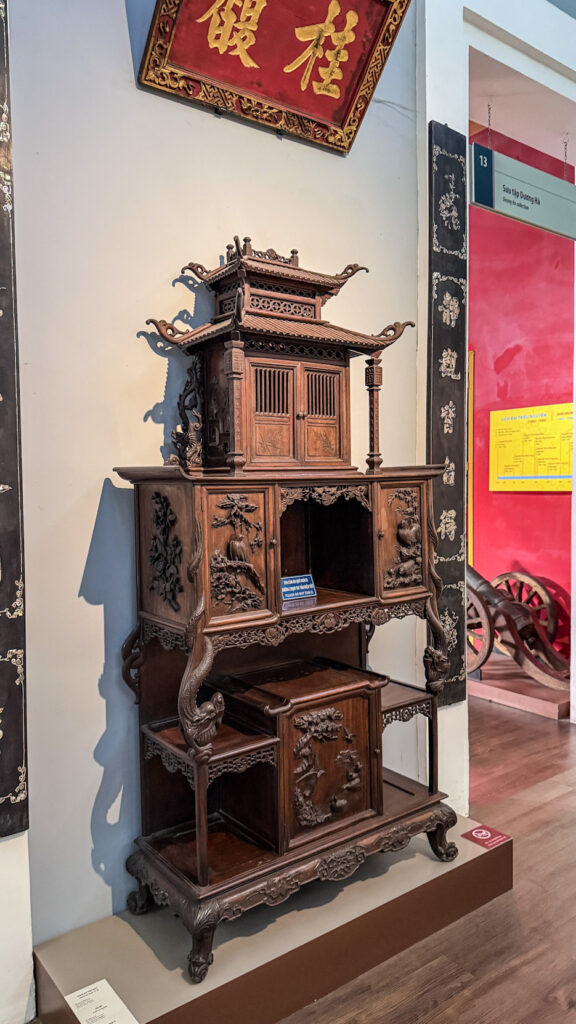
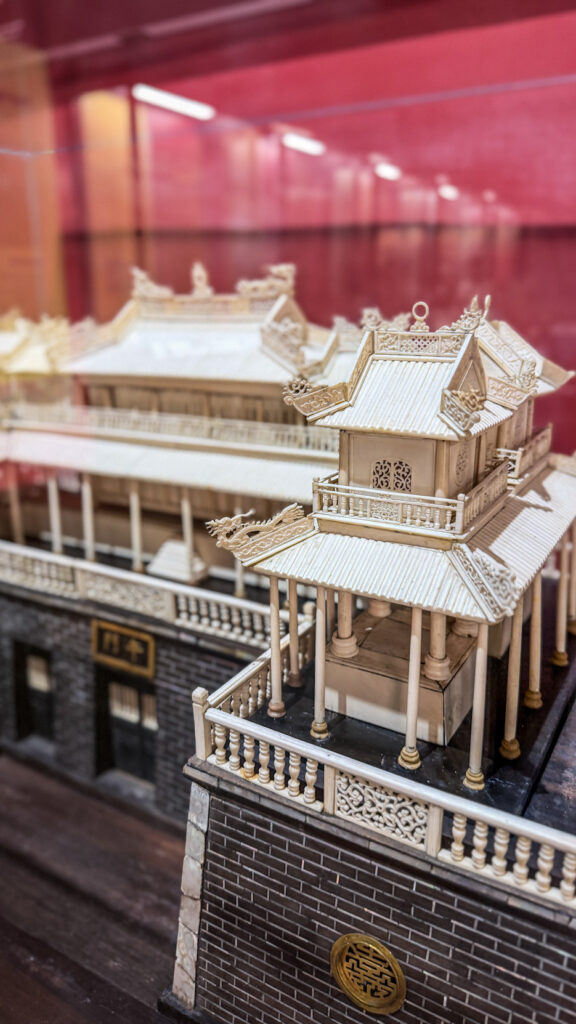
🌏 Galleries 4–6: Ethnography, Ceramics, and the Mekong
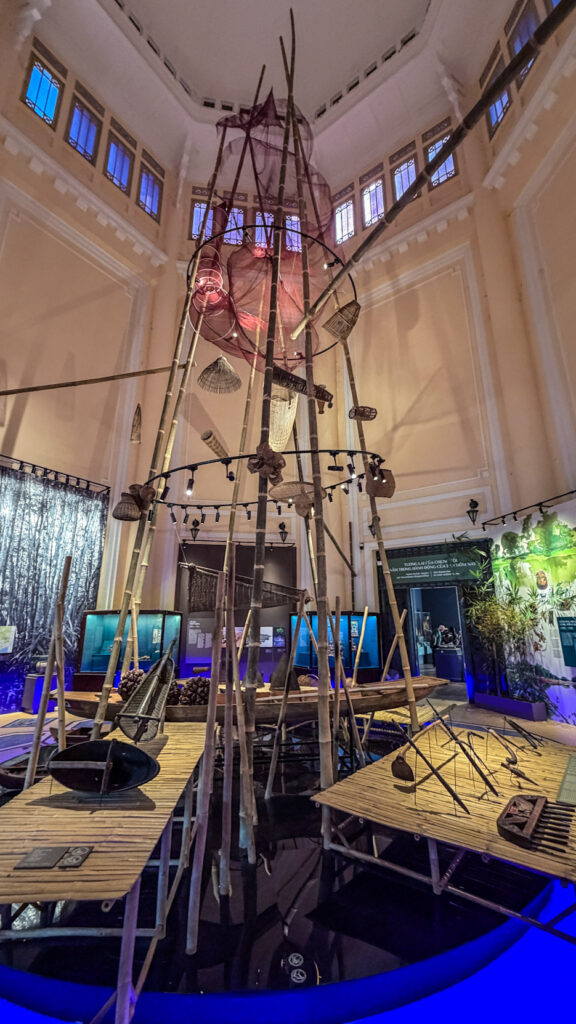
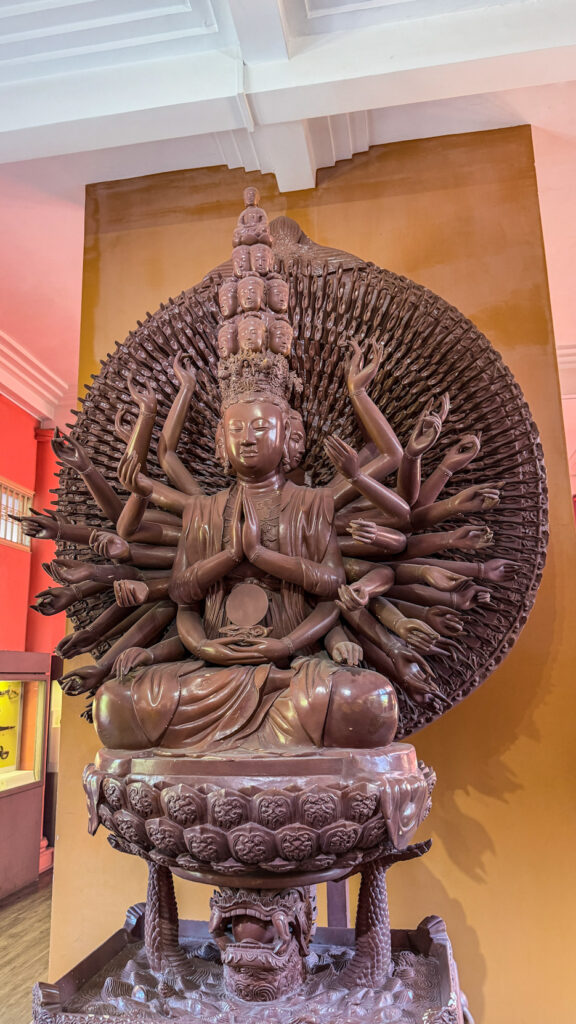
Several smaller galleries branch off from the main halls, each worth a few minutes. Gallery 4 is an ethnographic collection, with mannequins dressed in traditional clothing from Vietnam’s 54 recognised ethnic groups, alongside baskets, farming tools, and musical instruments from the Central Highlands and the northern mountains. Gallery 5 is devoted to ceramics — shelves of celadon-glazed bowls, blue-and-white porcelain from the 15th century, and terracotta jars that once held fish sauce on trading ships bound for China and Japan. Gallery 6 focuses on the Mekong Delta and the cultures that have lived along its banks for millennia, with a collection of wooden carvings, ritual masks, and a complete Khmer Buddhist altar transported from a temple in Sóc Trăng. The diversity is the point: this museum argues, quietly but convincingly, that Vietnam has always been a crossroads of civilisations. 🎭
📍 Practical Info
📍 Address: 2 Nguyễn Bỉnh Khiêm, Phường Bến Nghé, Quận 1, Ho Chi Minh City
🕒 Opening hours: Tuesday to Sunday, 8:00 AM – 11:30 AM and 1:30 PM – 5:00 PM. Closed on Mondays. Note the lunchtime closure — plan your visit for the morning or mid-afternoon.
🎟️ Entrance: 30,000 VND for adults. A small additional fee applies if you wish to take photographs inside the galleries.
👗 Dress code: Casual, but it’s a national museum — show the usual respect.
🚕 Getting there: A short Grab ride from anywhere in District 1. The museum entrance is beside the Saigon Zoo and Botanical Gardens — drivers recognise “Bảo tàng Lịch sử” or the Nguyễn Bỉnh Khiêm address.
The museum is at the eastern edge of District 1, next to the Botanical Gardens. You can find a hotel in Ho Chi Minh City in the central districts — staying in Bến Nghé Ward puts you within walking distance of this museum, the Saigon River, and several other landmarks. For the highest-rated stays across all budgets, my Top 10 Best Hotels in Ho Chi Minh City guide has the full lineup.
🔗 What to Pair It With
The Vietnam History Museum is literally next door to the Saigon Zoo and Botanical Gardens — you can walk from a 10,000-year-old stone axe to a live elephant in under five minutes. For a completely different kind of history, the Independence Palace picks up the story where this museum ends — with the fall of Saigon in 1975. And for a smaller, quieter museum experience, the Museum of Ho Chi Minh City is a short Grab ride west, housed in a beautiful colonial mansion. 🌸
💎 Verdict: The Museum That Waits for the Curious
The Vietnam History Museum Saigon doesn’t chase you. It doesn’t have interactive screens or a rooftop café. What it does have is a 3,000-year-old bronze drum, a stone Cham queen, and a mummy resting since 1869 — and that’s exactly why you’ll be glad you came. This is the museum that holds Saigon’s longest memory, and it’s almost always empty. Go on a weekday morning, take your time, and let the silence tell a story that began before the motorbikes. 🏛️
Frequently Asked Questions
When was the Vietnam History Museum Saigon built?
It opened in 1929, designed by French architect Auguste Delaval, originally named the Musée Blanchard de la Brosse.
How large is the collection?
Over 40,000 artefacts, spanning 3,000 years of history.
What are the Đông Sơn bronze drums?
Massive, intricately decorated ritual and war instruments used between 600 BC and 300 AD, cast using a lost-wax technique.
What does Gallery 2 cover?
The ancient kingdoms of Funan and Champa, including gold jewellery, stone lingas, and Cham sandstone sculptures from the 7th to 13th centuries.
Is the museum usually crowded?
No, the author found entire galleries empty on a Tuesday morning.
More from our travel guide network
Build your Vietnam route — free.