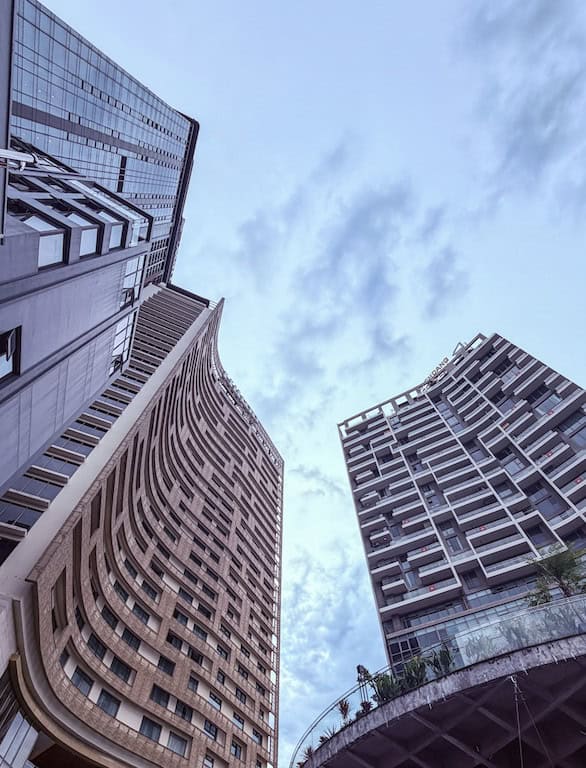
Ho Chi Minh City for First-Time Visitors won’t reveal itself in one afternoon.
At first, it can feel like pure chaos: thousands of motorbikes, horns, tiny alleys, huge boulevards, street food everywhere and people moving in every direction.
Then you start walking.
A French colonial building appears behind a row of cafes. A quiet pagoda sits down an alley. A rooftop bar suddenly opens above the traffic. A tiny restaurant serves one of the best meals of your trip.
That contrast is what makes Ho Chi Minh City so interesting.
For a first visit, Ho Chi Minh City for First-Time Visitors needs a solid base, sights, and time to wander.
Is Ho Chi Minh City Worth Visiting?
Absolutely, if you enjoy big cities, food, history, nightlife and urban exploration.
Ho Chi Minh City is not Vietnam’s most relaxing destination. That is not the point.
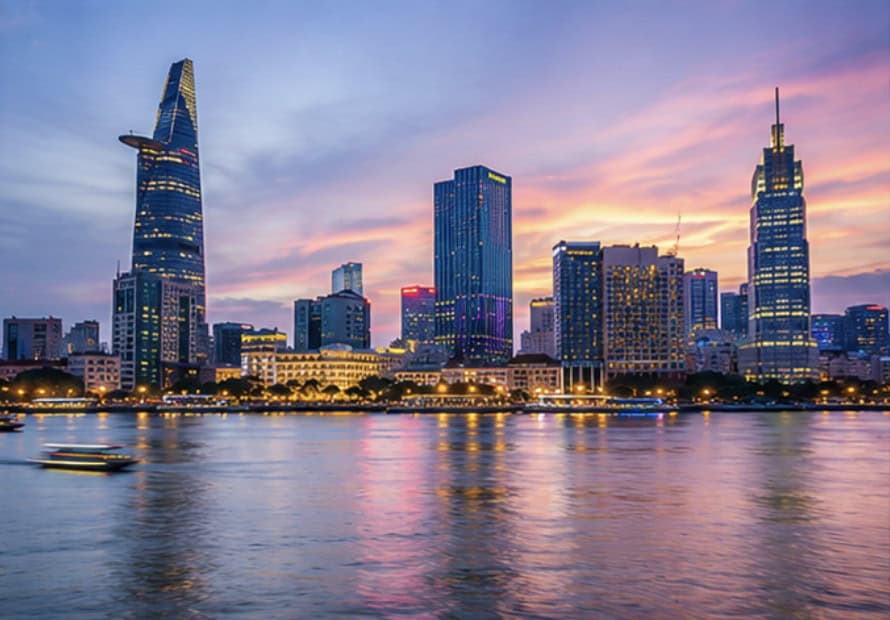
It is energetic, dense and constantly moving. You can spend a morning visiting historical landmarks, eat lunch in a tiny local restaurant, disappear into a quiet café in the afternoon and finish the day on a rooftop overlooking the city.
The city is also one of the best starting points for exploring southern Vietnam.
From here, you can continue toward the Mekong Delta, Vung Tau, Mui Ne or other destinations in the south.
How Many Days Do You Need in Ho Chi Minh City?
3 to 4 days is a good amount of time for a first visit.
- 1 day: enough for a quick introduction, but you will miss most of the city’s character.
- 2 days: enough for the main landmarks and a taste of local food.
- 3 days: a good first visit with time for both famous sights and less obvious places.
- 4–5 days: ideal if you want museums, neighborhoods, nightlife and a day trip.
If you are using Ho Chi Minh City as a base for southern Vietnam, staying longer makes sense because several major destinations are accessible from the city.
Where Should First-Time Visitors Stay?
Your choice of district will change the experience considerably.
District 1
Hotels in District 1 are the easiest option for a first visit.
You will be close to many of the city’s major attractions, restaurants, cafes, bars and transport connections.
This is the area I would choose if you only have two or three days.
District 3
Hotels in District 3 are worth considering if you want something slightly quieter while remaining close to central Saigon.
District 3 is particularly interesting for travelers who want local restaurants, cafes, churches, pagodas and residential streets rather than staying exclusively in the tourist centre.
Phu Nhuan
Hotels in Phu Nhuan can be useful for travelers who want to stay closer to Tan Son Nhat Airport while still having easy access to the city.
Near Tan Son Nhat Airport
If you are arriving late or leaving early, Ho Chi Minh City airport hotels can save a surprising amount of stress.
Our Ho Chi Minh City Airport Hotels guide focuses specifically on short stays and transit nights.
For a wider look at accommodation costs, our Vietnam Hotel Prices guide includes a breakdown of typical Ho Chi Minh City prices.
1. Start With the Historic Centre
The easiest way to understand Ho Chi Minh City is to begin in District 1.
Many of the landmarks that first-time visitors want to see are concentrated within a relatively manageable area.
Instead of treating each attraction as a separate trip, walk between several of them.
2. Visit the Saigon Central Post Office
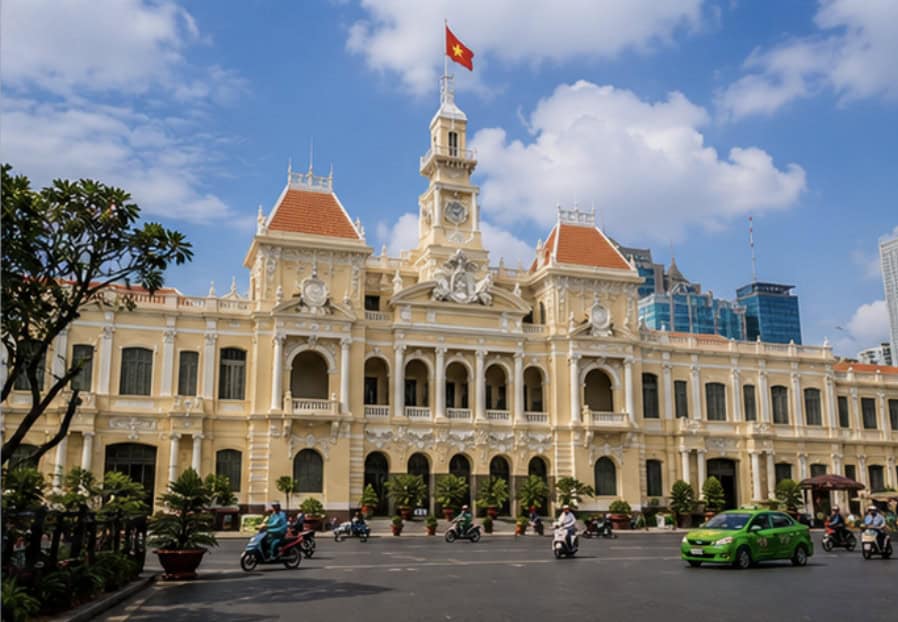
Saigon Central Post Office is one of the city’s easiest first stops.
The building is still functioning as a post office, which makes it more interesting than a preserved monument that exists only for tourists.
Take a few minutes to look at the interior, the old maps and the architecture rather than simply taking a photograph at the entrance.
You can even send a real postcard from inside.
Our Saigon Central Post Office guide explains what is worth seeing inside and how to make the most of the visit.
3. Walk Down Nguyen Van Binh Book Street
Immediately beside the Central Post Office is Nguyen Van Binh Book Street.
It is only about 100 meters long, but it feels completely different from the traffic outside.
There are trees, bookshops, cafes and benches instead of motorbikes.
It is an easy place to slow down after walking around the historic centre.
Our Nguyen Van Binh Book Street guide goes into the small details that make this one of the city’s more pleasant short stops.
4. See Notre-Dame Cathedral of Saigon
Notre-Dame Cathedral of Saigon is directly opposite the Central Post Office.
The cathedral is currently best treated as an exterior landmark because restoration work has affected access at different times.
It still makes sense to include the area in your walking route because the cathedral, post office and Book Street are so close together.
5. Visit the Independence Palace
Independence Palace is one of the most important historical sites in Ho Chi Minh City.
The building is closely associated with the end of the Vietnam War and provides a very different experience from the city’s colonial architecture.
For first-time visitors interested in Vietnamese history, this is one of the places I would prioritize.
6. Spend Time at the War Remnants Museum
War Remnants Museum is another major historical stop.
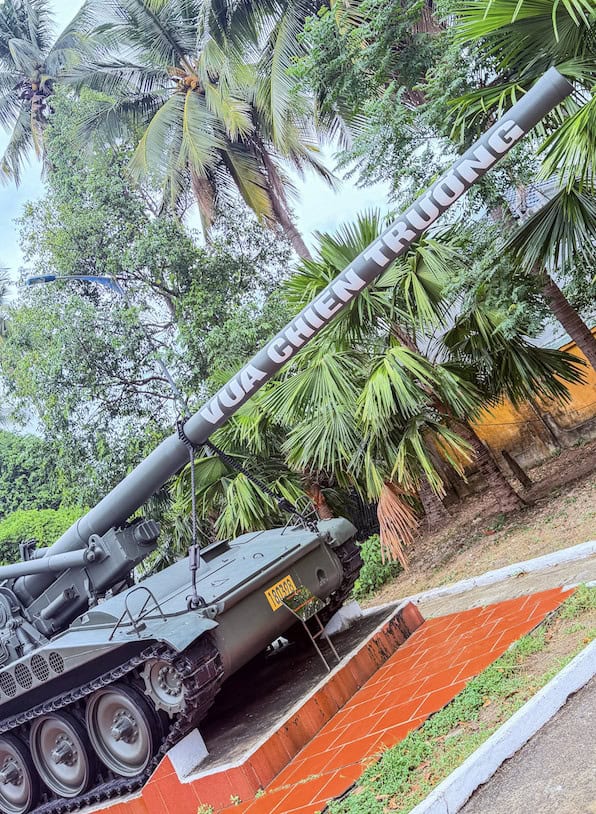
The museum deals directly with the Vietnam War and its consequences, including military equipment, photographs and historical material.
It can be emotionally difficult, so do not treat it as a quick sightseeing checkbox.
Give yourself enough time to process what you are seeing.
7. Walk Around Ben Thanh Market
Ben Thanh Market is one of the most recognizable names in Ho Chi Minh City.
It is busy, touristy and sometimes overwhelming, but that is part of the experience.
Go for the atmosphere rather than expecting a peaceful shopping trip.
If the heat and crowds become too much, there is another option nearby.
Central Market Saigon sits underground beneath September 23 Park and offers a much calmer, air-conditioned alternative.
8. Explore the Hidden Side of District 1
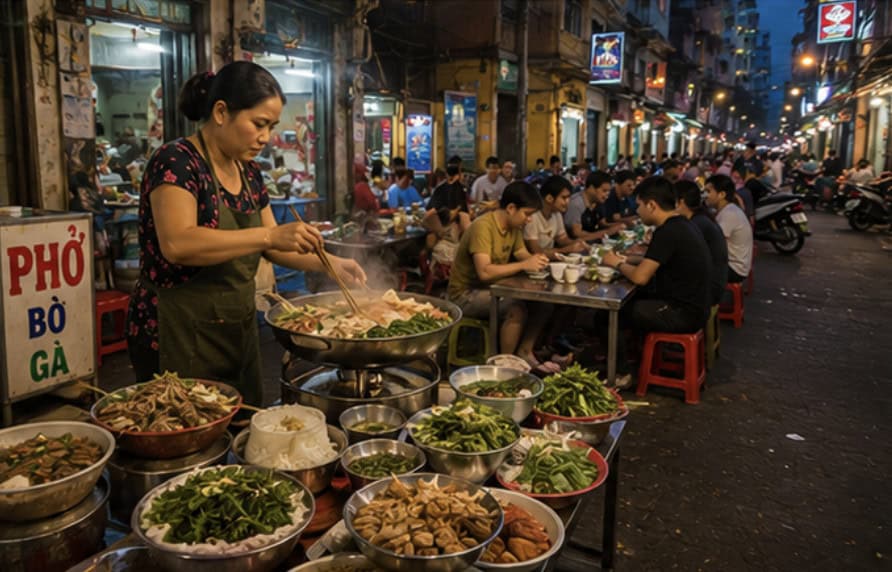
One mistake first-time visitors make is spending the entire trip on the main tourist streets.
Walk a few blocks away and the city changes quickly.
Small cafes appear above shops. Family restaurants occupy tiny corners. Narrow alleys lead into residential neighborhoods.
This is where Ho Chi Minh City starts feeling less like a collection of attractions and more like a real city.
9. Visit a Saigon Pagoda
Ho Chi Minh City has a surprisingly rich religious landscape.
Saigon pagoda tours can introduce several temples in one route, but you can also visit independently.
Our guide to five Saigon pagodas covers several quieter places away from the standard tourist circuit.
Giac Lam Pagoda, in particular, provides a very different atmosphere from the traffic-heavy streets outside.
10. See Tân Định Church
Tân Định Church is one of the most visually distinctive churches in the city.
The pink facade makes it easy to recognize, but the surrounding District 3 neighborhood is just as interesting.
This is a good example of a Ho Chi Minh City attraction that does not need an entire day.
Combine it with cafes, local food or another District 3 stop.
Our Tân Định Church guide covers the building and practical details.
11. Discover Vietnamese Traditional Medicine at FITO Museum
If the major museums start feeling repetitive, try something completely different.
FITO Museum explores Vietnamese traditional medicine inside a distinctive wooden building in District 10.
It is a more intimate experience than the major war and history museums and can be a good choice for travelers interested in Vietnamese culture beyond the standard landmarks.
Our FITO Museum guide explains what makes it worth the trip outside the central tourist zone.
12. Visit the Southern Women’s Museum
Southern Women’s Museum is another quieter cultural stop in District 3.
The museum focuses on the lives and contributions of Vietnamese women throughout history and during periods of war and social change.
It is free and generally much calmer than the city’s biggest museums.
Our Southern Women’s Museum guide explains why it is worth adding if you want to see another side of the city’s history.
13. Try Vietnamese Street Food
Do not spend your entire trip eating in international restaurants.
Ho Chi Minh City food tours are one easy way to discover local dishes without having to research every restaurant yourself.
But independent eating is just as rewarding.
Look for busy local restaurants, small noodle shops and street stalls rather than judging a place by its appearance.
For a broader introduction to Vietnamese food, our Vietnam Food Guide covers the dishes and eating habits you are likely to encounter around the country.
14. Spend an Evening on Bui Vien Walking Street
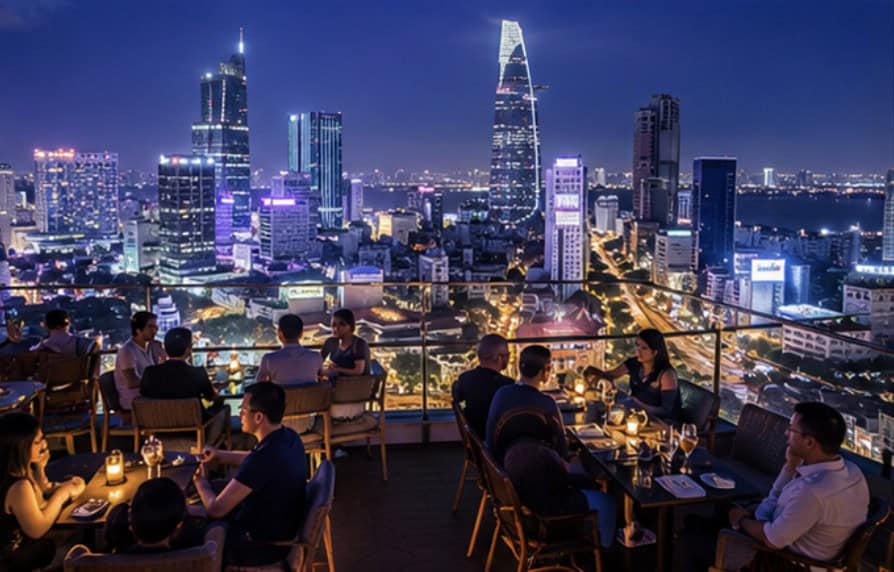
Bui Vien Walking Street is loud, crowded and deliberately chaotic.
It is not for everyone.
If you want quiet evenings, skip it. If you want to see the backpacker side of Saigon, spend an hour there and decide for yourself.
You do not have to stay all night.
15. Try a Rooftop Bar
For the opposite experience, go upward.
Ho Chi Minh City rooftop bars offer a completely different perspective on the city.
From above, the endless traffic becomes part of the scenery rather than something you have to navigate.
This is particularly good around sunset.
Our Social Club Rooftop Saigon guide is one option if you want a polished evening with a view.
For something more relaxed and hidden, our Hidden Saigon Cafés guide explores several less obvious places for an evening drink.
16. Take the Open-Top Bus
Ho Chi Minh City open-top bus tours are useful when your feet need a break.
They also give you a different perspective on the city because you can see the streets, buildings and traffic from above rather than constantly navigating between them.
Golden hour is particularly attractive for this type of experience.
17. Visit Tao Dan Park
Tao Dan Park is a useful escape when you need a break from concrete.
The park is large, green and central enough to fit easily into a sightseeing day.
It works particularly well early in the morning, when the city is beginning to wake up.
18. Find the Cafe Apartments
The Cafe Apartments at 42 Nguyen Hue are one of the city’s more unusual urban landmarks.
An old apartment building has been transformed into a vertical collection of cafes, shops and small businesses.
It is exactly the sort of place that makes Ho Chi Minh City interesting: the attraction is not necessarily a grand monument, but what people have done with an ordinary building.
It is also close to many central attractions, making it easy to combine with a walking route.
Ho Chi Minh City Districts: Where Should You Spend Your Time?
| Area | Best For |
|---|---|
| District 1 | First-time visitors, major sights, nightlife |
| District 3 | Local atmosphere, cafés, churches and pagodas |
| District 5 | Chinese-Vietnamese culture and food |
| District 10 | Local restaurants and less-touristy attractions |
| Phu Nhuan | Food, airport access and local neighbourhoods |
You do not need to visit every district.
For a first trip, District 1 and District 3 are enough to give you a strong introduction. Add other districts when a particular attraction interests you.
How to Get Around Ho Chi Minh City
Grab
Grab rides in Ho Chi Minh City are one of the easiest ways for visitors to move around.
They are particularly useful when crossing districts or traveling during hot parts of the day.
Walking
Walking is excellent in the central area, but do not underestimate the heat and traffic.
Distances that look short on a map can feel much longer when you are crossing busy streets in the middle of the day.
Motorbike
A motorbike gives you freedom, but Ho Chi Minh City traffic is not the place to learn from scratch.
Only ride if you are legally permitted and genuinely comfortable in dense urban traffic.
Private Car
Private Ho Chi Minh City transfers and tours can make sense for families or groups who want to combine several attractions without constantly arranging transport.
Getting From Tan Son Nhat Airport to the City
Tan Son Nhat International Airport is close to the central districts but traffic can make the journey unpredictable.
Private airport transfers from Tan Son Nhat are the easiest option if you are arriving with luggage or late at night.
Grab is another practical choice once you are comfortable with the airport pickup process.
If you have an early departure, staying in one of the airport hotels near Tan Son Nhat can be more convenient than crossing the city before sunrise.
How to Get to Ho Chi Minh City From Other Vietnamese Cities
Ho Chi Minh City is one of Vietnam’s main transport hubs.
Flights to Ho Chi Minh City connect the city with Hanoi, Da Nang, Nha Trang, Phu Quoc and many other destinations.
Long-distance buses and trains are also available.
Our Vietnam Transport Guide explains the main options if you are building a longer route through the country.
How Much Does Ho Chi Minh City Cost?
Ho Chi Minh City can be surprisingly affordable for a major Asian city.
You can eat cheaply, stay in a budget hotel and explore many attractions without spending much money.
At the same time, the city has no shortage of luxury hotels, rooftop bars and high-end restaurants if you want a more expensive trip.
Our Vietnam Hotel Prices guide gives a broader picture of accommodation costs, while our Vietnam Travel Cost Guide covers daily spending across the country.
When Is the Best Time to Visit Ho Chi Minh City?
There is no single perfect month for everyone.
Ho Chi Minh City is warm throughout the year, and rainfall can affect outdoor sightseeing during wetter periods.
If you are planning a trip around walking, markets and outdoor attractions, check the forecast before deciding how tightly to structure your days.
Our Vietnam Weather by Month Guide provides the broader national picture.
Ho Chi Minh City for Families
Families can enjoy the city, but the pace needs to be adjusted.
Do not schedule five museums in one day.
Mix major attractions with parks, cafes, markets and shorter activities.
Family-friendly Ho Chi Minh City tours can also be useful when you want transportation and activities handled together.
Ho Chi Minh City for Couples
Couples have plenty of options beyond standard sightseeing.
Start with the historic centre, find a good café, watch sunset from a Saigon rooftop bar and have dinner somewhere away from the busiest tourist streets.
For a quieter experience, spend part of an afternoon around Nguyen Van Binh Book Street and the surrounding historic buildings.
Ho Chi Minh City for Solo Travelers
Ho Chi Minh City is particularly good for independent travelers who enjoy exploring without a rigid itinerary.
The central districts are packed with cafes, restaurants, markets, museums and bars, while organized tours make it easy to reach attractions farther away.
If you want to meet other travelers, group food tours and city tours are an easy option.
A Practical 2-Day Ho Chi Minh City Itinerary
Day 1 — Historic Saigon
Start with Saigon Central Post Office, Nguyen Van Binh Book Street and Notre-Dame Cathedral.
Continue to Independence Palace and the War Remnants Museum.
Finish with dinner in District 1 and drinks at a rooftop bar.
Day 2 — Local Saigon
Start at Tao Dan Park.
Explore a local market or neighborhood.
Visit Tân Định Church or one of the city’s pagodas.
In the afternoon, choose between FITO Museum, Southern Women’s Museum or simply wandering District 3.
End the evening with street food or Bui Vien.
A Better 4-Day Itinerary
Day 1 — The Classics
Central Post Office, Notre-Dame Cathedral, Book Street, Independence Palace and the War Remnants Museum.
Day 2 — Local neighborhoods
District 3, Tân Định Church, cafes, pagodas and local food.
Day 3 — Markets and Modern Saigon
Ben Thanh Market, Central Market, Nguyen Hue and the Cafe Apartments.
Day 4 — Choose Your Own Adventure
Book a Ho Chi Minh City day tour, explore more museums, take an excursion outside the city or simply leave the schedule empty.
What to Eat in Ho Chi Minh City
This is not a city where you should be afraid to eat locally.
Try phở, bánh mì, cơm tấm, bún thịt nướng, fresh spring rolls and southern Vietnamese dishes.
Street food is part of the experience, but basic precautions still matter.
Choose busy places where food is moving quickly and avoid anything that looks like it has been sitting outside for hours.
Our Vietnam Food Safety Guide covers the practical side of eating safely.
What to Pack for Ho Chi Minh City
- Light, breathable clothing.
- Comfortable walking shoes.
- Sun protection.
- Small umbrella or rain protection.
- Reusable water bottle.
- Small crossbody or secure day bag.
- Light layer for strongly air-conditioned buildings.
For a complete country-wide list, use our Vietnam Packing List.
Ho Chi Minh City First-Time Visitor Checklist
- Stay in District 1 or District 3 unless you have a specific reason to stay elsewhere.
- Walk through the historic centre.
- Visit the Central Post Office.
- See the Independence Palace.
- Allow enough time for the War Remnants Museum.
- Try local Vietnamese food.
- Visit at least one pagoda or church.
- Explore one less-touristy neighborhood.
- Watch sunset from a rooftop.
- Leave some time to simply wander.
Final Thoughts
Ho Chi Minh City is easy to underestimate if you judge it only by its famous attractions.
The Central Post Office, Independence Palace and War Remnants Museum are worth seeing, but they are only the beginning.
The real character of the city appears when you move between them.
It is in a quiet book street next to a major landmark. It is in a tiny restaurant hidden behind a busy road. It is in a pagoda surrounded by traffic. It is in the view from a rooftop when the entire city starts glowing after sunset.
For a first visit, give yourself at least three days if possible.
Stay central, walk when the weather allows, use Grab when it does not, and do not try to turn every hour into a scheduled activity.
Before you go, compare Ho Chi Minh City hotels, Ho Chi Minh City tours and experiences and flights to Ho Chi Minh City.
Frequently Asked Questions
Is Ho Chi Minh City worth visiting?
Yes. It is one of the best destinations in Vietnam for food, history, nightlife, architecture and urban exploration.
How many days do I need in Ho Chi Minh City?
Three to four days is ideal for a first visit. Two days is enough for the main sights if your schedule is tight.
Where should first-time visitors stay in Ho Chi Minh City?
District 1 is the easiest choice for most first-time visitors. District 3 is a good alternative if you want a slightly quieter and more local atmosphere.
What is Ho Chi Minh City famous for?
The city is known for its history, street food, French colonial architecture, museums, nightlife, markets and enormous motorbike traffic.
Is Ho Chi Minh City safe for tourists?
It is generally straightforward for tourists, but normal big-city precautions are important. Take care with valuables in crowded areas and when crossing busy streets.
Do I need a motorbike in Ho Chi Minh City?
No. Grab, taxis and walking are enough for most first-time visitors.
Is Bui Vien Walking Street worth visiting?
It depends on your interests. It is loud and heavily oriented toward nightlife and backpackers. Visit for the atmosphere rather than expecting a cultural attraction.
What should I do in Ho Chi Minh City at night?
Try local food, visit a rooftop bar, explore Nguyen Hue, walk through Bui Vien or find one of the city’s smaller hidden bars and cafes.
Is Ho Chi Minh City expensive?
No. You can travel very cheaply, but the city also offers extensive mid-range and luxury options.
Can I use Ho Chi Minh City as a base for southern Vietnam?
Yes. It is one of the country’s main transport hubs and a practical starting point for exploring destinations in southern Vietnam.
Planning a wider Southeast Asia trip?
Cambodia With Me — practical Cambodia travel guides
Siam With Me — Thailand travel guides
Indonesia With Me — Indonesia travel guides
Singapore With Me — Singapore travel guides
Build your Vietnam route — free.