However, we almost walked past it.
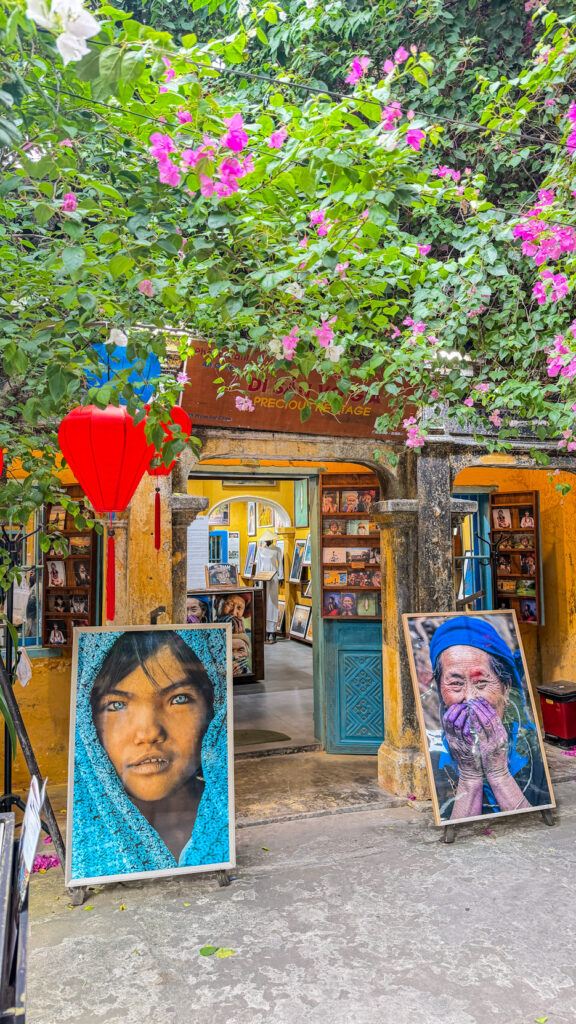
The entrance is simple and tucked away on a quiet street in Hoi An’s Old Town.
Inside, Precious Heritage Museum Hoi An feels profoundly meaningful, with no flashy signs or ticket booth.
Just a door and a small sign open to one of Vietnam’s most meaningful museums.
Precious Heritage Art Gallery Museum is the life’s work of French photographer Réhahn. In 2011, while traveling through northern Vietnam, he discovered there were 54 different ethnic groups across the country. He also realized their traditions, languages, and costumes were slowly disappearing as younger generations moved away.
So he spent the next decade documenting them. He traveled to remote villages, built trust with tribal leaders, and photographed members of each group in their traditional garments. He also collected their costumes – some of which are the last of their kind in existence.
The museum opened on 1 January 2017 and is completely financed by Réhahn himself. Entry is free – donations are welcome, but you don’t have to pay anything to walk through the doors.
📜 The Story Behind the Project
Réhahn’s journey began in 2011 when he met several ethnic groups around Sa Pa.
He learned that there were 54 distinct ethnic groups across Vietnam.
Each had its own language, traditional costumes, handicrafts, and beliefs.
However, these traditions were fading as younger generations moved to cities, a story told by Precious Heritage Museum Hoi An.
By September 2019, Réhahn completed his primary mission: researching, meeting, and documenting all 54 ethnic groups in Vietnam. The project took 10 years, and the result is a collection of over 200 large-format portraits, each accompanied by the subject’s personal story.
The museum is housed in a 19th-century French colonial building on Phan Bội Châu Street, spanning 500 square meters over two floors. The building itself is a recognized piece of Hội An’s architectural heritage.
🖼️ What’s Inside — Portraits, Costumes & Stories
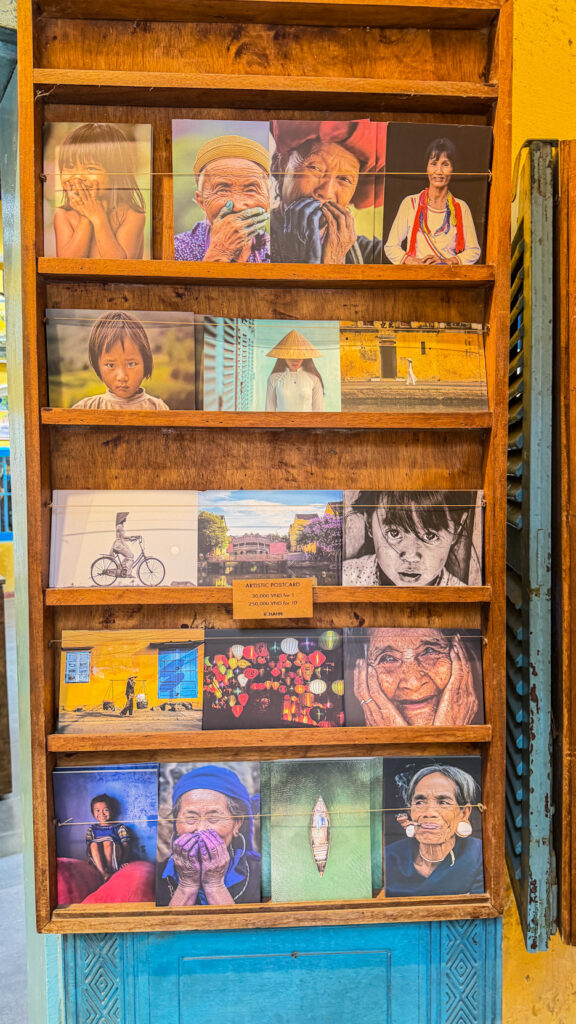
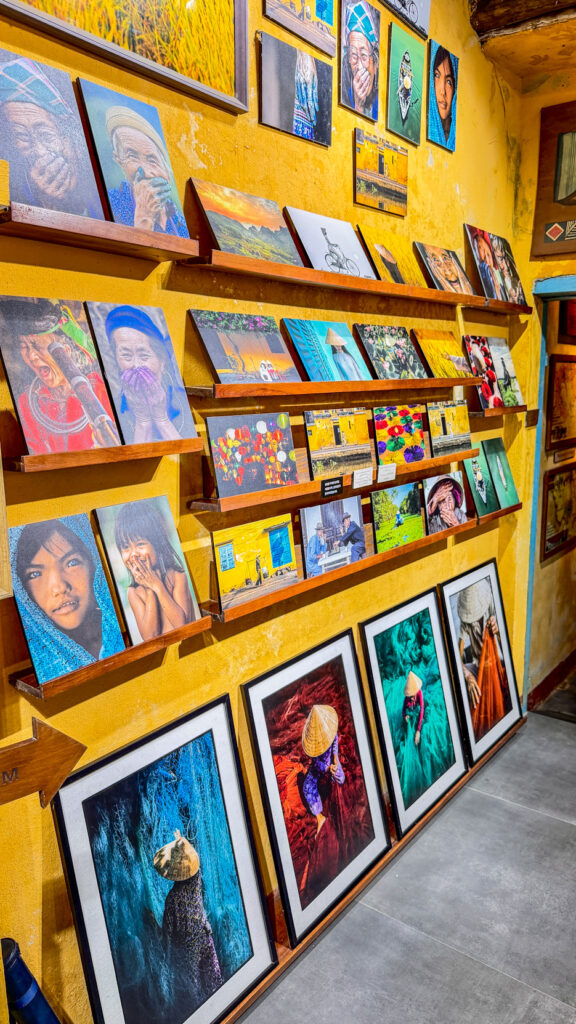
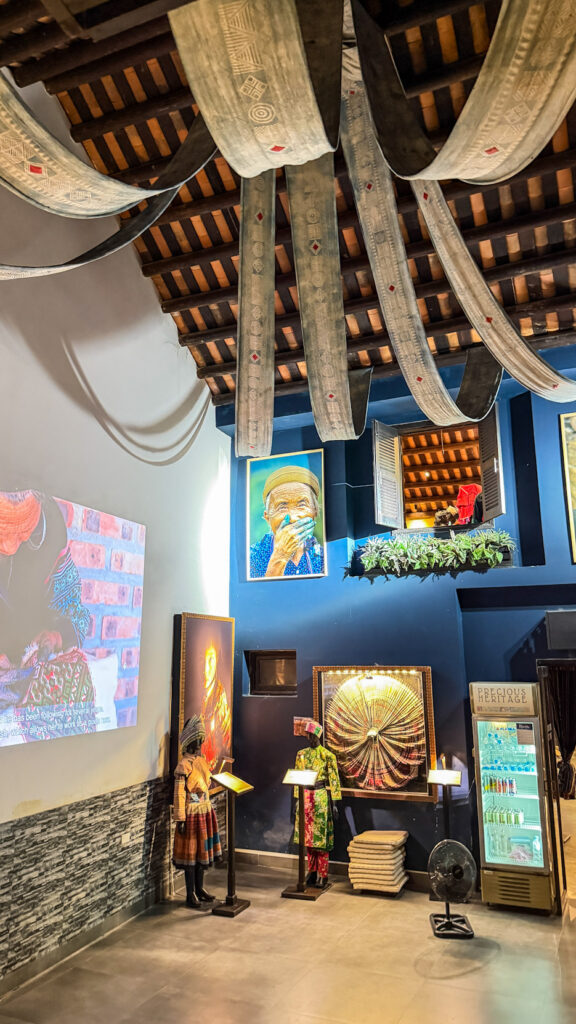
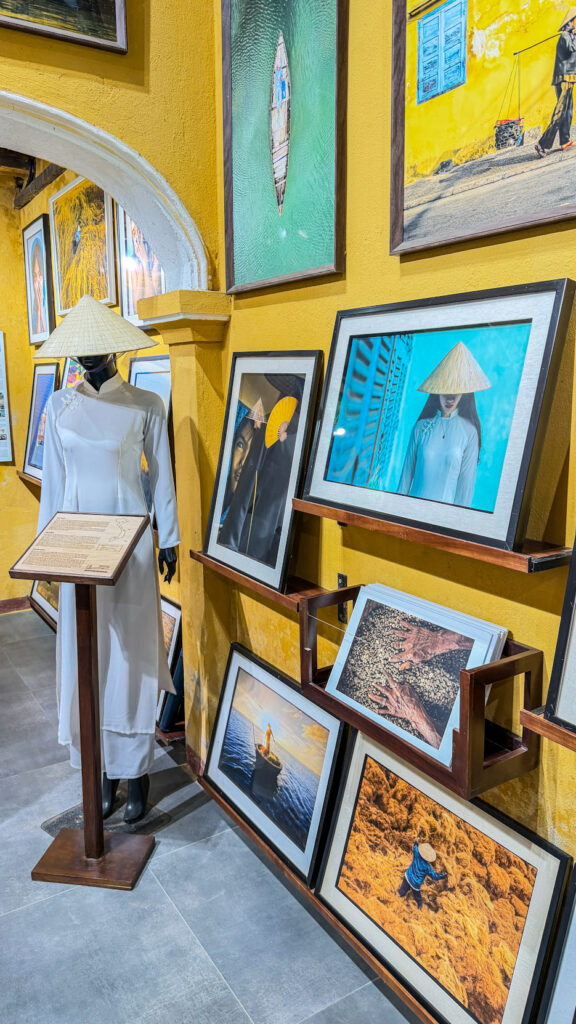
Over 200 portraits show close-ups of people from Vietnam’s diverse ethnic groups.
The faces are the main draw.
You see the lines on their skin, patterns on their clothes, and the look in their eyes.
Every portrait is accompanied by a personal story written in Vietnamese, English, and French, describing how Réhahn met them.
It also explains what their life is like.
This collection is part of the Precious Heritage Museum Hoi An.
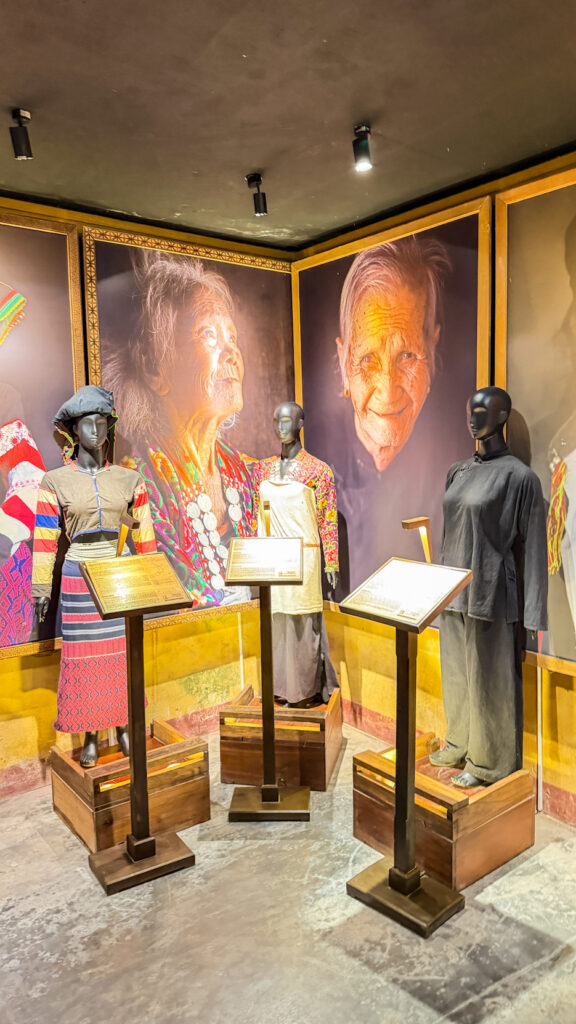
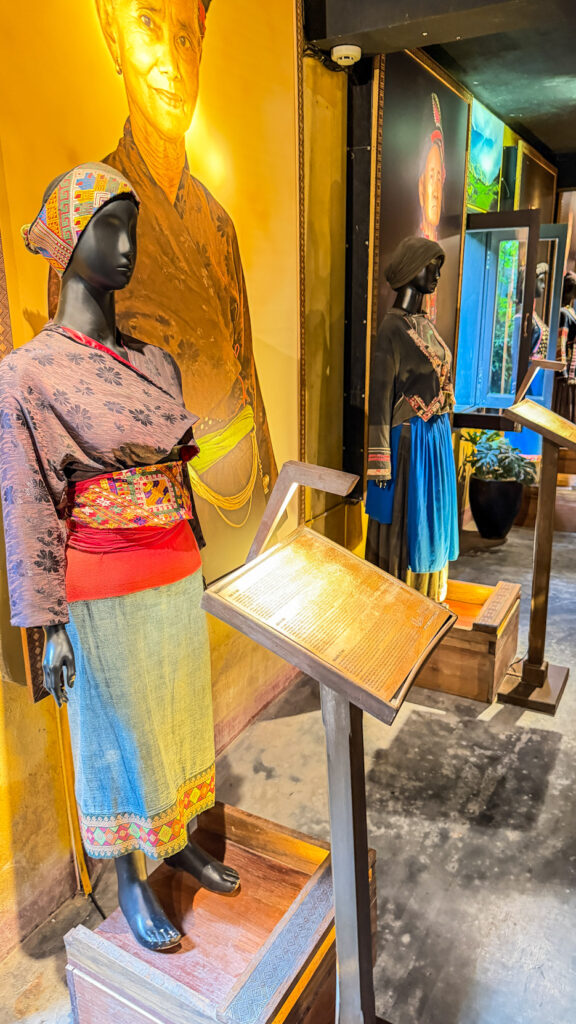
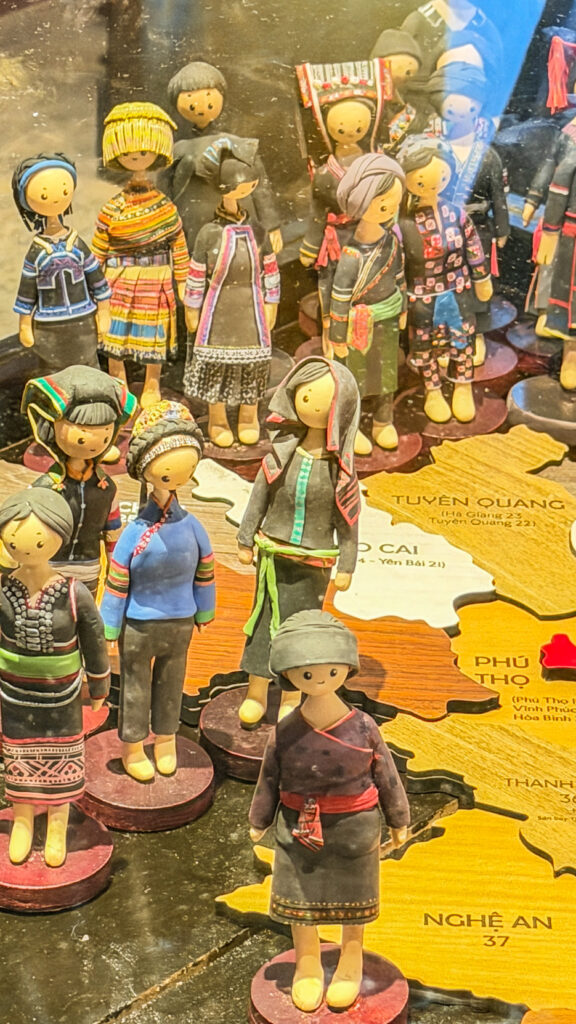
50+ traditional costumes — some of them are the last surviving examples of their kind. The museum displays these garments on mannequins, arranged by region. You can see the differences between the embroidered skirts of the Hmong, the indigo-dyed clothing of the Dao, and the beaded accessories of the Mường.
The Indigo Room — a small room painted with natural indigo dyes used by the northern mountain tribes. The deep blue color fills the space, and it’s one of the most photographed spots in the museum. The dye was made by the Dao and Hmong communities who have used it for centuries.
“Invisible Stories” for kids — an interactive activity where children can use UV lights to find hidden drawings on the walls. It’s a simple touch, but it keeps younger visitors engaged while adults explore the portraits.
One-hour documentary — plays in a small cinema room on the ground floor. It shows Réhahn’s journeys through remote villages, his meetings with tribal leaders, and the process of photographing and collecting the costumes. If you have time, it’s worth watching.
Traditional tribal songs — play quietly in the background as you walk through. The music is recorded from the villages themselves, adding another layer to the experience.
👕 The Ro Mam Story — A Costume That Took 3 Years to Get
The most powerful story in the museum involves the Ro Mam ethnic group. They are one of the smallest groups in Vietnam – only about 400 people remain. When Réhahn first approached them, the community was hesitant. He tried for three years to gain their trust.
Eventually, the village elder agreed to meet him. Réhahn explained his project: he wanted to photograph the Ro Mam and, if possible, acquire one of their traditional costumes for the museum. At that point, there were only 12 authentic Ro Mam costumes left in existence.
The elder agreed. He gifted one of the 12 costumes to Réhahn – a gesture that the photographer describes as the most significant moment of his entire project. The costume now hangs in the museum, displayed alongside the portrait of the elder who gave it.
That’s the kind of museum this is. Not a collection of objects, but a collection of trust.
🌍 Recognition & Global Reach
Since opening, the Precious Heritage Museum has received significant international attention:
- New York Times included it in their “36 Hours in Hoi An” guide
- Lonely Planet described it as an “essential detour”
- BBC, GEO, and National Geographic have featured Réhahn’s work
- In 2024, the museum became the first in Vietnam to be digitized and made available on Google Arts & Culture
- It has been recommended by 11 people on travel platforms (with more endorsements expected as awareness grows)
📌 Practical Information
- 📍 Address: 26 Phan Bội Châu, Cẩm Châu, Hội An, Quảng Nam
- 🕒 Open: 8:00 AM – 8:00 PM daily
- 🎟️ Entry: FREE — donations welcome
- ⏱️ Time needed: 1.5 – 3 hours
- 📞 Contact: +84 949 820 698
- 👗 Dress code: Smart casual (it’s a gallery, but no strict rules)
- 📸 Photos: Allowed – but be respectful and don’t use flash
💎 Final Verdict
Ultimately, Precious Heritage Museum is one of those places that stays with you long after you leave. It’s not a quick stop – you need at least an hour to do it justice. The stories, the faces, and the realization that some of these costumes are the last of their kind – it all adds up.
And it’s completely free – not because it’s low quality, but because Réhahn refuses to charge for entry. He wants people to see this work without barriers. If you’re in Hội An, this is the one museum you shouldn’t skip.
Pair your visit with a walk through Hội An Ancient Town – the museum is just a short walk from the Japanese Bridge. And if you’re planning a longer trip, check out my guides to Da Nang for First-Timers and Hội An for First-Timers.
🏨 Where to Stay & What to Pair It With
Once you’ve visited the museum, it’s time to book your accommodation. You’ll find everything from budget homestays to luxury resorts in Hội An – check hotels in Hội An to compare prices and read guest reviews. For a broader overview, I’ve put together guides to the best hotels in Da Nang and best hotels in Hanoi if you’re continuing your journey.
Frequently Asked Questions
How much does it cost to visit?
It’s free — donations are welcome but not required.
Who created this museum?
French photographer Réhahn, who spent a decade documenting Vietnam’s 54 ethnic groups.
When did the museum open?
On January 1, 2017, and it’s entirely financed by Réhahn himself.
How many portraits are on display?
Over 200 large-format portraits, each with the subject’s personal story in Vietnamese, English, and French.
How big is the museum?
It spans 500 square meters over two floors, in a 19th-century French colonial building on Phan Bội Châu Street.
Planning a wider Southeast Asia trip?
Cambodia With Me — practical Cambodia travel guides
Siam With Me — Thailand travel guides
Indonesia With Me — Indonesia travel guides
Singapore With Me — Singapore travel guides
Build your Vietnam route — free.